
Starlink Narrows the Gap to Under 13,000 as Nigeria’s ISP Market Fragments Further in Q2 2026

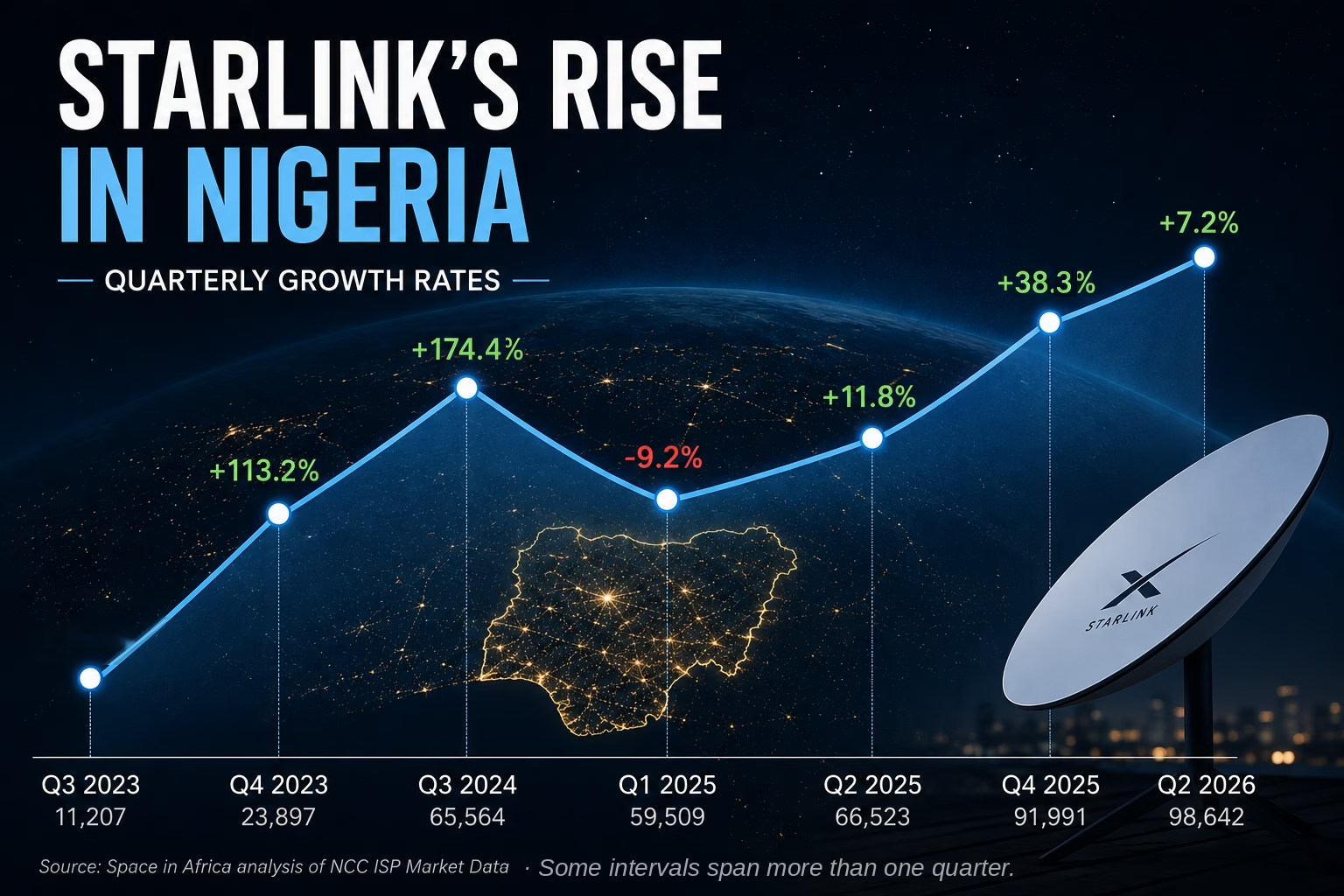
Starlink closed the second quarter of 2026 with 98,642 active subscribers in Nigeria, adding 6,651 subscribers since Q4 2025 and pulling within 12,742 subscribers of market leader Spectranet Ltd, which grew to 111,384. It’s the fifth straight reporting period in which Starlink has narrowed the gap, and the closest the two operators have been since the Nigerian Communications Commission (NCC) began publishing comparable per-operator figures.
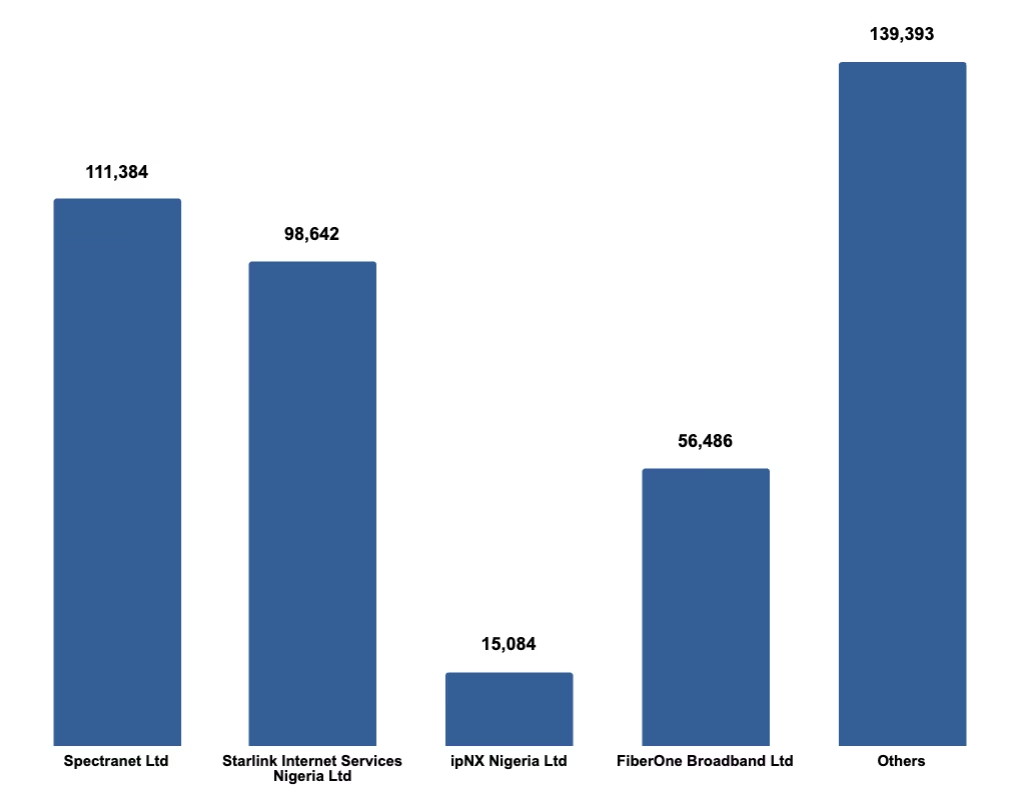
But the more significant shift this quarter isn’t between the top two. It’s underneath them: Nigeria’s ISP market grew 19.6% overall, from 352,006 to 420,989 active subscribers, and most of that growth came from outside the Big Three. The long tail of roughly 125 smaller operators added 47,400 subscribers, a 44.3% jump that outpaced the combined growth of Starlink, Spectranet, and FiberOne.
Click here to download Space in Africa’s latest report on Starlink.
The Gap that Nearly Vanished
Three years ago, Spectranet’s lead over Starlink looked insurmountable. In Q3 2023, Starlink had just 11,207 subscribers against Spectranet’s 113,865, a gap of 102,658. That gap has been almost entirely erased.
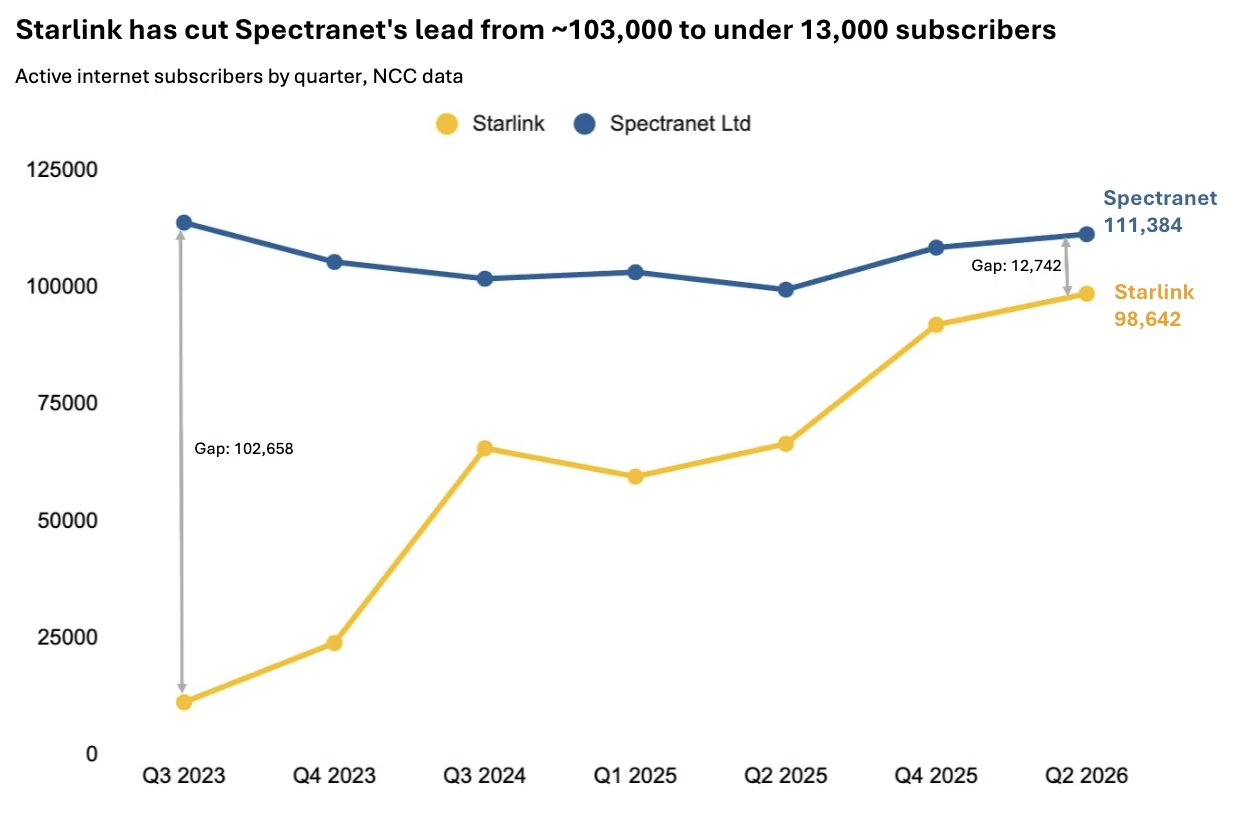
The trajectory wasn’t linear. Starlink’s subscriber base swelled through 2024 before a price-driven correction pulled it back in early 2025, the well-documented naira repricing episode that also hit FiberOne. However, it recovered fast: Starlink added 25,468 subscribers between Q2 and Q4 2025 alone, a 38.3% jump, before settling into a steadier 7.2% pace this quarter.
Spectranet, for its part, was shrinking for most of 2023 and 2024; from 113,865 to a low of 99,520 in Q2 2025, before returning to growth in late 2025. This quarter’s gain of 2,859 subscribers (2.6%) is a sharp deceleration from the 9.0% growth it posted between Q2 and Q4 2025, though it’s still growth, unlike the multiple quarters of decline that defined most of 2023 through mid-2025.
If both operators maintain their most recent growth rates, Starlink will overtake Spectranet as Nigeria’s largest ISP within roughly two to three quarters, though its Q4 2025→Q2 2026 deceleration (from 38.3% to 7.2% growth) suggests that pace may already be cooling.
This crossover estimate is our own extrapolation from the two most recent quarterly growth rates, not an NCC-reported figure, and it assumes both operators will maintain their current pace, which the data above show neither has maintained for more than two consecutive quarters.
It’s Not a Two-horse Race Anymore
Zoom out from Starlink and Spectranet, and the more interesting Q2 2026 story is fragmentation. The combined share held by Starlink, Spectranet, and FiberOne fell from 69.6% to 63.3% of the total market in a single reporting period.
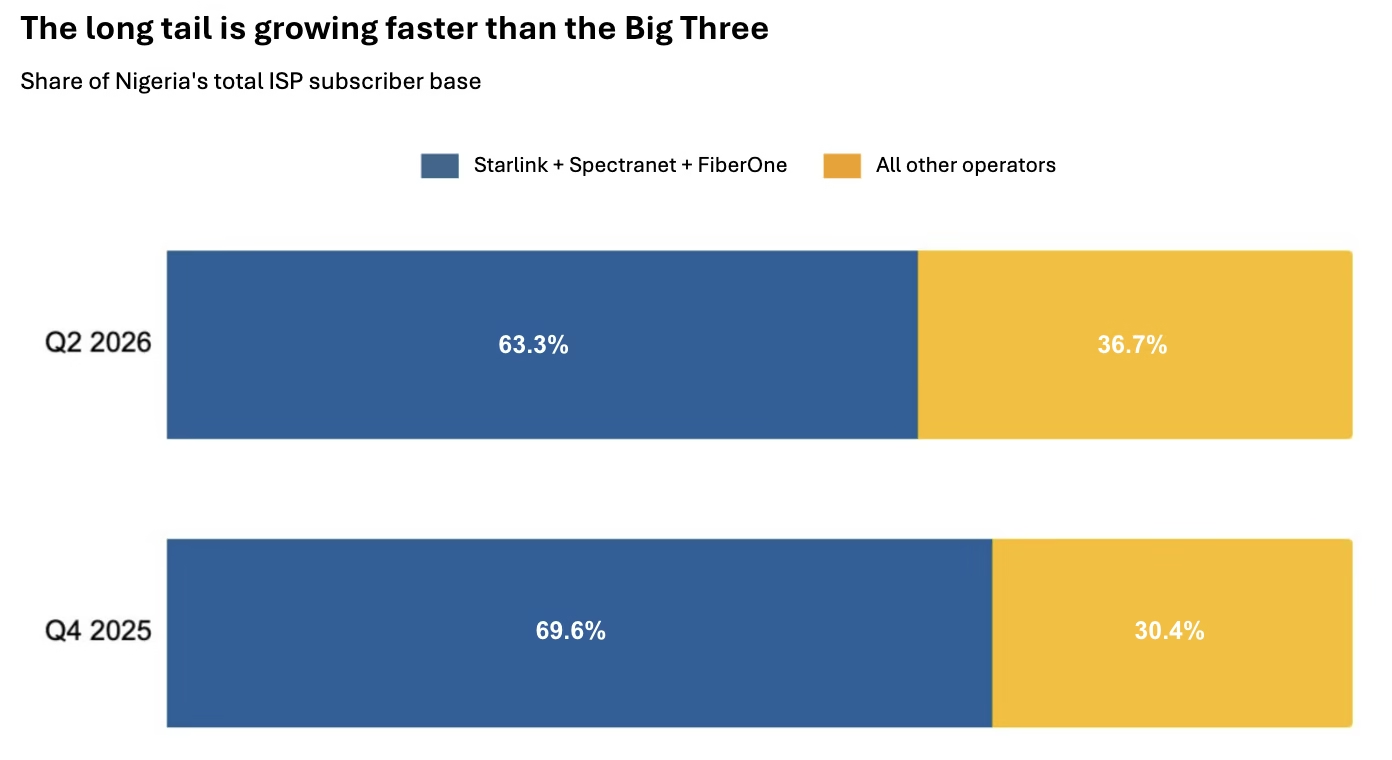
FiberOne itself had a strong quarter, up 27.2% to 56,486 subscribers, but even that trailed the long tail’s 44.3% growth rate.
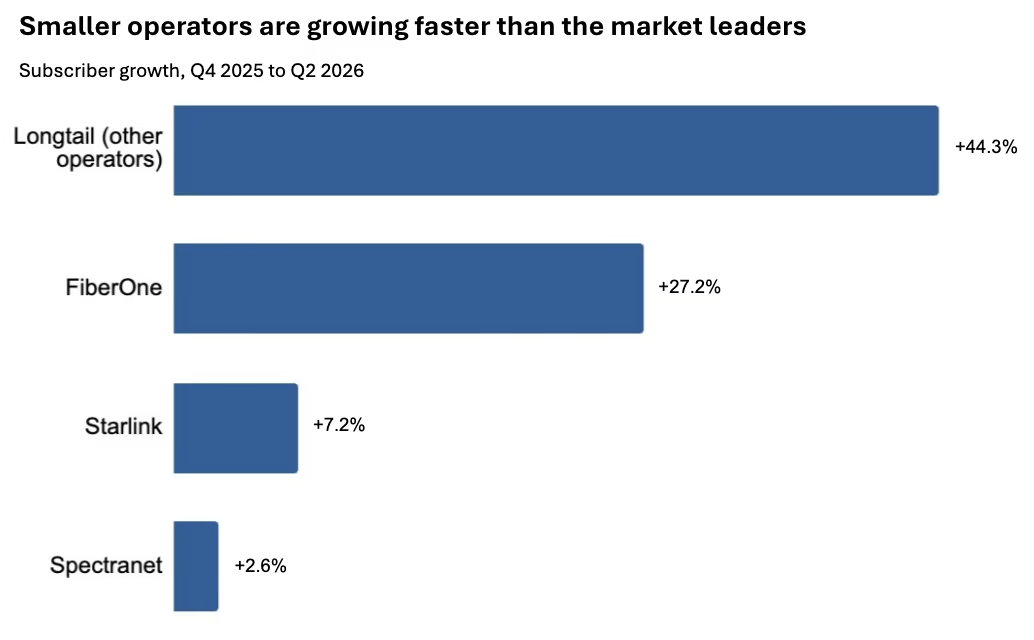 NCC licensed six new ISPs earlier in 2026, and total points of presence across the industry grew 15.4% (2,508 → 2,893) this period, broadly consistent with new entrants and existing smaller players expanding their footprint. Whatever the exact mix of new licensees versus existing operators scaling up, the effect is the same: Nigeria’s internet market is becoming less concentrated even as its two most-watched operators converge.
Wired Connections are Growing Again
Wireless has dominated Nigeria’s ISP market for years, and it still does, but its share is easing. Wireless subscriptions grew 15.9% this period versus 28.0% growth in wired/fixed connections, nudging wireless’s share of the total market down from 69.2% to 67.0%.
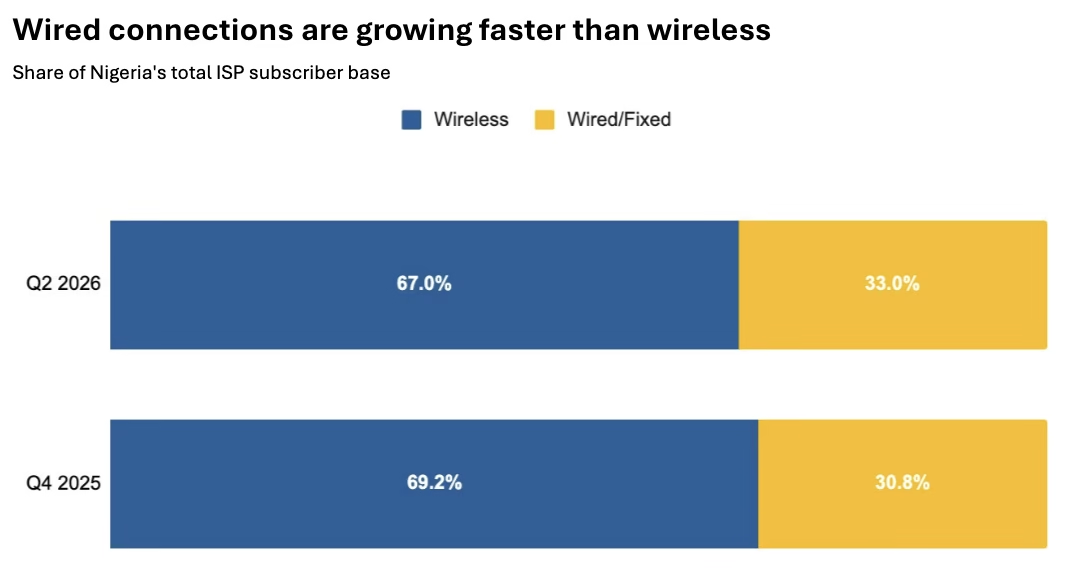
That shift shows up inside the wireless segment too: Starlink and Spectranet together accounted for 81.8% of all wireless subscribers in Q4 2025; by Q2 2026 that had fallen to 73.9%, as smaller wireless ISPs – Tizeti, Swift Networks, Cyberspace Network, and others- picked up share.
The Infrastructure Math Still Favours Starlink
One thing hasn’t changed: Starlink continues to serve its entire 98,642-subscriber base in Nigeria from a single declared ground station. Spectranet needed roughly 640 points of presence to serve its 111,384 subscribers, about 174 subscribers per point of presence, against Starlink’s 98,642. That structural gap in infrastructure economics is arguably a bigger long-term story than the subscriber count itself, since it means Starlink’s marginal cost of adding the next 10,000 Nigerian subscribers looks nothing like Spectranet’s.
That single-ground-station efficiency is also, increasingly, a constraint rather than just an advantage. Starlink halted new residential orders in parts of Lagos and Abuja in September 2025 after reaching its design capacity limits in those zones, leaving new customers on waitlists with no fixed activation date. It reopened access there in February 2026, but only through a ₦159,000/month Business “priority” tier; residential users in the most congested neighbourhoods have largely stayed locked out. That congestion is the flip side of the one-ground-station number above: it’s cheap to serve a widely distributed subscriber base from a single gateway, but it also means capacity in any one dense metro is a harder ceiling than it would be for an operator that can drop in another point of presence.
Starlink has reportedly been working to change that. Several reports indicate that as far back as 2024, the company is building additional ground stations at Okun Ajah (Lagos State), Sagamu (Ogun State), and Port Harcourt (Rivers State), with the Lagos site originally targeted for completion by late 2024 and the other two by 2025. None of this has been confirmed on the record by Starlink, SpaceX, or the NCC, and it’s worth noting that if those stations were operational and formally registered, Starlink’s NCC filing would presumably show more than one declared point of presence by now. As of Q2 2026, it still shows one.
What to Watch Next Quarter
Three threads worth tracking heading into Q3 2026: whether Starlink’s growth rate keeps decelerating toward Spectranet’s pace or reaccelerates; whether the long tail’s 44.3% growth was a one-quarter blip tied to new licensees onboarding or a durable trend; and whether wired/fixed’s faster growth this quarter marks a genuine shift in consumer preference or is a smaller-base statistical artifact worth revisiting once another quarter of data is in.