
Ghana Moves to Establish a National Space Agency

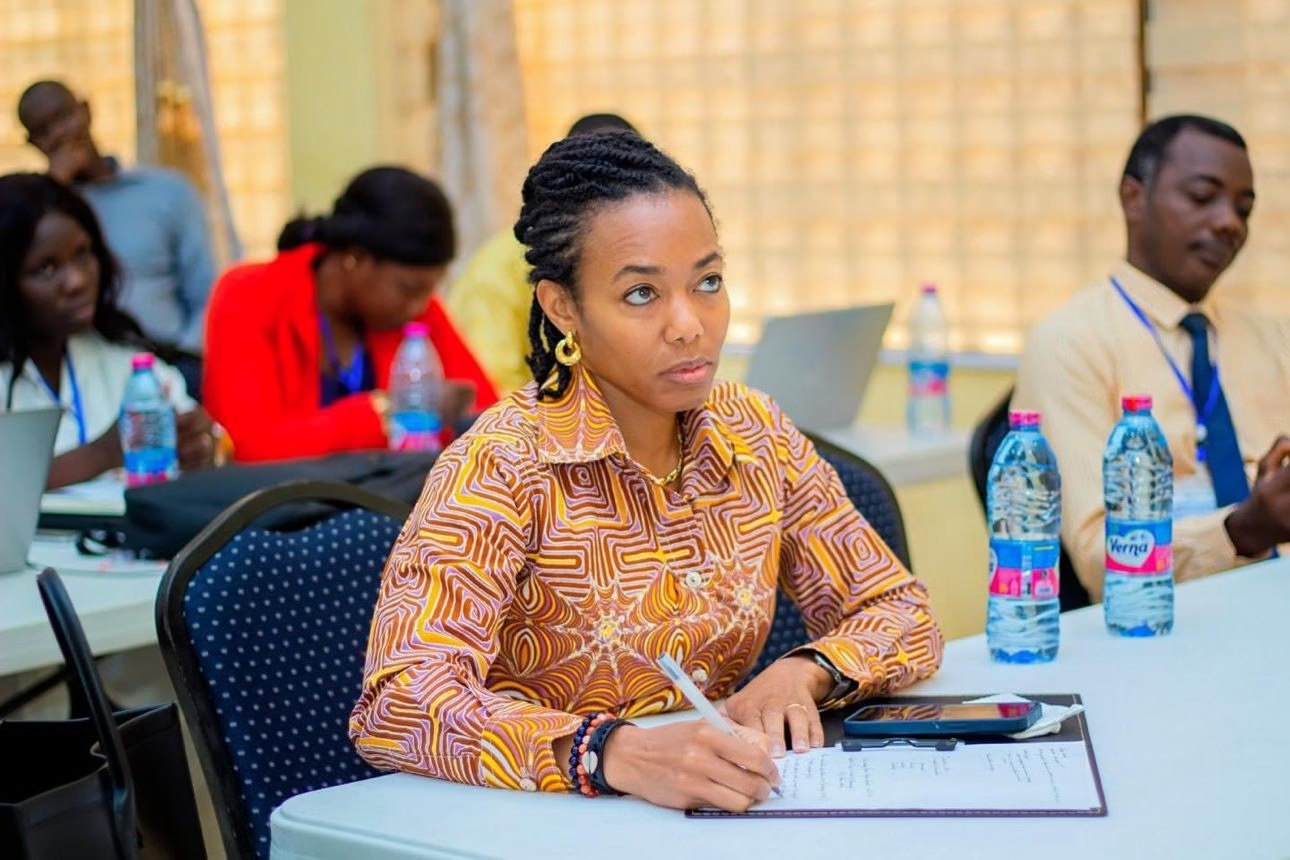
Ghana has started the process of creating a national space agency. Minister for Environment, Science and Technology, Dr Zanetor Agyeman-Rawlings, says Cabinet has already given its approval. She spoke on 2 October at a media engagement marking her first 100 days in office, where she explained how the government wants space science and technology to play a bigger role in national development.
The move follows a commitment in Ghana’s national space policy, launched in November 2024, which named a space agency as a strategic objective.
Turning an Institute into an Agency
The first step is to convert the Ghana Space Science and Technology Institute (GSSTI), which currently sits under the Ghana Atomic Energy Commission, into a full Ghana Space Agency. Legislation and institutional arrangements will be developed to give the new body the authority and resources to coordinate space activities across the country.
The Minister was explicit about the purpose. “The objective is not simply to create another institution. The objective is to establish a capable national institution,” she said, one able to coordinate Ghana’s efforts and secure the country a meaningful place in the global space economy.
GSSTI Director Mr Joseph Bremang Tandoh welcomed the announcement in a post in LinkedIn. For him, the significance lies in what the work delivers: satellite data that helps monitor the environment, supports farmers, warns of floods and gives decision-makers stronger evidence. He also pointed to the openings it could create for researchers, engineers, students and businesses.
Solving Problems, Not Chasing Prestige
The Minister repeatedly returned to impact over symbolism. In her view, Ghana’s space programme should be judged by whether it helps tackle real development challenges. She named agriculture, flood forecasting, climate adaptation, environmental monitoring, telecommunications, maritime surveillance, urban planning and national security as the areas where satellite and geospatial tools could matter most.
Environmental protection featured prominently. By bringing together satellite imagery, drones, geospatial systems and artificial intelligence, she said, authorities could track deforestation, illegal mining, land degradation, water bodies and coastal ecosystems. “The value of a satellite image is not simply the image itself. Its real value lies in what we can do with the information,” she said.
Investing in People
According to the Minister, Ghana’s most valuable space asset will be its people: those able to design, build and run space technologies. The government plans to encourage closer cooperation among universities, research institutions, industry and international partners, and to steer young Ghanaians towards careers in aerospace engineering, remote sensing, space law and policy, data science and space entrepreneurship.
Mr Tandoh shared this emphasis, stressing the need to advance the legislative framework, improve coordination, and invest in the people and infrastructure required to deliver results.
A Favourable Position
The Minister also sees geography as a strength. Ghana lies close to the equator, has a coastline on the Gulf of Guinea and enjoys relative stability within West Africa. Together, she suggested, these factors could help the country become a regional centre for space science, Earth observation, satellite data, research and innovation.
The Road Ahead
For the first 100 days, her priorities include progressing the institutional and legal groundwork for the agency, widening stakeholder engagement on the space policy, pinpointing infrastructure and skills gaps, and building stronger ties with international space agencies, development partners and the private sector. The government also wants to improve coordination among the bodies that produce, manage and use space data, and to open more space-related opportunities to Ghanaian researchers, engineers, students and entrepreneurs.
She framed the agenda as a practical one. “The space economy of the 21st century is increasingly about solving real problems, creating economic opportunities, and improving lives,” she said.
This article includes information originally reported by 3news on October 2, 2026.