
Mauritius Unveils Space Strategy 2036 to Advance National Space Sector

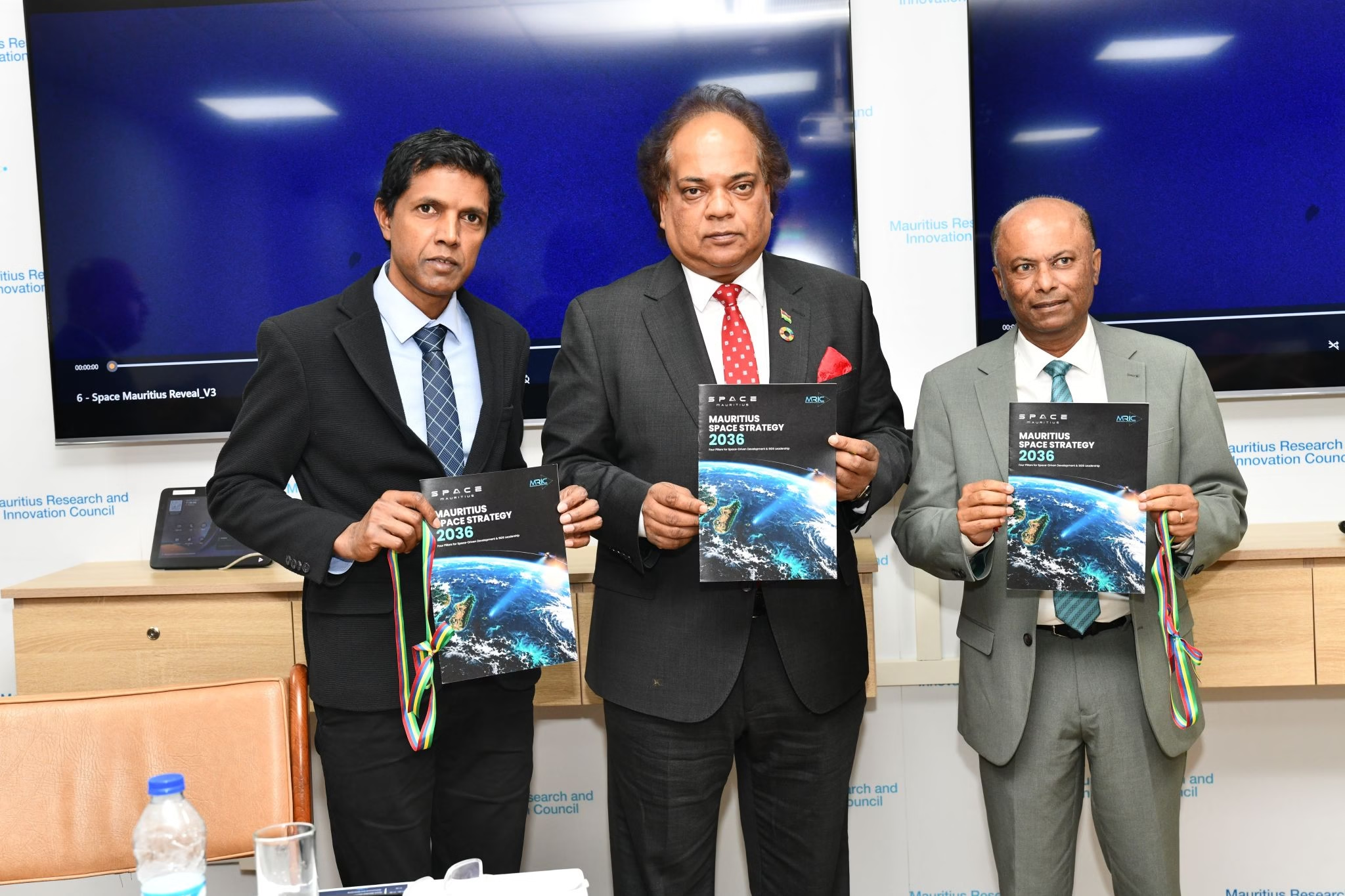
Mauritius has launched its Space Strategy 2036, setting out a long-term framework for strengthening the country’s use of satellite technologies and space-based data to support research, innovation and sustainable development. The strategy and the new Space Mauritius website were launched on 5 October 2026 by the Mauritius Research and Innovation Council (MRIC) at its premises in Ebène.
The unveiling was attended by the Minister of Tertiary Education, Science and Research, Dr Kaviraj Sharma Sukon, alongside MRIC Chairman Dr Khemduth Singh Angateeah and Executive Director Professor Theesan Bahorun. Speaking at the event, Minister Sukon highlighted the need to strengthen Mauritius’ capacity in space science and technology and to increase the use of satellite data to address national priorities.
He pointed to applications in sectors including agriculture and fisheries, where timely access to satellite-derived information can support productivity and improve decision-making. He also called for greater awareness of the practical applications of satellite data, alongside sector-specific training and stronger support for users to facilitate the adoption of available technologies.
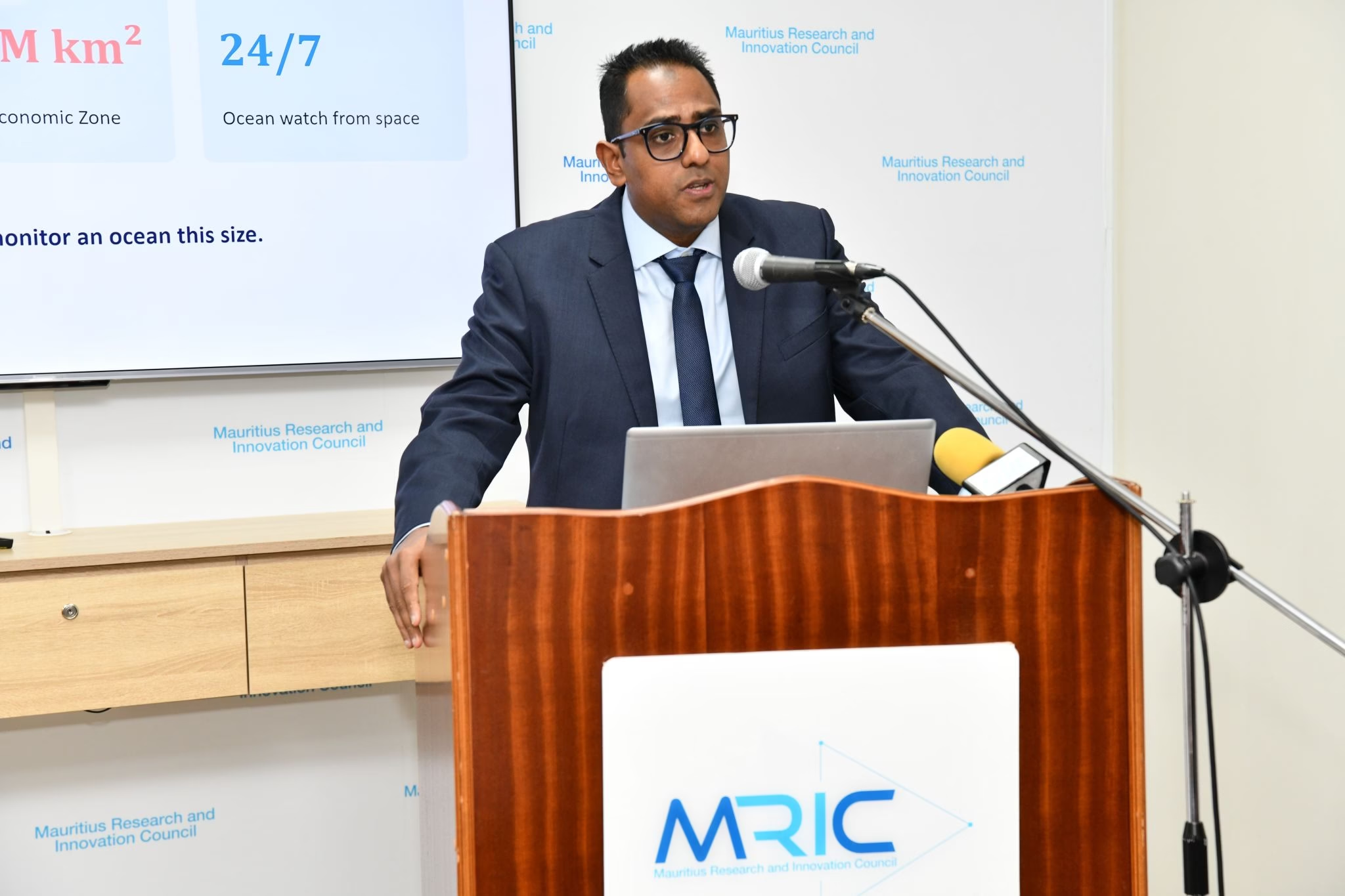
The launch included presentations on the Mauritius Space Initiative and applications of satellite data. Representatives from the MRIC, Mauritius Meteorological Services and the Ministry of Housing and Lands also outlined how space technologies and Earth observation data could support research, policymaking and national development.
Four Priorities for Mauritius’ Space Sector
The Space Strategy 2036 establishes four key priorities for the country: developing national expertise in space science and technology, increasing the use of satellite data in policymaking, promoting collaborative research, particularly in the blue economy, and expanding partnerships with international space organisations.

The strategy identifies cooperation with organisations such as NASA, the European Space Agency (ESA), the Indian Space Research Organisation (ISRO), and the United Nations Office for Outer Space Affairs (UNOOSA) as part of this international engagement. Furthermore, Mauritius’ strategy builds on several space-sector developments over the past five years. These include the commissioning of the MRIC Ground Station in 2021 and the deployment of MIR-SAT1, the country’s first nanosatellite, through the KiboCUBE programme.
International cooperation has also expanded. Mauritius signed a Memorandum of Understanding with ISRO in 2023 and has established collaboration with Airbus on satellite imagery. In July 2026, the country signed the Artemis Accords, while in September 2026, the MRIC was designated the National Focal Point for Space Matters, giving it responsibility for coordinating Mauritius’ international engagements in the space sector.
Earth Observation at the Centre of Future Applications
A key component of the strategy is to expand Earth observation capabilities and use satellite data for national applications. Looking ahead, the strategy provides for enhanced Earth observation services covering Mauritius’ 2.3 million-square-kilometre Exclusive Economic Zone (EEZ), as well as the establishment of a National Space Data Repository.
Additionally, these capabilities are expected to support wider access to satellite-derived information across government and other sectors, building on the strategy’s emphasis on integrating space data into policymaking. The strategy also emphasises human capital, with plans to strengthen STEM education and skills development in space-related fields.
In the longer term, Mauritius envisages establishing a National Space Agency and developing a regional hub for climate data services, signalling ambitions to extend the country’s role beyond the domestic application of space technologies.