
Madagascar Becomes the Third African Market to Trial Direct-to-Cell Satellite Connectivity
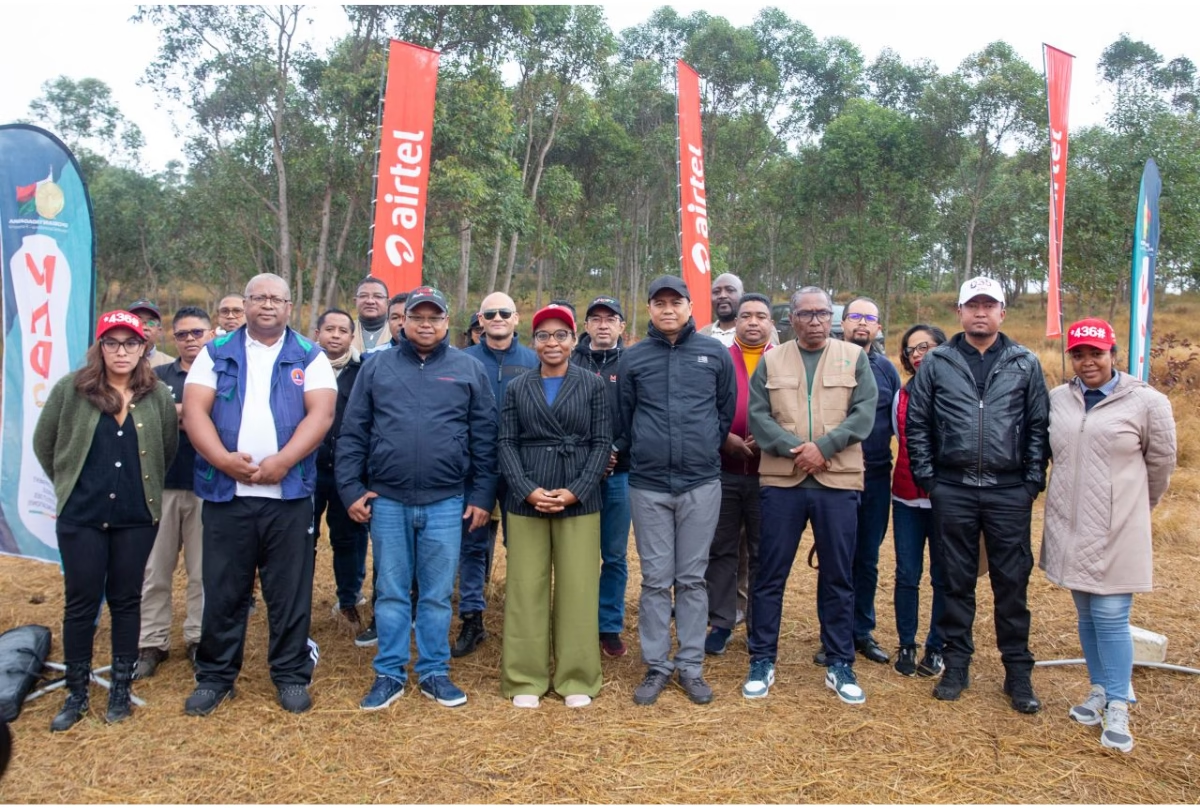
Madagascar has become the third African market to test direct-to-cell satellite connectivity, after Airtel Madagascar completed a live trial in partnership with SpaceX and the Ministry of Digital Development, Posts and Telecommunications (MNDPT). The demonstration took place in Sadabe on 11 July, in the presence of Minister Mahefa Andriamampiadana, officials from the Communications Regulatory Authority (ARTEC), the National Disaster Risk Management Office (BNGRC), and other partners.
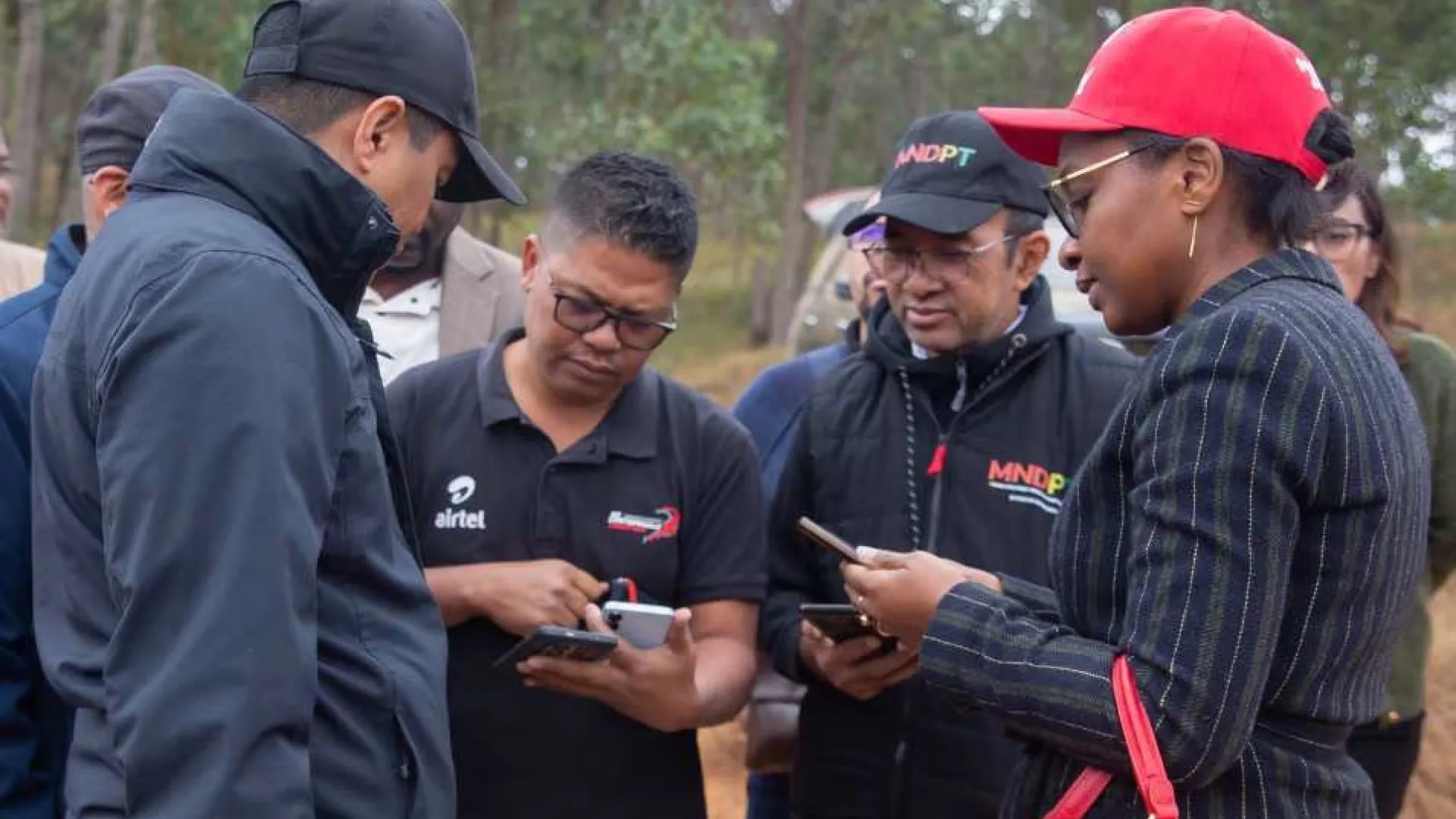
The trial delivered Madagascar’s first WhatsApp video call over satellite. Participants also exchanged messages, placed voice and video calls, and accessed platforms including Facebook and YouTube, all on a standard 4G smartphone with no additional hardware. Direct-to-cell technology, also known as Direct-to-Device or Supplemental Coverage from Space (SCS), turns low-Earth-orbit satellites into orbiting cell towers, allowing conventional handsets to connect directly when they fall outside terrestrial mobile coverage.
The result places Madagascar alongside Kenya and Uganda as the only African countries to have trialled the technology, and all three trials are operated by the same operator. Airtel Africa and SpaceX formalised a group-level agreement in December 2025 to deploy Starlink’s direct-to-cell service across all 14 of Airtel’s African markets, which serve a combined subscriber base of more than 174 million customers. Airtel Africa and SpaceX completed the first of these trials in Kenya’s terrestrial dead zones in March 2026, followed by Airtel Uganda in May, before the Madagascar demonstration in July.
What the trial signals
The commercial pathway in Madagascar is already partly defined. In a 13 May 2026 filing with the U.S. Federal Communications Commission, SpaceX confirmed it was securing authorisations to operate SCS in the country in partnership with Airtel, using spectrum bands and geographic areas where Airtel holds exclusive licensing rights. In other words, Airtel is structuring the service as an extension of its licensed network rather than allowing SpaceX to provide unrestricted, standalone consumer access. Airtel remains the licensed operator, manages the customer relationship, and uses Starlink as supplemental infrastructure. This operator-led model mirrors the framework adopted by regulators in Uganda, where the Uganda Communications Commission has stated that licensed operators will integrate satellite capacity into their networks rather than sell it directly to consumers.
The coverage case is significant. More than an estimated 80% of Madagascar’s population remains unconnected, and direct-to-cell offers a route to reach remote and hard-to-reach areas without the cost of building additional terrestrial towers, an economic problem that has long constrained rural expansion across the continent. The BNGRC’s presence at the trial also points to a second use case the ministry emphasised: maintaining communications during emergencies and natural disasters that disrupt terrestrial networks, a capability with direct relevance for a country regularly exposed to cyclones.
The technology remains early in its service curve. Starlink’s direct-to-cell constellation, currently around 650 satellites, launched commercially with text messaging in early 2025 and has been expanding into data; voice calling sits on the near-term roadmap, with next-generation satellites designed to deliver data speeds roughly 20 times faster than the current generation. The live voice and video calls demonstrated in Sadabe, therefore, represent a forward marker of where the service is heading rather than the messaging-and-light-data profile of the current commercial rollout.
For now, the government has framed the trial around digital inclusion, reaffirming its commitment to technologies that accelerate access while ensuring compliance with legal requirements, digital sovereignty, and security standards. The wider question, as the model moves from demonstration to deployment across Airtel’s African footprint, is how quickly regulatory approvals, spectrum arrangements, and finite satellite capacity translate the promise of coverage into consistent everyday service.