
The Diplomacy Shortcut: How Presidents Became Starlink’s Fastest Regulators in Africa

For any satellite operator seeking to expand across Africa, securing market access is, in principle, a regulatory exercise. Applications must be submitted, technical and licensing requirements satisfied, and approvals secured before commercial services can begin. The process can, in some cases, be lengthy and complex. Starlink’s expansion across Africa, however, suggests another dimension to how market access is secured.
Click here to download Space in Africa’s latest report on Starlink.
Across Africa, the company’s expansion has revealed a recurring pattern. In several markets, regulatory momentum accelerated only after engagement at the highest level of government. Rather than relying solely on telecommunications regulators, the company has repeatedly secured political backing from heads of state, helping to unlock markets that had faced prolonged uncertainty or stalled licensing processes. Additionally, where broadband connectivity has become a national development priority, presidential support has increasingly emerged as an important force alongside formal regulatory approval.
The Conventional Market Entry Pathway
Across most African jurisdictions, satellite operators follow a broadly similar regulatory pathway. They begin by establishing a local entity where required, submitting license applications to the national communications regulator, undergoing technical and regulatory assessments, obtaining the necessary operating and spectrum authorisations, paying licensing fees, and securing any additional approvals. These can include equipment type approval or gateway authorisations before commencing commercial operations. Although the specific requirements vary by country, regulators remain the primary gatekeepers to market entry.

In most cases, Starlink initially followed this conventional pathway. Nigeria, its first African market, provides a useful baseline: a roughly 24-month process driven entirely through engagement with the Nigerian Communications Commission (NCC), without the high-level political intervention seen in some of its later markets. In May 2021, following months of virtual discussions, a SpaceX delegation, including Ryan Goodnight, Starlink’s Market Access Director for Africa, met with senior NCC officials in Abuja. The company formally submitted applications for landing permits, an international gateway licence, and an ISP licence.
Starlink then progressed through the operational groundwork for market entry, including the incorporation of Starlink Internet Services Nigeria Ltd. In 2022, it obtained the frequency authorisations required for its gateway infrastructure, including a Gateway Earth Station (GES) licence for the Ka-band and a VSAT Earth Station Network frequency licence for the Ku-band. In May of that year, the NCC formally issued two operating licences: a 10-year International Gateway Licence and a five-year Internet Service Provider (ISP) Licence, paving the way for commercial rollout in January 2023.
None of this required presidential intervention or a diplomatic push. Nigeria’s entry ran its course entirely through the regulator.
The Presidential Push Strategy
Nigeria’s path, however, was not the template Starlink would follow everywhere. As the company expanded into subsequent African markets, a different pattern emerged. In several countries, regulatory progress had stalled or remained unresolved before direct engagement with heads of state came into play. In these cases, what followed was often more consequential than the meetings themselves: renewed regulatory momentum, changes in the status of Starlink’s application, or the eventual formalisation of market access.
Space in Africa describes this as the Presidential Push Strategy, an approach in which executive engagement becomes a catalyst for unlocking market access when regulatory progress has stalled, or when Starlink’s connectivity proposition aligns with national development priorities. It does not replace the formal licensing process. Rather, it adds a political layer that can help move it forward. Botswana provides the clearest starting point.
Evidence Across Africa
Botswana: A Stalled Process, Unlocked
The Regulatory Bottleneck: In May 2023, Starlink applied for a licence to operate in Botswana. The Botswana Communications Regulatory Authority (BOCRA) rejected the application in February 2024, citing missing information, and the government subsequently enacted a ban on the importation, sale, and use of Starlink kits.
The Presidential Intervention: In early May 2024, Starlink’s Director of Global Licensing and Market Activation, Ben MacWilliams, met with Botswana’s then-President, Mokgweetsi Masisi, at the Africa-US Business Forum in Dallas, Texas. Starlink executives pitched the service as a tool to advance the country’s digital transformation and extend connectivity to underserved areas. Masisi agreed to the licensing and directed BOCRA to fast-track the process within two weeks, a marked departure from the regulator’s own rejection three months earlier.
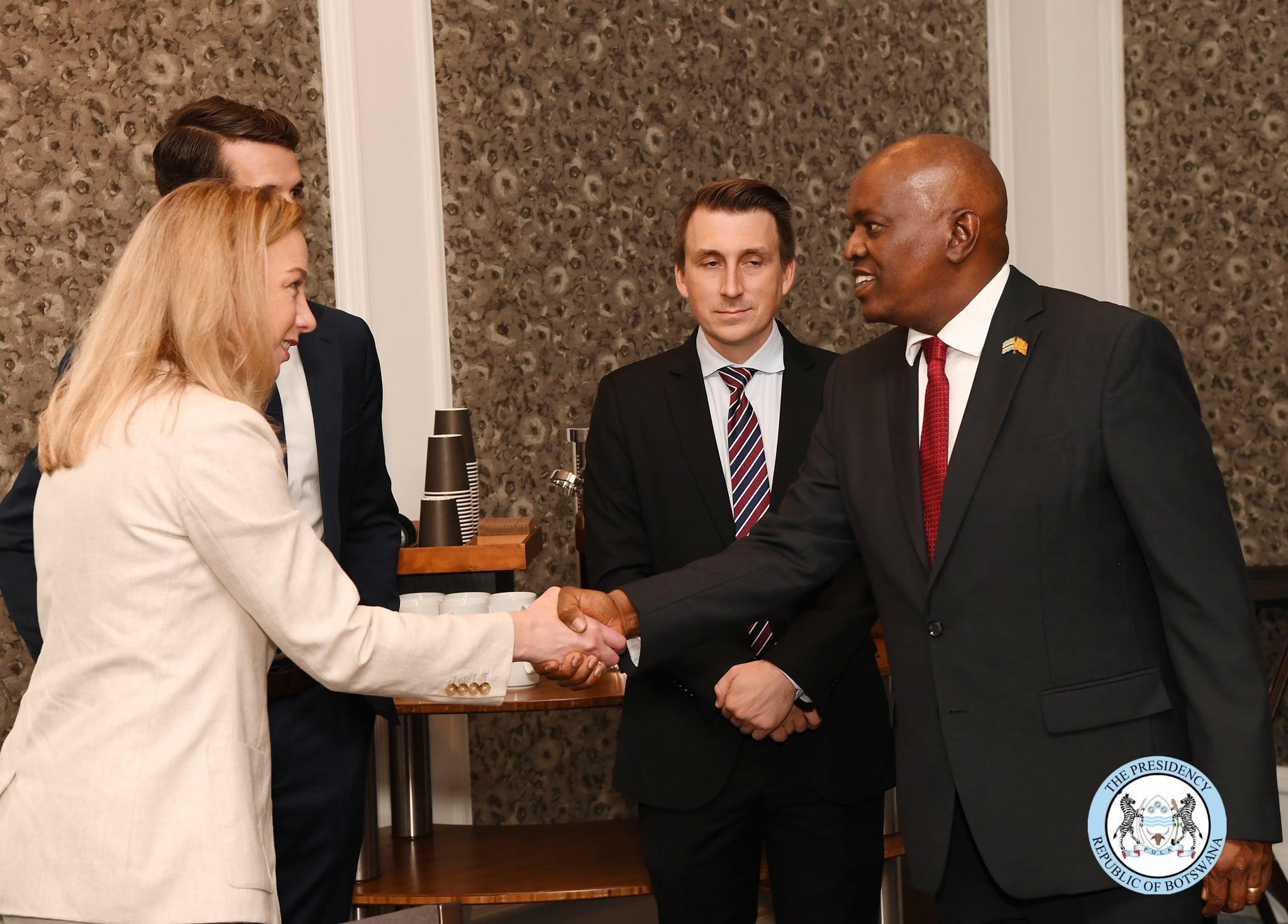
The Resulting Market Entry: BOCRA approved the licence later that month. Starlink launched commercial operations in Botswana on August 28, 2024, just over three months after the Dallas meeting and roughly 20 months after the original application stalled.
Liberia: Connectivity Diplomacy Without a Stall
Unlike Botswana, Liberia’s case did not begin with a rejected application or a regulatory crackdown. Starlink had no active licensing process to unblock. Instead, presidential engagement came first, shaping the market entry from the outset.
The Engagement: On July 21, 2024, President Joseph Nyuma Boakai held a virtual meeting with Elon Musk, coordinated by Foreign Minister Sara Beyslow-Nyanti and her team. The conversation centred on Starlink’s potential to extend connectivity to Liberia’s rural communities and support education and healthcare delivery, framed within the government’s ARREST Agenda (Agriculture, Roads, Rule of Law, Education, Sanitation, and Tourism). At the time, only 30% of Liberia’s 5.3 million people had access to reliable internet service.
The Regulatory Follow-Through: By the Liberia Telecommunications Authority’s (LTA) own account, its review of Starlink’s licence application followed the July call between Boakai and Musk. LTA officials met with Starlink representatives on September 10, 2024, to review a draft licence, and on October 10, 2024, signed a one-year provisional licensing agreement. This framework allowed the regulator to set quality standards and evaluate consumer protection ahead of a longer-term licence.
The Resulting Market Entry: The commercial service, initially expected in early November 2024, went live in January 2025, marking Starlink’s first African market entry that year. Government uptake followed quickly: the Liberia Revenue Authority acquired 50 terminals, valued at USD 162,000, to connect remote border posts and administrative offices nationwide.
Burundi: When the President Becomes the Regulator
Burundi’s case pushes the pattern further than either Liberia or Botswana. Where Liberia saw presidential engagement accelerate a licensing body’s own review, and Botswana saw it force a stalled review back open, Burundi saw the president bypass the review altogether.
The Engagement: On September 19, 2023, a SpaceX delegation was received by President Évariste Ndayishimiye in New York, on the sidelines of the 78th UN General Assembly. At the time, nearly 90% of Burundi’s population had no access to internet services. There is no publicly recorded Starlink licensing application with Burundi’s telecom regulator, the Agence de Régulation et de Contrôle des Télécommunications (ARCT), prior to this meeting. Engagement appears to have begun at the presidential level rather than through a standard regulatory filing.
The Regulatory Path: Rather than routing the application through ARCT’s standard evaluation process, the license was granted by presidential decree in May 2024, eight months after the UNGA meeting. ARCT’s role was to execute the terms of the decree under its Director General, rather than to independently assess the application from scratch.
The Resulting Market Entry: Starlink launched commercial service in Burundi on September 24, 2024, almost exactly one year after the initial meeting in New York, becoming the 15th African country with active service.
Across Botswana, Liberia, and Burundi, presidential engagement preceded market access in three different ways: unblocking a stalled process, accelerating a routine one, and bypassing regulatory review altogether. Different as these cases are, they share a common pattern: political engagement has repeatedly helped advance Starlink’s African expansion.
Why the Strategy Works
The Political Value of Connectivity
The pattern persists because it creates incentives on both sides, not just for Starlink. For governments, Starlink offers more than another telecommunications licence. A regulatory approval is largely an administrative event, and a presidential announcement of expanded connectivity is a visible political achievement. The incentive to claim that achievement is strongest where connectivity gaps are already a prominent public concern.
By associating themselves directly with the arrival of a new connectivity service, heads of state can claim visible progress on digital inclusion, particularly in markets where underserved populations and connectivity gaps remain politically salient. The stronger the public demand for better connectivity, the greater the political value of being seen to address it.
Executive Authority, Not Regulatory Bypass
What may appear to be a presidential override of a regulator can, in some cases, be better understood as the executive branch activating authority within the existing institutional hierarchy. Telecommunications regulators across much of Africa are not always the independent bodies they appear to be on paper. As telecommunications researcher Ewan Sutherland has argued, the absence of strong institutional traditions in many African states has left heads of state holding far more regulatory power than their formal roles suggest, with regulatory authorities delegating only limited functions and rarely operating with genuine independence.
A directive from the head of state does not necessarily eliminate the regulatory process; it can instead reveal how much of that process was always subject to executive discretion.
Burundi illustrates this most clearly. The presidential decree did not make regulation irrelevant, but it provided the executive direction under which the relevant authorities could formalise Starlink’s entry. The distinction matters because the Presidential Push Strategy is not necessarily about bypassing the regulator, but about using executive authority to move the regulatory system towards a decision.
The Elon Musk Factor
There is also a dimension to the strategy that is difficult to separate from Elon Musk himself. Starlink does not engage African governments as an anonymous satellite operator, but does so under the profile of one of the world’s most visible business leaders. Musk’s prominence, his direct access to senior political leaders, and his broader influence in US technology and policy circles give meetings with him a significance that extends beyond the connectivity proposition itself.
That visibility can make Starlink a more consequential political counterpart. For governments seeking to attract investment, expand digital infrastructure, or strengthen relationships with major technology players, engagement with Musk can carry value beyond the immediate licensing discussion. This is also what makes the strategy difficult to replicate. Competitors such as Eutelsat OneWeb may offer comparable satellite connectivity capabilities, but they do not have the same combination of corporate visibility, founder-level political access, and global public profile. The Presidential Push Strategy is therefore partly a Starlink strategy, and partly a product of the unusual political capital attached to its founder.
As powerful as this approach can be, its effectiveness depends on the nature of the obstacle it encounters. In some cases, the same strategy has met obstacles that high-level political engagement alone could not resolve.
Why the Presidential Push Isn’t Enough
Political engagement can open a door, but it cannot always remove the barrier behind it. The clearest limit comes when that barrier is written into law. Where a statutory requirement stands in the way, political goodwill alone cannot change it. Ramaphosa’s meetings with Musk, including their September 2024 meeting on the sidelines of the UN General Assembly, signalled high-level political interest in Starlink’s entry, but no licence has followed.
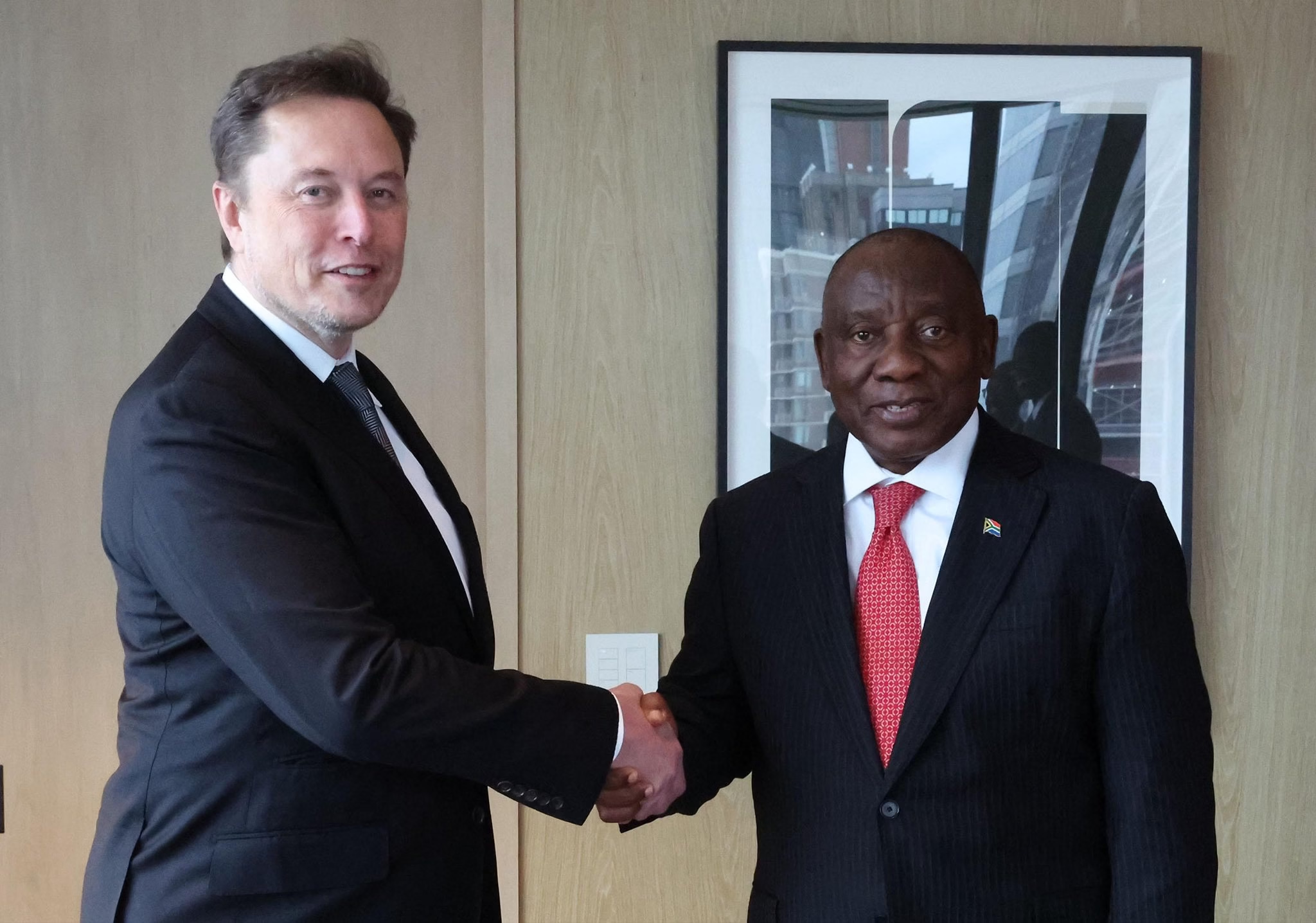
The obstacle is embedded in South Africa’s Electronic Communications Act, which requires individual licence holders to meet a minimum 30% ownership threshold for historically disadvantaged groups, a requirement SpaceX has not met. ICASA has been explicit that this cannot simply be waived at the regulator’s discretion. In response to a ministerial policy direction proposing Equity Equivalent Investment Programmes as an alternative to the ownership requirement, the authority indicated that implementing such an arrangement would require an amendment to the governing law, rather than a change in regulatory practice.
Even where the barrier is administrative rather than legal, executive direction can only accelerate a process that is already in place. Lesotho illustrates this limit. Prime Minister Sam Matekane met Musk on the sidelines of the UN General Assembly in September 2024 and later said the two had discussed “advancing connectivity in Lesotho.” Yet Starlink’s licence would not be granted for another seven months. The Lesotho Communications Authority explained why. Starlink’s April 2024 application had arrived before the country had a licensing framework designed for LEO satellite services.
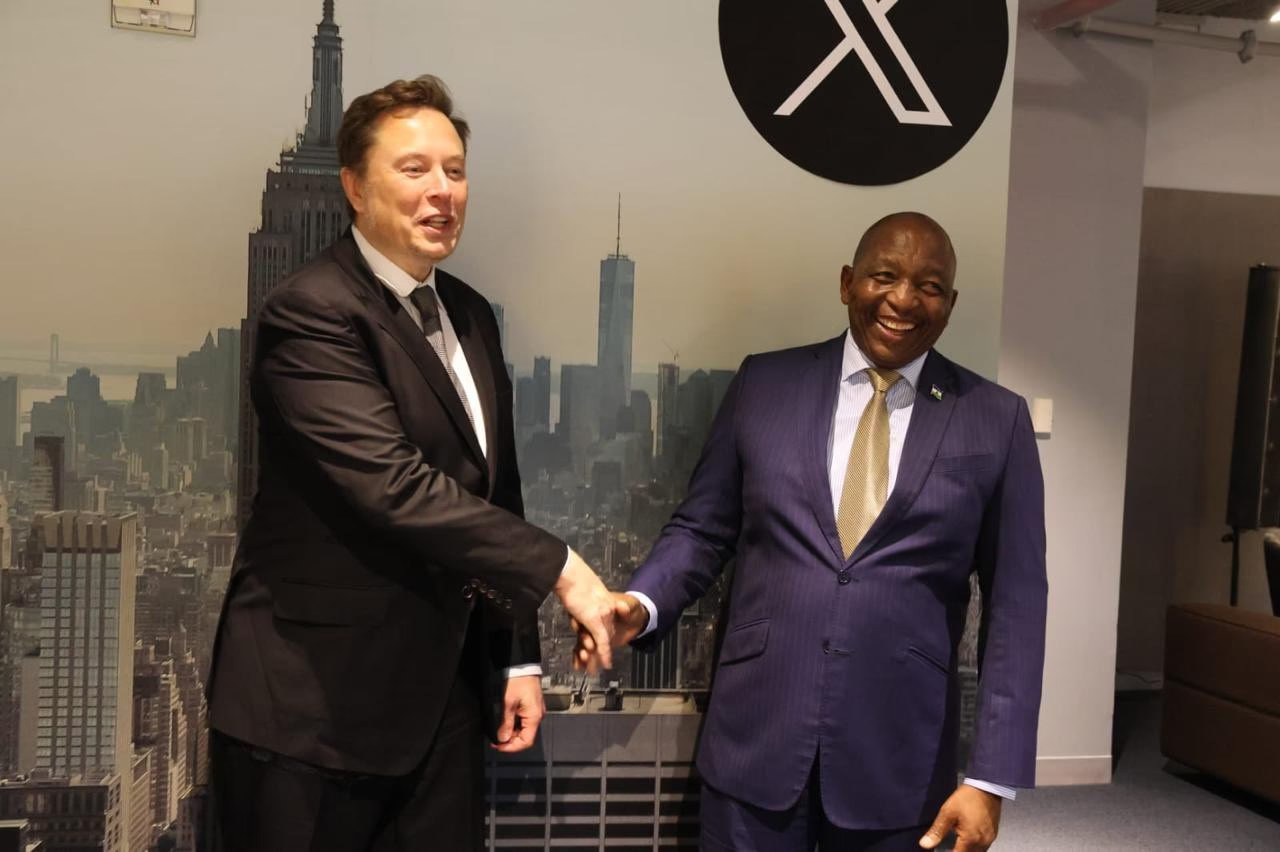
The authority therefore had to undertake a regulatory review and public consultation before the application could proceed. The revised framework was gazetted in January 2025, four months after the UNGA meeting, followed by a further public consultation that concluded in March before the board could act. Political will can accelerate a process, but it cannot substitute for regulatory infrastructure that does not yet exist. Starlink’s licence was ultimately granted on 14 April 2025, seven months after Matekane’s meeting with Musk and nearly a year after its original application.
Botswana provides the clearest contrast to this. Presidential intervention helped unlock a regulatory process that was already in place but had stalled, whereas in Lesotho, the process itself was not yet equipped to handle Starlink’s application. The distinction makes it clear that executive influence can accelerate an existing process, but it cannot create the rules and procedures needed to process an application where those rules do not yet exist.
Finally, presidential engagement does not guarantee an outcome even where it appears to open a door. Namibia’s meeting between President Mbumba and Musk in September 2024 was warmly received in public, with Mbumba sharing images of a Starlink Mini terminal, but eighteen months later, Namibia’s regulator formally rejected Starlink’s licence application, citing a similar 51%-local-ownership threshold that has also stalled Starlink in South Africa. CRAN had, in fact, ordered the confiscation of Starlink’s equipment in late 2024 for operating without a licence in the first place. Presidential engagement, in other words, is not a single instrument with one setting. The case illustrates that presidential engagement does not have a uniform effect: it can help unlock a stalled process, but it cannot by itself resolve every type of regulatory obstacle.
What the Presidential Push Strategy Means for Competitors
For competitors, the lesson is not simply to replicate Starlink’s presidential engagements, because its particular version is difficult to replicate. The strategy works because it combines political access with a proposition that governments have an incentive to advance, but its effectiveness ultimately depends on the obstacle facing market entry. Few rival operators can match the global visibility and political access associated with Elon Musk. One avenue for differentiation is to compete where Starlink is structurally constrained, particularly by local ownership requirements.
This leaves room for competitors to differentiate in how they approach markets within the existing regulatory system. Amazon Leo’s partnership with Herotel in South Africa is one example. Rather than pursuing the same direct-entry model as Starlink, Amazon is working through an established local operator, aligning its commercial structure with the country’s existing regulatory and market environment. Eutelsat OneWeb has adopted similar partnership-led models elsewhere through operators such as Airtel and Paratus. These approaches involve trade-offs, though, particularly around control of the customer relationship and economics, but demonstrate that competitors do not need to replicate Starlink’s political strategy to compete.
Starlink has demonstrated that political influence can accelerate market entry when the conditions allow it, but it has not changed the underlying regulatory rules. For competitors, the opportunity is not to bypass those rules, but to identify where Starlink’s model is constrained and structure their own businesses accordingly.