
ANGOSAT-2 Begins Operational Tests in Mozambique as Angola and Mozambique Sign Bilateral Space and ICT Agreements
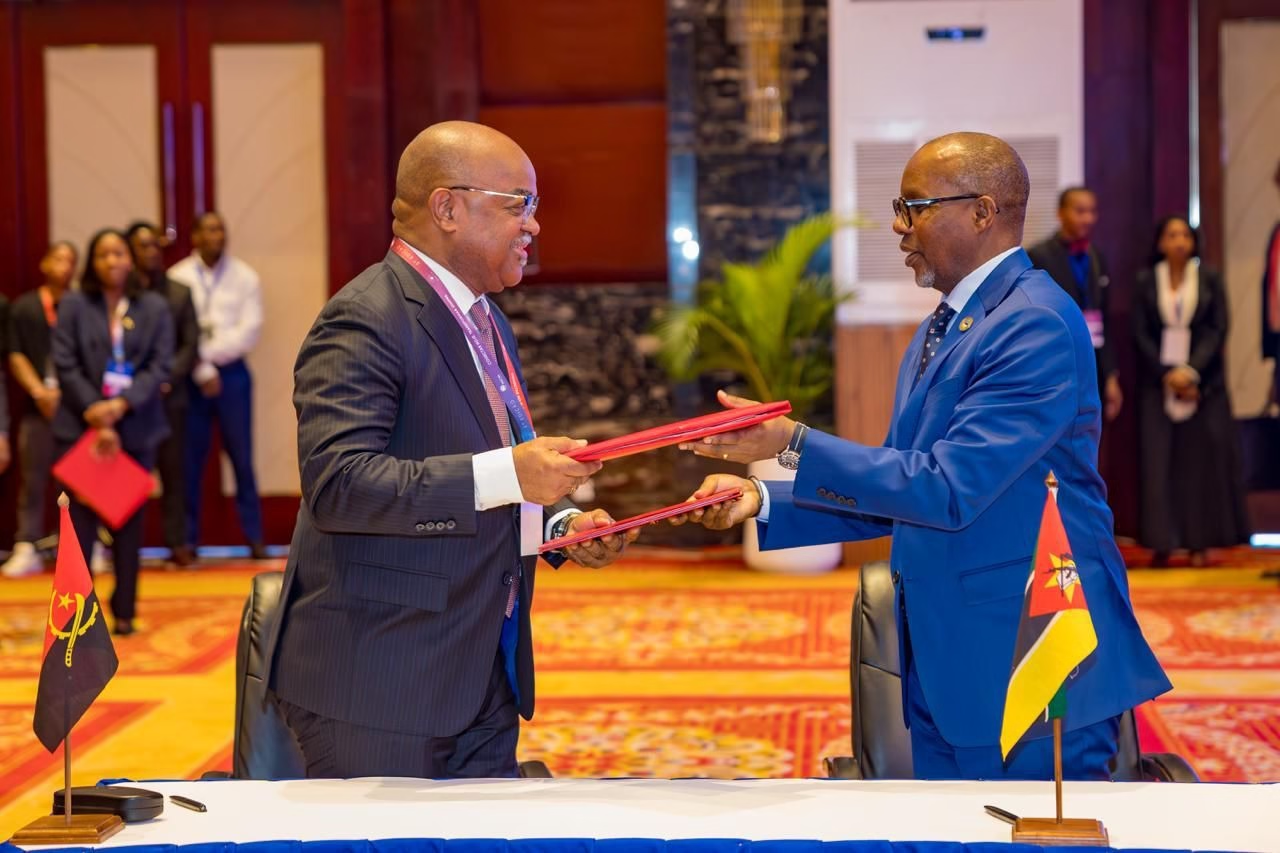
Angola’s national communications satellite, ANGOSAT-2, has begun receiving signals and conducting operational testing at the Boane Earth Station in Maputo Province, Mozambique, marking the first active technical deployment of the satellite in the country. The testing is running in parallel with the signing of two bilateral cooperation memoranda between Angola and Mozambique, concluded on the sidelines of the 5th National Communications Conference in Maputo on 23 June 2026.
The agreements were signed in a ceremony attended by Mozambique’s Minister of Telecommunications, Transport and ICT, Américo Muchanga, and Angola’s Minister of Telecommunications, Information Technologies and Social Communication, Mário Oliveira.
The Boane Earth Station tests
The Boane Earth Station, located in Maputo Province, is already technically aligned with ANGOSAT-2 and is currently receiving signals from the satellite. GGPEN, Angola’s National Space Programme Management Office, has deployed a technical team to Mozambique as part of the testing phase. The team is working alongside Mozambican counterparts to complete the operational test sequence and prepare for full activation of remote terminals.
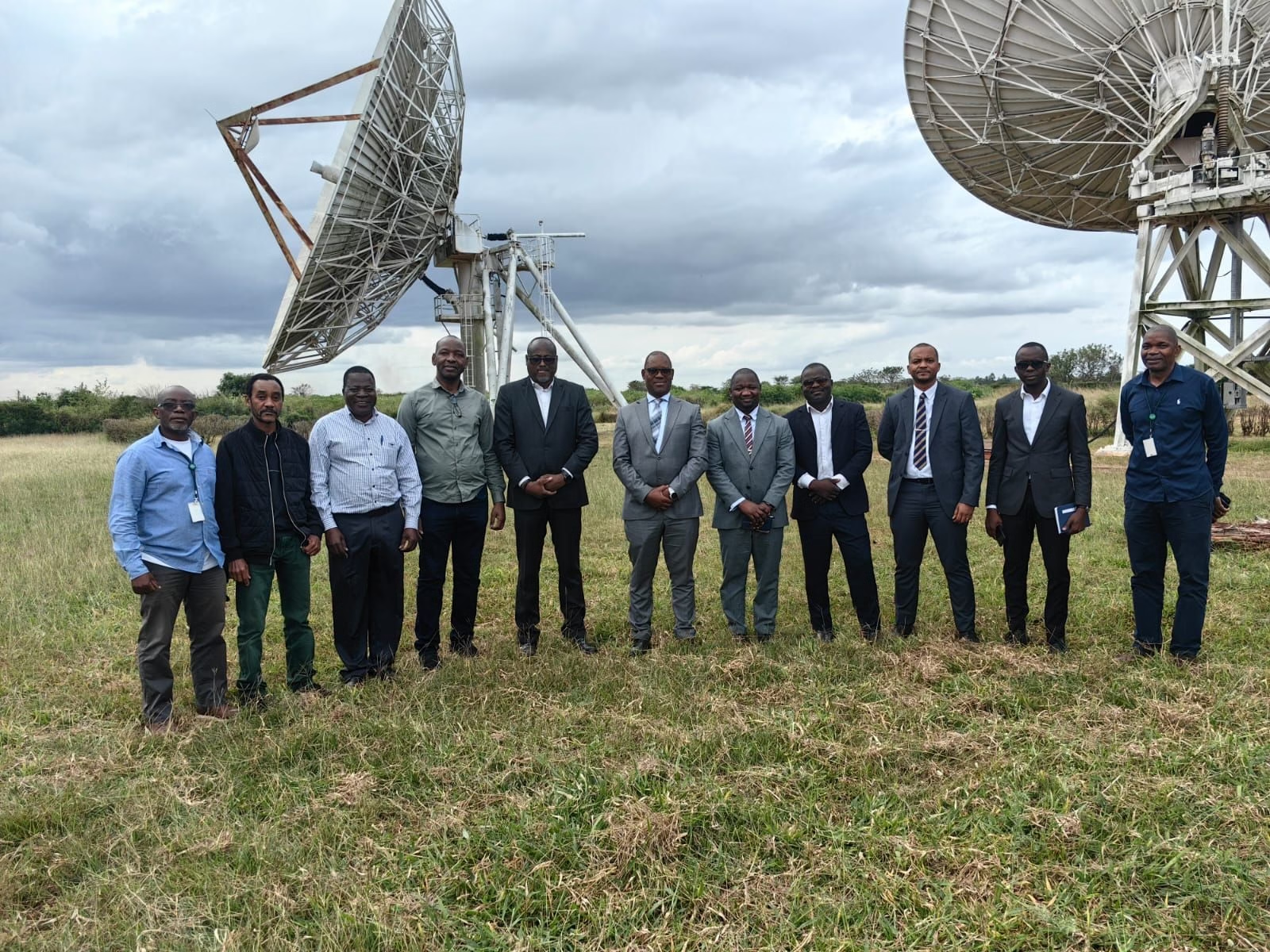
GGPEN has been working with Mozambique’s National Institute of Communications (INCM) in the lead-up to the tests. The completion of the testing phase is a prerequisite for activating ANGOSAT-2-based connectivity services in Mozambique. No timeline for full commercial activation has been publicly specified.
The agreements
The first memorandum, covering the space sector, establishes a framework for bilateral cooperation focused on knowledge sharing, technical capacity development, and joint initiatives to apply space technologies to economic and social development. The second agreement covers the broader communications, ICT, and meteorology sectors, providing for the exchange of experience, technical and institutional cooperation, and the promotion of best practices in digital transformation and public service modernisation.
The Angolan ministerial delegation to Maputo includes the Director General of GGPEN, Dr Zolana João, and the CEO of the National Institute of Communications of Angola (INACOM), Joaquim Muhongo, as well as senior ministry officials.
Angola’s broader southern African push
The Mozambique tests are part of a pattern of accelerating regional commercial engagement around ANGOSAT-2. On 12 June 2026, just eleven days before the Maputo agreements, GGPEN signed a Pilot Commercial Agreement with Telecom Namibia for the utilisation of ANGOSAT-2 services, in a ceremony attended by the ministers of ICT from both countries. That agreement allows Telecom Namibia to validate the performance and commercial viability of satellite-enabled services before committing to long-term implementation.
In October 2025, GGPEN signed a Memorandum of Understanding with SES Satellites to extend the reach of its Conecta Angola programme further across Africa. As of April 2026, more than 44 ISPs and startups were already benefiting from the Conecta Angola Commercial platform, which lowers market-entry barriers for VSAT-based connectivity businesses, with 37 companies in active formal integration. ANGOSAT-2 entered full commercial operations on 12 February 2023, following its successful launch in October 2022. The satellite operates across C, Ku, and Ka bands, providing broadband, broadcasting, backhaul, and corporate connectivity services across Africa and parts of southern Europe.
Context
Mozambique presents a relevant connectivity market for ANGOSAT-2. The country has significant rural populations across coastal and inland areas where terrestrial broadband infrastructure remains limited, and where satellite-delivered services, particularly for government institutions, schools, and health facilities, are a practical option. The Boane Earth Station’s alignment with ANGOSAT-2 gives Mozambique an operational ground anchor for those services, provided the testing phase completes without technical complications.
Angola’s commercial strategy for ANGOSAT-2 is governed by Presidential Dispatch No. 11/23, which authorised the satellite’s commercialisation and established a revenue-sharing framework: 50% of satellite income supports the National Space Programme, 40% goes to the national treasury, and 10% is allocated to a social fund for workers in the communications sector. The Mozambique and Namibia engagements, taken together, represent the most active period of cross-border commercial activity for ANGOSAT-2 since the satellite entered operations three years ago