
Mauritius Becomes Seventh African Nation to Sign the Artemis Accords

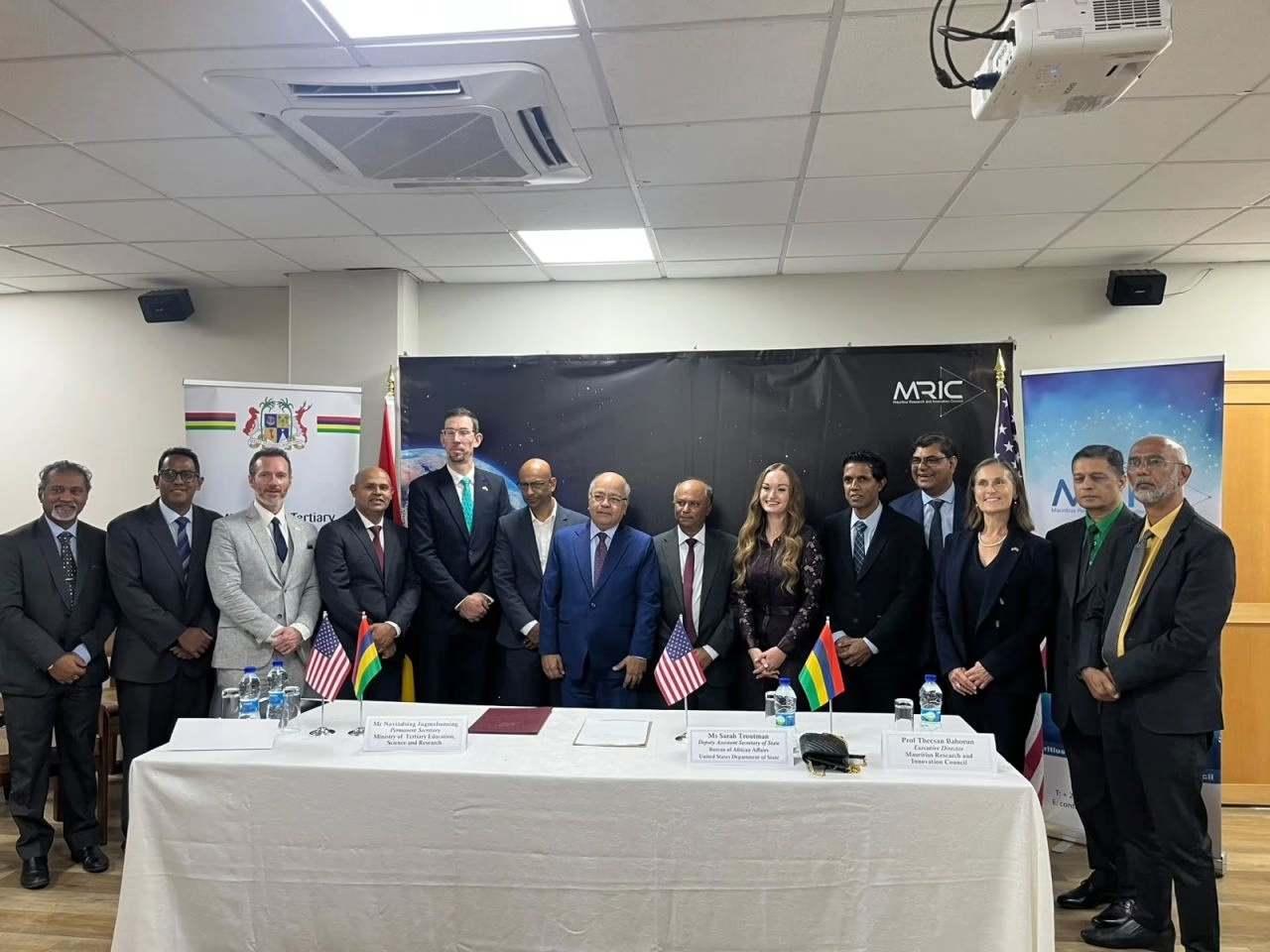
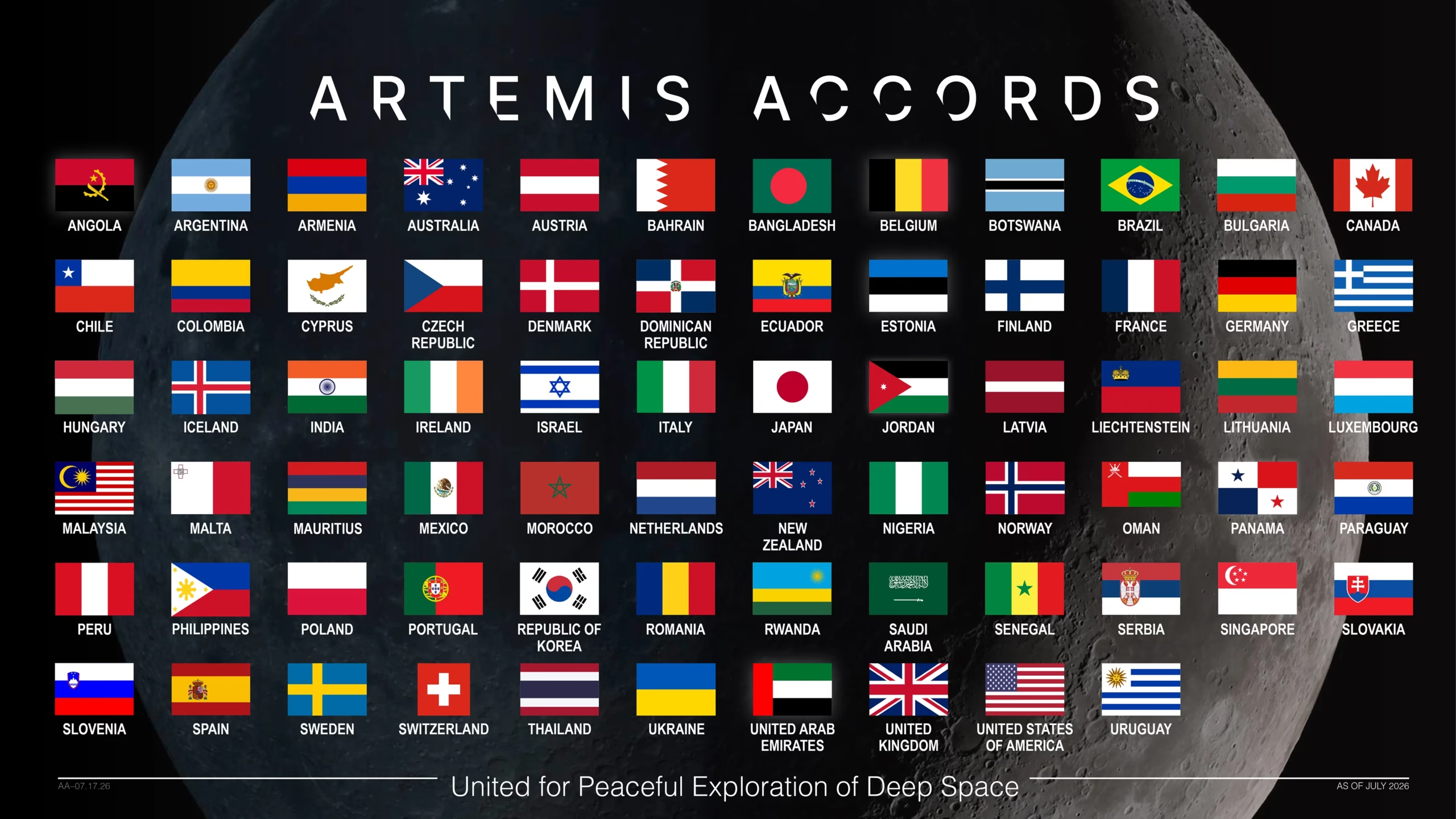
The Republic of Mauritius has signed the Artemis Accords, becoming the 70th country overall and the seventh African nation to join the U.S.-led framework for responsible space exploration. Mauritius’ Permanent Secretary at the Ministry of Tertiary Education, Science and Research, Navindsing Jugmohunsing, signed the Accords on behalf of the country at a ceremony in Ébène on 17 July 2026.
NASA Deputy Administrator Matt Anderson delivered video remarks welcoming Mauritius to the Accords community, framing the country as a capable partner in what he described as a return to the Moon. U.S. Deputy Assistant Secretary of State for African Affairs Sarah Troutman and U.S. Chargé d’Affaires to Mauritius Craig Halbmaier attended the signing.
Jugmohunsing described the accession as a defining moment in the country’s space journey. He positioned Mauritius’ membership through the lens of its status as a Small Island Developing State, arguing that the country’s priorities, protecting its oceans and coastlines and amplifying the voice of smaller nations in space governance, give it a distinct stake in how the rules of space activity are shaped.
A Longstanding NASA Connection
Mauritius’ link to NASA predates the current agreement by decades. Between 1965 and 1980, NASA operated international tracking stations to collect global measurements of Earth’s size and shape, and the agency sent teams to Mauritius, one of those sites, leveraging its strategic location to support satellite photography for geodetic analysis. NASA credits that early work with strengthening the navigation techniques later used across its programmes from Apollo to Artemis.
The United States and seven other founding nations established the Artemis Accords in 2020 as a set of non-binding principles grounded in the 1967 Outer Space Treaty. Signatories commit to core principles, including peaceful and transparent exploration, providing emergency assistance, publicly releasing scientific data, avoiding harmful interference with others’ activities, and preserving historically significant sites and artefacts. The framework underpins participation in NASA’s Artemis programme, which aims to establish a sustained human presence on the Moon.
Africa’s Growing Presence in the Accords
Mauritius is the seventh African country to sign, and its accession continues the continent’s steady expansion in less than four years. Nigeria and Rwanda were the first African signatories in December 2022, signing at the inaugural U.S.-Africa Space Forum. Angola followed in November 2023, Senegal in July 2025, Morocco in April 2026, and Botswana in June 2026, ahead of Mauritius in July.
The pace has accelerated markedly: three of the seven African signatures have come in 2026 alone. That clustering reflects both intensified U.S. space diplomacy on the continent and a broader recognition among African governments that early participation in emerging space-governance frameworks carries strategic weight beyond the symbolic act of signing. Membership offers exposure to the international agreements, technical standards, and coordinated policy structures that increasingly define how space activity is conducted, positioning signatories to help shape rules rather than inherit them.
For African signatories, the framework’s practical value is likely to depend less on lunar ambitions, which remain distant for most of the continent’s programmes, than on what the commitment signals and enables closer to home: alignment with international norms on data-sharing, debris mitigation, and transparency; access to cooperative relationships with established space agencies; and a seat in the governance conversation at a formative stage. Mauritius’ framing, tied to ocean and coastal monitoring rather than deep-space exploration, shows how signatories interpret the Accords through the lens of their immediate national priorities.