
GGPEN Closes ANGOTIC 2026 with Partnerships, Hackathon Winners, and a Stronger Continental Footprint
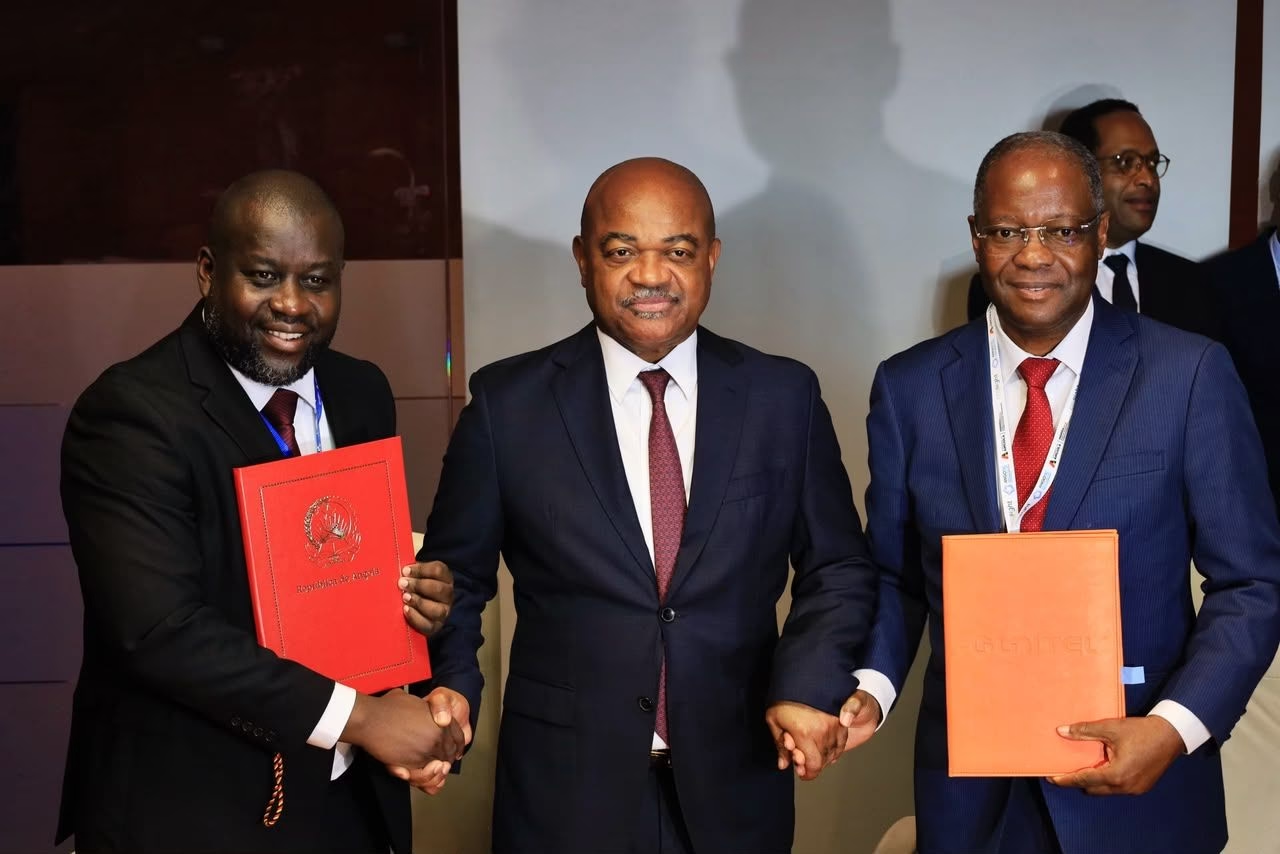
Three days. Twelve partnership agreements signed. Five startups bound for France. A plenary stage that brought together space agency heads from four continents. A new initiative launched to put satellite data in the hands of rural communities. A mangrove mapping project unveiled. And a forum that drew over 34,000 visitors, 88% more than the year before. GGPEN arrived at ANGOTIC 2026 as Angola’s national space programme management office; it left having demonstrated what that mandate looks like in practice, not as infrastructure quietly operating in the background, but as an institution actively shaping Angola’s digital future and pulling the continent’s space agenda in its direction. Throughout the forum, from the opening plenary to the closing ceremony, the fingerprints of Angola’s space programme were evident in the moments that mattered most.
Setting the Agenda on Day One
GGPEN opened the forum with the plenary session “Space as an Engine for Digital Transformation,” one of the highest-profile sessions of the entire conference, bringing together senior figures from UNOOSA, the African Space Agency, SANSA, the UAE Space Agency, and the Portuguese Space Agency on a single stage, moderated by Space in Africa MD Dr Temidayo Oniosun. In his remarks during the session, Minister of Telecommunications H.E. Eng. Mário Oliveira positioned the National Space Programme, anchored by ANGOSAT-2 and the ANGEO-1 Earth observation satellite under development, as a core pillar of Angola’s digital transformation strategy. AfSA Council Chairman Dr Tidiane Ouattara used the session to formally assess Angola as one of the five leading space nations on the African continent, alongside Algeria, Nigeria, South Africa, and Egypt.
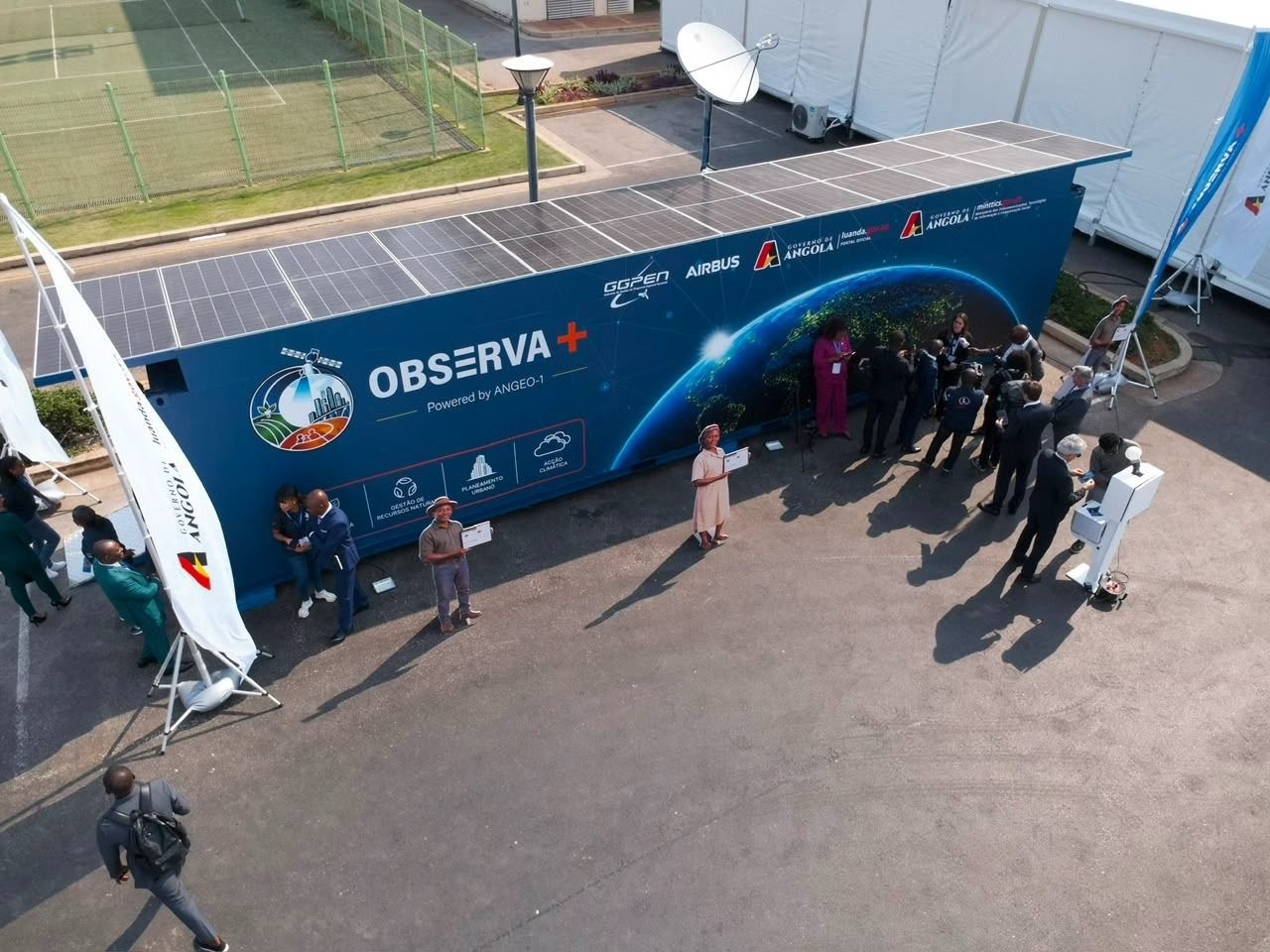
The day also saw the launch of Observa+, a new initiative to deliver satellite data applications directly to communities in support of agriculture, natural resource management, and climate risk monitoring, extending GGPEN’s existing operational portfolio into new public-facing terrain.
A Day of Signings
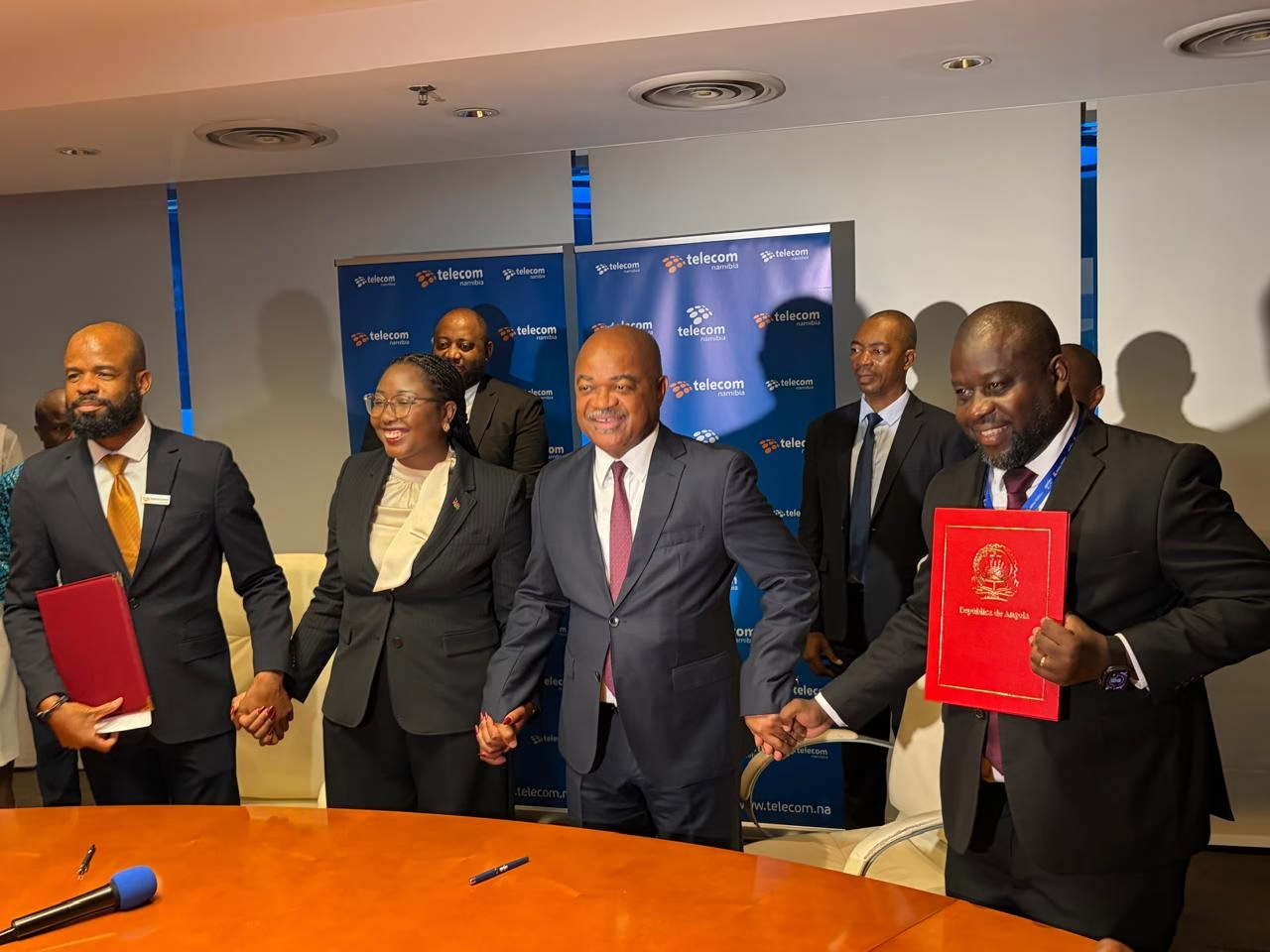
The afternoon brought what would prove to be one of the most consequential outcomes of the entire forum: GGPEN formalised over 15 memoranda of understanding and cooperation agreements spanning both national and international partners, aimed at expanding the reach of Angola’s space infrastructure and deepening technical cooperation across the continent and beyond. Minister Oliveira presided over the signings, signalling that these are not merely institutional arrangements but commitments backed by the highest levels of government.
On the national side, agreements were concluded with Unitel, the National Agency for Petroleum, Gas and Biofuels (ANPG), Banco Angolano de Investimentos (BAI), the National Maritime Agency, the Instituto Nacional de Fomento da Sociedade de Informação (INFOSI), FATCOM, Mercury Telecommunications Services (MSTelcom), Telecom Namibia and the Luanda Provincial Government. Internationally, GGPEN signed with the Gabonese Agency for Space Studies and Observations (AGEOS), the National Space Research and Development Agency (NASRDA), Telecom Namibia, Satlyt, Hayes Group International and Symphony Space of the United States.
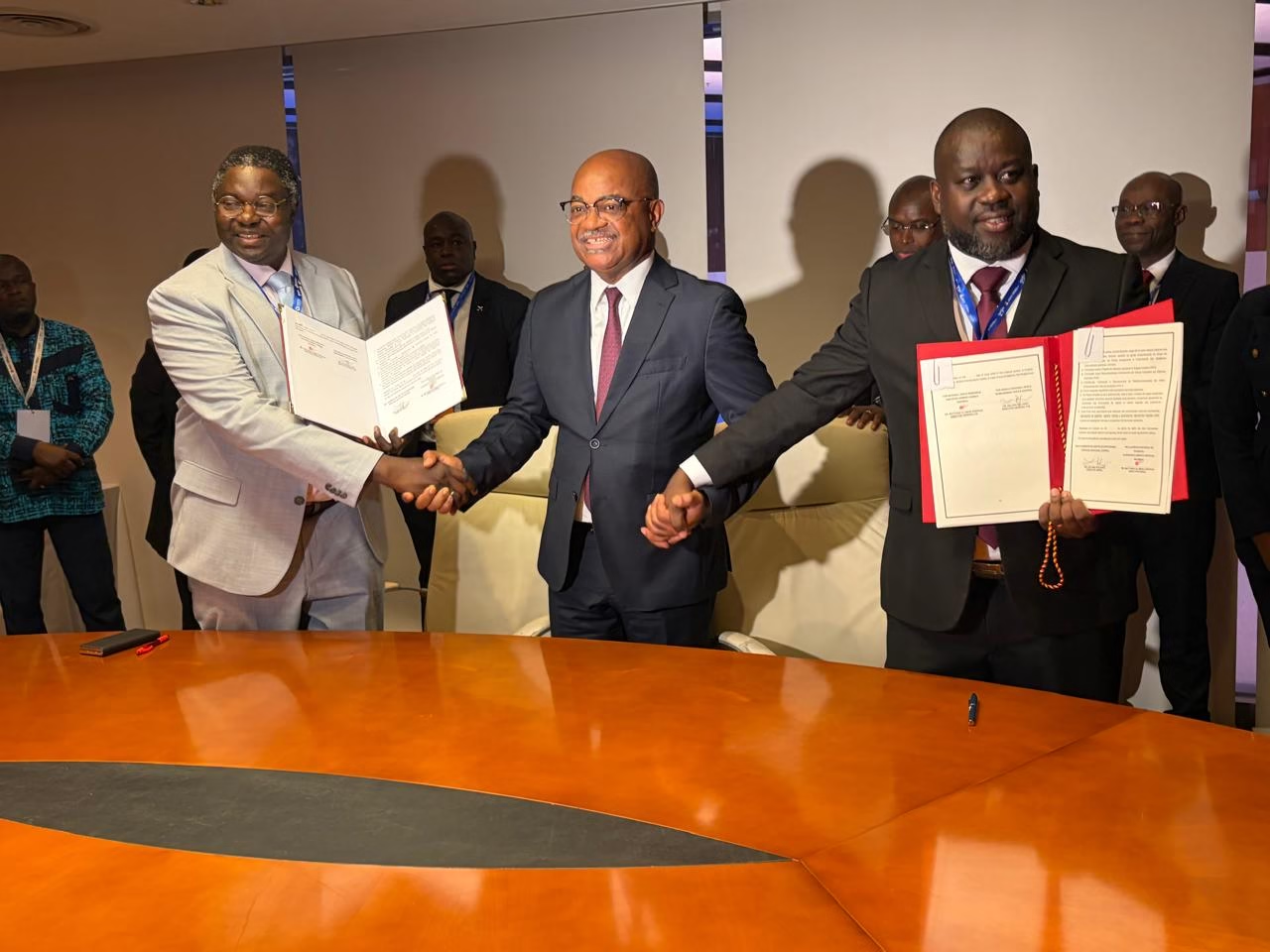
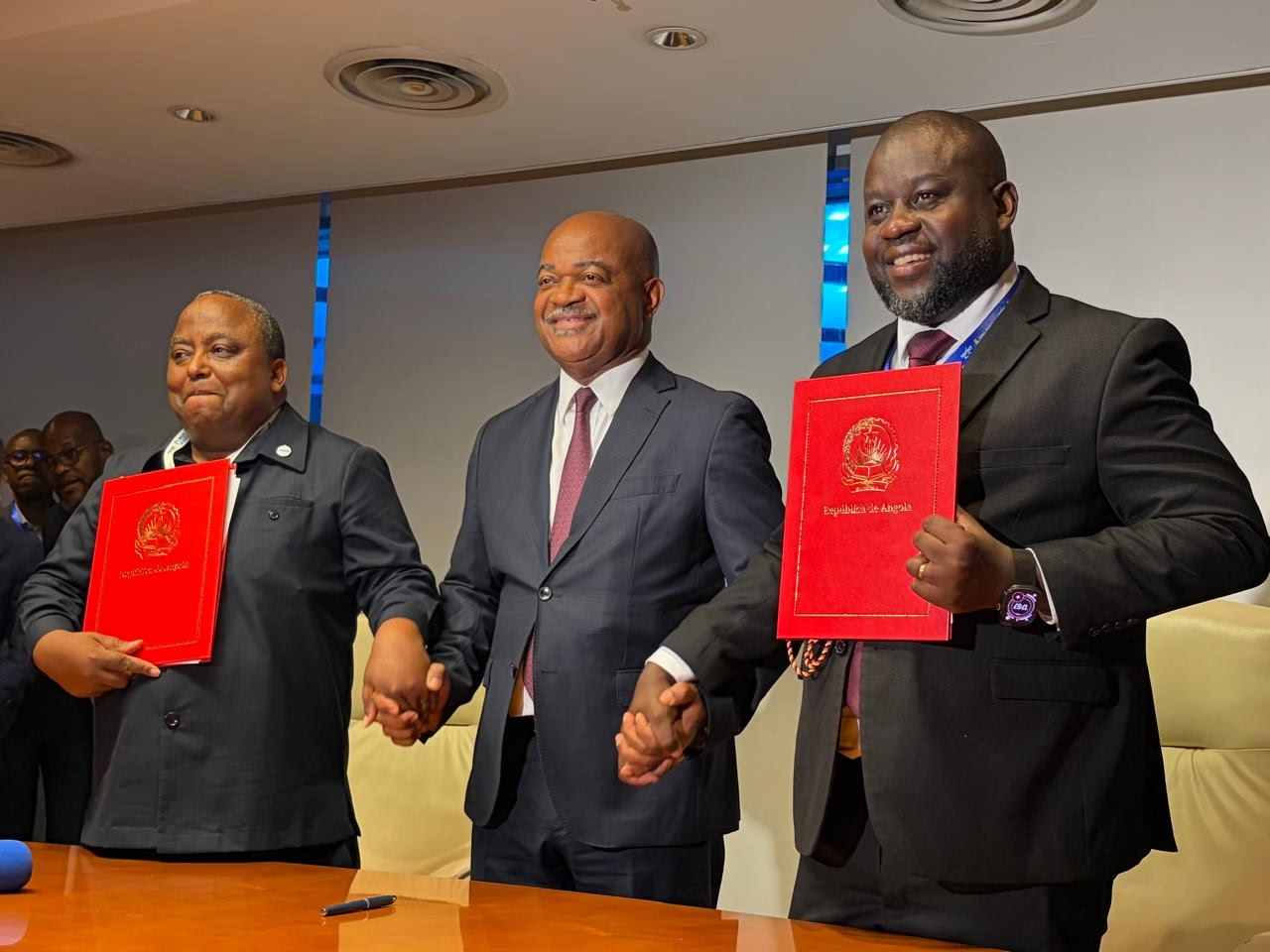
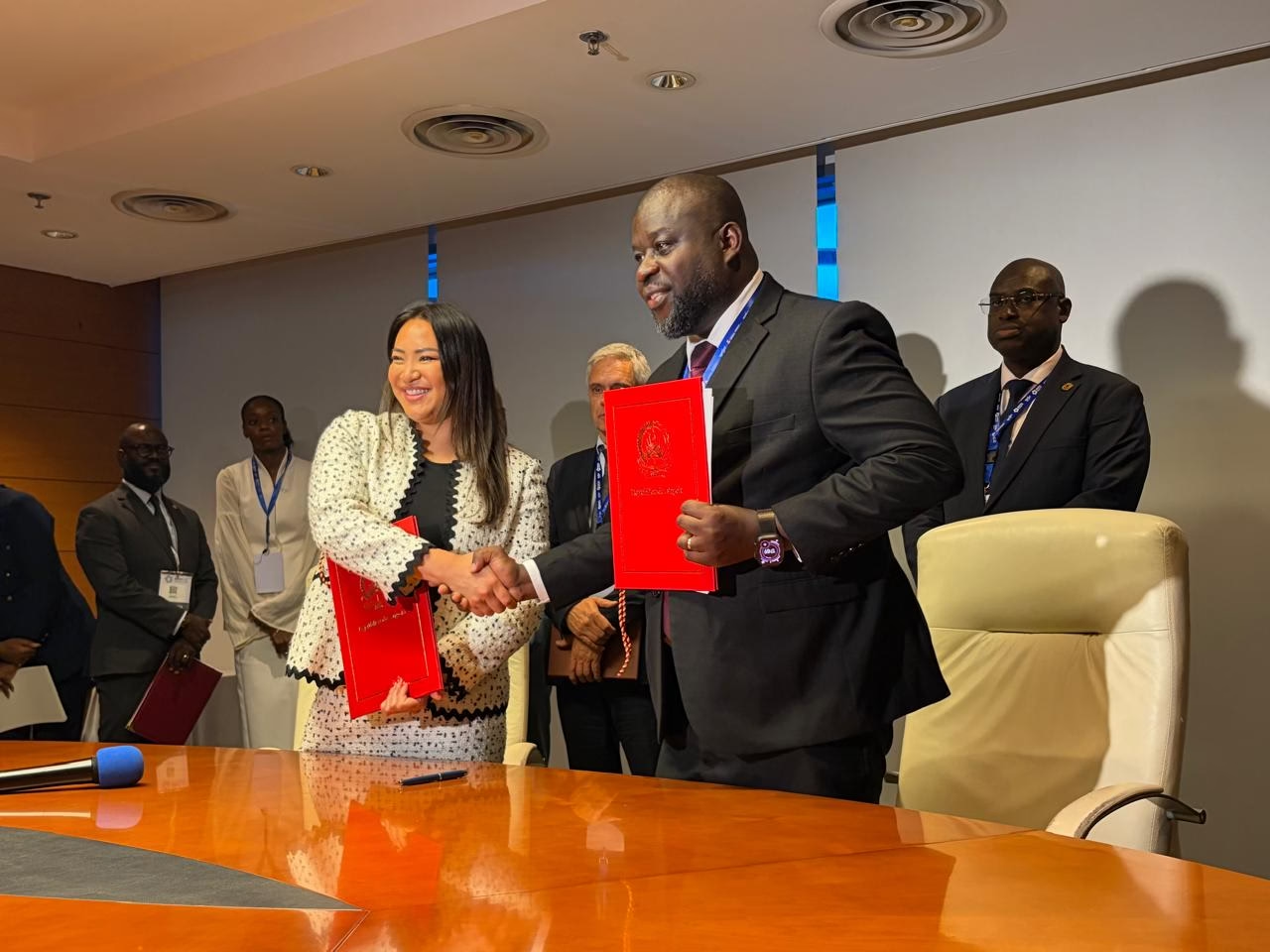
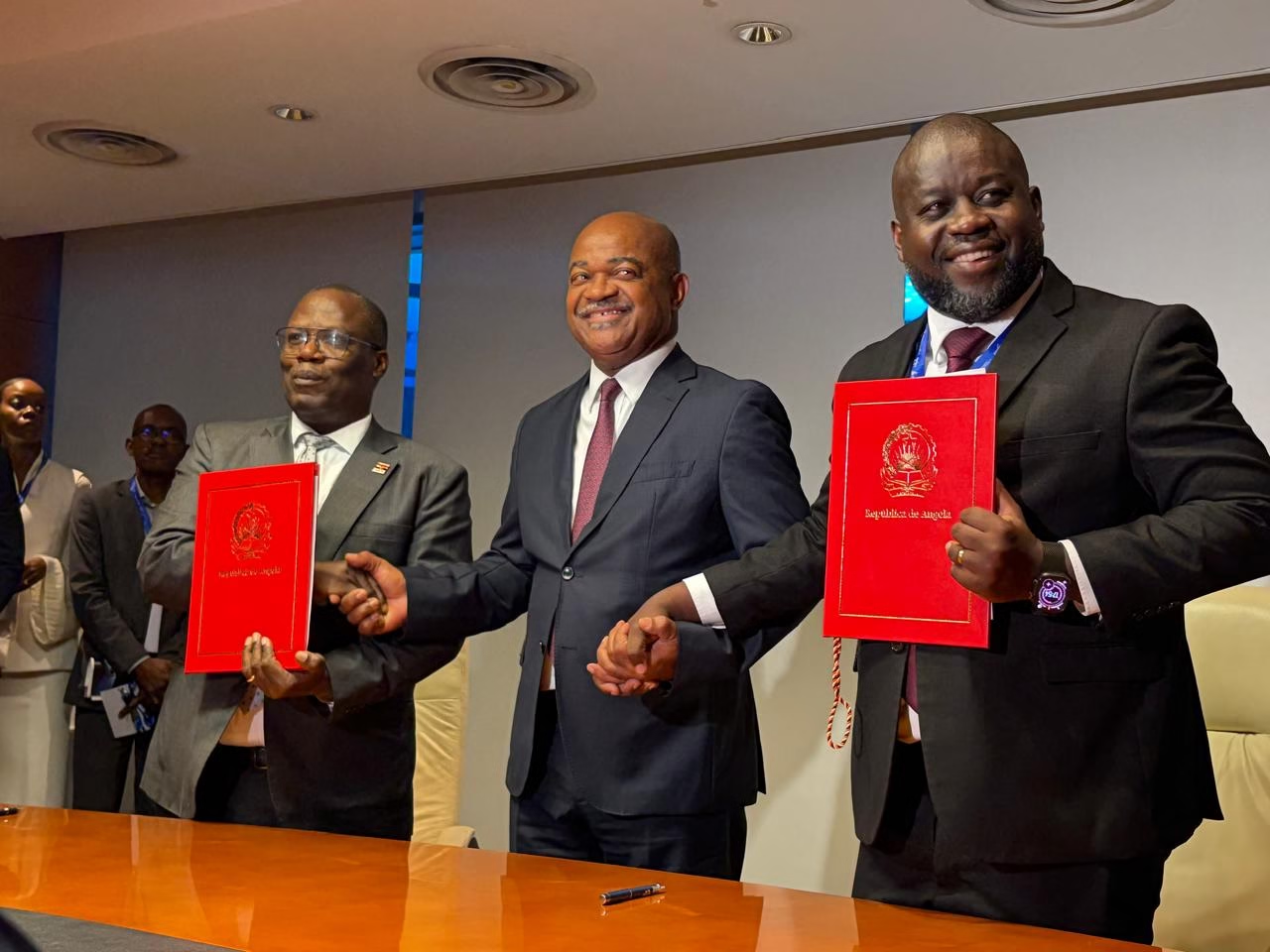
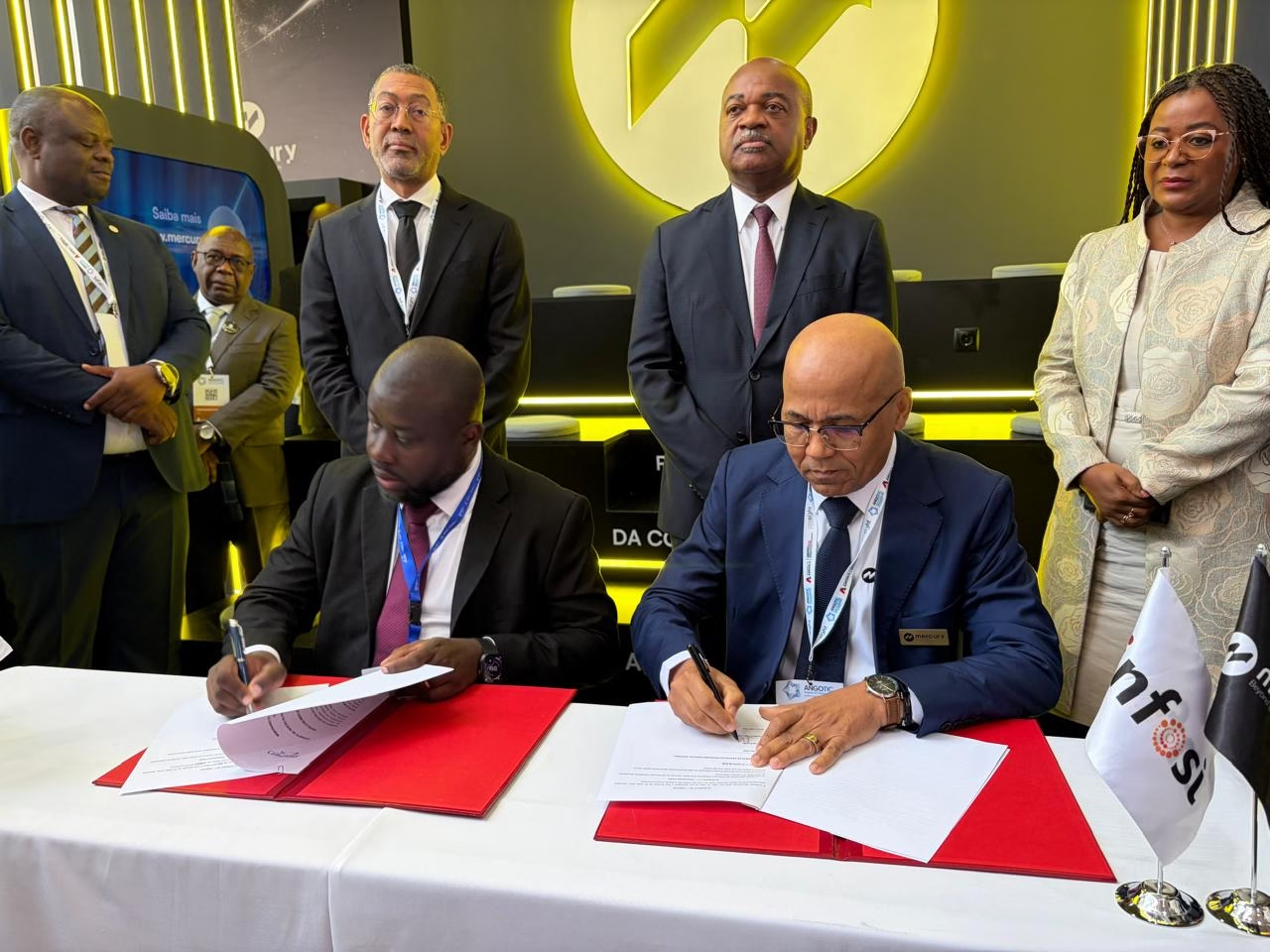
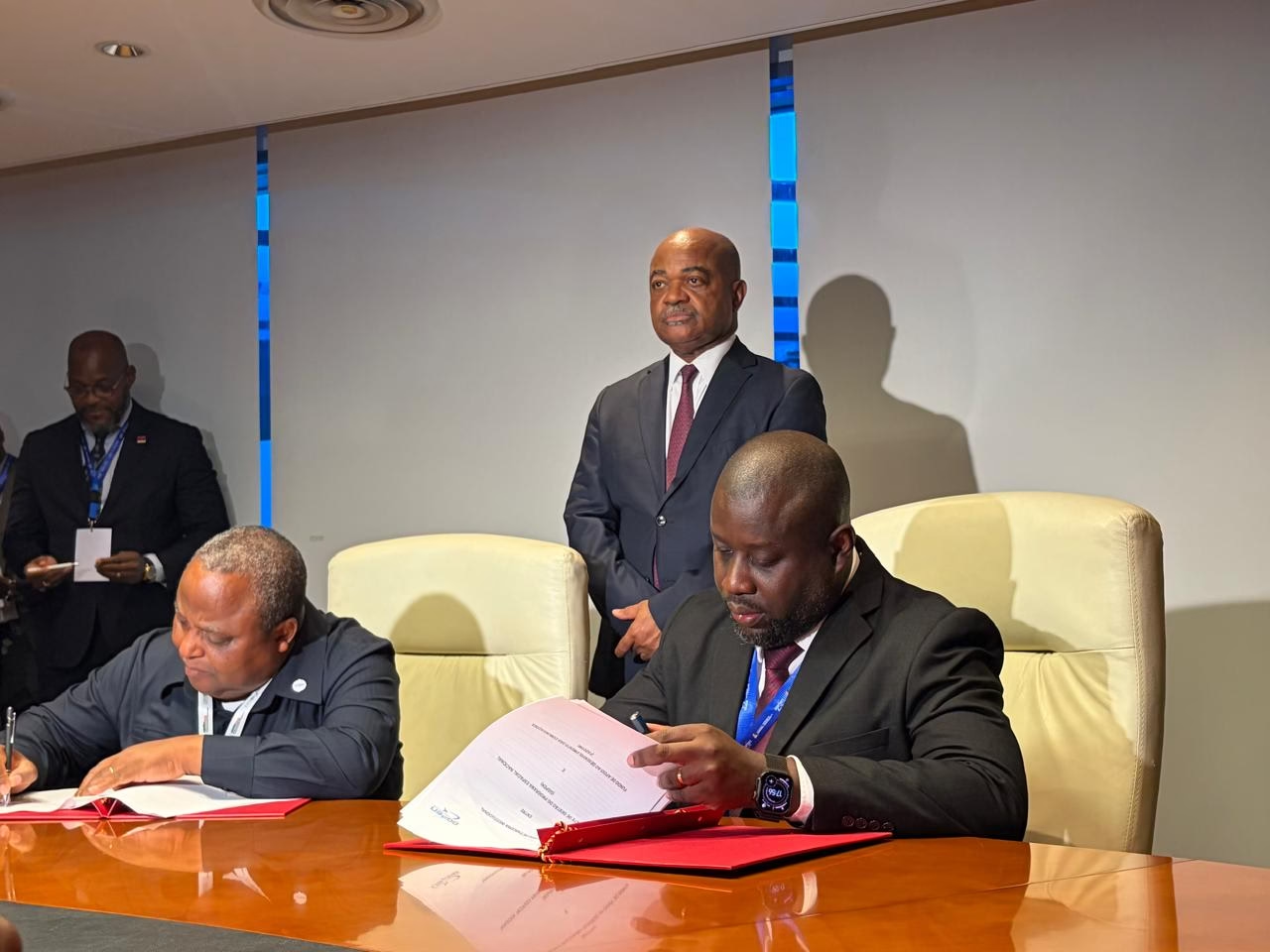
The centrepiece was the MoU with Unitel, formalised by GGPEN Director General Dr Zolana João and Unitel President of the Executive Committee Amílcar Safeca. The agreement commits both institutions to cooperation in space technologies, AI-powered geospatial solutions, connectivity, innovation, and digital transformation, pairing GGPEN’s operational satellite infrastructure and data applications with Unitel’s nationwide network, which reaches all 18 provinces of Angola.
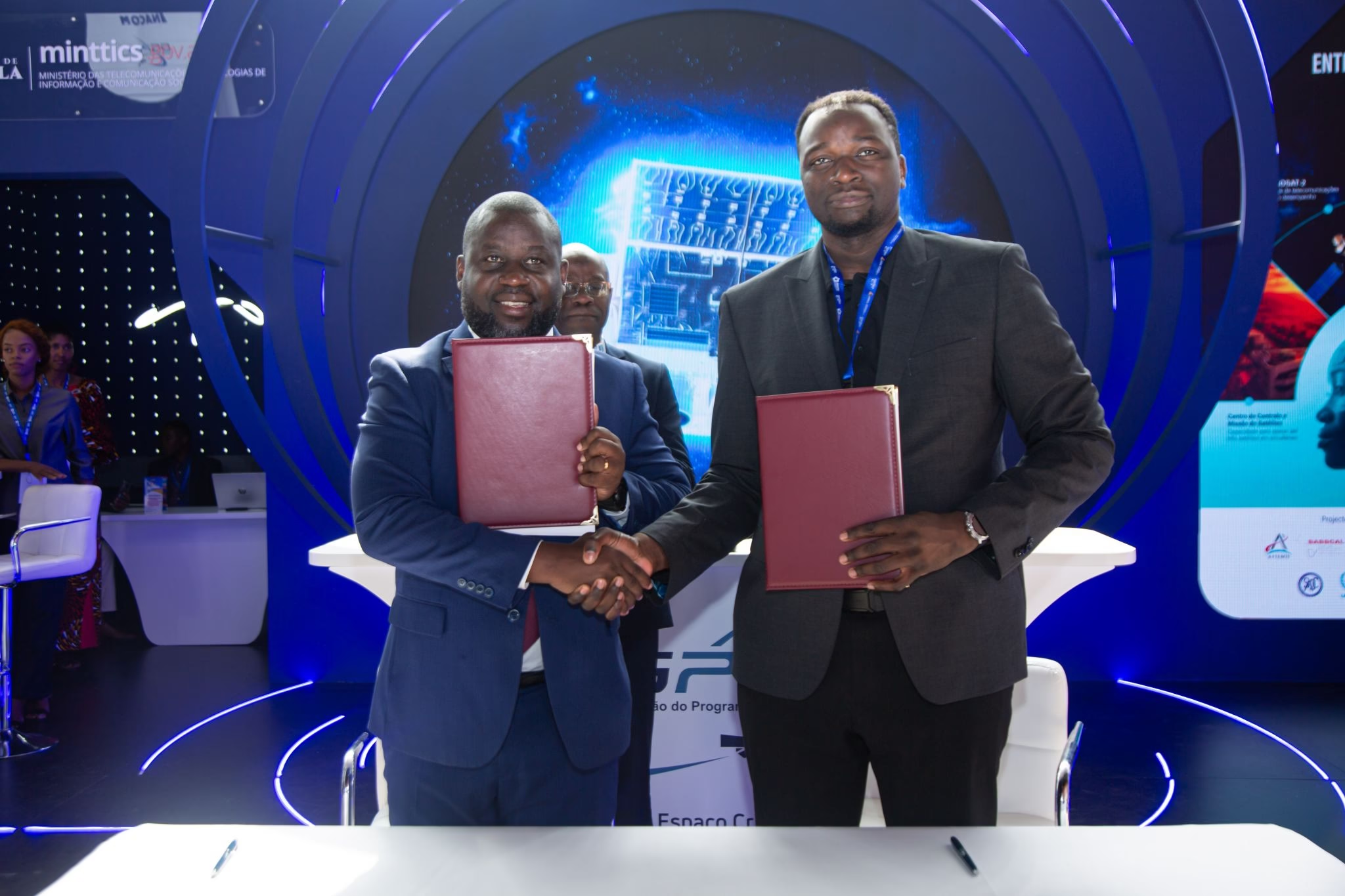
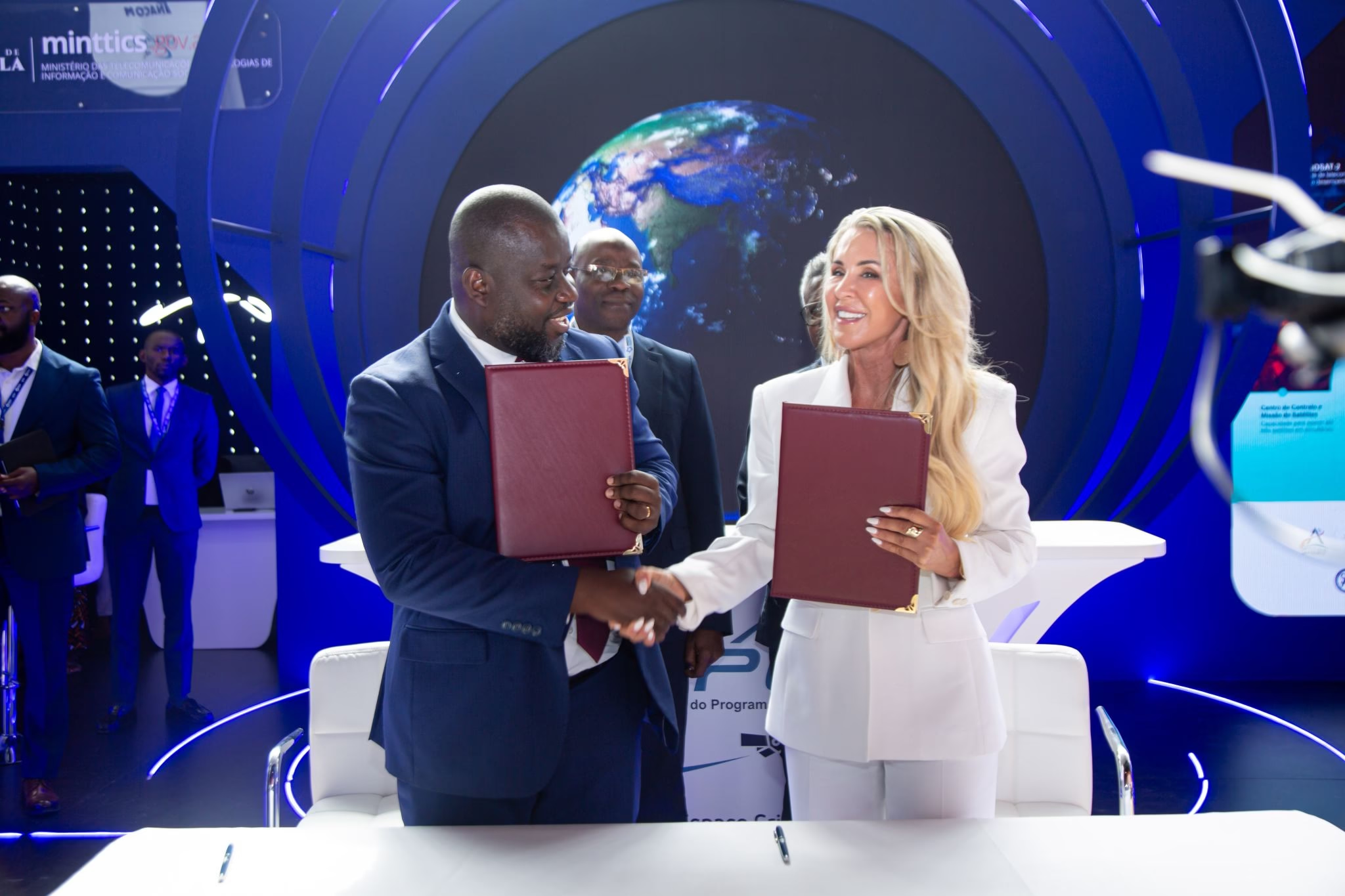
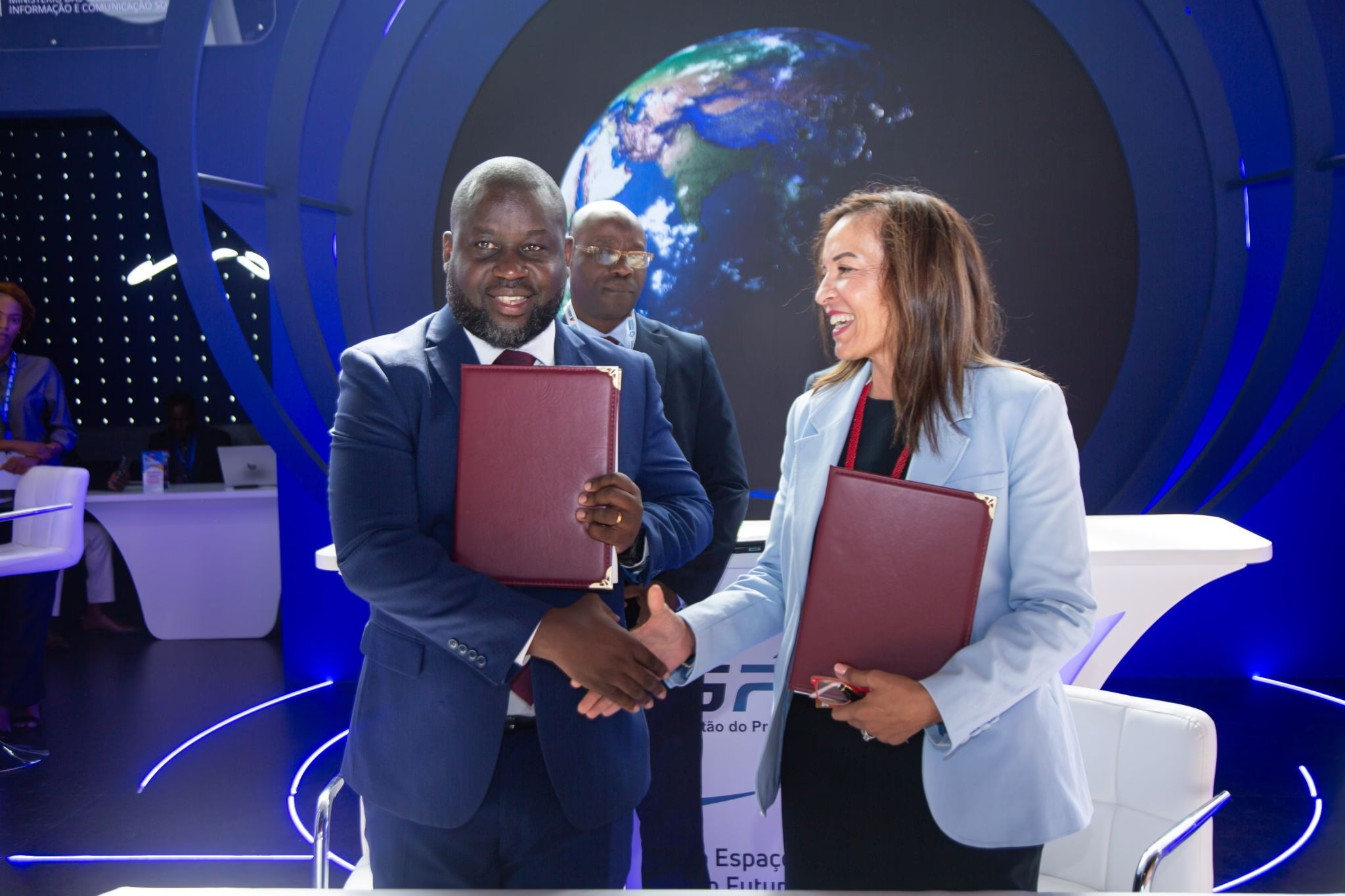
Taken together, the signings reflect a deliberate strategy rather than a collection of agreements accumulated for optics. Each partnership maps onto a specific gap or opportunity within GGPEN’s existing operational portfolio, whether expanding ANGOSAT-2’s commercial reach into southern Africa, embedding satellite-derived data into Angola’s financial and regulatory systems, or building the institutional bridges that allow space technology to move from government infrastructure into everyday economic activity. For GGPEN, partnership is not an end in itself. It is the mechanism through which a national space programme becomes a continental one.
Africa’s Space Leaders Converge on Luanda
On the second day of ANGOTIC 2026, GGPEN convened a plenary session that brought three of Africa’s five largest space programmes into the same room. The session, titled “Lunar Economy and International Cooperation,” featured GGPEN Director General Dr Zolana João, SANSA CEO Eng. Humbulani Mudau, and NASRDA Director General Dr Matthew Olumide Adepoju, three leaders whose agencies collectively represent the continent’s most advanced space capabilities, gathered on a stage in Luanda to discuss where Africa fits in the next era of space exploration.
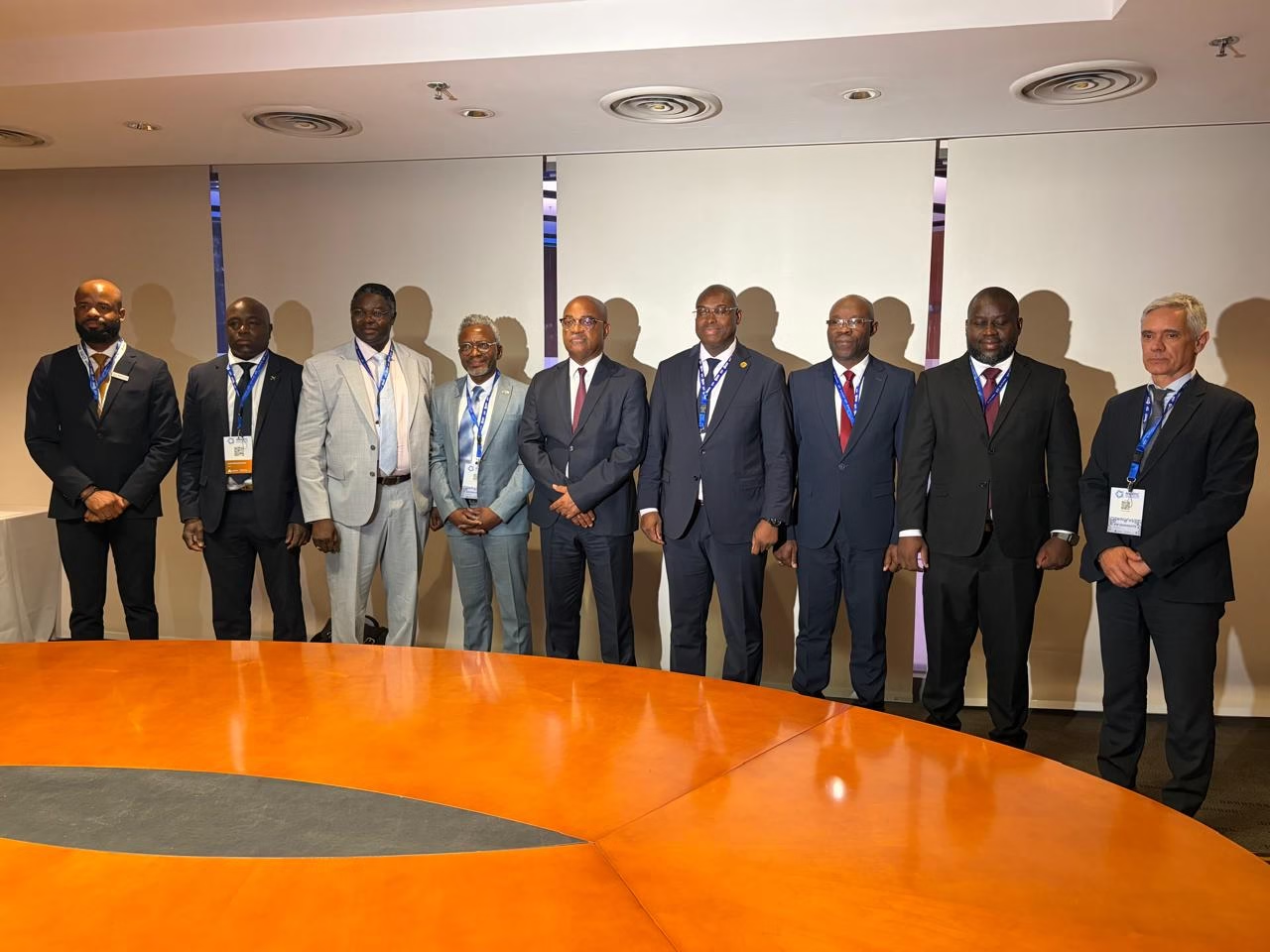
The session carried additional weight with an exclusive message from Kathleen Karika, Associate Administrator of NASA’s Office of International and Interagency Relations, who congratulated the organisers of ANGOTIC 2026 for assembling leaders driving digital transformation and technological innovation across Africa. The panel was further strengthened by the participation of Dr Danielle Wood of the Massachusetts Institute of Technology and Stéphane Vesval of Airbus, who brought perspectives on the commercial and scientific dimensions of the lunar economy and the international cooperation frameworks needed to realise them. The session was moderated by Space in Africa MD, Dr Temidayo Oniosun.
That three of Africa’s five leading space agencies were present in the same plenary, convened by GGPEN, was not incidental. It reflected the agency’s deliberate effort to position Angola not merely as a participant in continental space discourse, but as one of its convening powers.
Launching Angola’s Next Generation of Space Entrepreneurs
On the closing day, GGPEN announced the winners of the Hackathon ANGOTIC 2026 – Track 2: Space Startups, an initiative run by MINTTICS through GGPEN in partnership with Airbus and Aerospace Valley. Five Angolan startups: VundaX, Inauditos, Tecmicro, Agri IA, and Dronesig, were selected from the competition and will receive a fully funded week of immersion in Toulouse’s space ecosystem, including institutional visits, specialised workshops, networking sessions, and meetings with key actors in the European space industry. The winners will also access three months at the DISTRICT accelerator, with specialised mentorship, business training, internationalisation support, and opportunities to develop strategic partnerships. Travel and accommodation expenses will be fully covered by the organisation. Additional prizes from initiative partners include consulting sessions, a professional photo shoot, institutional video production, business training, an entrepreneur kit, computers, and domain registration.
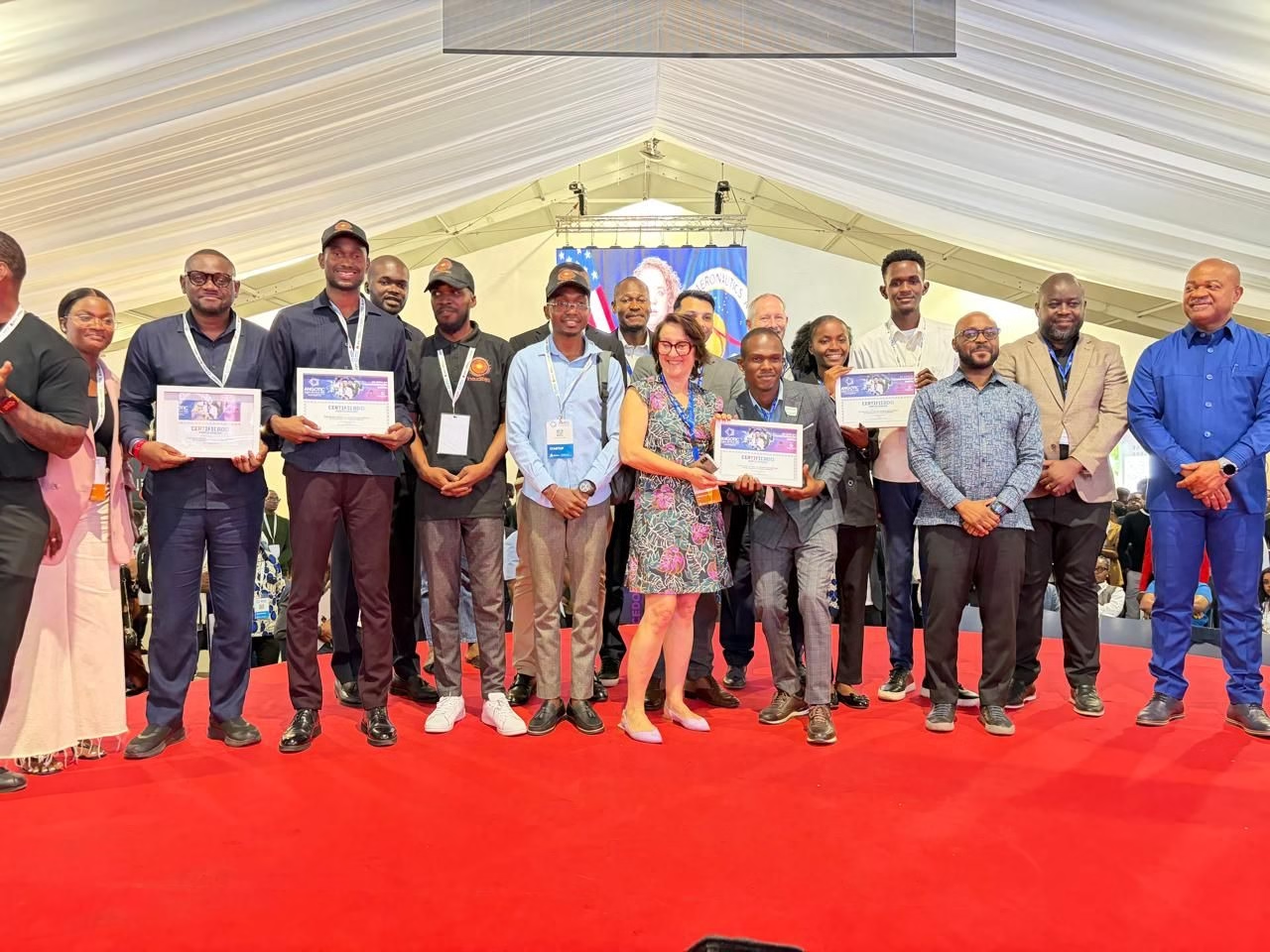
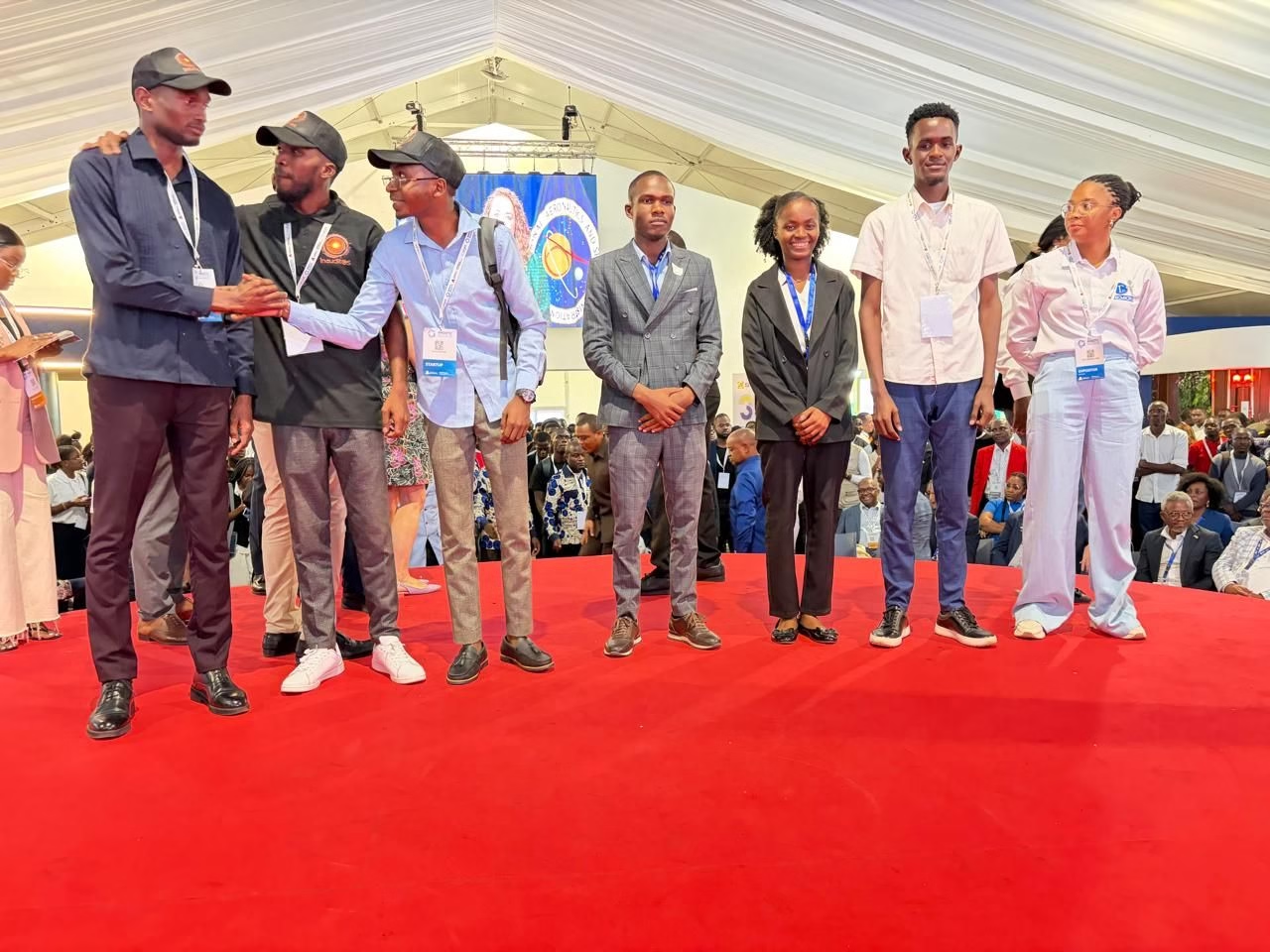
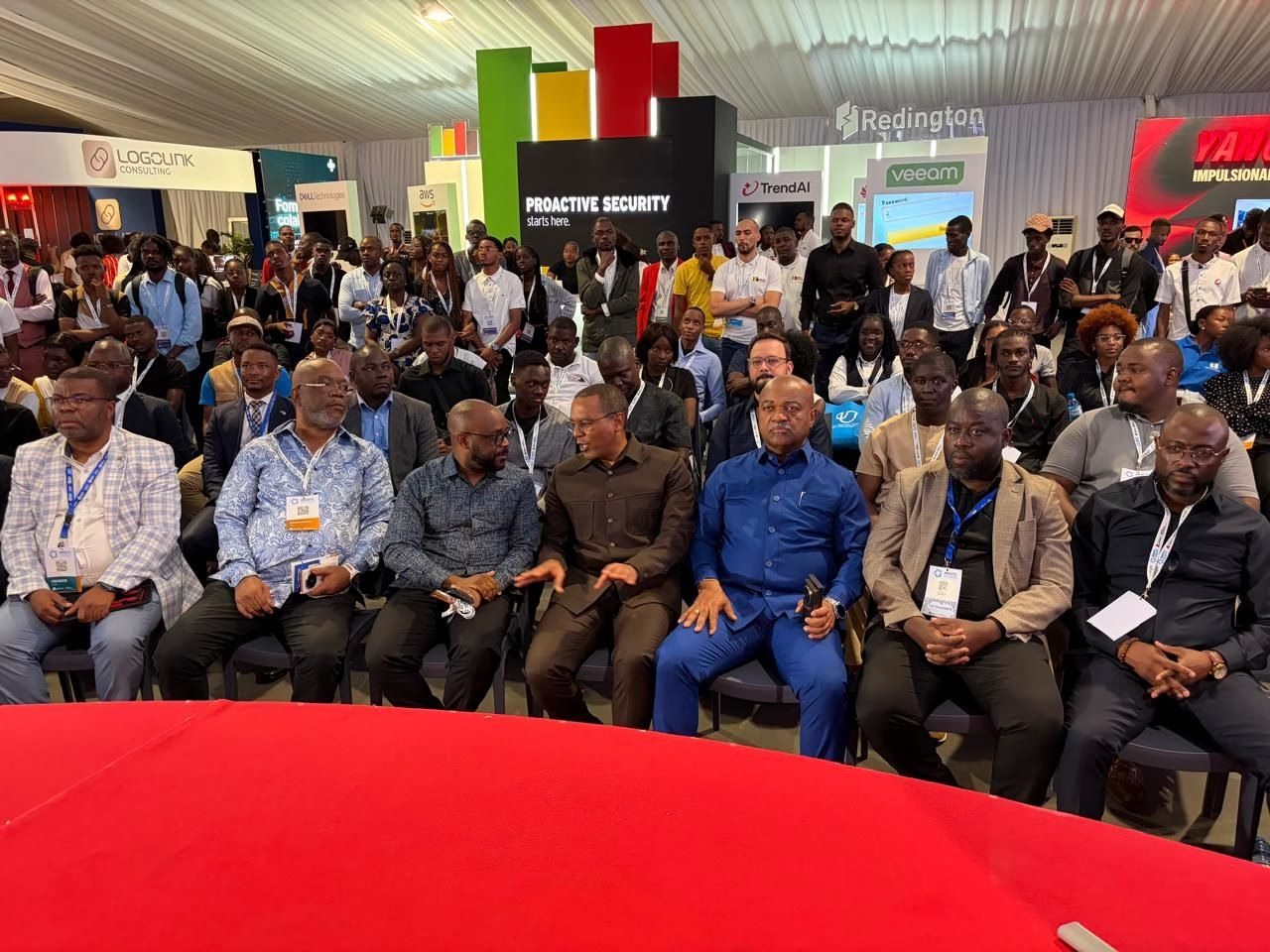
The announcement was made in the presence of Minister Oliveira, Minister of State for Economic Coordination José de Lima Massano, Secretaries of State, and GGPEN Director General Dr Zolana João, underscoring the political weight behind GGPEN’s innovation agenda.
Also on the closing day, GGPEN and the non-governmental organisation Otchiva officially launched the Mangrove Map of Angola at the GGPEN stand, a platform developed by specialists at GEDAE, the Geodata Centre, in partnership with Equinor. The tool applies artificial intelligence to satellite imagery to map and monitor mangrove ecosystems across the country. Drawing on data collected under the “Mangroves for Tomorrow” project, it has mapped 43,000 hectares across seven provinces and enables tracking of ecosystem changes over the past five years. The platform supports the monitoring, preservation, and management of one of Angola’s most ecologically significant coastal environments, with direct implications for biodiversity protection and climate change adaptation.
The Numbers Behind the Forum
ANGOTIC 2026 closed with over 34,000 visitors across three days, an 88% increase over the previous edition, with 211 startups, 118 exhibitors, and partner entities in attendance. But for GGPEN, the significance of those three days runs deeper than attendance figures. Angola’s space programme has spent years building satellites, ground infrastructure, data applications, connectivity initiatives, and a growing roster of operational tools embedded across the country’s economy.
ANGOTIC 2026 was where that foundation met its next logical step: the recognition that infrastructure alone does not produce impact, and that the true measure of a space programme’s maturity is its ability to bring others along. Through the partnerships signed, the sessions convened, the startups it is now sending to France, and the international relationships deepened across every day of the forum, GGPEN signalled clearly what it intends to be, not just Angola’s space agency, but a reference institution for the continent, one that shares what it has built, learns from those it works with, and continues to push the boundaries of what African space programmes can achieve.