
Starlink’s Kenya Subscriber Base Grows by 10,191 in One Year as Market Share Reaches 1%


Starlink’s subscriber base in Kenya grew by 10,191 users year-on-year to reach 27,616 in June 2026, representing annual growth of 58.48% from June 2025. The increase places Elon Musk’s satellite internet service seventh among internet service providers in Kenya, according to the latest quarterly report from the Communications Authority of Kenya. Growth also continued on a quarterly basis, with subscribers rising from 24,999 in the previous quarter to 27,616, equivalent to quarterly growth of 10.47%.
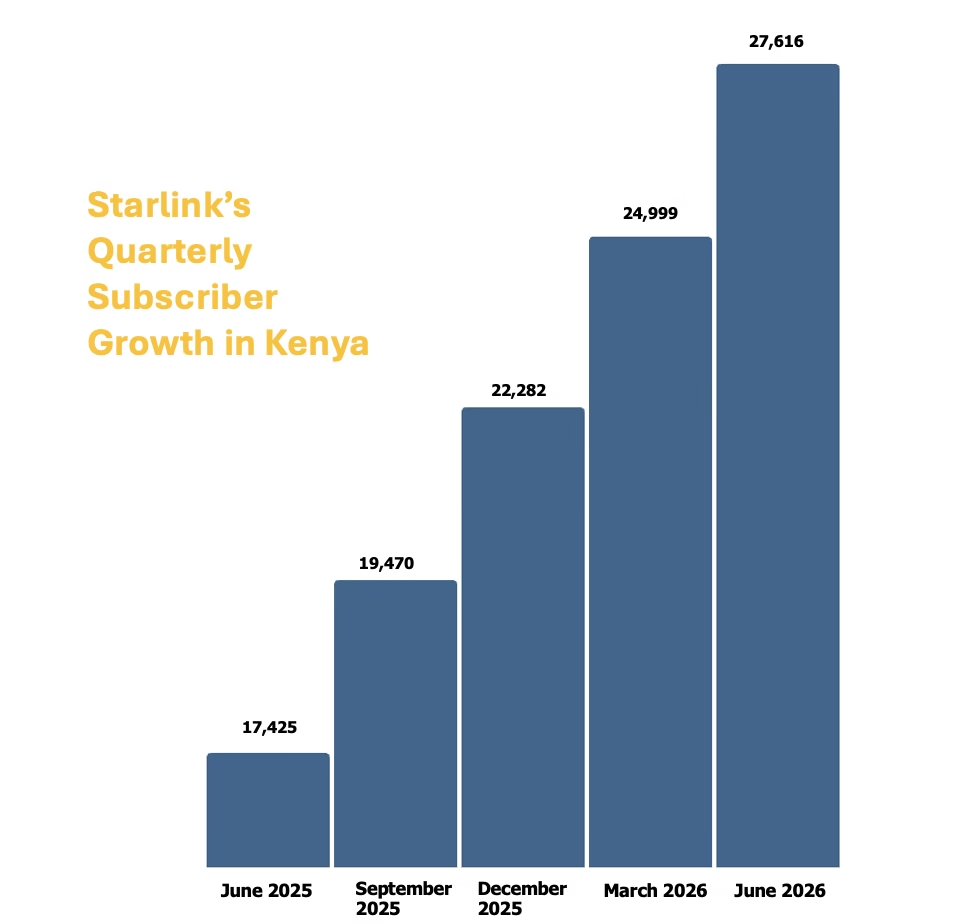
The latest figures suggest that Starlink’s subscriber growth is becoming more resilient despite recurring network capacity constraints. Unlike in earlier periods, when subscription pauses were followed by slower or even negative net additions, the company continued to expand its subscriber base while managing demand in congested service areas.
This trend is particularly notable given that Starlink has once again suspended new residential orders in seven high-demand counties, including Nairobi, Kiambu and Mombasa, where prospective customers are now placed on waiting lists until additional network capacity becomes available.
The continued increase in subscribers therefore suggests that capacity constraints are no longer resulting in an outright halt to net subscriber growth, indicating a more balanced relationship between new customer additions and Starlink’s ongoing network expansion efforts.
Click here to download Space in Africa’s latest report on Starlink.
Starlink’s Growth Sits Within a Larger Expanding ISP Market
Starlink has consistently ranked among the fastest-growing ISPs in Kenya in recent reporting periods, and its subscriber growth remained strong in the latest quarter, although it was surpassed by Vilcom Network Limited. Vilcom recorded quarterly subscriber growth of 16.48%, compared with Starlink’s 10.47%, placing the two among the faster-growing providers during the period.
Starlink’s market share also continued to expand, reaching 1% of Kenya’s ISP market, its highest level since launch, while Vilcom held a considerably larger 6.6% share. Despite this difference in market size, Starlink recorded slightly faster quarterly market-share growth, at 11% compared with Vilcom’s 10%. The figures point to continued expansion for both providers, although from markedly different positions within the market.
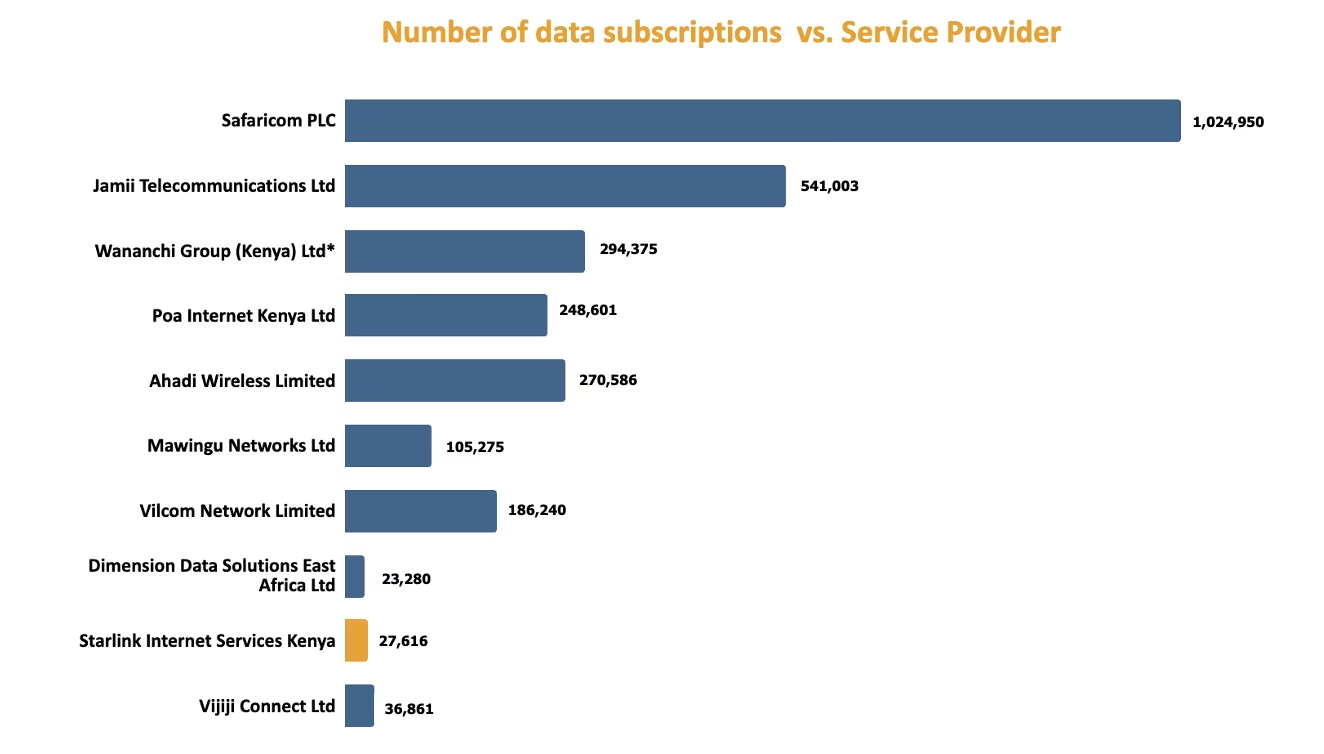
Kenya’s largest ISPs also continued to expand their subscriber bases, maintaining their strong position in the market despite the growth of providers such as Starlink. Safaricom crossed the one-million-subscriber threshold during the period, increasing its market share to 36%. The growth coincides with Safaricom’s April upgrade of its Home Fibre packages, which increased speeds across several plans without raising monthly prices. The changes lowered the effective cost per Mbps and increased the value offered to existing and prospective customers, although the available data does not establish a direct causal link between the upgrades and subscriber growth.
Jamii Telecommunications Ltd and Wananchi Group (Kenya) Ltd, the second- and third-largest ISPs by subscriber base, also recorded net additions of 23,733 and 17,768 users, respectively, during the same period. By comparison, Starlink added 2,617 subscribers quarter-on-quarter. The figures highlight the scale advantage of Kenya’s established ISPs: although Starlink continues to grow at a relatively high rate, the largest providers are adding substantially more subscribers in absolute terms.
Kenya’s satellite connectivity market is also shifting from traditional VSAT services towards LEO-based connectivity. Satellite bandwidth capacity declined by 19.1% year-on-year, from 0.445 Gbps in June 2025 to 0.360 Gbps in June 2026, with the Communications Authority attributing the decline primarily to the migration from VSAT to LEO technology. At the same time, utilised bandwidth capacity increased by 23.9%, while utilised satellite bandwidth declined by 18.2%. Taken together, these movements point to a changing structure of satellite connectivity in Kenya, where the growth of LEO services is occurring alongside a reduction in reliance on traditional satellite bandwidth.
Kenya’s Starlink Subscriber Base in the Continental Context
Now available in 30 African markets, Starlink’s subscriber base continues to expand across the continent, although adoption varies considerably from market to market. Kenya’s 27,616 subscribers remain modest in comparison with some of the continent’s larger markets, with Nigeria’s 98,642 subscribers representing almost four times Kenya’s base, while Zimbabwe’s 86,488 is just over three times larger. Ghana also surpasses Kenya in subscriber numbers, highlighting the different adoption patterns emerging across Starlink’s African footprint.
These variations point to a diverse continental user base, shaped by differences in population size, connectivity needs, competitive ISP markets and regulatory environments. Kenya’s position, therefore, reflects one market within a broader African Starlink landscape, where adoption is progressing at different rates and under different market conditions.