
SSGI Signs Cooperation Agreement with Two Leading South Korean Institutions

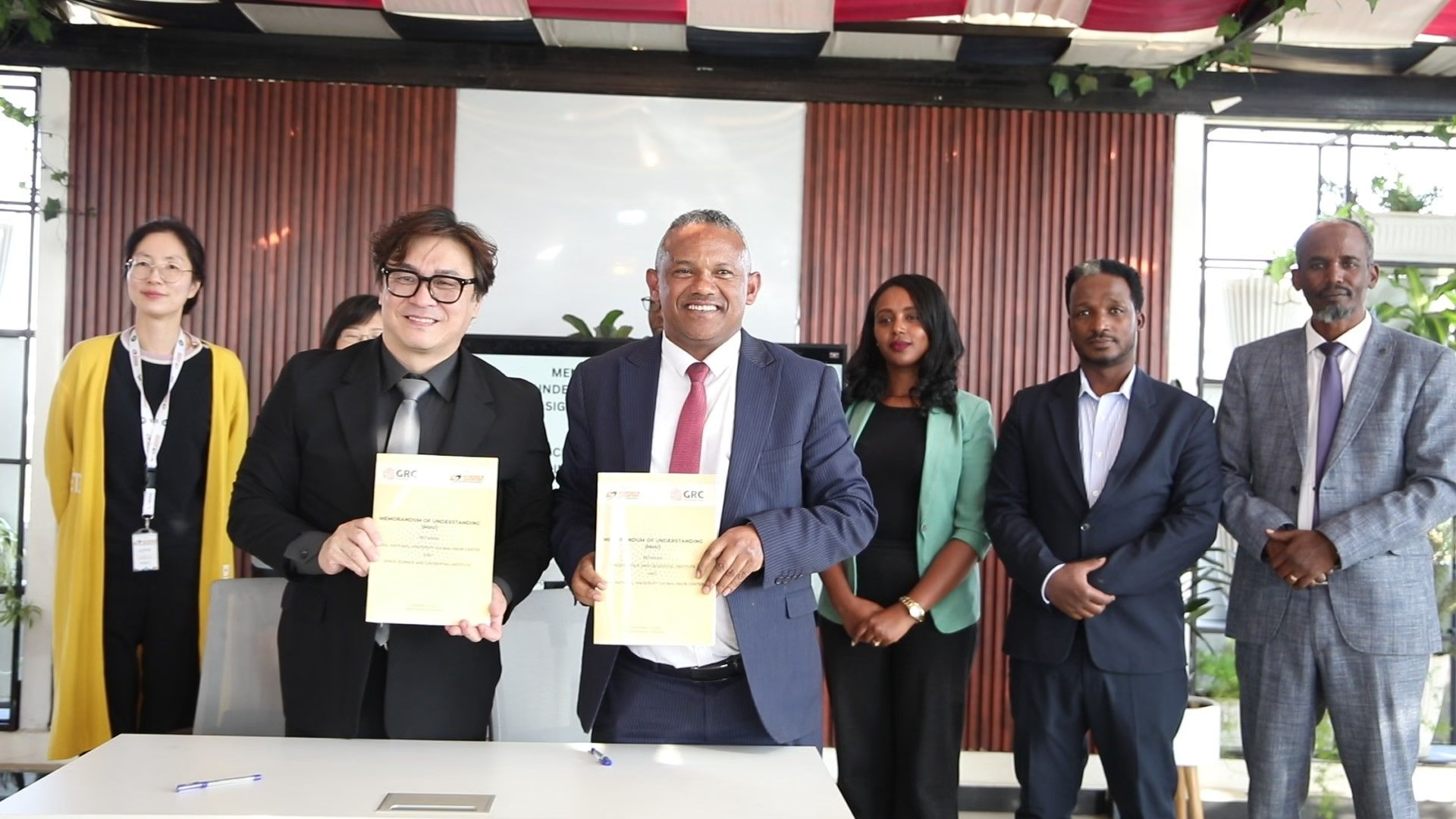
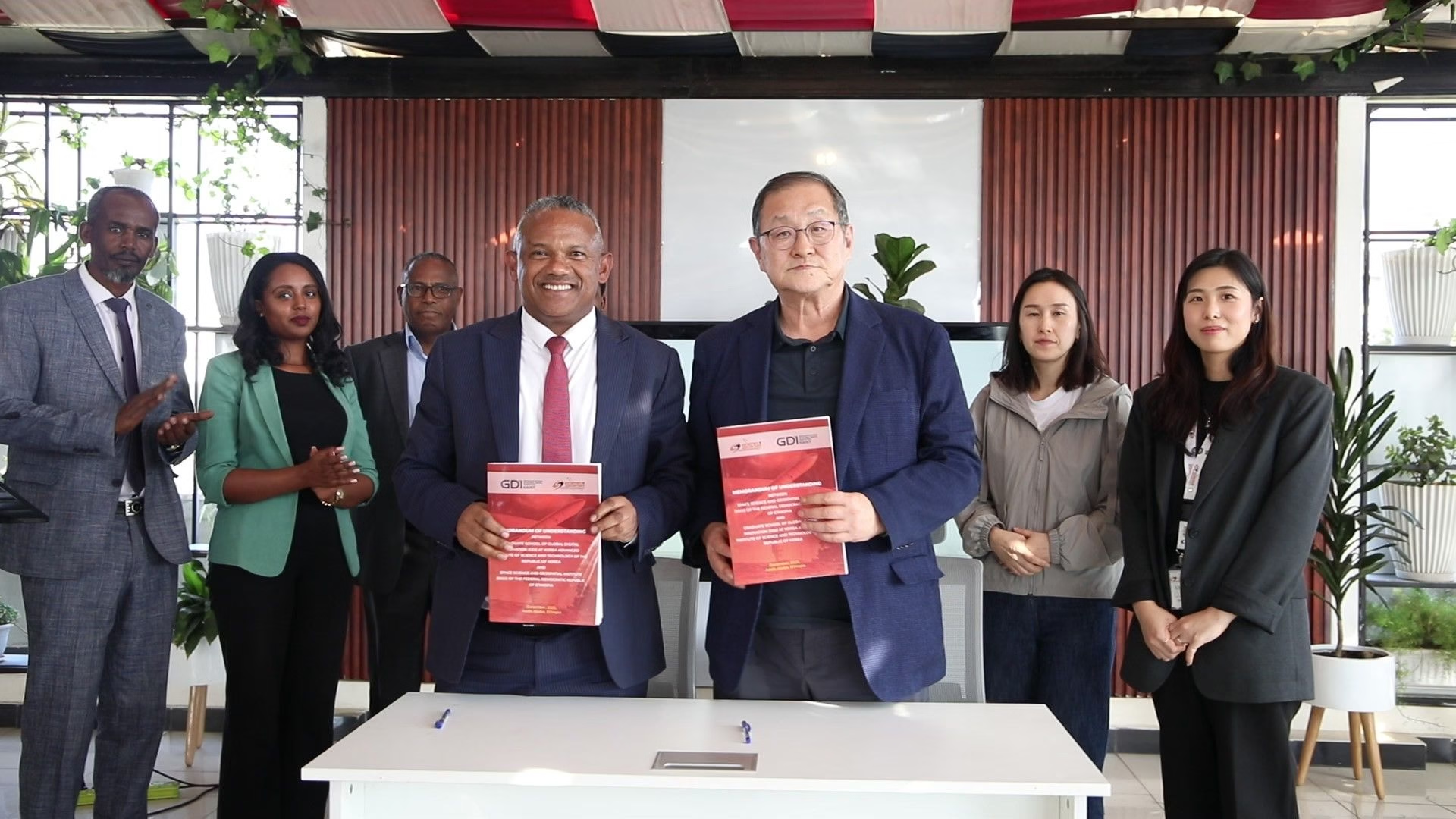
The Space Science and Geospatial Institute (SSGI) has formalised cooperation agreements with two prominent South Korean research institutions: Seoul National University’s Global Research and Development Base (R&DB) Centre and the Graduate School of Global Digital Innovation (GDI) at the Korea Advanced Institute of Science and Technology (KAIST).
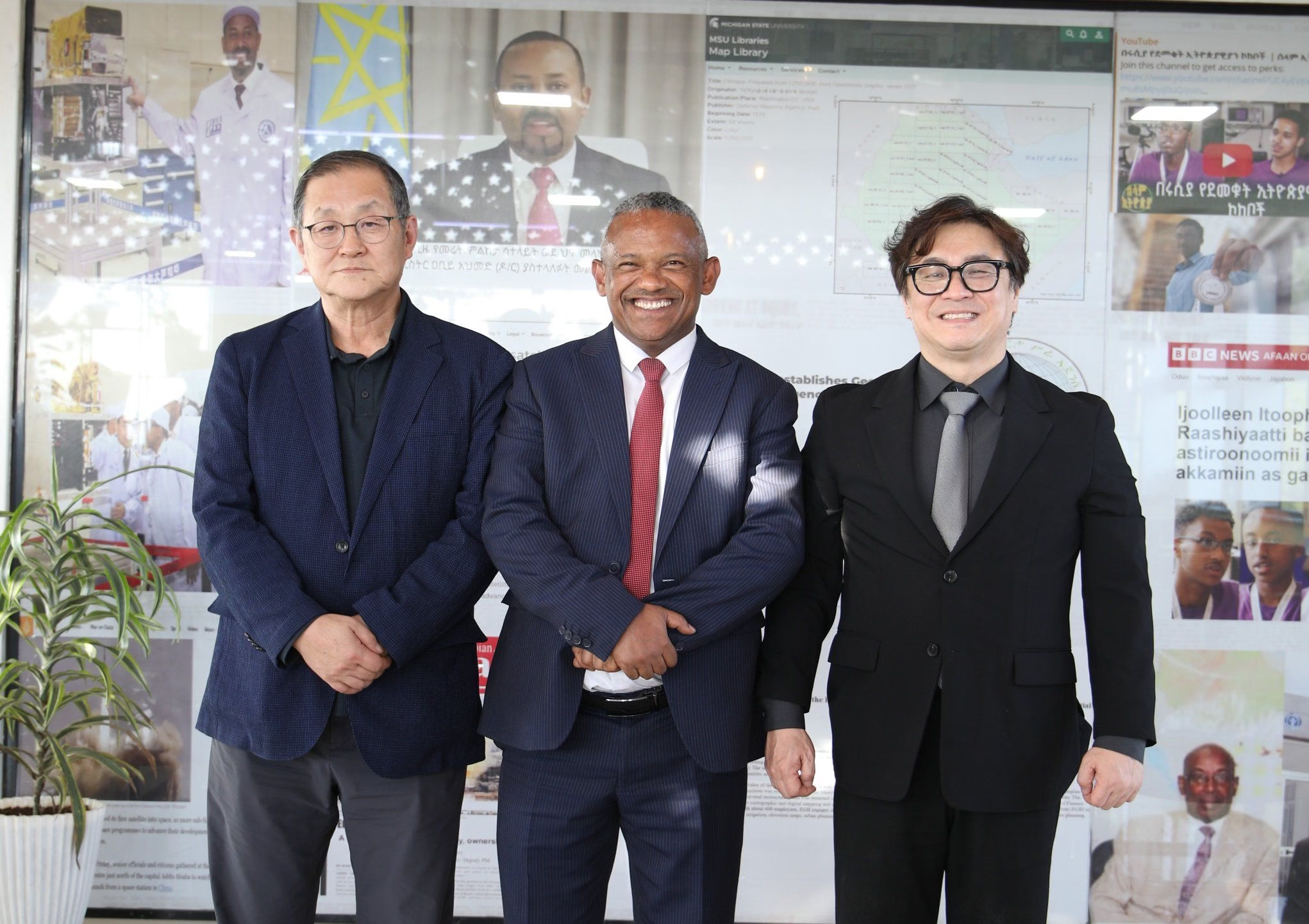
The agreements, signed by SSGI Director General Abdisa Yilma alongside Prof. Seung Hun and Dr Junseok Hwang, establish frameworks for collaboration in education, research development, technology transfer, and human capacity building.
Scope of Collaboration
The partnership centres on several operational areas. SSGI will gain access to advanced technical expertise in space science and geospatial technologies, fields where South Korea has developed significant capabilities through its own satellite programmes and digital infrastructure development. The technology transfer component suggests potential collaboration on remote sensing applications, spatial data analysis systems, and digital innovation platforms that SSGI can adapt to Ethiopia’s specific needs in different thematic areas.
For Korean institutions, the partnership provides a research platform in the Horn of Africa, offering access to unique datasets from Ethiopia’s diverse geography and ecosystems. This includes opportunities to test and refine geospatial technologies in contexts different from East Asia, particularly in agricultural systems, climate patterns, and developmental challenges specific to Sub-Saharan Africa.
Human Capacity Development
The human capacity component involves training programmes for SSGI staff and researchers, including graduate-level education, technical workshops, and research exchanges. Given that both Korean institutions operate advanced graduate programmes, SSGI personnel would be able to access specialised training in satellite data processing, geographic information systems, and digital innovation methodologies. Conversely, Korean researchers and students gain field research opportunities and practical experience applying technologies in development contexts, thereby complementing their theoretical training with real-world implementation challenges.
Strategic Context
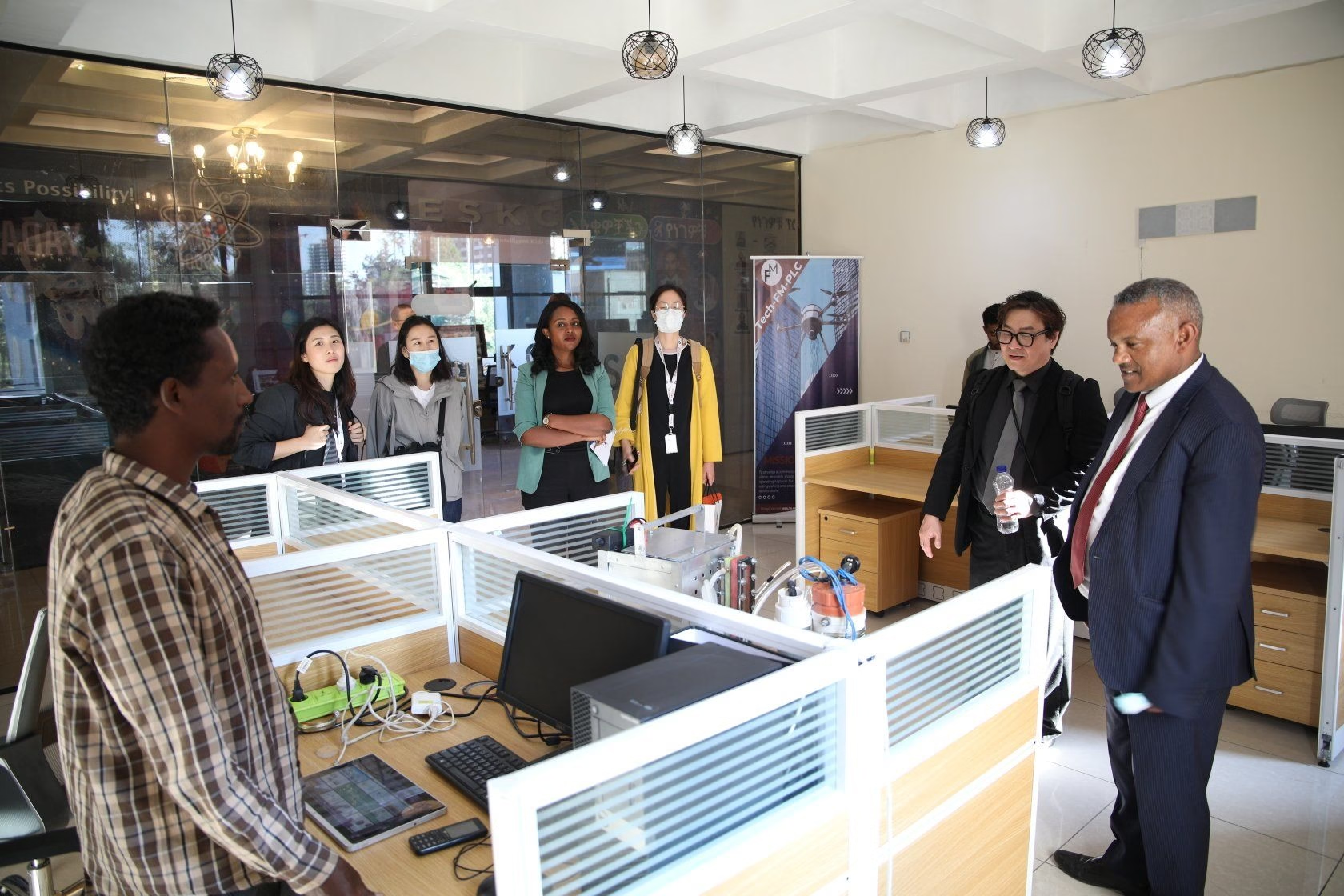
Prof. Seung Hun and Dr Junseok Hwang noted their previous visits to Ethiopia and observations of development across multiple sectors, suggesting this partnership builds on established relationships rather than representing an entirely new engagement. Their expressed commitment to supporting SSGI’s education and research initiatives indicates plans for sustained, long-term collaboration rather than one-off projects.
For SSGI, the partnership strengthens its institutional network beyond its existing collaborations, providing access to research methodologies and technical systems developed by institutions ranked among Asia’s leading science and technology universities. For Seoul National University and KAIST, the agreement extends their international research footprint and aligns with South Korea’s broader development cooperation efforts in Africa.
The partnership positions both parties to pursue joint research projects, potentially attracting international funding for collaborative work in areas such as satellite applications for sustainable development, climate adaptation technologies, and digital infrastructure solutions.