
Kenya Concludes the Global Data Festival and Space Expo & Conference 2026
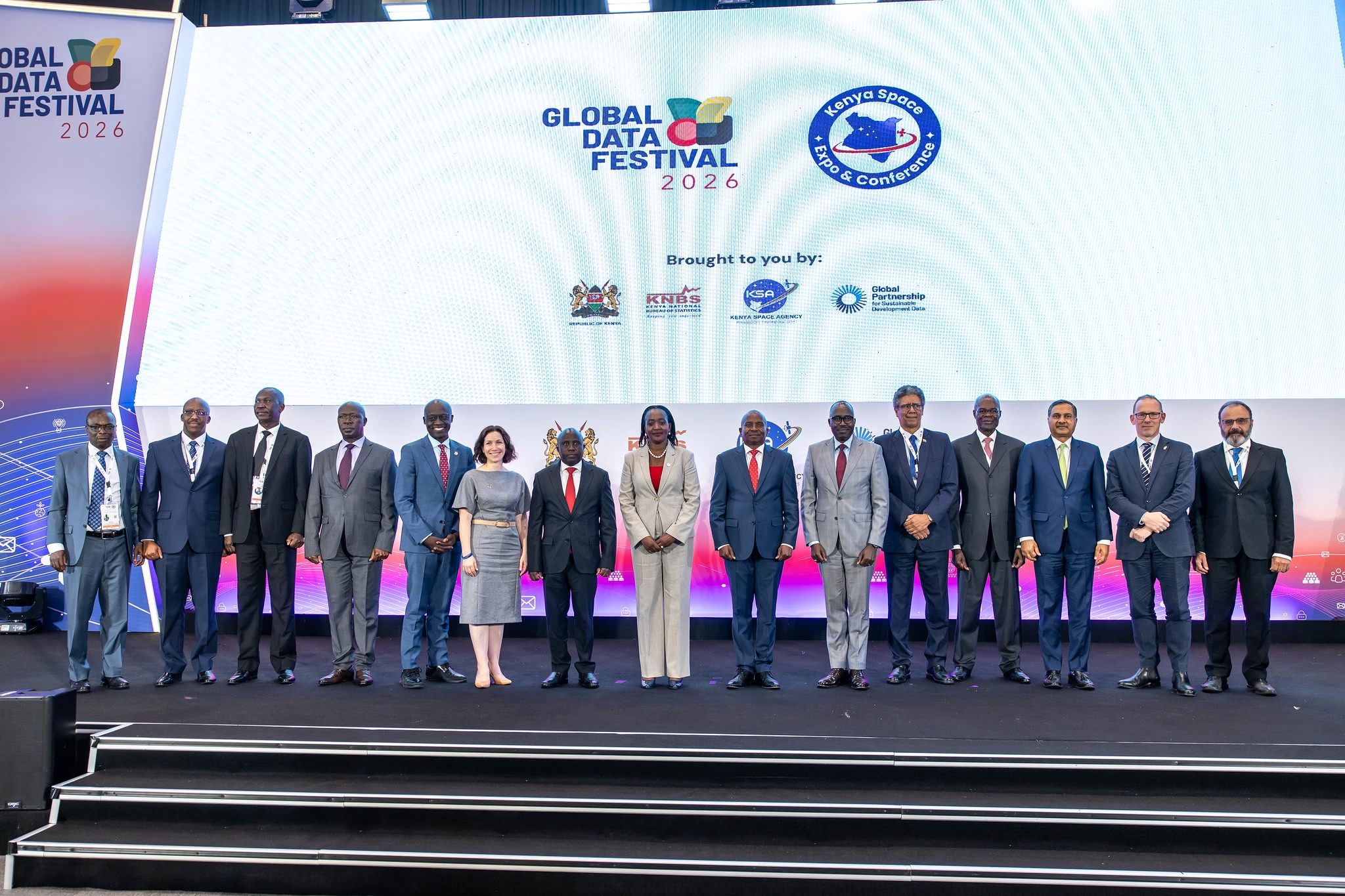
Nairobi became the focal point of global discussions on data and space technology from June 2 to 5, hosting the first-ever Global Data Festival on African soil alongside the third Kenya Space Expo and Conference. The four-day event, co-organised by the Kenya National Bureau of Statistics (KNBS), the Kenya Space Agency (KSA), and the Global Partnership for Sustainable Development Data (GPSDD), brought together more than 1,000 delegates from over 60 countries, including policymakers, researchers, statisticians, space scientists, technology firms, development partners, and private sector innovators.
Held at The Edge Convention Centre in Nairobi, the joint gathering underscored the growing role of data and space-based technologies in shaping national development strategies. Against a backdrop of increasing adoption of data-driven policymaking across Africa, discussions focused on integrating satellite data, geospatial information, and emerging technologies to improve infrastructure planning, strengthen climate resilience, enhance public service delivery, support disaster management, and drive sustainable economic growth.
Feature Sessions
Prospects for Launch Capabilities in Africa
The session on Africa’s launch capabilities examined the practical requirements for building a viable launch ecosystem on the continent, with discussions extending beyond infrastructure and technology to the enabling conditions needed to attract commercial activity. Speakers highlighted the development of robust legal and regulatory frameworks as a critical foundation for any future launch market, providing the certainty required by investors, operators, and international partners. An often-overlooked theme was the role of insurance, with panellists noting that insurability serves as a marker of industry maturity and commercial competitiveness.
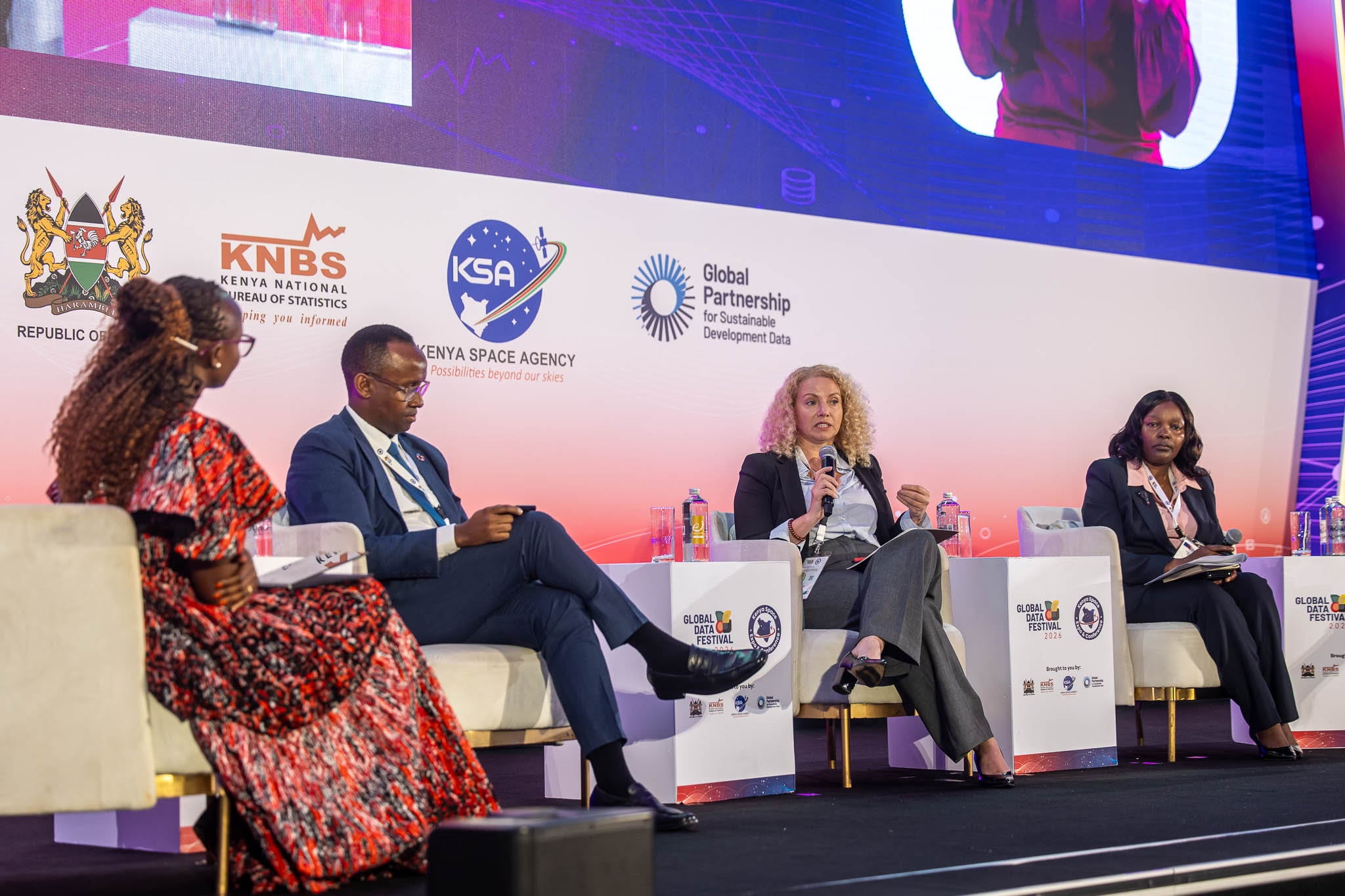
The ability to secure insurance for launch operations was highlighted as a key indicator of confidence in a country’s regulatory environment, risk management practices, and technical capability, and a critical factor in attracting customers and investment. Participants noted that as African nations advance their launch ambitions, including Kenya’s emerging spaceport plans supported through an ongoing transaction advisory services process, equal attention must be given to strengthening policy, regulatory, and financial frameworks alongside physical infrastructure. This integrated approach, they said, is essential for building sustainable and globally competitive launch ecosystems.
Enhancing Precision in Positioning and Navigation Systems
Discussions on enhancing precision in positioning and navigation systems examined the technologies and operational frameworks required to meet increasingly stringent accuracy demands across multiple sectors. Speakers underscored the value of GNSS-based systems and augmentation services in improving positioning accuracy, particularly when supported by reference networks that close existing precision gaps for high-demand applications. However, the discussion also pointed to persistent barriers to adoption, notably the high cost of precision equipment, which limits uptake among potential users and slows the scaling of commercial services.
Participants noted that in many contexts, GNSS is still primarily used as a backup system rather than the backbone of operational decision-making, despite its strong potential in utilities, aviation, logistics, and other safety-critical sectors where reliability and accuracy are essential. Governments were encouraged to play a more active role in supporting infrastructure development and reducing cost barriers, thereby enabling wider deployment and unlocking new use cases for high-precision navigation services. The session ultimately highlighted that advancing precision positioning is as much a policy and investment challenge as it is a technical one.
Practical Approaches to SSA Capability Development in Africa
Kenya’s ongoing development of SSA capacity was featured in the discussions, with reference to real-world applications through the space debris incident in Makueni in December 2025, which underscored the operational relevance of these systems. The conversation also highlighted the complementarity between SSA and astronomy, noting that instruments such as telescopes used in missions like DART can be repurposed for astronomical observation, creating efficiencies and shared value across disciplines. Overall, the discussions reinforced SSA as both a strategic necessity for space safety and a foundational capability for strengthening Africa’s broader space science and technology ecosystem.
Positioning Kenya as an Astro-Tourism Destination
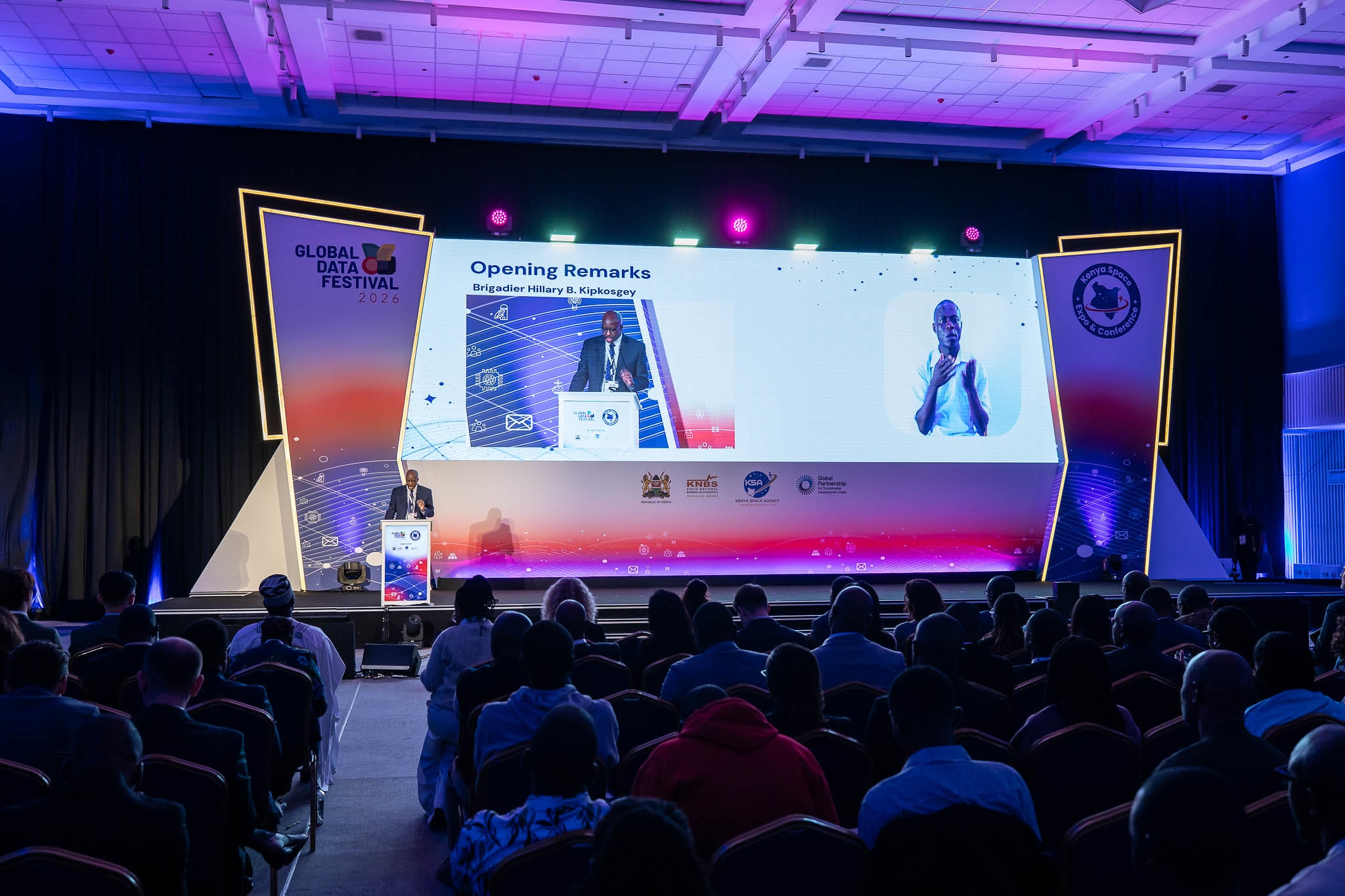
Positioning Kenya as an astro-tourism destination highlighted the sector’s potential as a sustainable and inclusive driver of economic growth, particularly through job creation, small enterprise development, and deeper integration of local communities into tourism value chains. Moderated by Space in Africa’s Samuel Nyangi, the discussion highlighted Kenya’s strategic advantages, including its dark skies, equatorial location, and generally favourable climatic conditions, which collectively strengthen its competitiveness as a global astro-tourism hub.
A key emphasis was placed on the role of cultural astronomy in shaping authentic, distinctly African visitor experiences, moving beyond observational tourism to incorporate heritage and storytelling. Speakers also underscored the role of government in establishing and enforcing dark sky protection measures, noting that claims of pristine skies must be backed by quantifiable assessments and monitoring frameworks to ensure credibility and long-term sustainability. The conversation further highlighted investment opportunities, infrastructure development, and public-private partnerships as essential enablers for scaling the sector in a structured, commercially viable way.
Key Messages from the Conveners
Kenya Space Agency Director General Brigadier Hillary Kipkosgey said investments in Earth observation infrastructure are central to transforming raw satellite data into actionable intelligence across key sectors of the economy, noting that the value of satellite systems lies in how effectively their outputs are translated into decision-making tools.
“Satellites generate enormous amounts of information that help us understand what is happening on Earth. Through investments in Earth observation infrastructure and partnerships, Kenya is translating satellite data into insights that support food security, disaster risk reduction, environmental management and sustainable development,” he said.
He added that the agency is expanding access to Earth observation data through continued investment in ground infrastructure and strategic partnerships, including collaboration with the Italian Space Agency. According to him, these efforts aim to strengthen research, innovation, and evidence-based public-sector planning, and to improve the integration of satellite-derived insights into national development priorities.
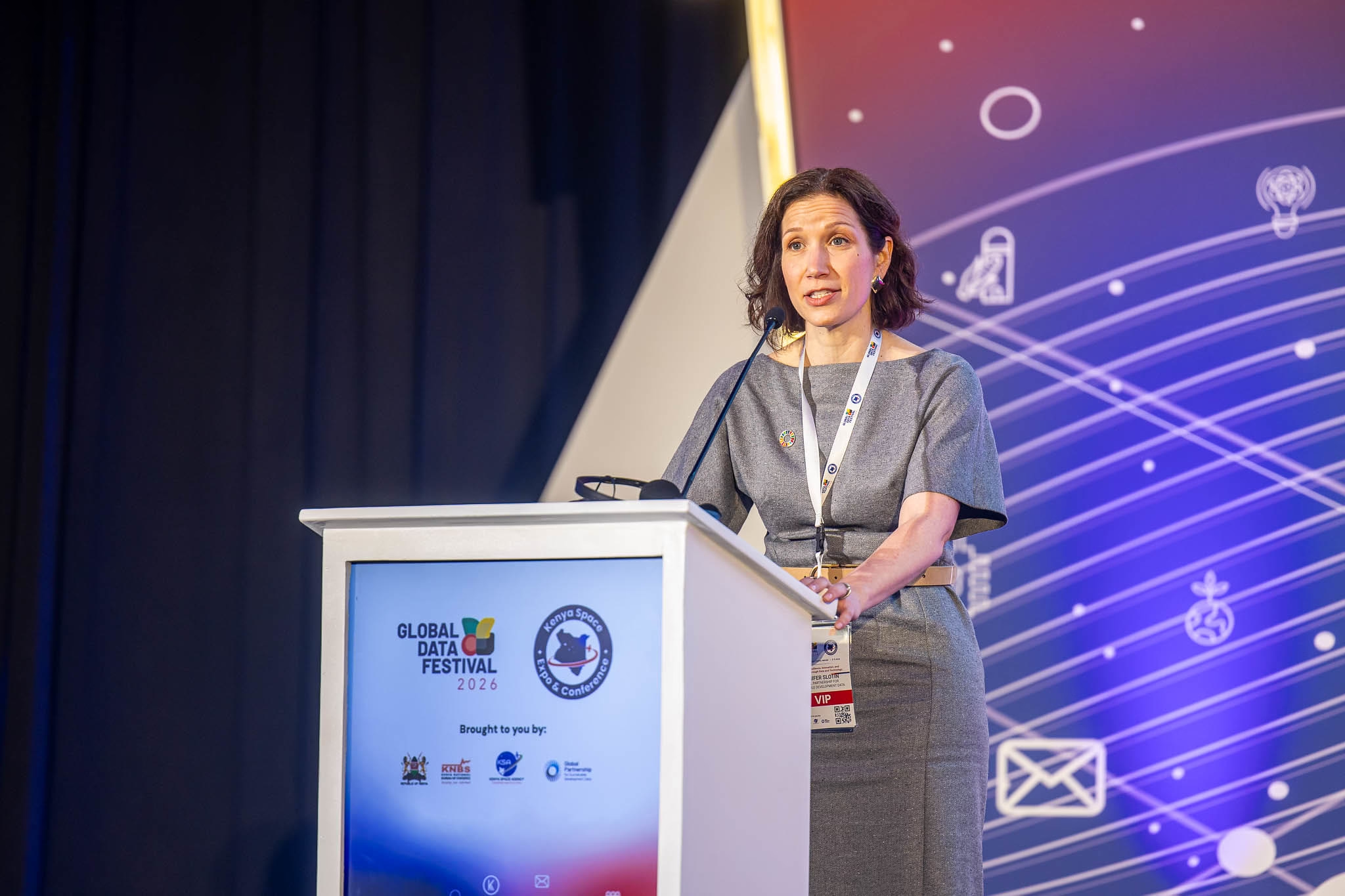
The Global Partnership for Sustainable Development Data (GPSDD) highlighted the strong economic case for investing in data systems, noting that every dollar spent generates an estimated USD 32 in returns through improved planning, investment decisions, and service delivery. The organisation stressed that beyond economic returns, reliable data systems are essential for inclusive development and investor confidence. GPSDD Chief Executive Officer Jenna Slotin noted that “every data point represents a person, and every pixel represents a place, a community and a life,” underscoring the human dimension behind data-driven governance and decision-making.
Special Envoy on Technology Philip Thigo said stronger collaboration between governments, businesses, and development institutions is key to unlocking the economic value of data while safeguarding privacy and security. He noted that the convergence of the data and space science communities provides an opportunity to advance data interoperability, strengthen policy frameworks, and drive innovation in support of sustainable development outcomes.
Speaking during the closing ceremony, Kenya National Bureau of Statistics (KNBS) Director General Macdonald Obudho said quality data remains central to inclusive economic development and effective policymaking. He emphasised that statistical systems and space-based information are increasingly interconnected, noting that “in statistics, you require the space information too,” underscoring the need for stronger cross-sector collaboration in modernising national data systems.