
Kenya Hosts the Inaugural African Women in Space Conference (AWiSC) 2025
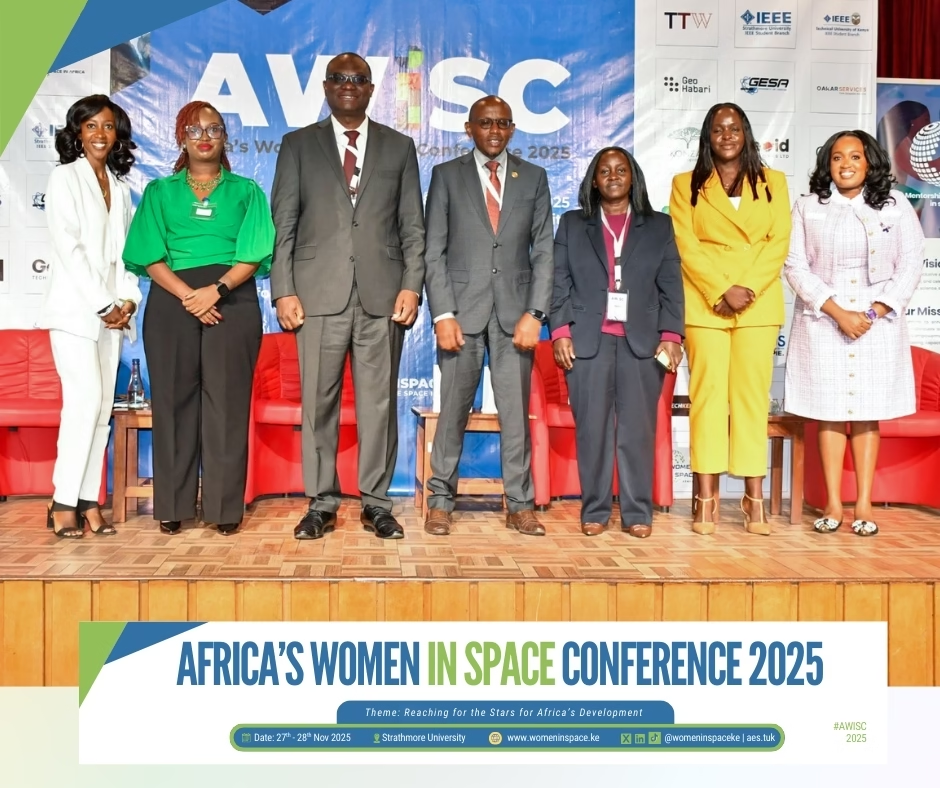
Women in Space Kenya, in collaboration with the Association of Engineering Students of the Technical University of Kenya, organised the African Women in Space Conference (AWiSC) 2025, held from 27–28 November 2025 at Strathmore University in Nairobi, Kenya, under the theme “Reaching for the Stars for Africa’s Development.” The conference placed a deliberate spotlight on women in the space sector, recognising their growing contributions while also addressing the persistent gaps that continue to limit full and equitable participation.
Day One Highlights
Day One of the Africa Women in Space Conference (AWiSC) 2025 opened with a strong affirmation of Africa’s commitment to building an inclusive, resilient and future-focused space sector. The opening session brought together key institutional leaders whose reflections established the day’s overarching themes: collaboration, gender inclusion, and the strategic development of Africa’s space ecosystem.
Opening Remarks
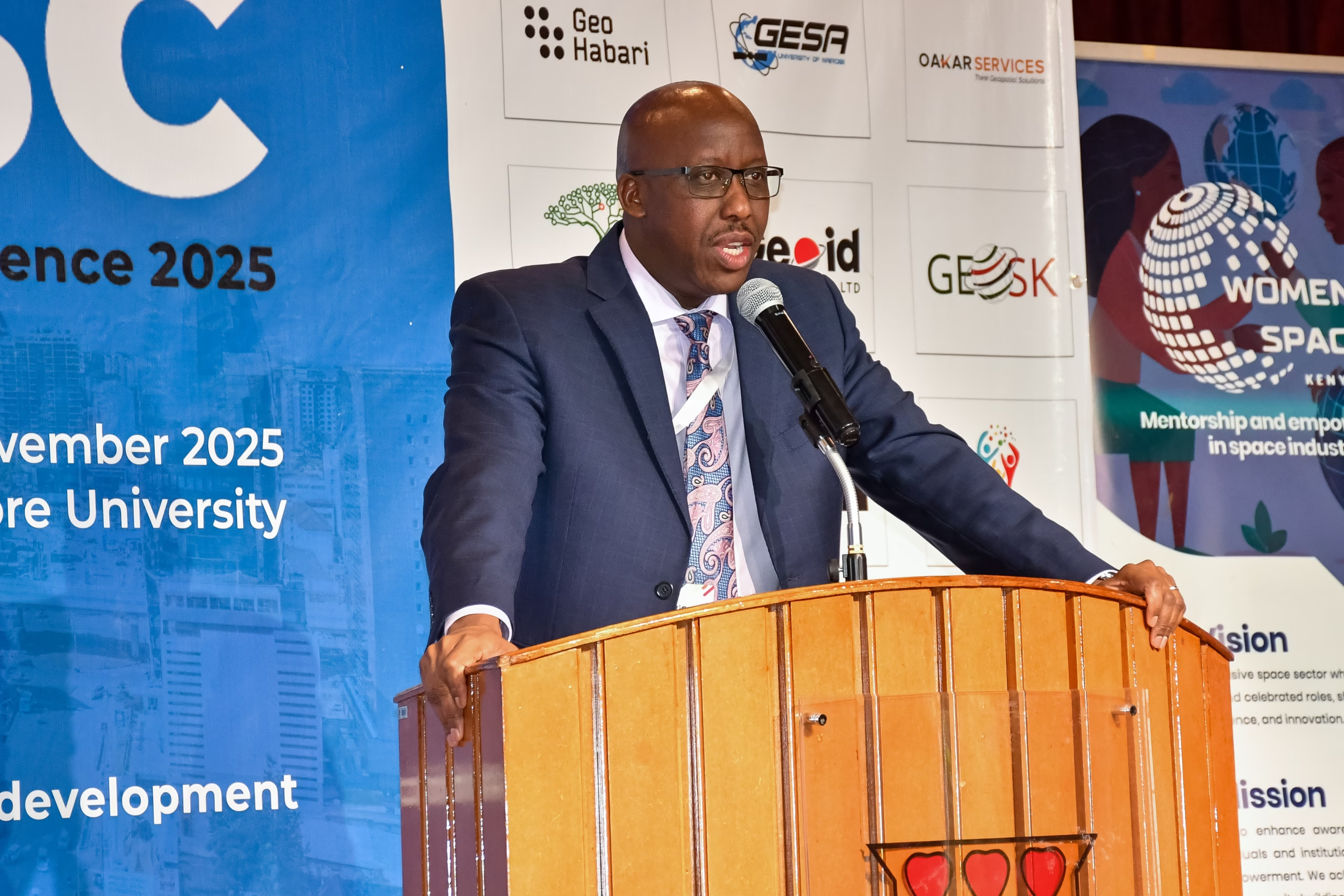
Stella Mutai, Co-Founder of Women in Space Kenya (WiSK) and Geospatial Planner at the World Bank, set the tone by emphasising the importance of women taking deliberate leadership roles in shaping Africa’s space future. Elvina Rioba, President of SCESA and representative of Strathmore University, welcomed participants on behalf of the host institution and highlighted the role of academic partnerships in nurturing the next generation of space professionals. After setting the stage, Brigadier Hillary B. Kipkosgey, Director General of the Kenya Space Agency, reinforced the growing institutional alignment around policy development and capacity-building, stressing that despite Africa’s progress, gender mainstreaming remains a critical frontier. He reaffirmed KSA’s commitment to advancing both regulatory frameworks and inclusive participation to ensure the benefits of space technology reach all communities.
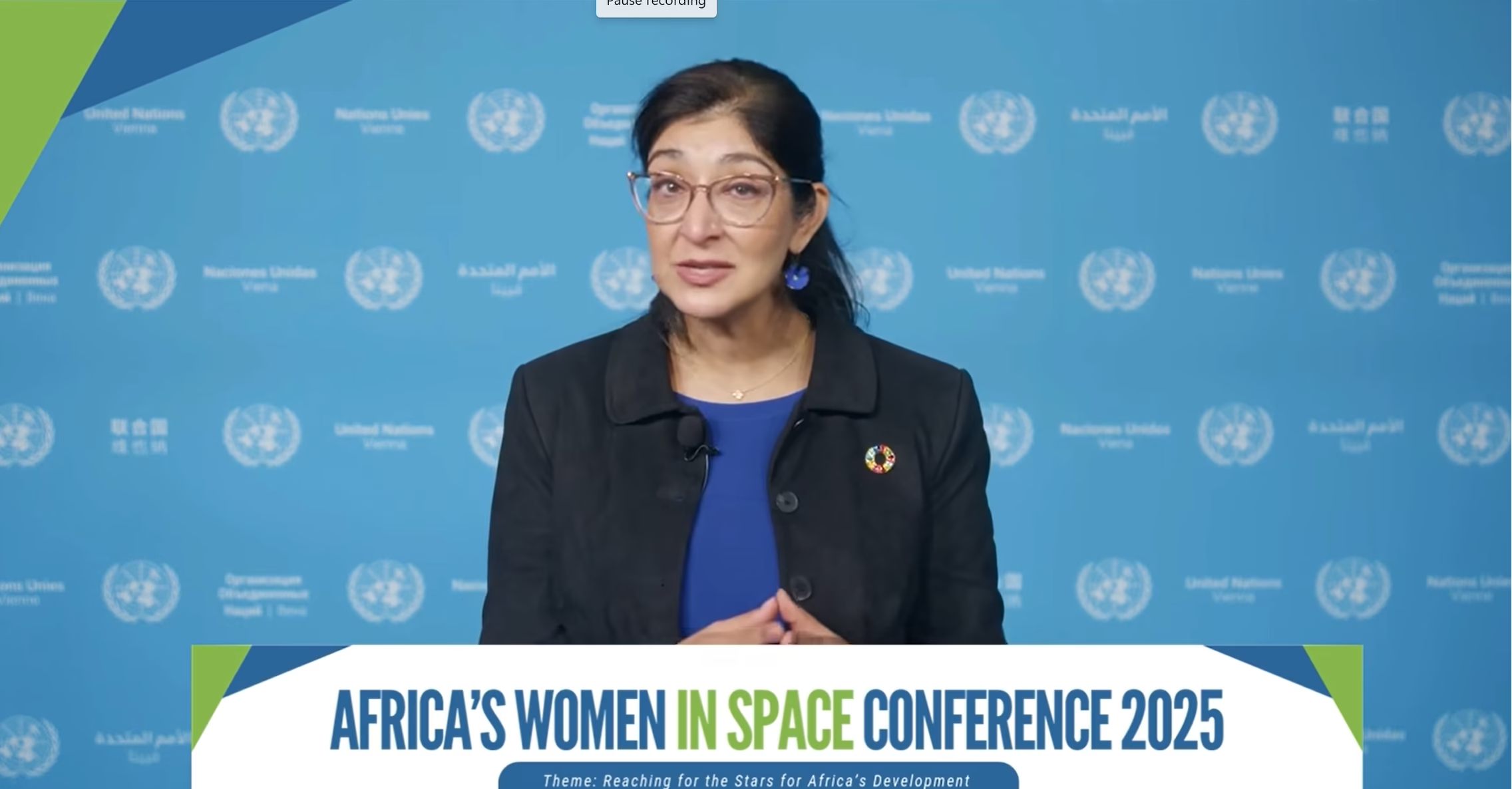
Aarti Holla-Maini, Director of the United Nations Office for Outer Space Affairs (UNOOSA), delivered a keynote that framed Africa’s global role through the lens of gender, inclusion and sustainable development. Drawing from UNOOSA’s gender equality assessment, she highlighted Africa’s remarkable leadership, noting that public space institutions across the continent have the highest proportion of women in management and leadership roles worldwide. She further stated that while global disparities persist, African women-led startups and early-career professionals are reshaping the industry’s trajectory. Her call for stronger mentorship, earlier STEM outreach and a dedicated toolkit to support under-resourced communities reinforced the day’s focus on inclusion as a driver of long-term competitiveness.
Morning Session: Reaching for the Stars in Africa’s Development
Subsequent keynote presentations expanded the conversation to Africa’s broader innovation landscape. Esri’s Pauline Okeyo described startups as the “engine of space innovation” in Africa and stressed the need for accessible data, cloud tools, and public-sector purchasing to help early-stage companies survive beyond the proof-of-concept stage. A panel discussion that followed explored national infrastructure, agriculture, data systems and funding models. Following the keynote, panellists argued that Africa’s space sector must prioritise local needs such as food security, land monitoring, connectivity, and further highlighted persistent gaps in data access, cloud infrastructure, and industry–academia alignment. The issue of funding, particularly for R&D, emerged as a recurring theme, alongside emerging opportunities such as parametric insurance, where satellite data is increasingly central to risk modelling.
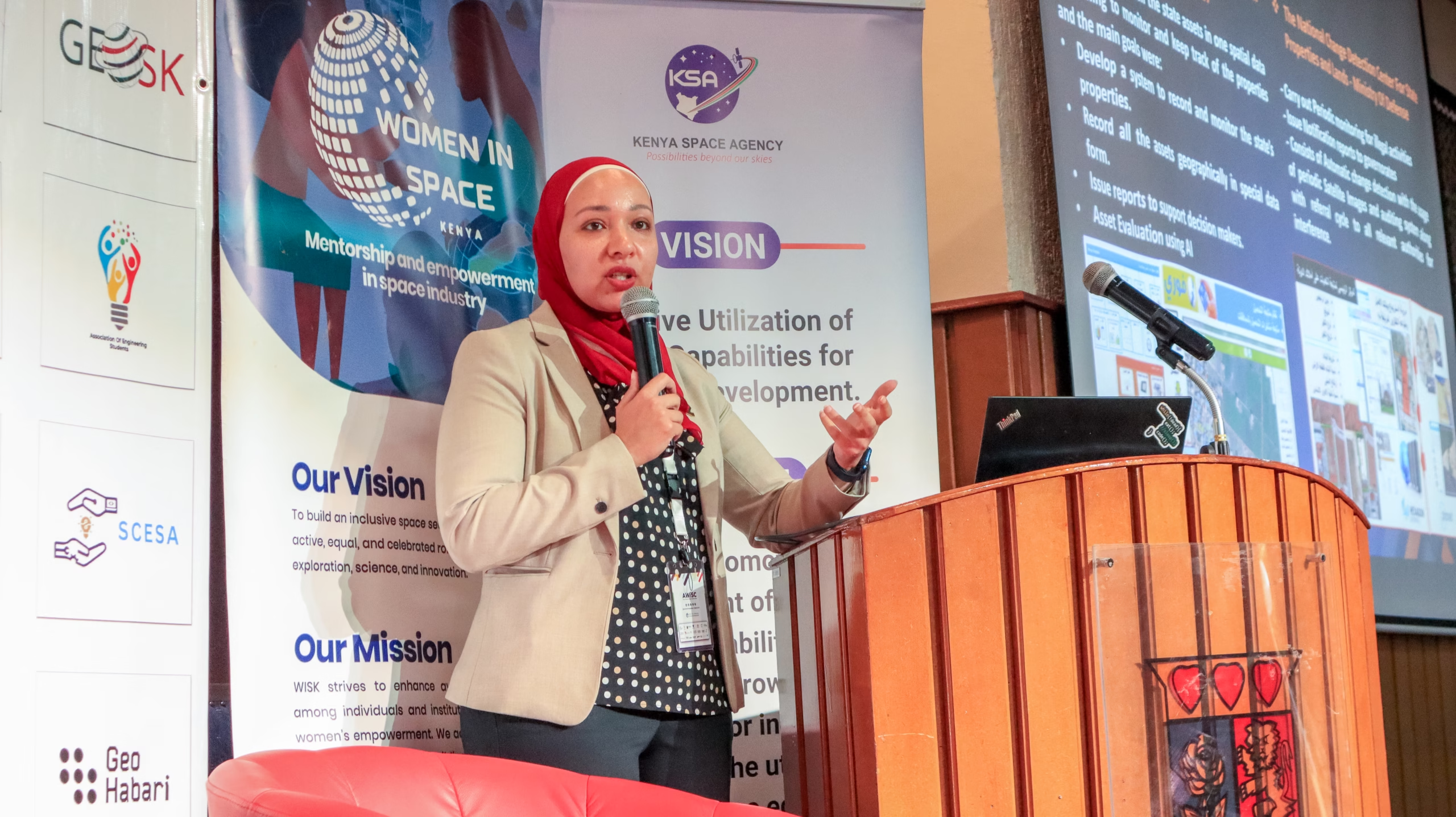
In the following sessions, Eng. Enjy Salah, Chairwoman of Geomakani, demonstrated how satellite-enabled solutions already support land management, illegal encroachment detection, mining activities, and agricultural monitoring across the Middle East and Africa. Dr Shikoh Gitau, CEO and Founder of Qhala, then shifted attention to Africa’s AI readiness, outlining the four pillars: data, talent, markets and digital infrastructure, required to build competitive AI systems. She argued that without Africa’s women and youth positioned as leaders of AI-driven transformation, the continent risks reinforcing existing inequalities rather than solving them.
Institutional perspectives later in the day emphasised the importance of ecosystem-building. Jacques Matara of the Kenya Space Agency showcased ongoing youth-focused programmes, including the Kenya Space Generation Workshop and the Space Investment and Innovation Challenge, aimed at expanding participation and stimulating private-sector growth. Peris Ngumba of the Research Institute for Innovation & Sustainability (RIIS) presented a framework for inclusive innovation ecosystems, highlighting the essential roles of talent pipelines, infrastructure, governance, funding, and community engagement. She stressed that inclusive design must be embedded from the onset to ensure diverse teams can build targeted, high-impact solutions.
Panel Discussion 2: Levelling up – Career progression, Research and Innovation
A second panel session on capacity-building highlighted the widening gap between academia and industry in Kenya, noting that graduates often lack the applied skills employers require. Panellists called for intentional curriculum reform, stronger partnerships, proactive upskilling, and a renewed focus on employability and problem-solving capacity as key measures of academic success. The session also encouraged young professionals to leverage free online training, cultivate foundational coding skills, and take initiative in bridging their own knowledge gaps.
The panel featured a multidisciplinary group of professionals drawn from academia, industry, and applied Earth observation, including Dr Adah Majala Tole, a Lecturer at the Technical University of Kenya with a PhD in Space Orbital Mechanics from the University of Strathclyde, Glasgow, Stella Kaniaru, an Associate Account Manager at Ansys part of Synopsis, Victoria Neema, an Earth Observation Data Scientist at Digital Earth Africa and Dr Clifford Okembo, Founder and Director of Geo-Consult Ltd and a Lecturer at the Technical University of Kenya.
Space Immersion Experience
The day concluded with an engaging Space Immersion Experience, designed to translate discussion into practice through hands-on interaction. Women in Space Kenya led targeted speed mentorship sessions, connecting early-career participants with experienced professionals. At the same time, Leo Sky Africa delivered immersive planetarium experiences and live rocket demonstrations that brought space science closer to the audience.
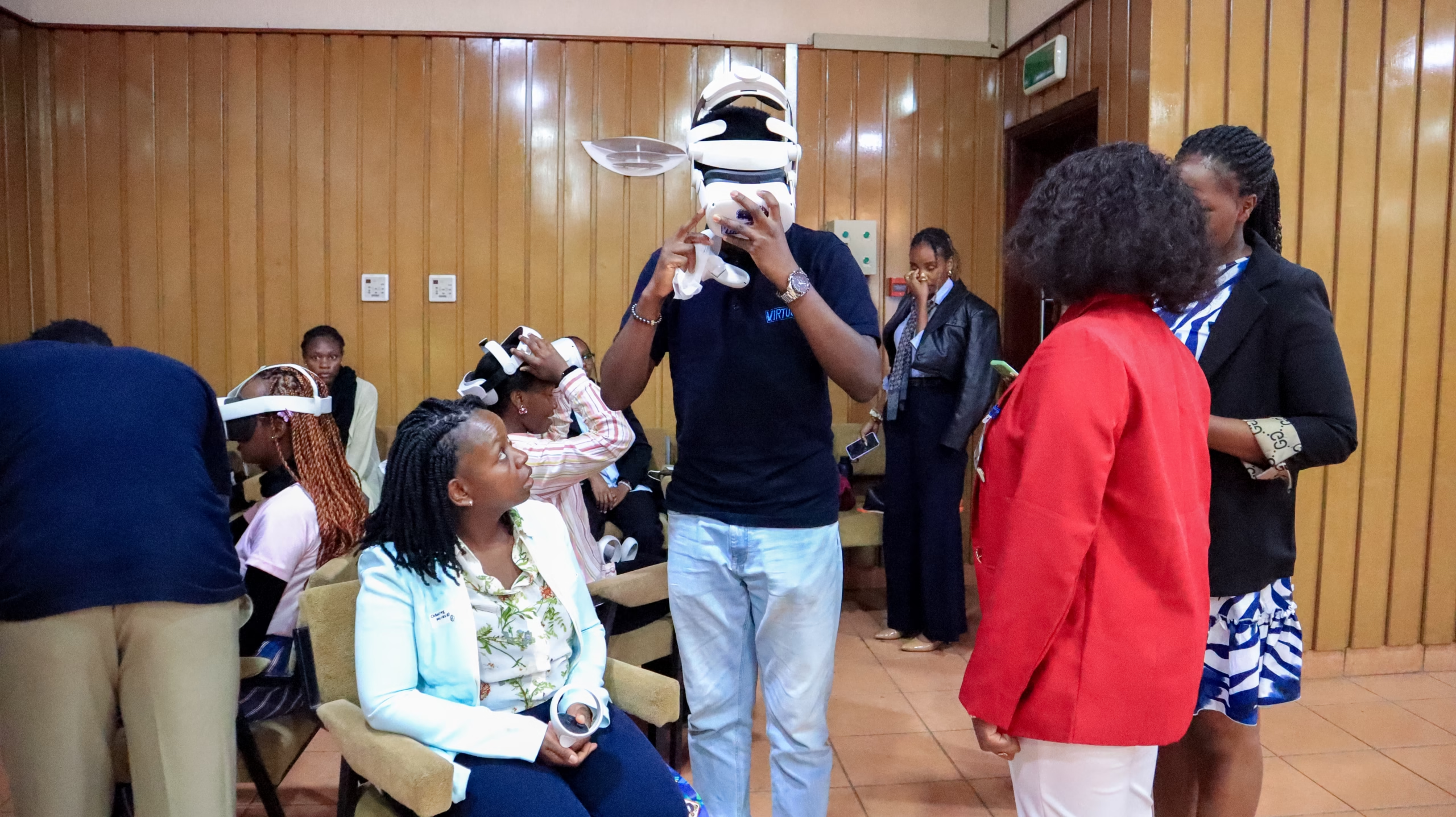
Practical exposure to applied technologies was provided through drone demonstrations by Geoid Technologies and Konza Technopolis, as well as virtual reality showcases led by the Multimedia University of Kenya Optical Society (MUKOS) and VirtueQuest. The experience was rounded off with interactive space quizzes facilitated by Penda Kujua, reinforcing learning in an accessible and engaging format. Collectively, these activities underscored AWiSC’s commitment to inspiring, educating, and equipping the next generation through experiential learning and direct engagement with space technologies.
Day Two Highlights
Day 2 of AWiSC 2025, themed “Women in Space, Policy & Governance, spotlighted the pivotal contributions of women to Africa’s space sector and the policy frameworks required to drive continental progress. The speaking floor was opened by Joy Munnet, former IEEE Strathmore University Branch President, who highlighted the crucial role of perspective: individuals’ unique experiences growing up in Africa are not a weakness but a superpower that enables them to see problems and opportunities differently. Then the keynote kicked off.
In the keynote, Joan Chesoni, an expert in space policy, governance and law, underscored that Africa’s transition from a consumer to a producer in the global space economy depends on an inclusive, multidisciplinary, and collaborative approach. Highlighting systemic challenges, she noted the “high effort, low recognition” paradox faced by women in space, particularly in areas such as space law, policy, and governance, while emphasising the transformative economic impact women can have. 47% of women in the market are driving innovation in health, agriculture and education through space technologies.
The session emphasised the importance of mentorship, framing it as a bridge rather than an obstacle, and called for actionable solutions, including mentorship pipelines, institutional reforms with gender parity targets and dedicated funding and incubation hubs for women-led space enterprises. The overarching message was clear: an African space agenda without women is incomplete, and empowering women is key to unlocking the continent’s full potential in space.
Short Highlight Video: Why Women’s Voice in Space Matters
In a short video, Nelly-Helen Ebruka, Africa Region Coordinator at SGAC, highlighted that women’s participation is critical for the growth and representativeness of space industry subsectors. Emphasising a decolonial approach inspired by African feminists, she argued that women must shape sectoral structures from the foundation, not merely join pre-set tables. Inclusion of women in decision-making roles ensures that strategies, governance, and resource allocation reflect African agency and community needs. Their leadership, she noted, generates a ripple effect across health, agriculture, climate resilience and foreign policy, strengthening national development and Africa’s influence in global space governance.
Panel Discussion I: Breaking Gravity – Women Rising in Africa’s Space Industry
The Breaking Gravity: Women Rising in Africa’s Space Industry panel, moderated by Charlynne Jepkosgei, who is the founder of Women in Space Kenya, brought together leading voices, including Muthoni Mwangi, Carol Njeri Kiarie, Pauline Okeyo, and Joy Cherono Kirui, to explore the pathways and barriers for women in Africa’s space sector. The discussion opened with recognition of the vital role male allies, such as lecturers, colleagues and leaders, play in advancing inclusive environments and supporting women’s careers, highlighting that gender equity is a collective responsibility.
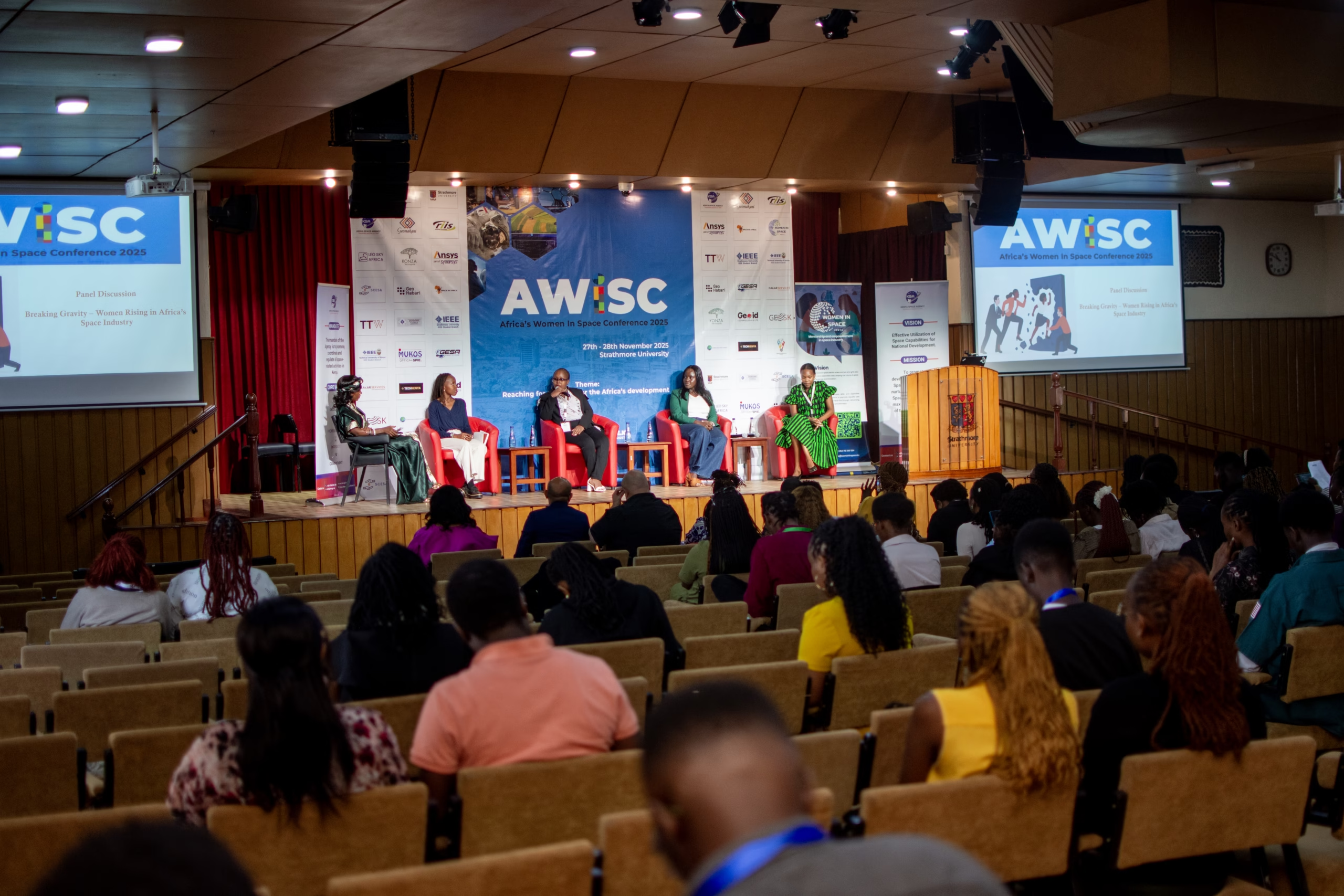
Panellists identified key challenges, including a lack of mentorship, visibility, and social pressure; a gap between education and industry; and hostile workplace cultures. Proposed solutions emphasised actionable institutional reforms, such as implementing accessible, regulated mentorship programmes from early education, promoting women into leadership and technical roles, investing in internal and external capacity-building, providing technology for early exposure, and cultivating inclusive workplaces that balance technical competence with interpersonal support. These insights underscore that structured support and systemic change are critical to enabling women to thrive and lead in Africa’s space industry.
Short Highlight video: The Space Ecosystem – Space is for Us
Wanjiku Chebet Kanjumba, co-founder of Vicillion and aerospace entrepreneur, emphasised that Africa’s space sector is a broad ecosystem that extends beyond engineers and scientists to include coders, lawyers, artists, marketers, and even farmers, united by curiosity and the drive to address pressing challenges. She encouraged individuals to start where they are by cultivating relentless curiosity, mastering their craft, and actively connecting with communities through clubs, forums, and competitions. Highlighting the unique value of African perspectives, she described lived experiences on the continent not as limitations but as superpowers that reveal distinctive problems and opportunities. Ultimately, Kanjumba underscored that the space sector welcomes innovators and problem-solvers from all walks of life to leverage space technology in tackling Earth-bound challenges.
Keynote Session II: Policy and Governance for Africa’s Space Ecosystem
In this keynote session, David Kasibante, a space policy, governance and law expert, highlighted that Africa’s challenge lies not in space activities themselves but in space governance, noting that only five African countries shaped global space negotiations in the 1960s. While the continent possesses talent and infrastructure, it currently contributes just 1% to the global space economy, reflecting gaps in implementation and inclusivity. He stressed that merit-based systems, rather than “diversity hires,” are essential to address structural barriers for women, including educational pipeline gaps, hostile workplaces, and limited mentorship. Kasibante called for prioritising space governance, closing the gender-blind spot in academia and research, and ensuring international partnerships focus on building continental capacity.
Panel Discussion II: Policy and Governance for Africa’s Space Ecosystem
Panel Discussion II, moderated by Johnmark Ochieng, brought together David Kasibante, Rachael Olore (KSA), Byron Anangwe (Expertise France) and Josephine Ndambuki (Konza Technopolis) to explore the policy and governance frameworks needed to strengthen Africa’s space ecosystem. The panel identified critical challenges, including implementation gaps, limited budgets, regulatory barriers, and the need to retain local ownership of innovations. Participants emphasised that political will, strategic planning, and collaboration between government and private sector actors are essential to ensure effective policy execution and resource optimisation.
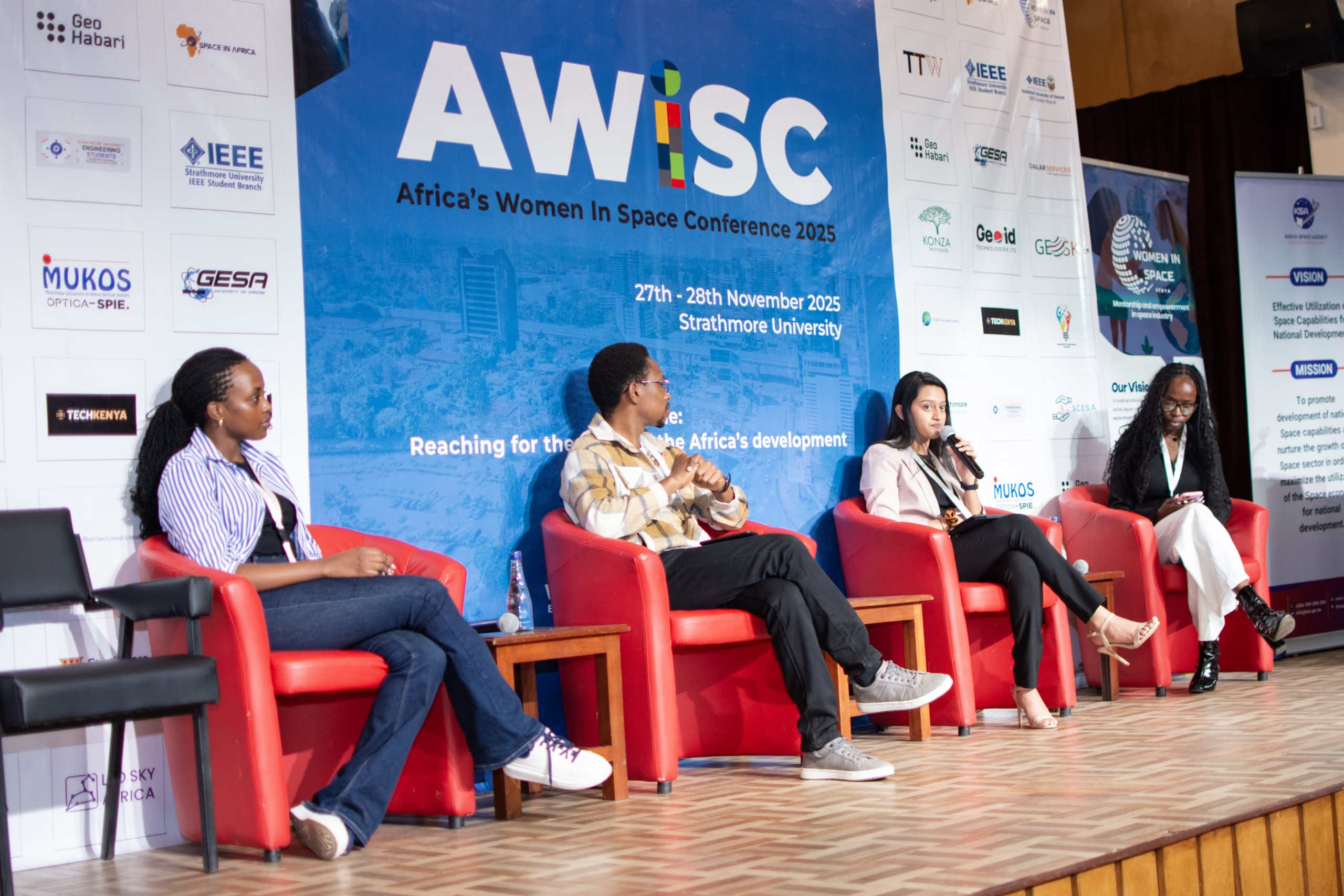
The discussion also highlighted the importance of experimentation and talent development, recommending the establishment of sandboxes and drone zones to encourage testing, as well as measures to protect and commercialise local intellectual property. Panellists emphasised the necessity of investing in local talent, co-creating with communities, and bridging the education-to-industry gap through early STEM engagement, internships, hackathons, and university partnerships. By addressing regulatory, financial and educational barriers in a coordinated manner, the panel argued, Africa can build a robust, locally led space sector capable of competing on the global stage.
Panel Discussion III: Emerging Voices Fireside Chat
Panel Discussion III, moderated by Daisy Jelagat, featured emerging voices in Africa’s space sector, including Mahek Shah, Linus Anari, and Junn Hope Wangari, who shared their non-traditional pathways into the field. The panel underscored that curiosity, initiative, and mentorship are critical to success, and highlighted that space is inherently multidisciplinary, welcoming professionals from diverse backgrounds beyond STEM. Panellists emphasised the importance of creating opportunities, challenging social norms, and promoting meaningful inclusion rather than tokenism, while noting that personal fulfilment comes from learning, embracing new perspectives, and building practical solutions. Their final encouragement to young professionals was straightforward: “Closed mouths don’t get fed”; take initiative, volunteer, and actively open doors for yourself.”
In the afternoon, attendees participated in the hands-on Space Immersion Experience designed to reinforce learning and engagement, similar to day one. These experiences brought theory to life, allowing participants to connect directly with space technologies while fostering inspiration, collaboration, and practical understanding.
Conclusion
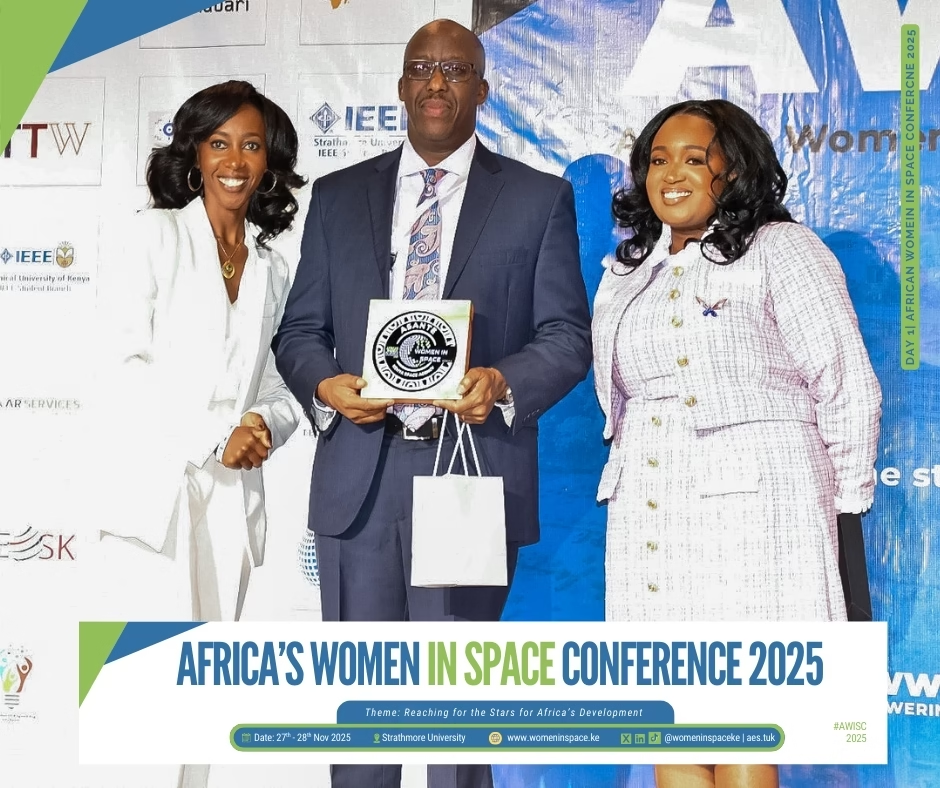
Day 2 concluded with a clear message: Africa’s space sector can only thrive by embedding gender inclusion as a standard across leadership and policy roles, and by strengthening governance through decisive implementation, adequate funding, and supportive legal frameworks that protect local talent and promote innovation. Together, these priorities will shape a more inclusive, resilient and globally competitive African space ecosystem.
“The feedback from participants was overwhelming and deeply affirming. Many described the conference as inspiring, timely, bold and long overdue. Others shared that AWiSC was not just a conference, but a safe space to learn, connect, be seen and now envision themselves as leaders in Africa’s space ecosystem.”
AWiSC promoted meaningful engagement across the ecosystem, with students discovering new career pathways, young professionals connecting with mentors and collaborators, and institutions identifying opportunities for strategic partnerships. In doing so, the conference catalysed substantive dialogue and tangible momentum across Africa’s space community.
“We look forward to the next Africa’s Women in Space Conference (March 2027) – bigger, bolder and more inclusive continentally as we continue building a future where African women don’t just participate in space, but lead it,” Charlynne Jepkosgei- Founder, Women in Space Kenya.