African Space Industry Annual Report, 2025 Edition Global License
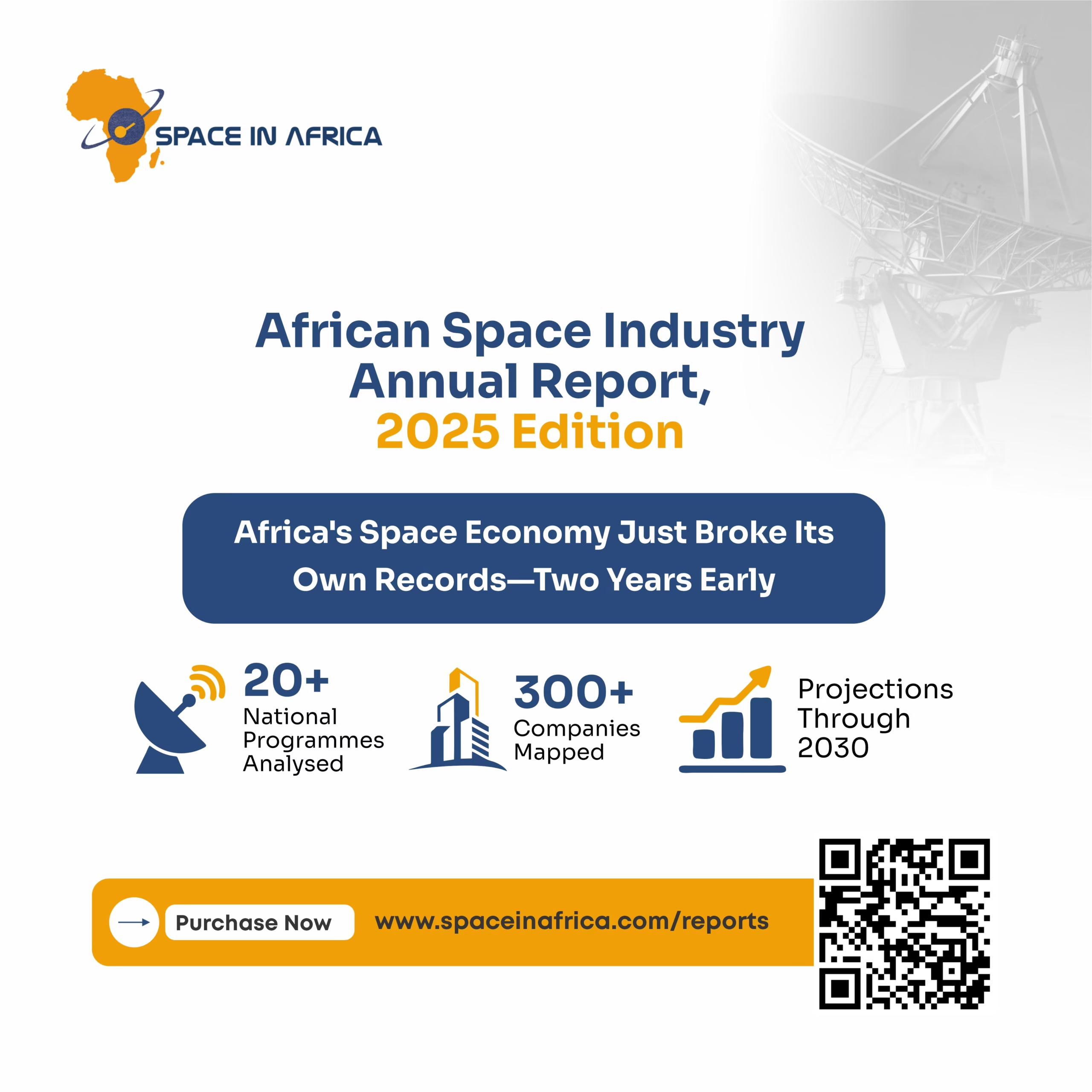
This report provides an up-to-date analysis of the African space industry segments, government priorities, business trends, promising models, and development outlook. Purchase to get year-long access to real-time African space industry data and insights.
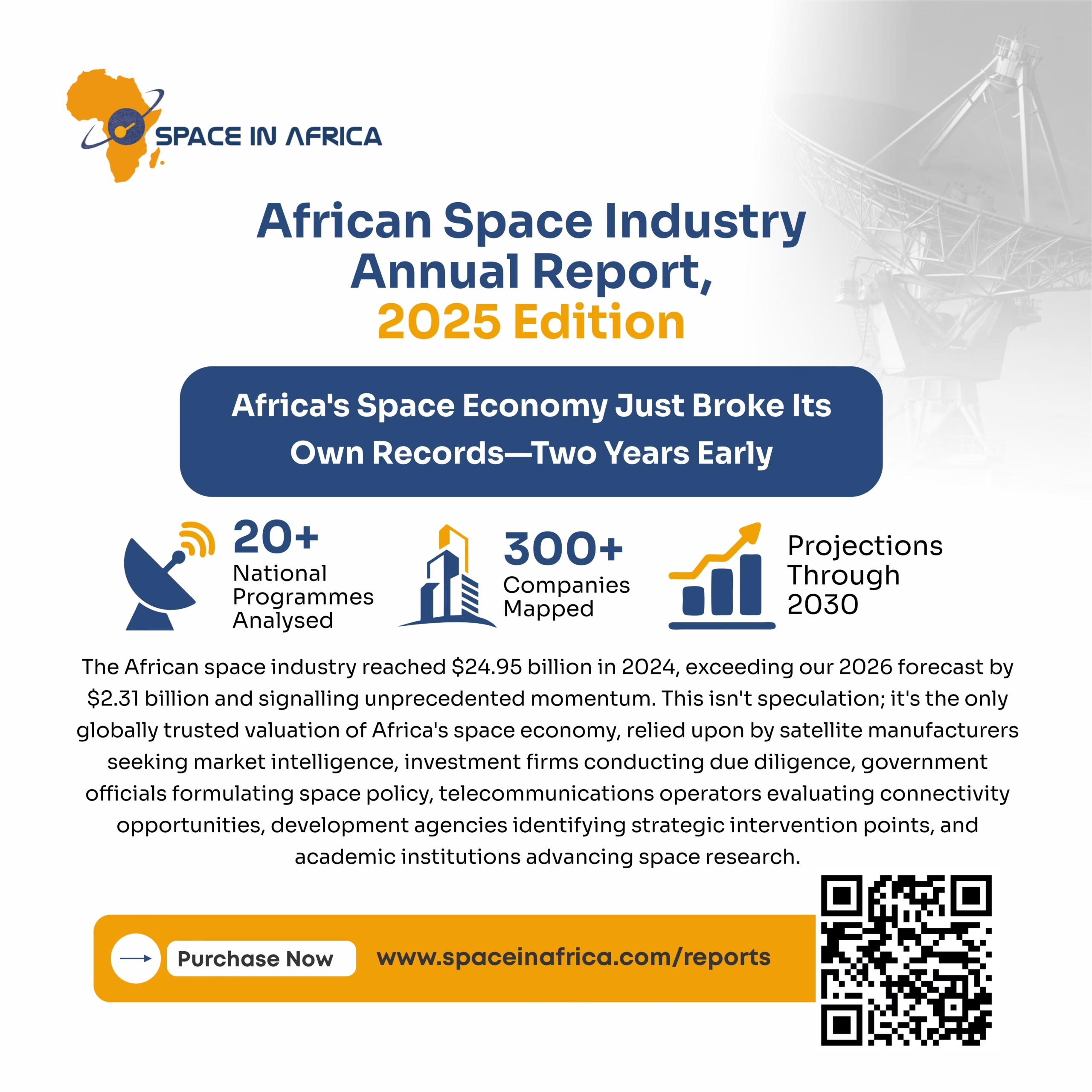
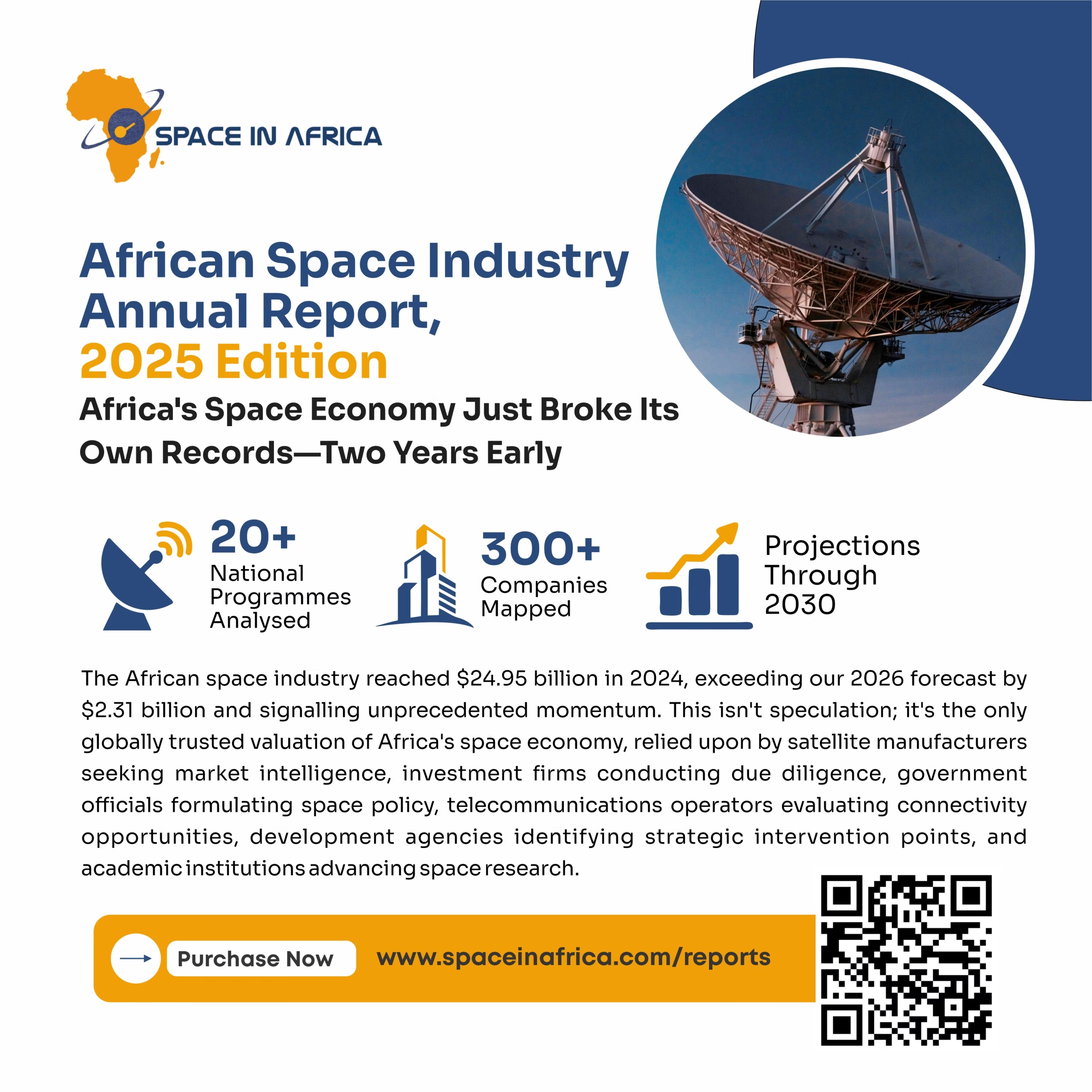
The African Space Industry Report 2025 is the definitive resource for understanding Africa’s space ecosystem, providing a comprehensive analysis of the continent’s space economy, national programmes, satellite manufacturing landscape, and emerging opportunities. This year’s report features a new valuation of the African space economy for 2024, with projections through 2030, building on our 2022 valuation, which became the foundation for global discussions on African space capabilities. Our transparent, robust methodologies, detailed throughout the report, demonstrate how each figure is derived, reinforcing the international space community’s trust in our intelligence and establishing this report as the authoritative reference for Africa’s space sector.
-
- 1.0. The African Space Economy1.1. Introduction1.2. The Current State of the African Space Industry 1.3. Core Segment Analysis2.0. National Space Programmes2.1. African Space Budget
2.2. African Space Agency Budget
2.3. Country-Level Analysis
2.4. International Budget Comparison
2.5. Funding Mechanisms for Large-Scale Projects
2.6. Space Priorities of African Countries
2.7. Space Agreements
2.8.National Space Policies
2.9. The African Lunar Trend: From Signatures to Substance in Lunar Governance Architectures
3.0. African Satellite Manufacturing Market Landscape
3.1. Historical Overview of Satellite Activities in Africa
3.2. Number of Satellites Launched (1998-2025)
3.3. Africa’s Contribution to Global Fleets
3.4. Satellite Distribution by Country of Ownership
3.5. Mission Analysis and Size Classification
3.6. Launch Vehicles & Providers
3.7. Manufacturing Insights
3.8. Insights from Historical Projects
3.9. Current and Future Satellite Demand in Africa
3.10. Market Enablers and Constraints
3.11. Financial Outlook: Manufacturing & Launch Costs
3.12. Cost Segmentation Analysis
3.13. Investment Trends and Growth Potential
3.14. Satellite Manufacturing Ecosystem in Africa
4.0. Industry Segment Trends
4.1. Earth Observation and Remote Sensing
4.2. Satellite TV
4.3. Africa’s FSS & MSS Market
4.4. Starlink Operations in Africa
4.5. Astronomy and Space Science
4.6. Ground Segment Infrastructure
4.7 Satellite Navigation and Positioning
4.8. Emerging Markets
5.0. Space Application Projects in Africa
5.1. Overview
5.2. Key Applications and their Development Roles
5.3. Funding Landscape
5.4. 2025 Active Projects
5.5. Key Application Areas Prioritised by African Space Programmes
5.6. Trends & Strategic Insights
6.0. African Newspace Industry Landscape
6.1. Industry Overview & Growth Trajectory
6.2. Geographic Overview
6.3. Segment Analysis
6.4. Ownership and Capital Dynamics
6.5. Business Model Evolution and Techno-Economic Imperatives in the African Space Sector
6.6. Funding Deep Dive
6.7. Revenue & Valuation Outlook
6.8. Segment Analysis
6.9. Talent & Workforce
7.0. Abbreviation
- 1.0. The African Space Economy1.1. Introduction1.2. The Current State of the African Space Industry 1.3. Core Segment Analysis2.0. National Space Programmes2.1. African Space Budget
The African Space Industry Report 2025 is the definitive resource for understanding Africa’s space ecosystem, providing a comprehensive analysis of the continent’s space economy, national programmes, satellite manufacturing landscape, and emerging opportunities. This year’s report features a new valuation of the African space economy for 2024, with projections through 2030, building on our 2022 valuation, which became the foundation for global discussions on African space capabilities. Our transparent, robust methodologies, detailed throughout the report, demonstrate how each figure is derived, reinforcing the international space community’s trust in our intelligence and establishing this report as the authoritative reference for Africa’s space sector.
Below is a detailed description of the different reader categories, explaining why they should read this report and what they stand to gain.
Space Industry Executives and Satellite Manufacturers
Why read this report: Access the most comprehensive market intelligence on Africa’s billion-dollar space economy, including the authoritative 2024 valuation and 2030 projections that the global space community relies upon for strategic planning.
What you’ll gain: Detailed insights into satellite procurement pipelines across 20+ African nations, identification of prime contractors and partnership patterns, understanding of how countries select manufacturers, and visibility into future satellite demand by mission type, size category, and readiness stage. The report’s transparent cost segmentation analysis, covering manufacturing and launch costs by mission, orbit type, and satellite size, enables precise bid preparation and competitive positioning in emerging African markets.
- Budget Benchmarking: Unprecedented comparative data on African space budgets, including spending as a percentage of GDP (2.1.3), percentage of defence budgets (2.1.4), and per capita spending (2.1.5).
- Policy Formulation: In-depth analysis of national space policies and priorities (2.6, 2.8) from over 8 key countries, providing a playbook of effective (and ineffective) strategies.
- Strategic Planning: Clear insights into international partnership models (2.7), funding mechanisms for large projects (2.5), and the geopolitical landscape of lunar engagement (Artemis Accords vs. ILRS) (2.9).
Investment Firms and Private Equity
Why read this report: Gain exclusive access to market sizing, valuation methodologies, and growth projections for Africa’s space economy that institutional investors worldwide use as their baseline for due diligence and investment theses. Similarly, find and vet investment opportunities across the entire African space value chain, from NewSpace startups to major infrastructure projects.
What you’ll gain: Data foundation for portfolio construction and risk assessment in Africa’s expanding space sector.
- Deal Flow & Ecosystem Map: A complete landscape of the African NewSpace industry (6.0), classifying companies by market reach and industry segment.
- Financial Outlook: Detailed analysis of investment trends and growth potential (3.14), including public, private, and international finance participation in the satellite manufacturing sector.
- Identify Gaps: Strategic insights into key challenges and opportunities for startups (3.15.6), domestic supply chain gaps (3.15.1), and emerging markets like launch (4.8.1).
- Funding Models: Analysis of capital allocation frameworks (2.5.1) and geographic financing patterns (2.5.2) to understand how large-scale projects are funded.
Policymakers and Government Officials
Why read this report: Benchmark your nation’s space investments against regional peers using the continent’s most trusted data source, with detailed analysis of 20+ national space programmes, including budget allocations, policy frameworks, and strategic priorities.
What you’ll gain: Comparative intelligence on space budgets as percentages of GDP and defence spending, per capita space investment metrics, funding mechanisms for large-scale projects, and insights into capital allocation frameworks.
- Budget Benchmarking: Unprecedented comparative data on African space budgets, including spending as a percentage of GDP (2.1.3), percentage of defence budgets (2.1.4), and per capita spending (2.1.5).
- Policy Formulation: In-depth analysis of national space policies and priorities (2.6, 2.8) from over eight key countries, providing a playbook of effective (and ineffective) strategies.
- Strategic Planning: Clear insights into international partnership models (2.7), funding mechanisms for large projects (2.5), and the geopolitical landscape of lunar engagement (Artemis Accords vs. ILRS) (2.9).
African Union Officials and Regional Organisations
Why read this report: Access continent-wide space investment data and the African Space Agency budget analysis necessary for coordinating pan-African space initiatives and maximising synergies across national programmes.
What you’ll gain: Aggregate analysis of African space budgets with distribution patterns across regions, identification of capability gaps and duplication, insights into funding mechanisms, including domestic resource mobilisation and grant-based financing, and comprehensive mapping of space agreements and partnership models. The report’s analysis of opportunities for regional cooperation in satellite manufacturing and component production provides actionable pathways for continental coordination.
Telecommunications Companies and Satellite Operators
Why read this report: Understand the Fixed Satellite Services (FSS) and Mobile Satellite Services (MSS) market landscape, NGSO broadband penetration, including detailed Starlink operations analysis, and ground segment infrastructure distribution across Africa.
What you’ll gain: Market share analysis of satellite TV providers with subscriber base insights, growth trends of foreign and African satellite operators, identification of emerging market opportunities in underserved regions, and comprehensive ground station infrastructure mapping by mission type and regional distribution. The report’s analysis of trends in Ground Station as a Service (GSaaS) and satellite navigation priorities enables strategic positioning in Africa’s evolving connectivity ecosystem.
Earth Observation and Geospatial Companies
Why read this report: Discover Africa’s Earth Observation services market with detailed analysis of business trends, comparison to global EO markets, and identification of strategic opportunities specific to African applications.
What you’ll gain: Understanding of space application projects across agriculture, disaster management, urban planning, and natural resource monitoring, insights into government procurement patterns for EO data and services, analysis of challenges hindering segment growth, and strategic recommendations for market entry. The report maps active projects in 2025 and key application areas prioritised by African space programmes, revealing high-potential opportunities for EO service providers.
International Development Agencies and Multilateral Organisations
Why read this report: Identify how African nations integrate space capabilities into their development strategies and where targeted support can accelerate progress toward sustainable development goals.
What you’ll gain: The report’s examination of partnership models from major space-faring nations and new entrants reveals gaps where development assistance can maximise impact.
- Project & Priority Mapping: A detailed overview of active space application projects (5.4) and a clear analysis of which development areas (e.g., agriculture, climate, security) are being prioritised by African governments (5.5).
- Funding Landscape Analysis: A breakdown of the funding landscape for application projects (5.3), helping you identify gaps and opportunities to co-finance or support new initiatives.
- Cost-Benefit Analysis: Access to specific economic models, such as the Cost-Benefit Analysis (CBA) of SBAS (Satellite-Based Augmentation System) in Africa (4.7.2).
Space Technology Startups and Newspace Entrepreneurs
Why read this report: Navigate Africa’s emerging newspace landscape with detailed classification of 300+ companies, market reach analysis, and identification of ecosystem enablers and constraints specific to African markets.
What you’ll gain: Understanding of which countries offer the most promising environments for space innovation based on budget priorities and startup support mechanisms, insights into domestic manufacturing capabilities by country, analysis of supply chain opportunities for component manufacturers, and strategic recommendations for market entry. The report identifies key challenges facing African satellite component manufacturer startups alongside concrete opportunities for regional cooperation and public-private partnerships.
Academic and Research Institutions
Why read this report: Access the most comprehensive dataset on African space programmes, satellite manufacturing, and industry trends available anywhere, with transparent methodologies supporting rigorous academic analysis.
What you’ll gain: Historical data on 65 satellites launched from African countries (1998-2025) with mission analysis and size classifications, insights into astronomy and space science infrastructure, including the Square Kilometre Array project, understanding of research priorities within national space policies, and identification of potential collaboration opportunities with African space agencies and universities. The report’s analysis of component manufacturing capabilities and industrial case studies provides a foundation for technology transfer and capacity-building research.
Foreign Policy and Diplomatic Corps
Why read this report: Decode African nations’ strategic space priorities and their implications for bilateral and multilateral relationships, with particular focus on lunar governance participation and international partnership patterns.
What you’ll gain:
- Geopolitical Insights: A unique analysis of Africa’s “Lunar Trend” (2.9), detailing national positions on the Artemis Accords (2.9.2) and ILRS involvement (2.9.3).
- Partnership Intelligence: A comprehensive review of trends in partnership models (2.7), identifying gaps and opportunities for new forms of bilateral and multilateral cooperation (2.7.4).
- Strategic Priorities: In-depth country-level analysis of national space policies and strategic priorities (2.3, 2.6, 2.8), revealing the “why” behind their space investments.
Satellite Component Manufacturers and Supply Chain Companies
Why read this report: Map the complete African satellite manufacturing ecosystem, including domestic capabilities, supply chain gaps, and economic sizing of component manufacturers across the continent.
What you’ll gain: Identification of existing African component manufacturers with their product portfolios and industrial capabilities, analysis of supply chain requirements for future satellite demand, understanding of key challenges facing startups in this sector, and strategic recommendations for entering regional supply chains. The report highlights opportunities for regional cooperation that could create viable continental supply chain networks.
Astronomy and Space Science Organisations
Why read this report: Understand Africa’s unique contributions to global astronomy through projects like the Square Kilometre Array, alongside emerging telescope infrastructure and research priorities across African nations.
What you’ll gain: Overview of major astronomy facilities and ongoing telescope projects, insights into how national space budgets allocate resources for space science versus applications, identification of research collaboration opportunities with African institutions, and understanding of how astronomy infrastructure like SKA is positioned within broader African space strategies. The report examines trends in space science education and workforce development critical to sustaining Africa’s astronomy leadership.
The report analyses the space industry landscape across all 54 African countries, focusing on the 25+ nations with active space programmes. It also explores their relationships with regions such as Europe, the US, Asia, and the Middle East, examining partnerships, expansion efforts, trade, human resource development, and funding activities. The African countries analysed include Algeria, Angola, Botswana, Burkina Faso, Côte d’Ivoire, Djibouti, Egypt, Ethiopia, Gabon, Ghana, Kenya, Libya, Malawi, Mauritius, Morocco, Namibia, Nigeria, Rwanda, Senegal, South Africa, Sudan, Tunisia, Uganda, Zambia and Zimbabwe.