
Starlink Closes In on Fibre as Zimbabwe’s VSAT Subscriptions Hit Record 86,488

Starlink has narrowed the gap to the fibre subscriber base in Zimbabwe, driving the country’s VSAT subscriptions to a record 86,488 in Q1 2026, according to POTRAZ’s Q1 2026 sector report. The figure sits just 17 subscriptions behind the country’s 86,505 active fibre connections, marking one of the clearest signs yet of how rapidly Elon Musk’s satellite internet service has reshaped Zimbabwe’s broadband market.
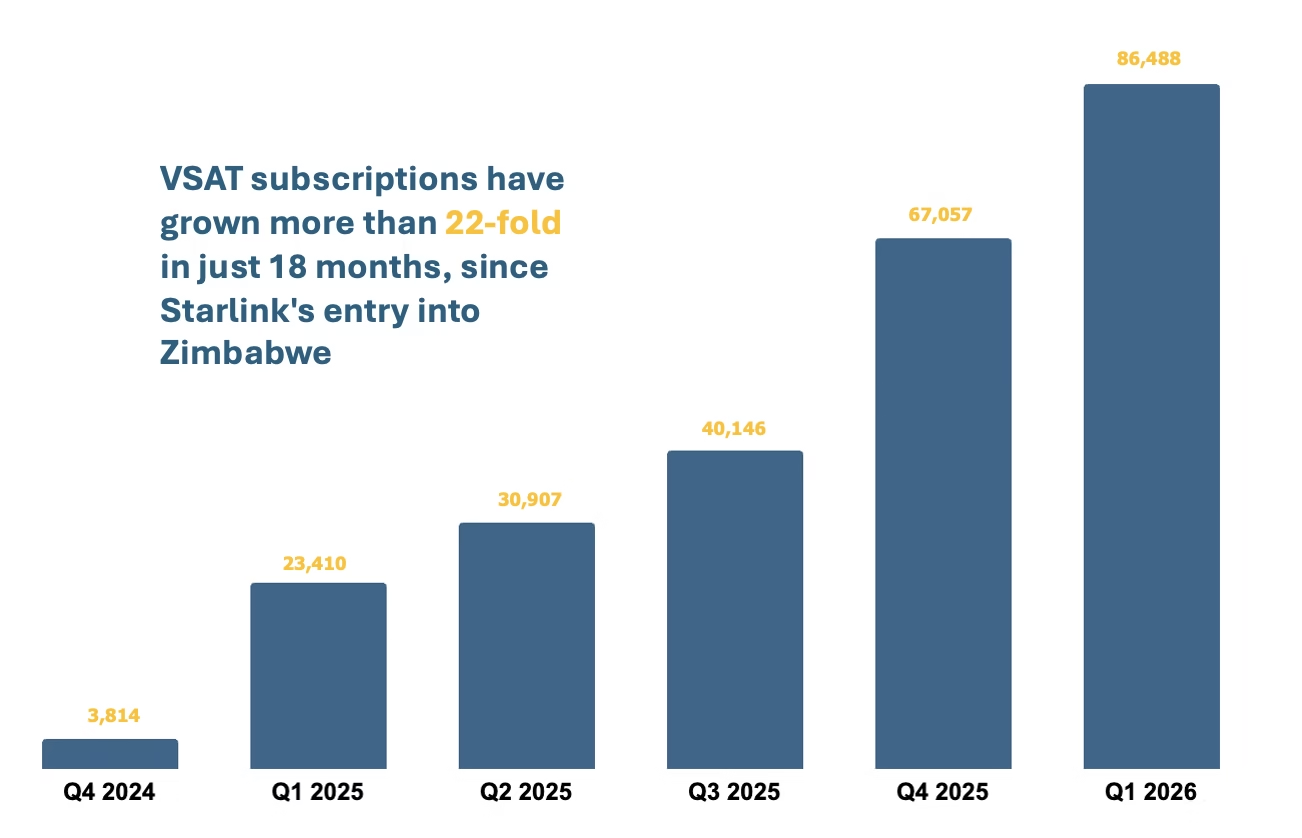
VSAT subscriptions grew 28.98% quarter-on-quarter, from 67,057 in Q4 2025 to 86,488 in Q1 2026, making it the fastest-growing internet technology provider in the country. That growth rate is nearly three times that of fixed LTE, the second-fastest-growing technology over the same period. Every other provider in the quarter. The pattern points to a shift in consumer preference toward Starlink’s combination of higher speeds and comparatively affordable pricing, and suggests the service is not just adding new broadband users but actively pulling users away from competing options.
Before Starlink’s entry into Zimbabwe, VSAT subscriptions were a negligible slice of the broadband market. In the quarter Starlink launched, the category jumped from 3,814 to 23,410 subscriptions. That step change, sustained across every subsequent quarter, is what allows VSAT subscription data to be treated, but cautiously, as a useful proxy for Starlink’s footprint in the country, even though POTRAZ does not report Starlink subscriptions as a standalone line item.
Starlink’s Growth in Context
Using that proxy, Starlink added 19,431 users in Zimbabwe in the last single quarter alone, a scale of growth that took Kenya, one of the continent’s more digitally advanced markets, roughly 12 months to match. On that single-quarter metric alone, Zimbabwe’s Q1 2026 Starlink subscribers would rank among the largest in Africa, trailing only larger and more established markets such as Nigeria, Zambia, Ghana and Kenya.
The milestone cements Zimbabwe as Starlink’s fastest-growing market in Africa, with its subscriber base recording an average quarterly growth rate of more than 100% since launch. It also gives Zimbabwe the second-largest reported Starlink subscriber base on the continent, behind Nigeria’s 98,642 subscriptions in Q2 2026. However, the comparison is not on a like-for-like quarterly basis. Nigeria’s figure is for Q2 2026, one quarter ahead of Zimbabwe’s Q1 2026 data, while Nigeria’s Q1 2026 subscriber figure was not publicly released by the Nigerian Communications Commission.
That gap, however, is narrower than it looks. Even a modest 20% quarter-on-quarter increase, well below Zimbabwe’s latest growth rate of 28.98%, would put its Q2 2026 VSAT subscriptions at well over 100,000, surpassing Nigeria’s reported Q2 2026 count. At that pace, Zimbabwe would not just be closing the gap with Africa’s largest Starlink market, but would be on track to overtake it.
On a broader scale, Starlink’s subscriber base in Zimbabwe now surpasses that of New Zealand, which recorded 85,000 subscribers in Q2 2026, putting Zimbabwe among Starlink’s larger markets globally. At its current growth trajectory, Zimbabwe could also overtake the UK’s 110,000 subscribers, recorded in Q4 2025. Reaching that level would place Zimbabwe’s subscriber base ahead of a significantly more mature Starlink market, highlighting the unusually rapid pace of adoption in the Southern African country.
Click here to download Space in Africa’s latest report on Starlink.
Reshaping Zimbabwe’s Broadband Market
Zimbabwe’s fixed broadband market grew from 286,271 subscribers in Q3 2024 to 417,892 in Q1 2026, an increase of 131,621 connections. Satellite accounted for nearly two-thirds of the net increase, adding 82,674 subscribers, while fixed LTE contributed another 66,951. Fibre, by comparison, added just 7,043 subscribers, while DSL lost 14,048 connections over the period.
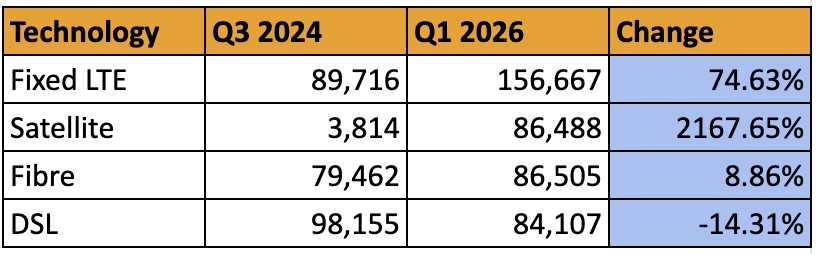
The shift is also becoming evident at the provider level. Starlink has overtaken TelOne’s ADSL subscriber base, underscoring how quickly satellite connectivity has gained ground among Zimbabwean internet users. At the broader technology level, however, satellite and fibre remain neck and neck, separated by just 17 subscriptions.
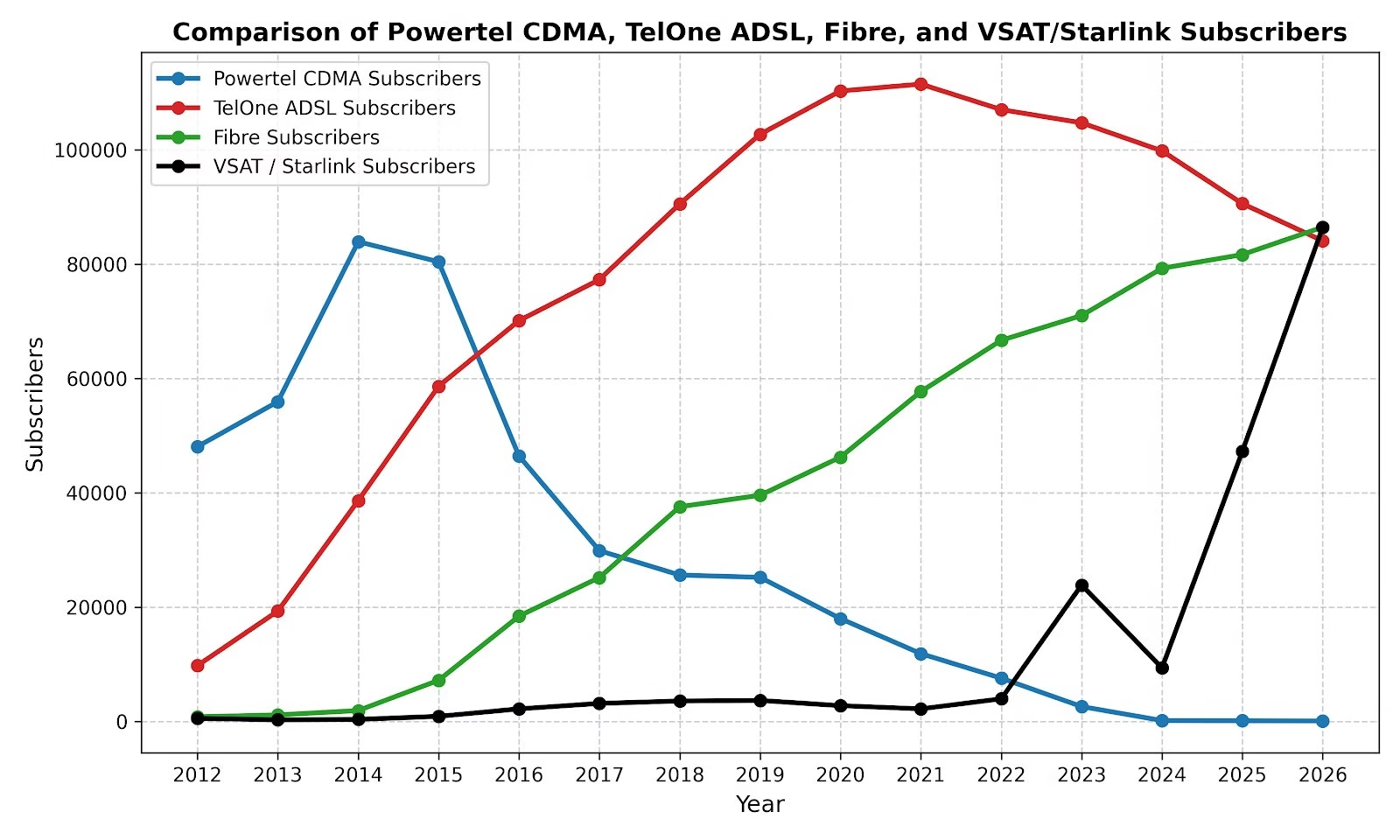
That breakdown complicates a simple reading of the data as “fibre being replaced by Starlink”. Fibre did not shrink, but it grew by 7,043 subscribers over the same period, while satellite gained 82,674. That makes the rise of satellite look less like a direct substitution for fibre and more like a combination of two things: the expansion of the addressable broadband market itself and the erosion of DSL’s base, which lost subscribers outright. Consumers appear to be sorting across technologies on price, availability and performance rather than migrating from a single incumbent option.
Why is Starlink Growing So Rapidly In Zimbabwe?
Starlink’s advantage in Zimbabwe is partly rooted in the cost and reach of terrestrial infrastructure. Fibre and fixed wireless networks require infrastructure to reach individual communities and premises, making expansion into underserved areas slower and more capital-intensive. Starlink faces less of this constraint. Once a customer has the required equipment and a clear view of the sky, the service can be activated without waiting for a new terrestrial network to be built. This gives Starlink access to customers that existing providers may be unable to serve, allowing it to add subscribers across a much wider geographic area at a faster pace.
Price has further strengthened that proposition. When Starlink launched in September 2024, its standard residential service cost USD 50 per month for unlimited data, while the Mini plan cost USD 30 per month, with advertised speeds of up to 200 Mbps and 100 Mbps, respectively. At the time, local providers were charging significantly more for comparable unlimited packages. TelOne’s top package was priced at USD 300 for up to 50 Mbps, while Liquid Home’s unlimited fibre package cost USD 439. Econet subsequently introduced an unlimited LTE package for USD 45, with speeds up to 50 Mbps. The gap has since narrowed as local providers responded to Starlink’s entry, but the initial combination of price, speed and nationwide availability gave the satellite service a significant competitive advantage.