
Senegal Hosts Its Second Edition of Space Week, Putting Execution at the Heart of the Agenda

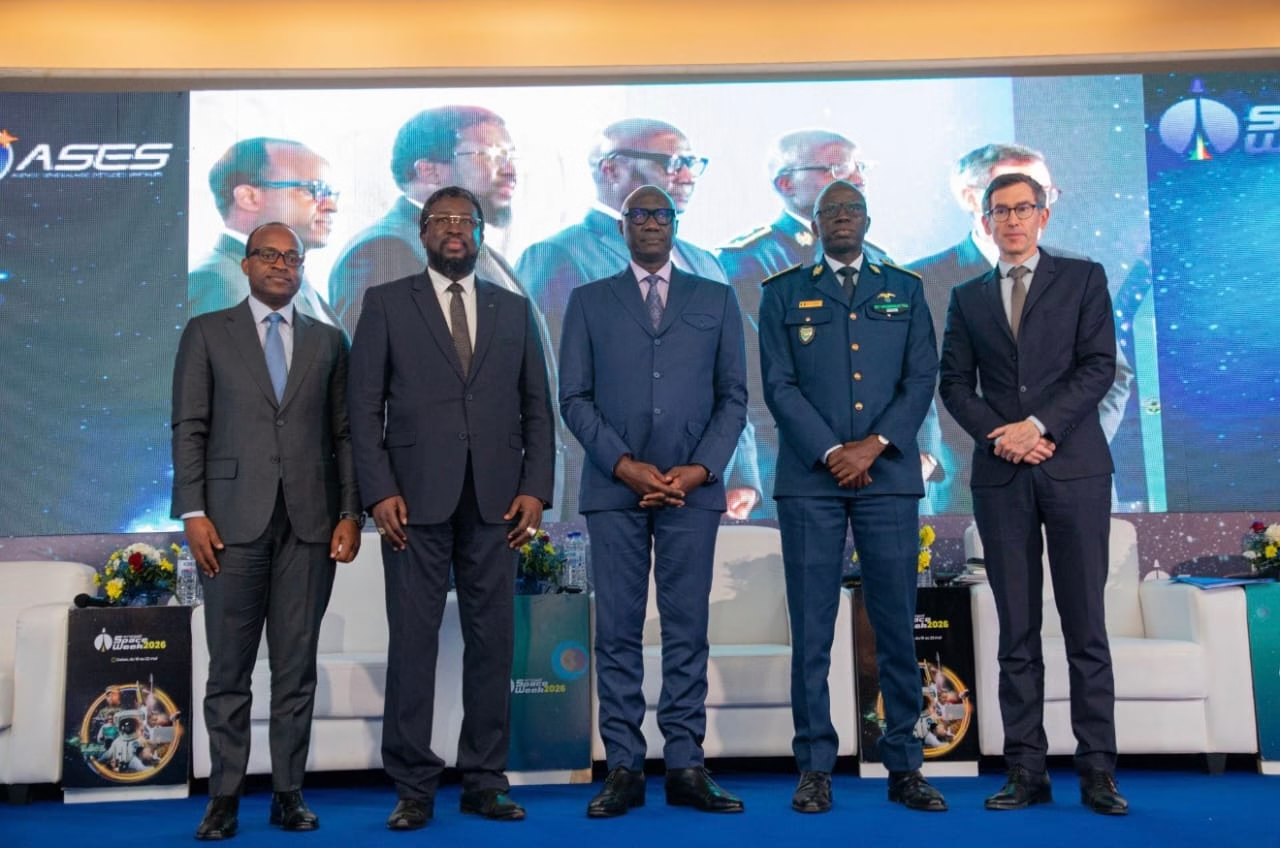
The second edition of Senegal Space Week convened in Dakar from 19 to 22 May 2026, once again bringing together representatives from government, academia, industry, and the international space community under one roof. Organised by the Agence Sénégalaise d’Études Spatiales (ASES), the event has quickly established itself as one of Africa’s most significant gatherings at the intersection of space technology, policy, and development.
This year’s edition arrived with a sharper sense of purpose. Where the first edition planted a flag, the second was intent on building ground.
More Than an Event, A Strategic Platform
To understand what Senegal Space Week is designed to achieve, Ms Rosso K. Dieng, Director of Planning, Partnership and Development at ASES, offers a clear answer.
“Senegal Space Week was conceived as more than an event,” she explains. “It is a strategic platform designed to position space as a driver of national and continental transformation.”
At the heart of ASES’s vision, she notes, is a deliberate effort to demystify space and anchor it firmly within Africa’s development priorities, not as an abstract scientific pursuit, but as a direct response to the continent’s most pressing challenges. The agenda spans agriculture and food security, public safety, urban planning, digital connectivity, climate resilience, natural resource management, and public health. Space, in this framing, is not a luxury reserved for wealthier nations. It is, as Ms Dieng puts it plainly, “strategic infrastructure for sovereignty, resilience, and inclusive growth.”
From Ambition to Execution
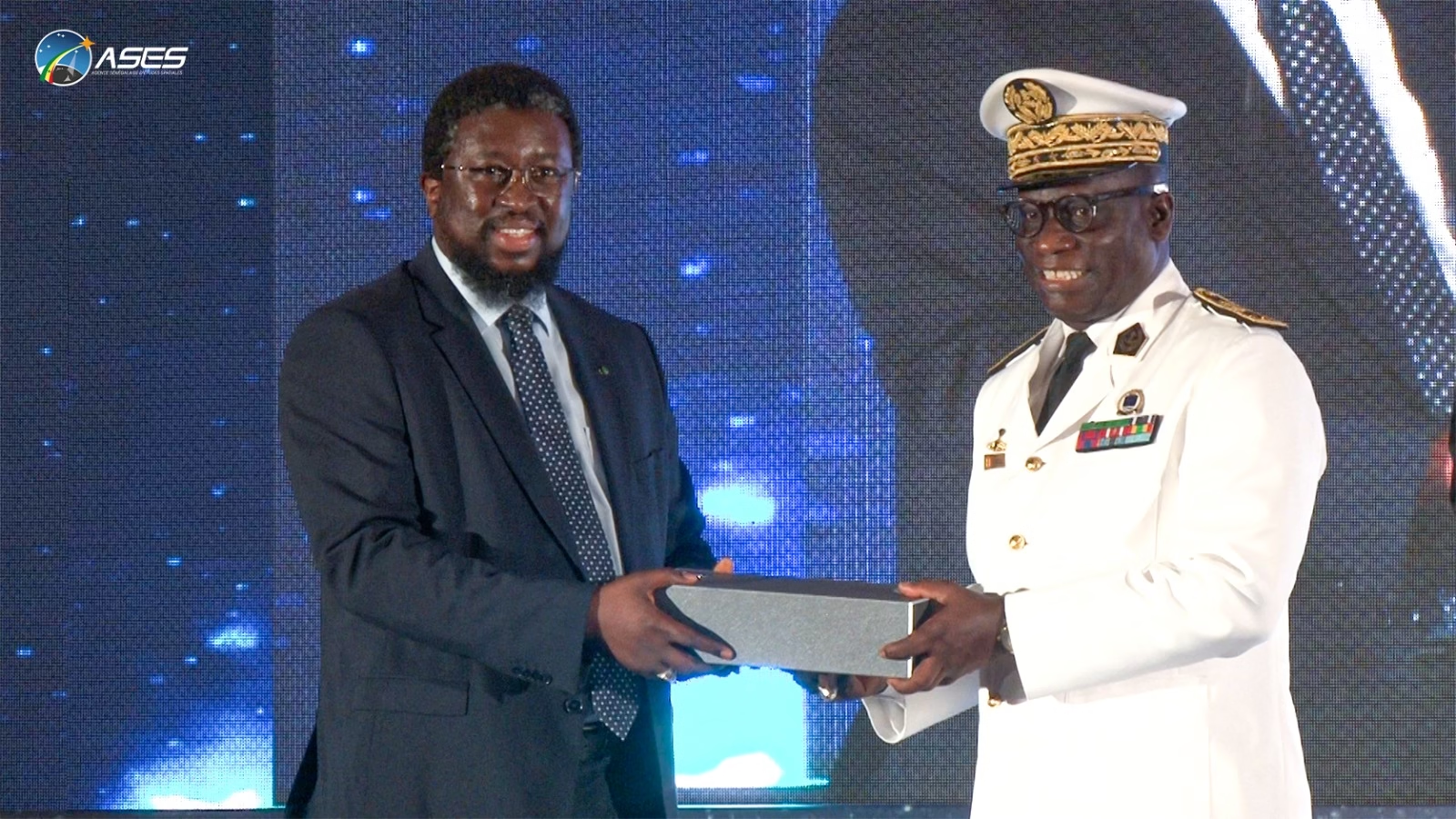
If there is one phrase that captures the spirit of this year’s edition, it is this: the ecosystem moved from ambition to execution.
Ms Dieng describes the outcomes in concrete terms. From the very first day of the event, ASES formalised a dozen strategic memoranda of understanding with international and regional partners spanning academia, industry, and innovation. These were not ceremonial signatures. “Beyond the signatures,” she says, “the event created real operational bridges, turning high-level dialogue into actionable collaboration pipelines with tangible next steps.”
Policy alignment followed suit. The presence of Senegal’s Minister of Defence, alongside the Chiefs of Staff of the Air Force and Navy, and senior figures from the energy, telecommunications, and research sectors, lent the event a weight few continental space gatherings have achieved. A high-level ministerial dialogue positioned space as a strategic lever for national security and sovereignty, a framing that signals just how far the conversation has evolved.
Among the landmark moments of the edition was the launch of the Space Climate Observatory’s Senegal chapter, established in partnership with the French space agency CNES. The initiative anchors Senegal within global frameworks on climate action and data governance, and represents a tangible step in translating international cooperation into domestic impact.
Building the Full Value Chain
One of the most deliberate design choices of Senegal Space Week is the breadth of its convening. This is not a gathering limited to scientists or government officials. The 2026 edition brought into the same space global industry leaders demonstrating operational geointelligence solutions, universities and training institutions aligning curricula with market demands, and startups alongside investors working to close the persistent gap between innovation and scale.
Ms Dieng is particularly emphatic on the human dimension of this work. “Building infrastructure is important,” she says, “but building people is fundamental.” The strong participation of students and young professionals across the four days of the event was, for her, as significant as any institutional milestone. Africa’s long-term space ambitions, she argues, will depend on its capacity to train, retain, and empower a new generation of scientists, engineers, entrepreneurs, and policymakers.
It is a conviction she distils into a single, striking formulation: “Africa’s future sovereignty will also be shaped through data, orbit, and talent.”
Shaping Africa’s Space Future, Edition by Edition
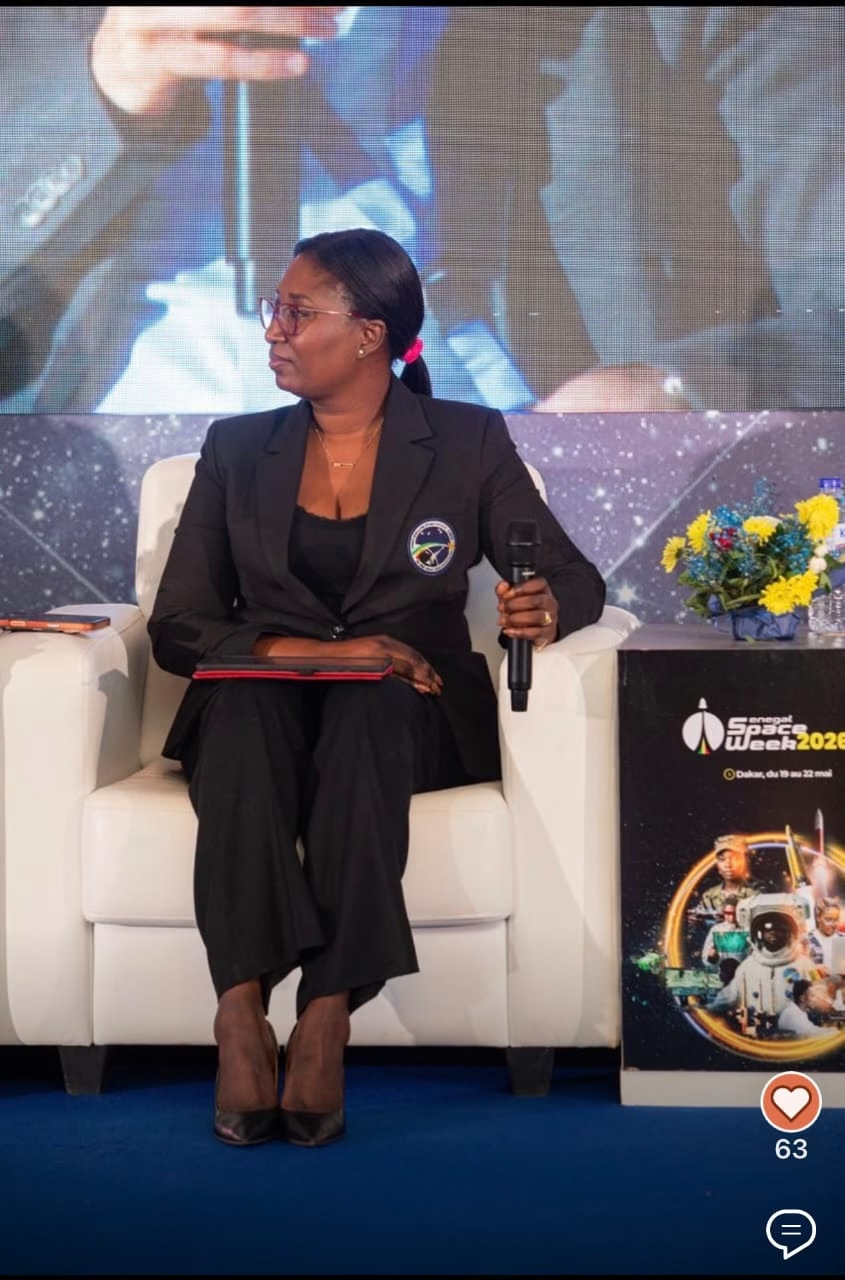
Looking further ahead, Ms Dieng envisions Senegal Space Week growing into a fully continental platform, one that actively shapes the trajectory of Africa’s space ecosystem rather than simply reflecting it.
She identifies three pillars through which it will do so. First, by driving integration across the continent, connecting governments, startups, universities, and research centres that too often develop in isolation from one another. Second, by accelerating the translation of vision into execution, structuring partnerships, aligning policies, mobilising industry, and linking innovation to capital. Third, by strengthening Africa’s positioning on the global stage, reinforcing the continent’s role not merely as a consumer of space solutions, but as an emerging architect of them.
Future editions, she anticipates, will feature stronger investment and business components, more demonstrations of African-built technologies, expanded policy dialogues, and broader opportunities for women, students, and young professionals.
The ambition is, ultimately, part of a larger movement, one that ASES is helping to lead with considerable intentionality. As Ms Dieng frames it, the goal is nothing less than building Africa’s space sovereignty through partnerships, innovation, and the deliberate cultivation of human capital.
Senegal Space Week, it seems, is only getting started.