
Starlink Expands to 26 African Markets as Three Countries Account for 64% of Subscribers, Space in Africa Report Shows
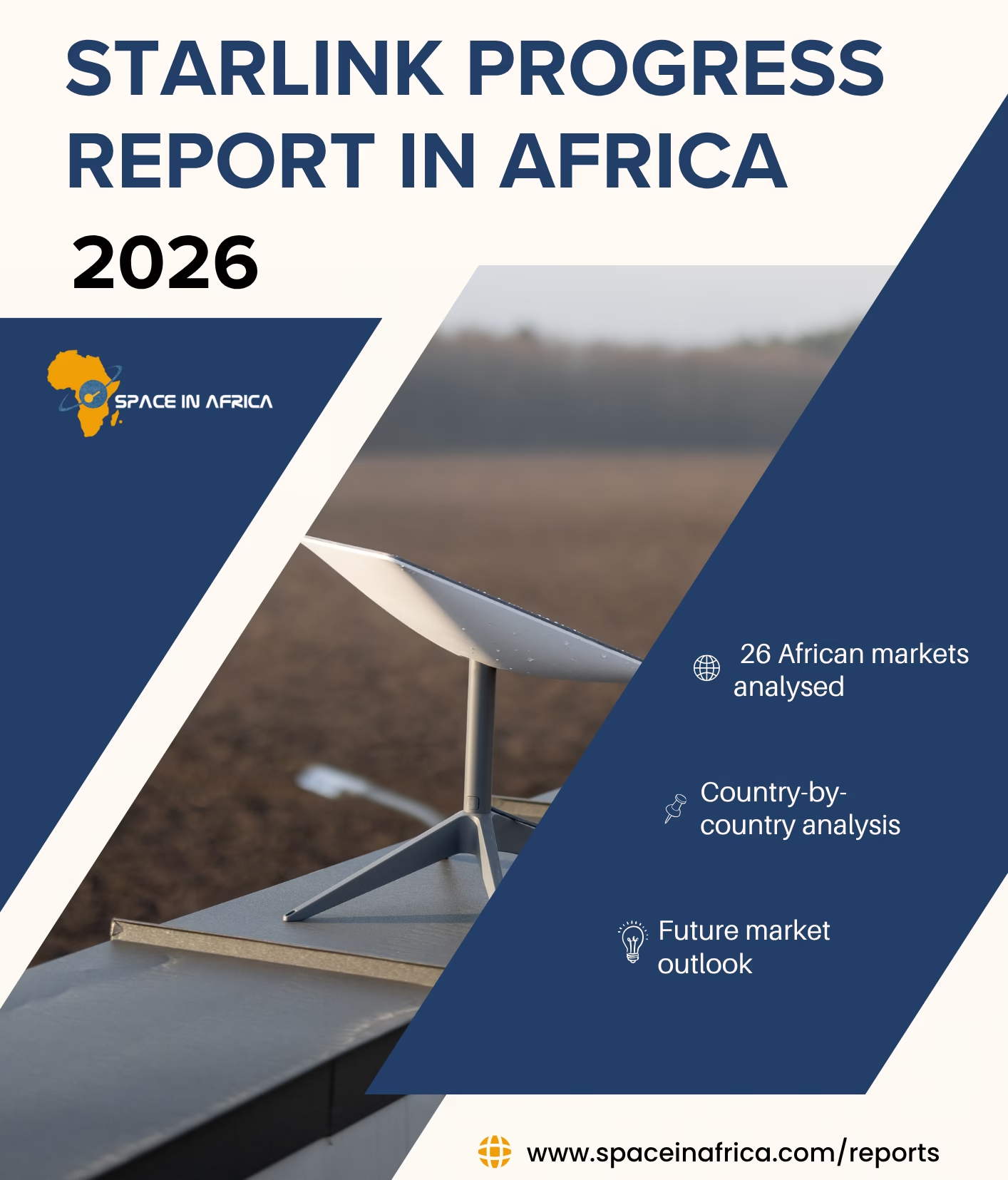
As of June 2026, Starlink had expanded to 26 African markets, making it one of the continent’s fastest-growing satellite broadband providers and accounting for an estimated 3% of its global subscriber base by December 2025. But the ~300,000 customers connected across the continent tell you less than it appears to.
The top three countries, Nigeria, Zimbabwe, and Zambia, account for approximately 64% of all African subscribers combined. At the same time, despite intense early enthusiasm, Starlink’s market share remains marginal in countries like Kenya, commanding just 0.9% of the local ISP market.
These gaps persist because the African broadband landscape is not one uniform market. A consumer relying on Starlink due to the failure of local ISPs and a mobile network operator partnering for rural Direct-to-Cell coverage are operating under completely different conditions, facing different affordability constraints, and navigating a widely varying regulatory landscape. Treating them as part of the same continental growth story produces a misleading picture.
To address that, we built a comprehensive market intelligence report combining country-level subscriber statistics with regulatory developments, pricing, partnerships, service availability, and competitive dynamics. The result is a more granular view of where satellite broadband is expanding, where infrastructure ceilings are constraining it, and why.
What the data shows:
- ~300,000 customers connected across 26 active African markets as of June 2026.
- Nigeria, Zimbabwe, and Zambia account for roughly 64% of the continent’s entire subscriber base.
- Zimbabwe emerged as the fastest-growing market, with an average quarterly growth rate of 126.1%, reaching 67,057 users as of December 2025.
- Licensing fees vary by a factor of 18.5 across the continent, ranging from USD 32,000 to USD 575,000.
- Starlink’s landmark Direct-to-Cell partnership with Airtel Africa could extend satellite connectivity to approximately 174 million subscribers across 14 markets.
- Median download speeds for Starlink (54.7 Mbps in Q3 2025) are nearly 160% higher than those of local terrestrial ISPs, though local providers maintain a structural advantage in multi-server latency.
- Starlink Impact initiatives have connected over 1,600 schools and 2,000 healthcare centres across Africa, with significant NGO funding support.
Who this report is for:
The analysis is relevant to :
- Telecommunications Operators and MNOs: To understand the evolving competitive landscape shaped by satellite connectivity providers, emerging telecom-satellite partnerships, and the strategic implications for terrestrial operators.
- Policymakers, Regulators & Government: To understand how African countries are responding to satellite broadband, benchmark regulatory approaches, and inform evidence-based policy and licensing decisions.
- Satellite Operators: To understand the drivers of Starlink’s market expansion, its strategic evolution, and infrastructure constraints, and to identify opportunities to differentiate services and strengthen competitive positioning.
- Local Internet Service Providers (ISPs): Benchmark Starlink’s Total Cost of Ownership (TCO) against local broadband offerings, assess market-share risks, and identify opportunities to strengthen pricing and competitive positioning.
- Investors and Development Partners: To identify high-impact opportunities for advancing digital inclusion, understand proven deployment models, and optimise investment decisions using evidence from Starlink deployments across Africa.
- Enterprise Users & Resellers (B2B): To assess the commercial and operational viability of Starlink for enterprise use cases by understanding deployment challenges, service limitations, and factors that influence long-term performance and reliability.
- Industry Enthusiasts & the General Public: To gain a comprehensive understanding of Starlink’s expansion across Africa, its impact on connectivity, and the opportunities and challenges shaping its adoption.
This report was researched, written, and produced by Space in Africa.
Discover the full insights and purchase the report here.
About Space in Africa
Space in Africa is a boutique consulting and media firm dedicated to providing data-driven insights, market intelligence, and strategic advisory services to businesses and decision-makers in the African space industry. Through rigorous research and transparent methodologies, Space in Africa enables stakeholders to make informed decisions and succeed in Africa’s rapidly growing space sector. The firm’s reports have become the foundation for global discussions on African space capabilities and are trusted by satellite manufacturers, institutional investors, government agencies, and international organisations worldwide.