
2026 NewSpace Africa Conference – Day 3 Recap

By the time Day 3 of the 2026 NewSpace Africa Conference opened, the event had already reiterated why it is widely regarded globally as one of the most substantive gatherings the African space sector has seen. The first two days had moved with purpose, from high-level policy dialogues and heads-of-agency panels to founder spotlights, pitch competitions, and deep technical discussions on Earth observation, satellite navigation, and connectivity infrastructure. Across every session, a consistent thread had emerged: the appetite among African space actors, their regional partners, and the global industry for relationships that go beyond conversation and translate into concrete, coordinated action. Those first two days were equally rich in the margins, bilateral meetings, B2B exchanges, B2G engagements, G2G dialogues, and the kind of informal networking that often produces the most durable outcomes. Day 3 arrived with that momentum intact, promising more of the lived experience that practitioners and decision-makers had come to share, and more of the structured discussions designed to advance the African space economy in manufacturing, investment, standards, and industrial policy.
Heads of Space Agencies – Cohort 4
Speakers:
- Soreefan Ziyaad, Research Engineer, Mauritius Research and Innovation Council (MRIC)
- Ms Amal Layachi, Head of the Training and Cooperation Department, Royal Centre for Remote Sensing, Morocco
- Mohamed A. Ismail, Director, Space and Satellite, Ministry of Communication and Technology, Somalia
- Dr Gweme Pianos, Coordinator, Zimbabwe National Geospatial and Space Agency
- Moderator: Dr Rakiya Babamaaji, Acting Director, International Cooperation and Linkages Department, NASRDA
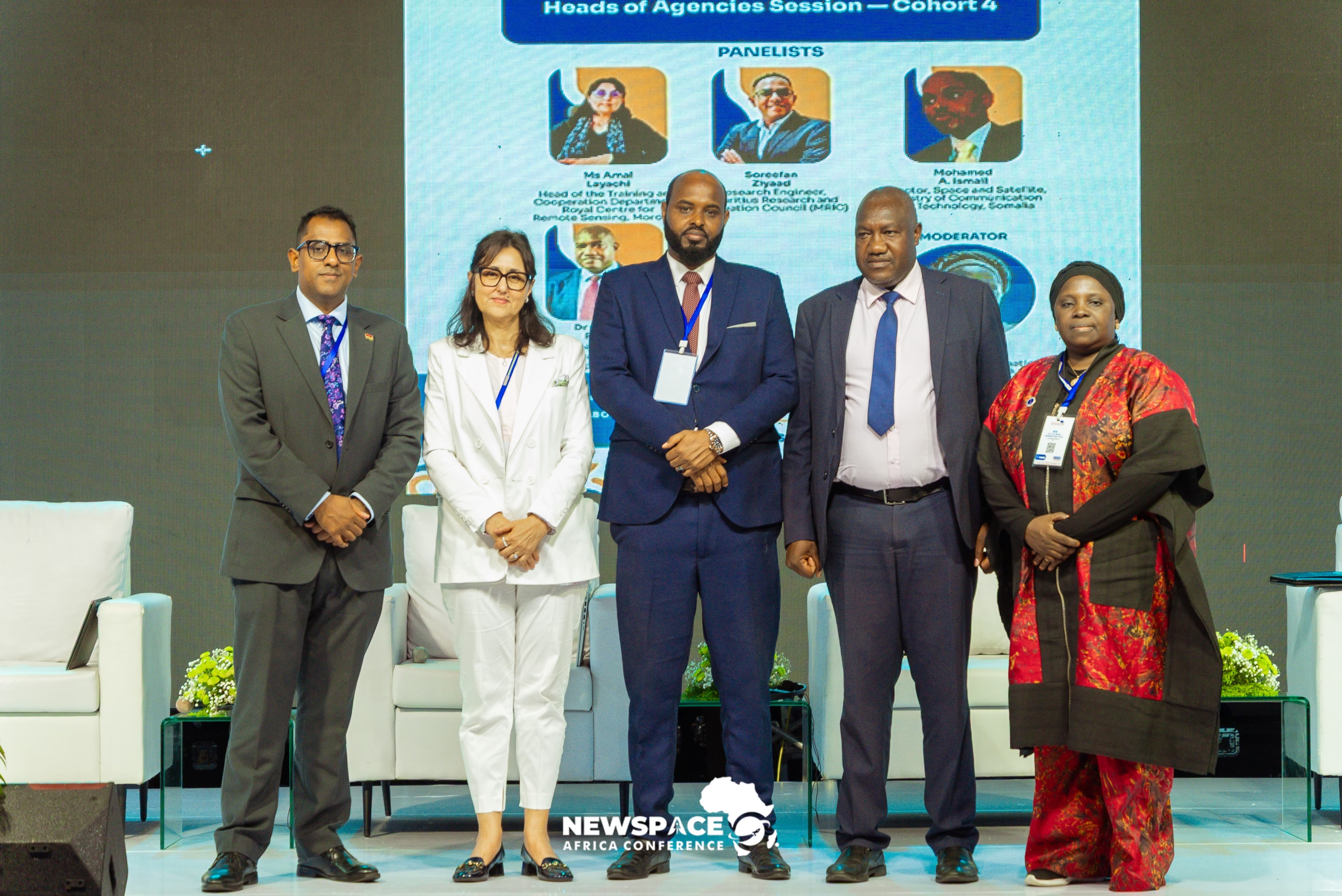
The fourth and final cohort of the Heads of Space Agencies series brought together representatives from Mauritius, Morocco, Somalia, and Zimbabwe, continuing the conference’s commitment to giving voice to the full breadth of Africa’s space landscape, from established remote sensing programmes to newer institutions still defining their mandates. Each speaker shared updates on the current state of their national programmes, including recent developments in capacity building, infrastructure, satellite data applications, and international cooperation. The session reflected the diversity of entry points through which African nations are engaging with space, and reinforced the view that there is no single model for building a functional space programme; context, political will, available resources, and strategic priorities all shape different but equally valid paths. Moderated by Dr Rakiya Babamaaji, the discussion also touched on how regional bodies and bilateral partnerships are helping smaller or newer space nations accelerate progress without having to build every capability from scratch.
Keynote: SAH Analytics
Speaker: Dr Moussa Traoré, Group Deputy Chief Executive Officer, Innovation and R&D, SAH Analytics
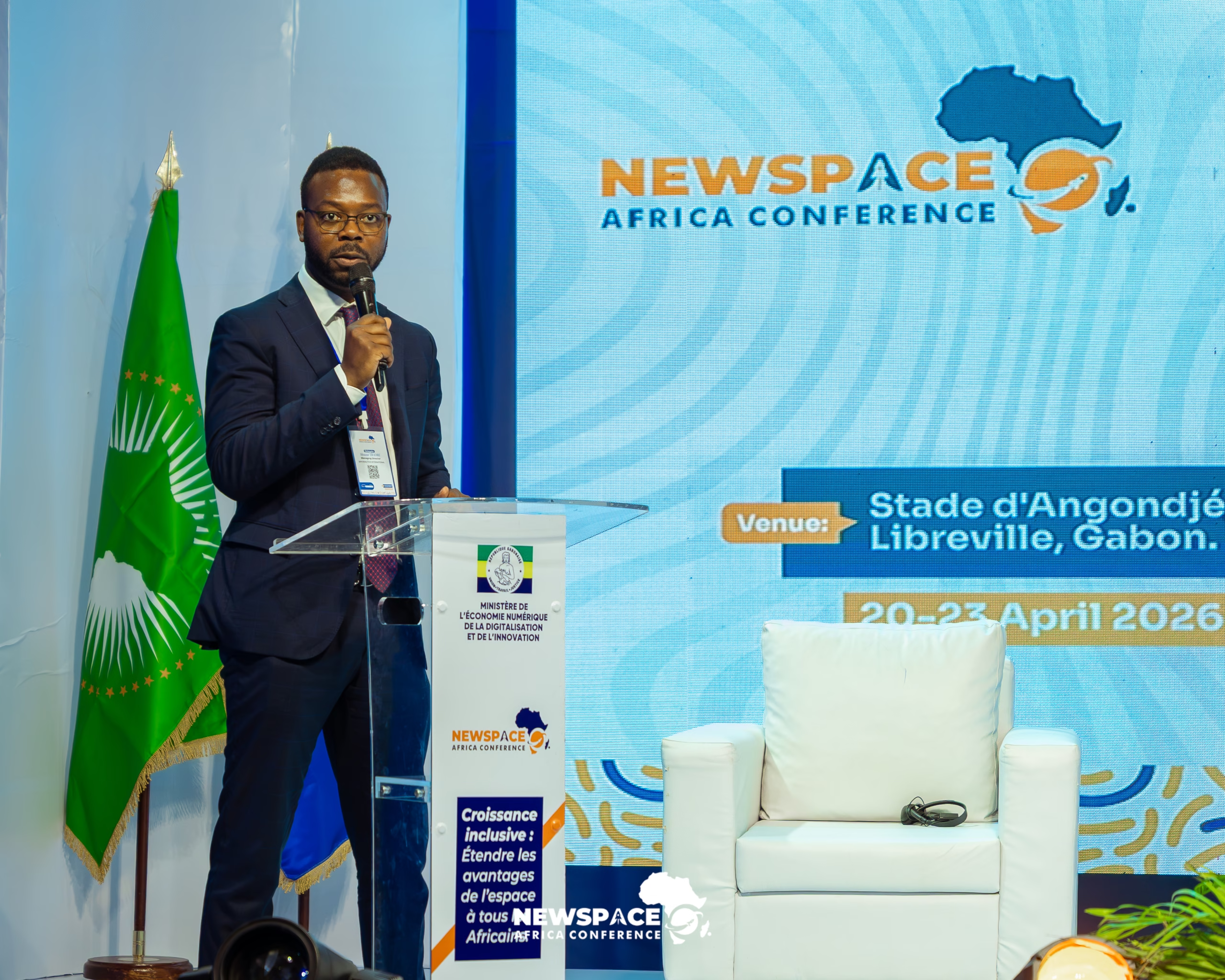
As one of the sponsors of the 2026 NewSpace Africa Conference, SAH Analytics reaffirmed its commitment to the African space and data ecosystem and its intention to continue supporting the event in future editions. Dr Moussa Traoré used the keynote to introduce SAH Analytics’ work at the intersection of satellite data, advanced analytics, and decision-support systems, outlining how the company is leveraging space-derived information to address practical challenges across sectors such as agriculture, infrastructure, and public administration. He highlighted the company’s interest in deepening collaboration with African institutions, governments, and private-sector actors seeking to turn raw data into actionable intelligence. Sylla emphasised that SAH Analytics sees partnership, not just service provision, as the model it wants to pursue across the continent, and expressed a clear appetite for co-developing solutions grounded in African priorities and built for African conditions.
Panel: Accelerating the African Space Ecosystem with Japan
Speakers:
- Prof. Shinichi Nakasuka, Professor, Research Organisation of Science and Technology, Ritsumeikan University
- Masayuki Sakata, Senior Manager, Deloitte Touche Tohmatsu LLC
- Masaya Ochiai, General Manager of the Office of the CEO, ArkEdge Space Inc.
- Yuya Nakamura, CEO, Axelspace Corporation
- Masashi Yamamoto, Director, Office for STI & DX, Japan International Cooperation Agency (JICA)
- Moderator: Dr Saki Kiki Miyazaki, General Manager, Cross U
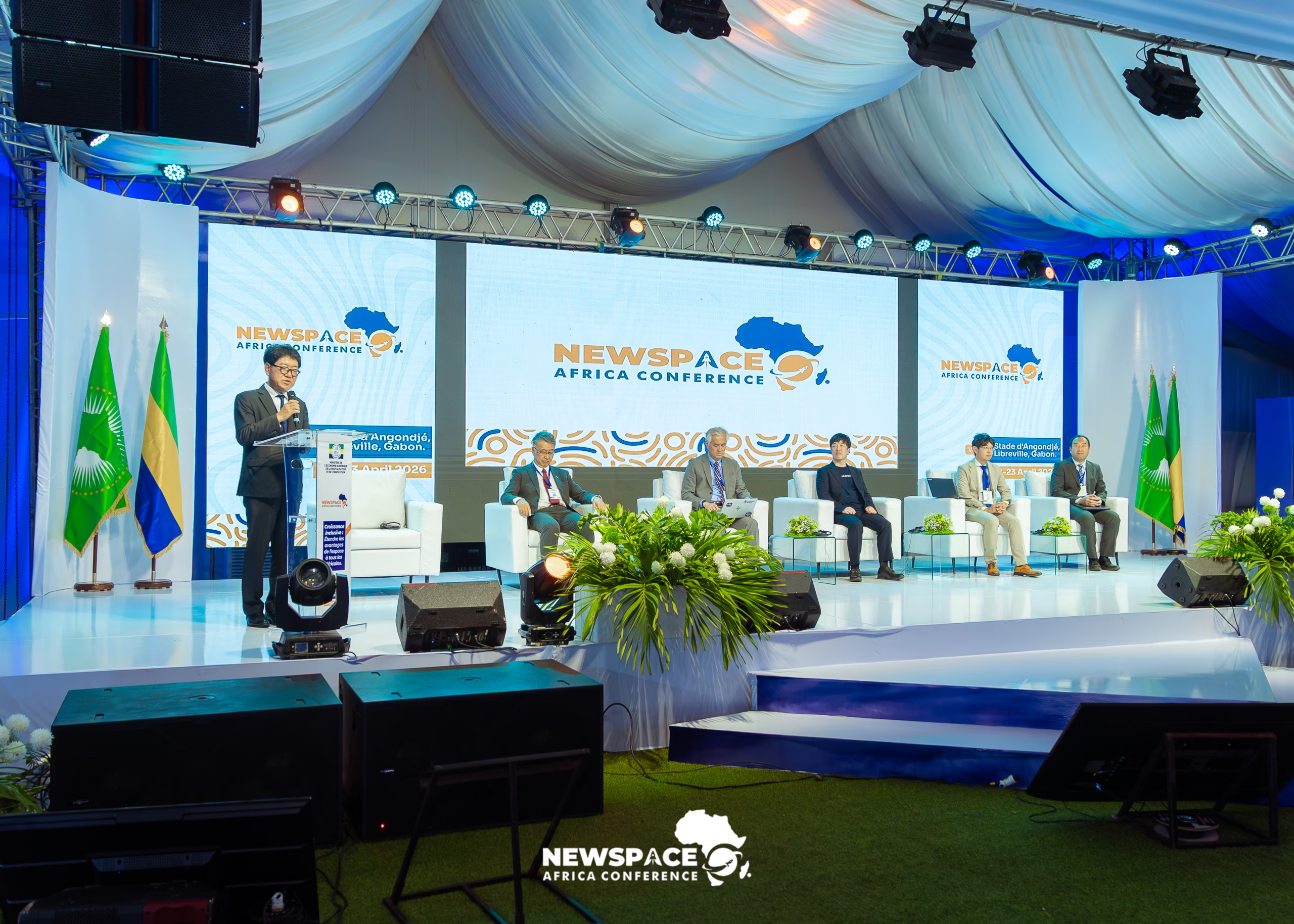
This session brought together a diverse group of Japanese space actors to explore the opportunities for deeper collaboration between Japan and Africa’s growing space ecosystem. Prof. Shinichi Nakasuka, a leading figure in small satellite research, brought an academic and technical perspective, reflecting on how Japan’s strengths in satellite engineering and systems design can be shared with African universities and research institutions to build long-term technical capacity. Masayuki Sakata of Deloitte spoke to the strategic and commercial dimensions of Japan-Africa space engagement, examining how business advisory frameworks can help African space ventures structure for investment and scale. ArkEdge Space, represented by Masaya Ochiai, outlined the company’s focus on small satellite development and its interest in identifying African partners for mission co-development and technology collaboration.
Furthermore, Yuya Nakamura of Axelspace, one of Japan’s leading Earth observation satellite operators, highlighted the company’s data offerings and its appetite for partnerships with African governments and institutions seeking reliable, high-frequency imagery for development and environmental applications. Masashi Yamamoto of JICA brought a development cooperation lens to the panel, discussing how Japan’s official development assistance frameworks can be leveraged to support space capacity building across the continent in ways that align with African-led priorities. Together, the panel made a compelling case that Japan-Africa space collaboration is moving from an emerging conversation into a domain of genuine strategic alignment.
Keynote: DFH Satellite Co., Ltd.
Speaker: Zhong Penghua, Director, International Business, DFH Satellite Co., Ltd.
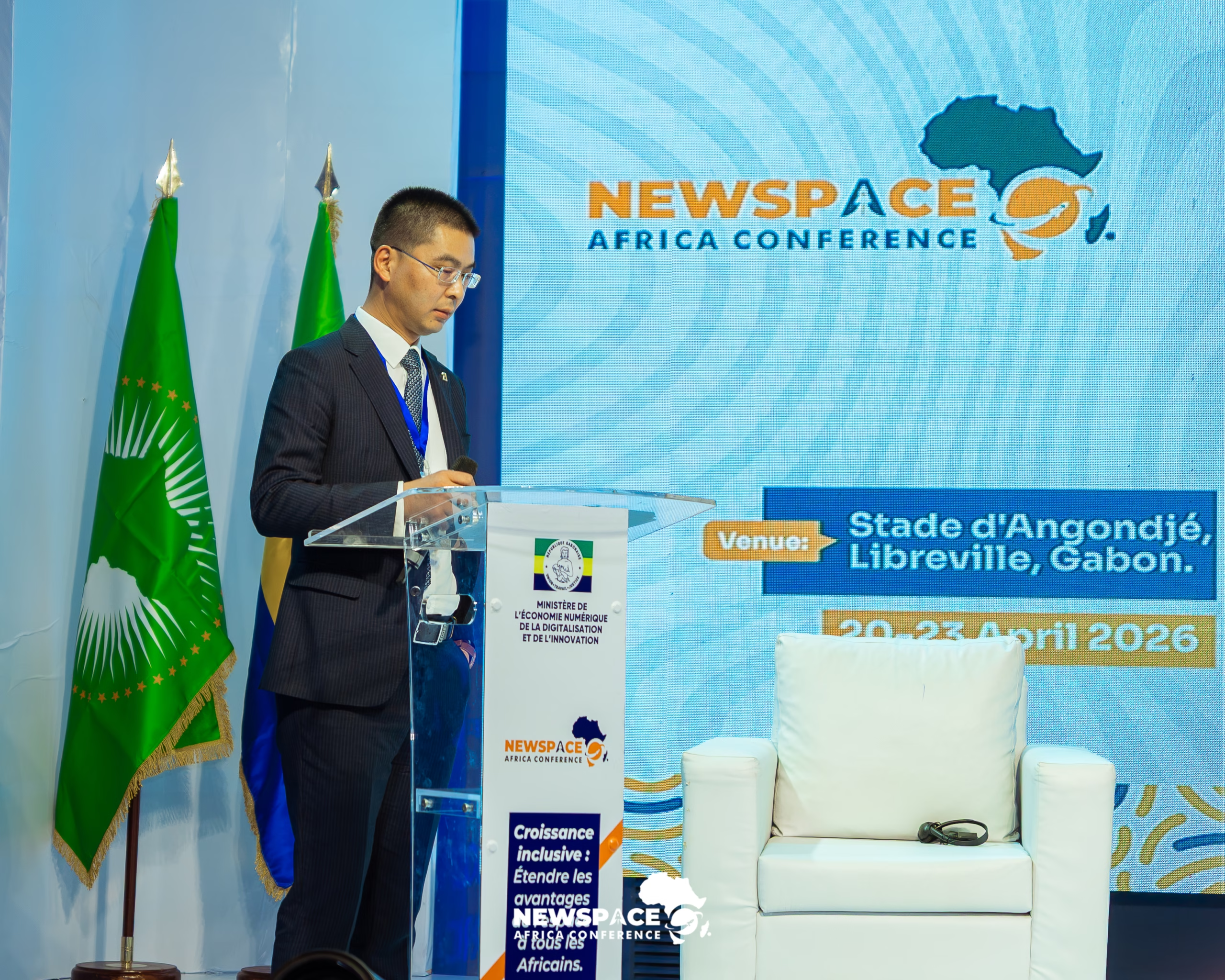
DFH Satellite Co., Ltd., one of this year’s conference sponsors, used its keynote slot to reaffirm its commitment to the African space community and signal its intent to remain an active, long-term partner in the continent’s development. Zhong Penghua outlined DFH’s extensive capabilities in satellite design, manufacturing, and systems integration, positioning the company as a partner that can support African nations across the full satellite programme lifecycle, from design and build through to on-orbit operation. He expressed a strong interest in co-development arrangements, technology transfer, and capacity-building partnerships that allow African institutions to internalise knowledge and build lasting expertise rather than simply receiving a finished product. DFH’s engagement with the conference, Zhong noted, reflects a broader strategic orientation toward Africa as a space of genuine opportunity and shared growth, and the company looks forward to deepening those relationships in the years ahead.
Content Track: Industrial Capability, Standards & Market Opportunities
Panel: Coordinated Governance – Continental Cooperation for Global Competitiveness
Speakers:
- H.E Dr Tidiane Ouattara, President of the Council of the African Space Agency
- Henrike Hirnstein, Programme Coordinator, Data Governance in Africa Initiative, Expertise France
- Fuad Aslanov, Vice Chair of the Board, Azercosmos
- Representative from the U.S. State Department
- Moderator: Hambani Masheleni, Former Executive, AUC
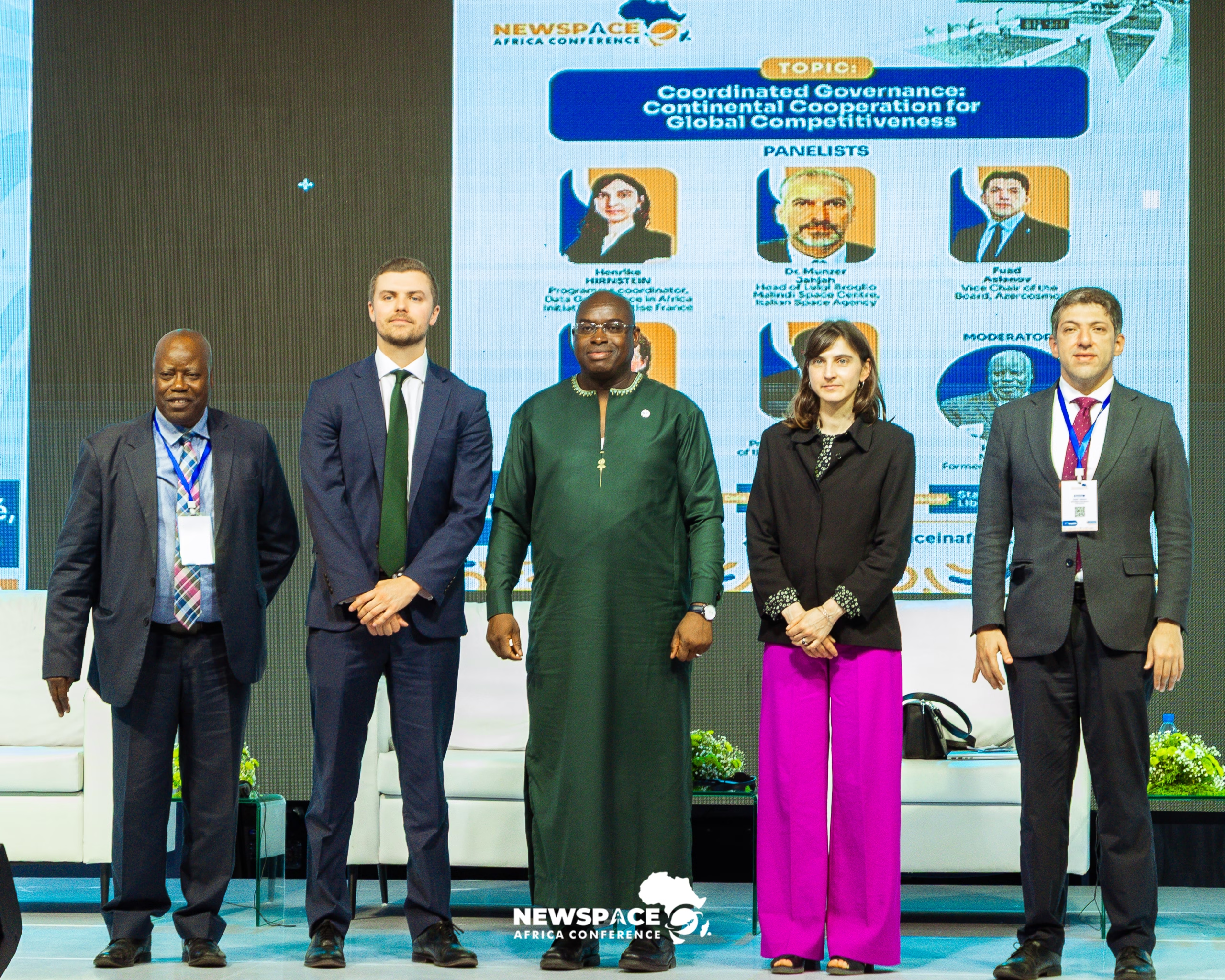
This panel brought together voices from across the governance, policy, and industry spectrum to examine how coordinated continental frameworks can position Africa more competitively in the global space economy. Henrike Hirnstein drew on the work of the Data Governance in Africa Initiative to highlight how the regulatory treatment of space-derived data ownership, access, and cross-border flow remains a foundational issue that shapes what African nations can actually do with their satellite assets. Fuad Aslanov of Azercosmos offered the perspective of an emerging space operator with regional ambitions, reflecting on how governance harmonisation affects the practical realities of service delivery and cross-border commercial expansion. The representative brought the U.S. Department of Commerce’s perspective on international space commerce, addressing how global regulatory frameworks interact with national policies and what that means for African operators seeking to participate in international markets. H.E Dr Tidiane Ouattara, as President of the African Space Agency Council, anchored the discussion at the continental level, speaking to the institutional mechanisms through which African nations can coordinate their regulatory environments, share spectrum resources, and present a unified front in international forums. The panel made clear that competitiveness in the global space economy is increasingly a function not just of technical capability, but of governance maturity and the ability to act collectively.
Content Track: Satellite Launch and Manufacturing – Opportunities for Africa
Panel: Building What We Design – Local Manufacturing Thresholds
Speakers:
- Alvin Mulamula, Project Manager, NewSpace Systems
- Jakub Janík, Foreign Affairs Manager, TRL Space
- Milo Van Riel, Business Development Manager, Simera Sense
- Tensae Ali, Sales Engineer, CubeSpace
- Moderator: Ayooluwa Adetola, Programmes & Corporate Communication Associate, Space in Africa
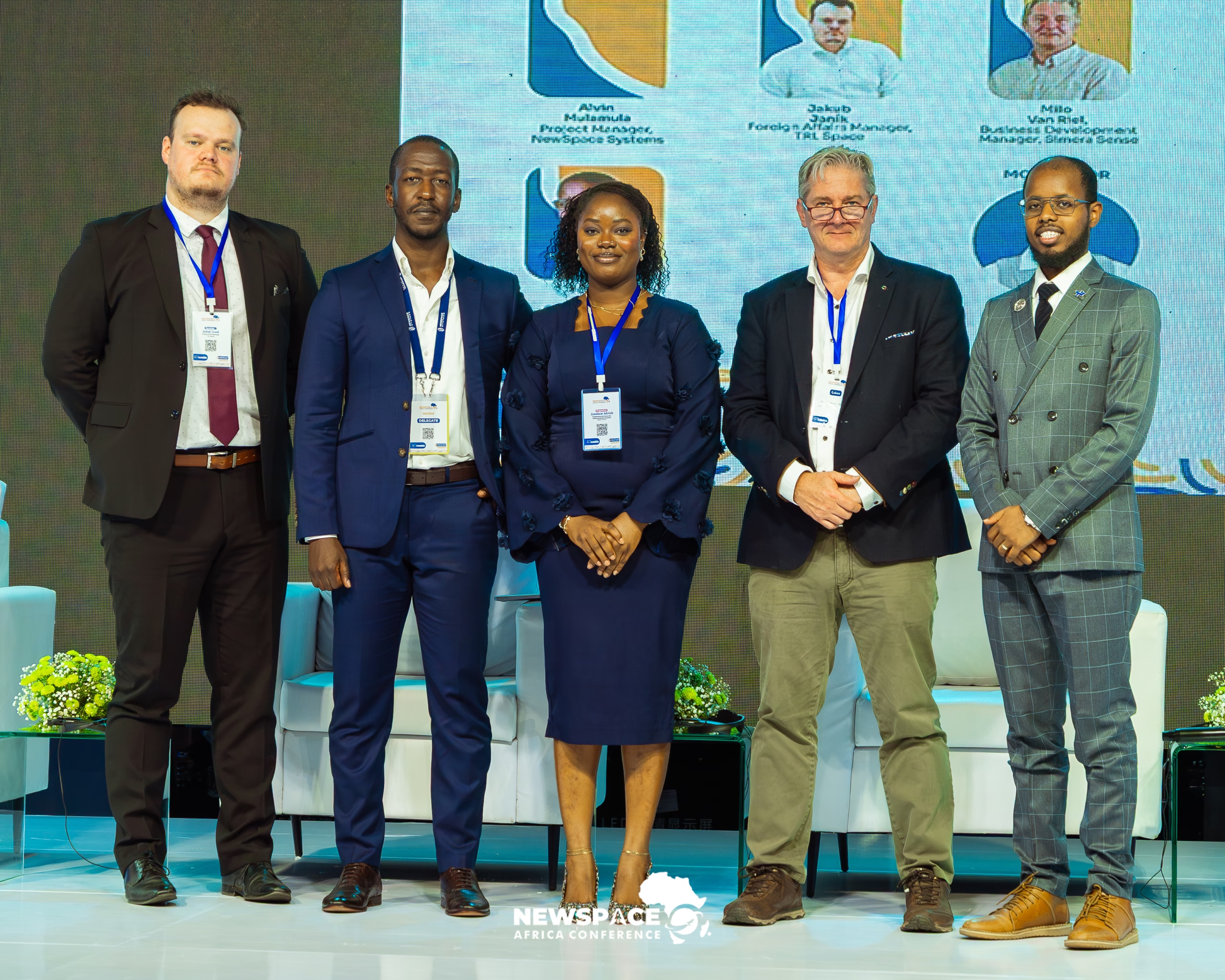
This session tackled one of the most practical questions facing the African space manufacturing sector: at what point does local design capability need to be matched by local manufacturing capacity, and what does it take to cross that threshold? Speakers from NewSpace Systems, TRL Space, Simera Sense, and CubeSpace, all companies with direct experience building satellite components and systems, brought grounded, real-world perspectives on the supply chain constraints, quality assurance requirements, and capital investment realities involved in manufacturing at competitive standards. The discussion examined where African-based manufacturers are already meeting global benchmarks, where the most significant gaps remain, and what combination of policy support, private investment, and skills development is needed to close them. The panel also explored how international component suppliers and integrators can structure partnerships with African firms in ways that genuinely transfer capability rather than simply fulfil a local content requirement.
Panel: Insurance, Liability & Risk in African Launch Markets
Speakers:
- Dr Arnold Agaba, Researcher, McGill Institute of Air and Space Law
- Dr Doreen Agaba, Technical Lead, Department of Aeronautics and Space Science, Science, Technology and Innovation Secretariat, Uganda
- Steve Bochinger, Associate Professor, Paris Saclay University
- Teddy Jean Patrick Nzikou, Managing Partner, JAM Consulting
- Moderator: Rihab Ben Moussa, Policy Analyst, Space in Africa
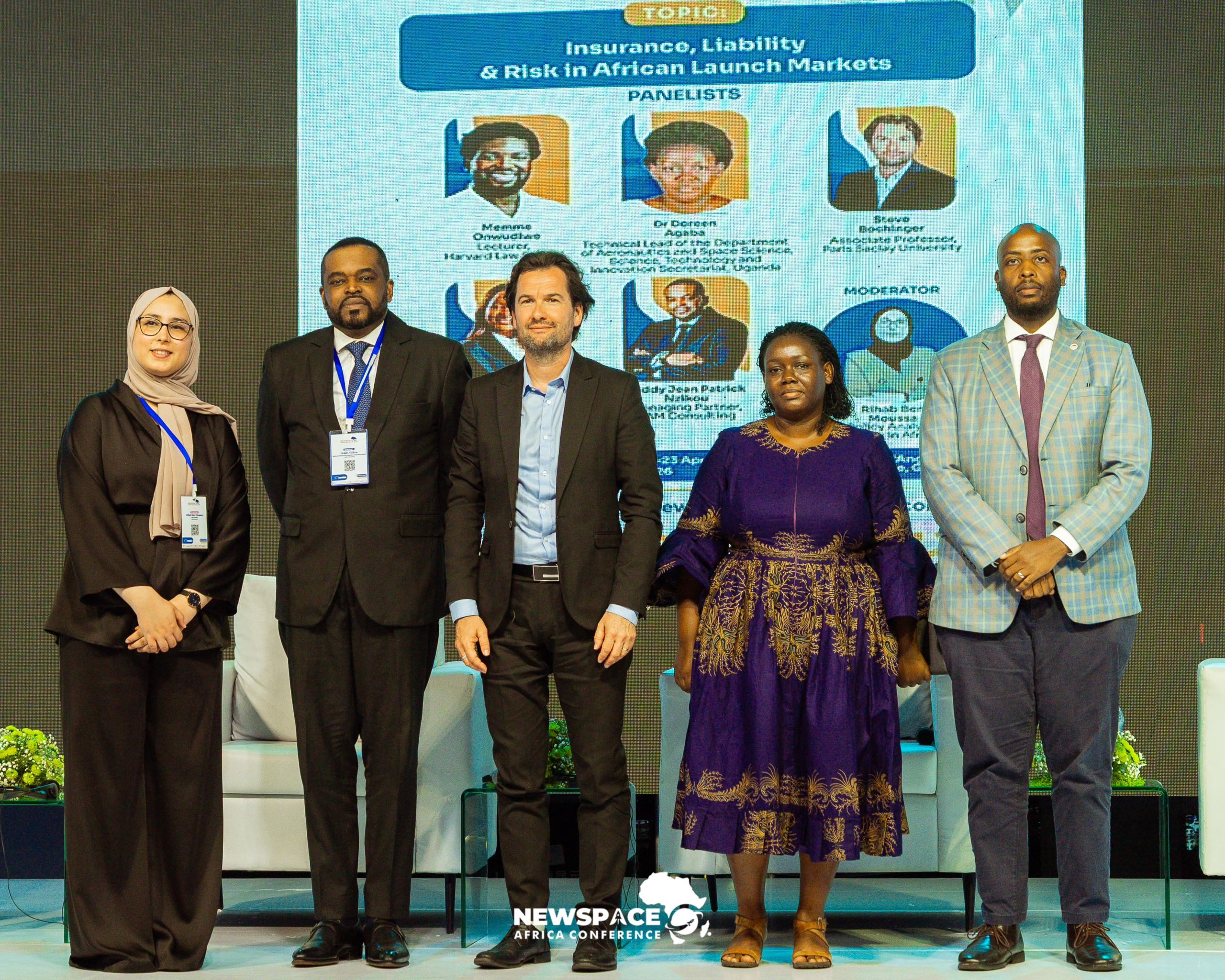
As African nations begin to seriously consider domestic launch ambitions and engage more actively with international launch providers, the legal and financial frameworks governing liability, risk allocation, and insurance have become increasingly urgent areas of attention. This panel brought together legal scholars, policy practitioners, and industry advisors to examine the current state of those frameworks on the continent and identify the critical gaps. Speakers addressed how international liability conventions interact with emerging African national space laws, and what obligations governments and operators must be prepared to meet as launch activity increases. The discussion also explored the practical realities of obtaining space insurance in markets where risk profiles are less established, and how African governments can create enabling regulatory environments that attract launch-related investment without exposing themselves to undue liability. Kenya’s experience as one of the continent’s most active space policy environments provided a useful reference point, alongside broader comparative analysis from academic and consulting perspectives.
SIA Industry Briefing – Valuation, Insights & Predictions
Speakers:
- Dr Temidayo Oniosun, Managing Director, Space in Africa
- Mustapha Iderawumi, Senior Analyst, Space in Africa
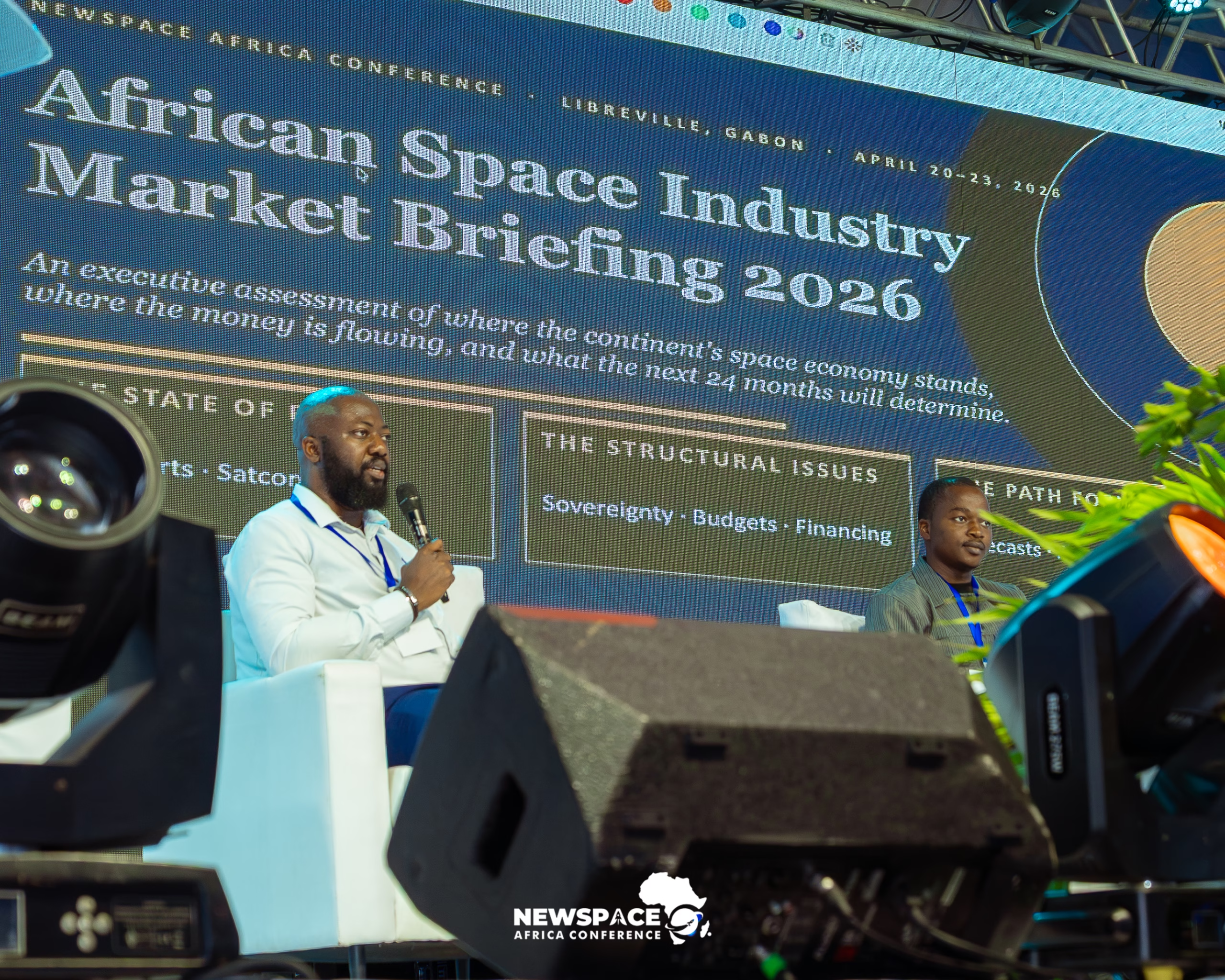
Space in Africa’s annual industry briefing provided the conference with a data-driven assessment of the African space economy’s current state and near-term trajectory. Dr Temidayo Oniosun and Mustapha Iderawumi walked attendees through the key market forces shaping the continent’s space sector, covering investment flows, programme activity, commercial trends, and the competitive dynamics between national operators and private players. The session addressed both the structural opportunities that make Africa one of the most compelling emerging space markets globally, and the persistent challenges, including financing constraints, regulatory fragmentation, and skills shortages, that continue to limit the pace of growth. Alongside the analysis, the briefing offered targeted recommendations for the different categories of actors present at the conference, from government agencies and development finance institutions to commercial operators and technology providers, outlining what each can do to contribute more effectively to a productive and self-reinforcing continental space ecosystem.
Panel: Scaling the African Space Economy – Investment & Valuation Strategies
Speakers:
- Dr Ayman Mahmoud, Senior Director, Egyptian Space Agency
- James Barrington-Brown, Group Chairman, NewSpace Systems
- Dr Zolana Joao, General Manager, GGPEN
- Mustapha Iderawumi, Senior Analyst, Space in Africa
- Moderator: Samuel Nyangi, Industry Analyst, Space in Africa
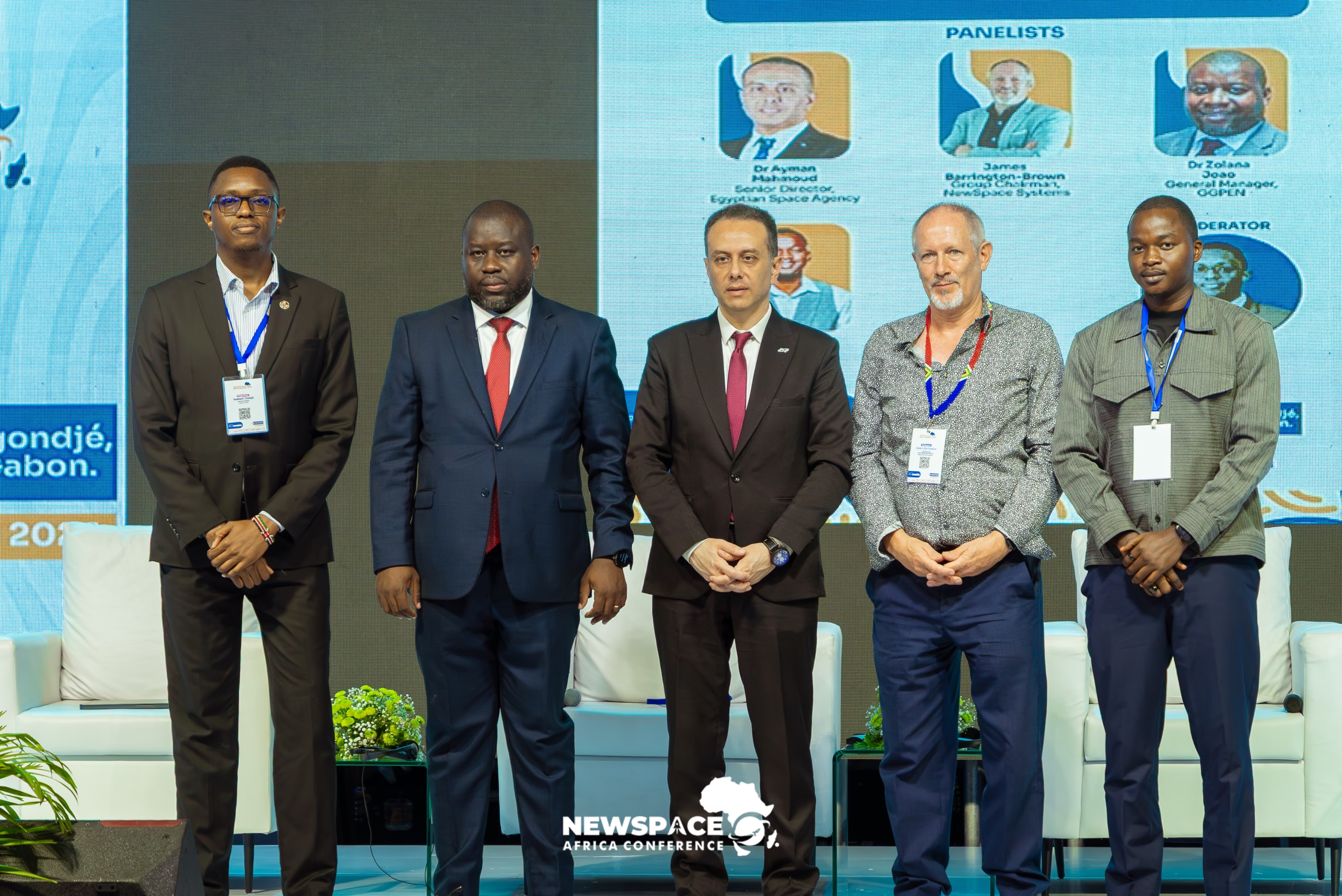
This panel examined the investment landscape for the African space economy, bringing together perspectives from government programme leaders, industry executives, and market analysts to explore what it will take to attract and sustain the capital needed to scale the sector. Speakers discussed how African space assets and programmes are being valued by investors today, what metrics and frameworks are being applied, and where the disconnect between institutional ambition and investor appetite is most acute. The panel also addressed how sovereign space programmes in Egypt and Angola can be structured to create commercial value alongside their public mandates, and what role development finance, blended finance, and private equity each plays in funding the next phase of growth in the African space industry. The discussion was grounded in real programme experience and market data, offering a pragmatic rather than aspirational view of what scaling the African space economy will actually require.
Content Track: Space Finance, Standards & Industrial Policy
Panel: Defining the Future – Towards an African Space Standard for Manufacturing & Quality
Speakers:
- Timothy Ashong, Managing Director, Regional African Satellite Communications Organisation
- Dr Taiwo Tejumola, Lecturer, University of Southampton
- Ifriky Tadadjeu, Founder, Nanosatellite Missions Design
- James Barrington-Brown, Group Chairman, NewSpace Systems
- Moderator: Victor Oluniyi, Data Analyst, Space in Africa
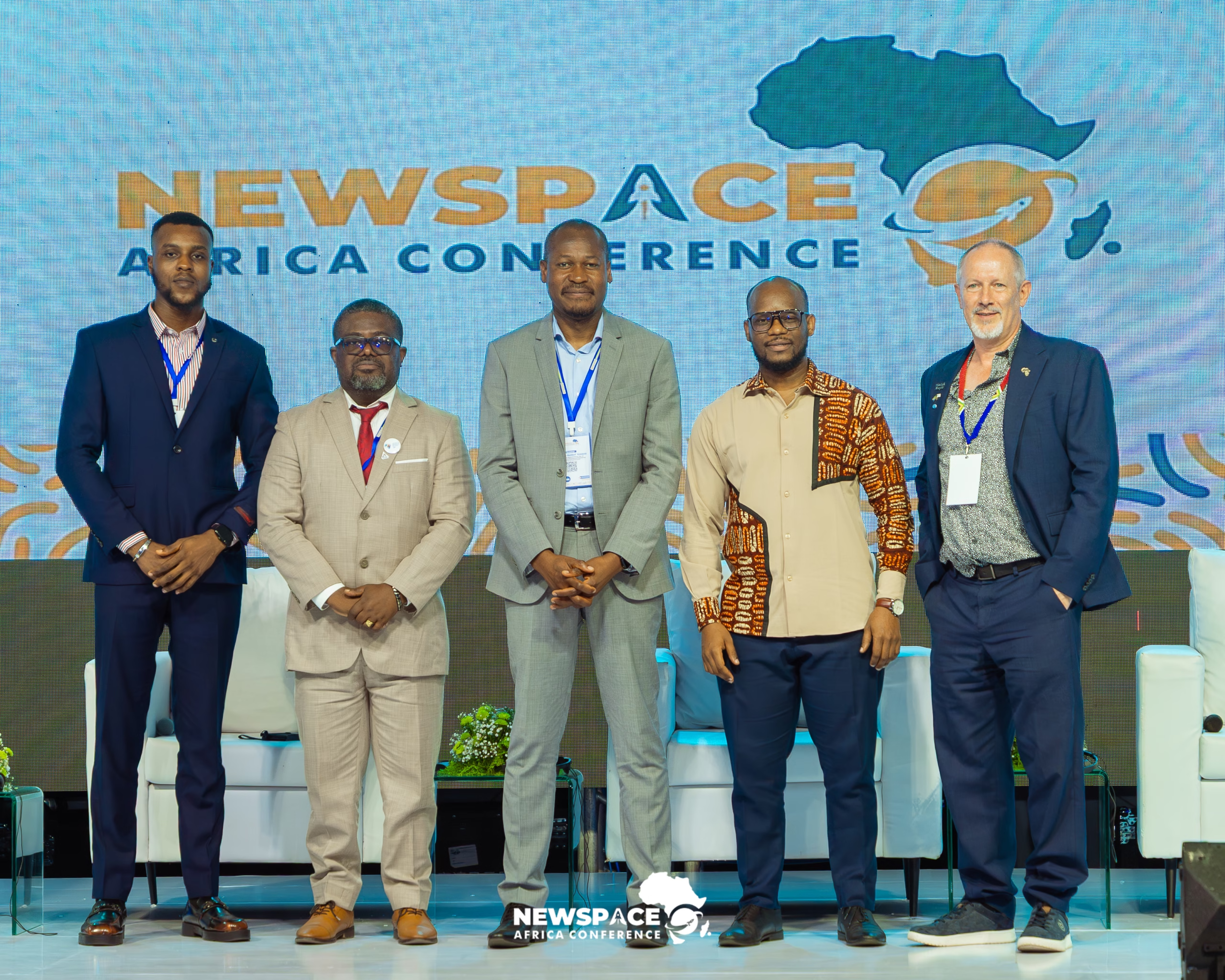
The final content session of the conference addressed a question that sits at the heart of Africa’s long-term space industrial ambitions: can the continent develop its own standards for satellite manufacturing and quality assurance, and what would it take to have those standards recognised internationally? Timothy Ashong brought the communications infrastructure perspective, reflecting on how standards harmonisation across the satellite communications value chain affects interoperability, procurement, and market access. Alberto Mounguengui Moudoki addressed the regulatory dimension, exploring how national frequency and digital infrastructure agencies can align with continental standards frameworks to create coherent operating environments for manufacturers and operators alike. Dr Taiwo Tejumola contributed the academic and engineering perspectives, drawing on comparative experience with international standards bodies to assess what a credible African quality assurance framework would need to include and how it could be built in command global recognition.
Closing Note
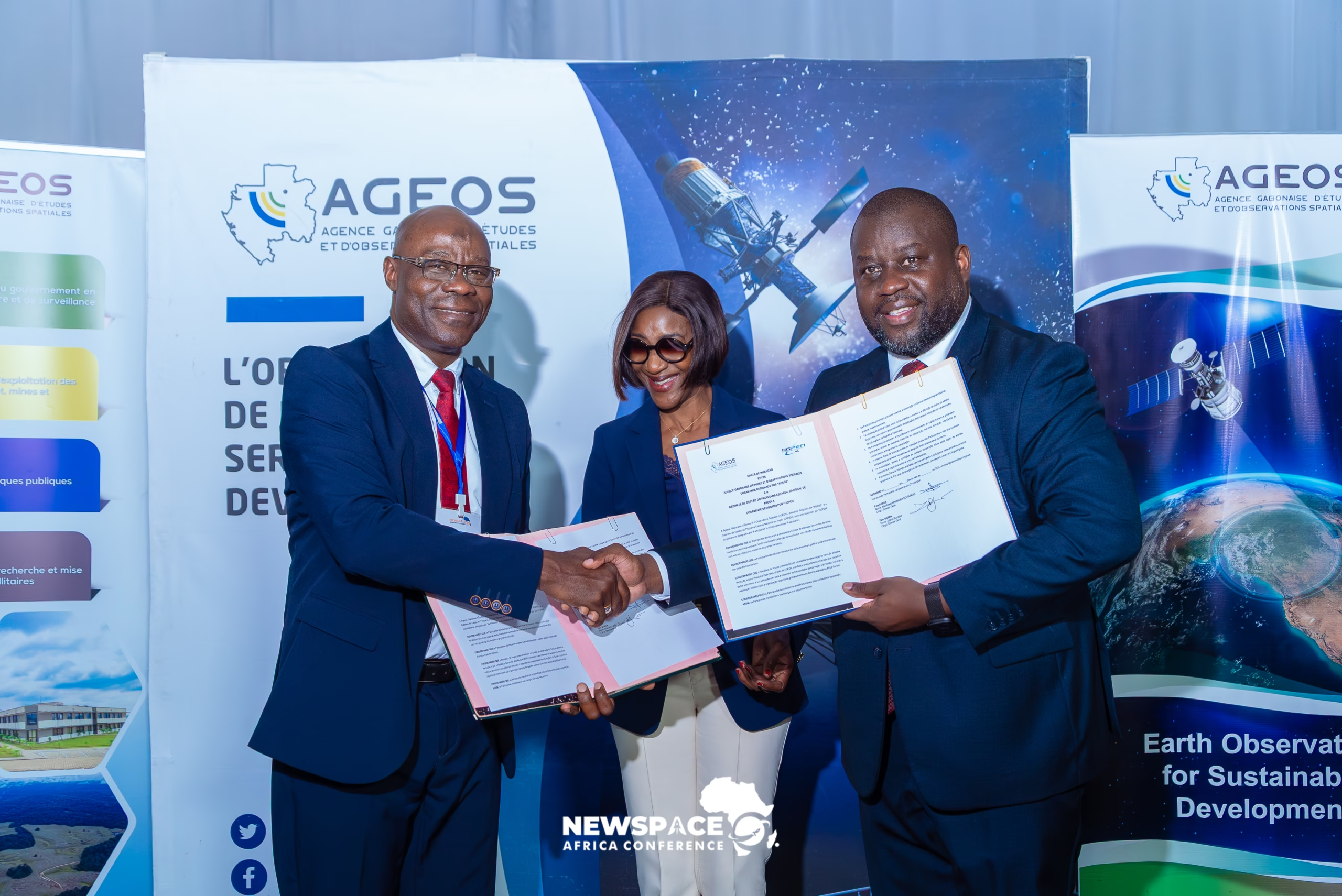
The 2026 NewSpace Africa Conference concluded its third day, having delivered on the promise of its opening sessions, substantive, action-oriented dialogue that moved well beyond aspiration into the territory of concrete commitments and shared frameworks. Across three days, the event produced outcomes that will resonate long after the final panel: Egypt and Somalia signed a Memorandum of Understanding with China’s LASAC to strengthen satellite imagery applications, a significant step in expanding access to space-derived data for two countries at different stages of their space journeys. STAR.VISION and RIIS formalised a partnership to combat mining-driven environmental degradation and illegal mining across Africa, a direct application of Earth observation capabilities to one of the continent’s most pressing governance challenges. AGEOS announced partnerships with the University of Energy and Natural Resources in Ghana and GGPEN (Gabinete de Gestão do Programa Espacial Nacional), deepening its links with Gabon’s space observation agency and other space and academic institutions working in space technology commercialisation, natural resource sciences, and environmental sciences.
These agreements, alongside the many bilateral engagements, B2B connections, B2G conversations, and G2G dialogues that took place in the margins, reflect the kind of conference the organisers set out to build, one where outcomes are as important as discussions. Day 4 promises to carry that momentum forward, offering participants an even richer environment for networking, deal-making, and relationship-building, turning conference commitments into lasting partnerships.