
African Governments Budget USD 828.37 Million for Space Programmes in 2026, Space in Africa Report Shows
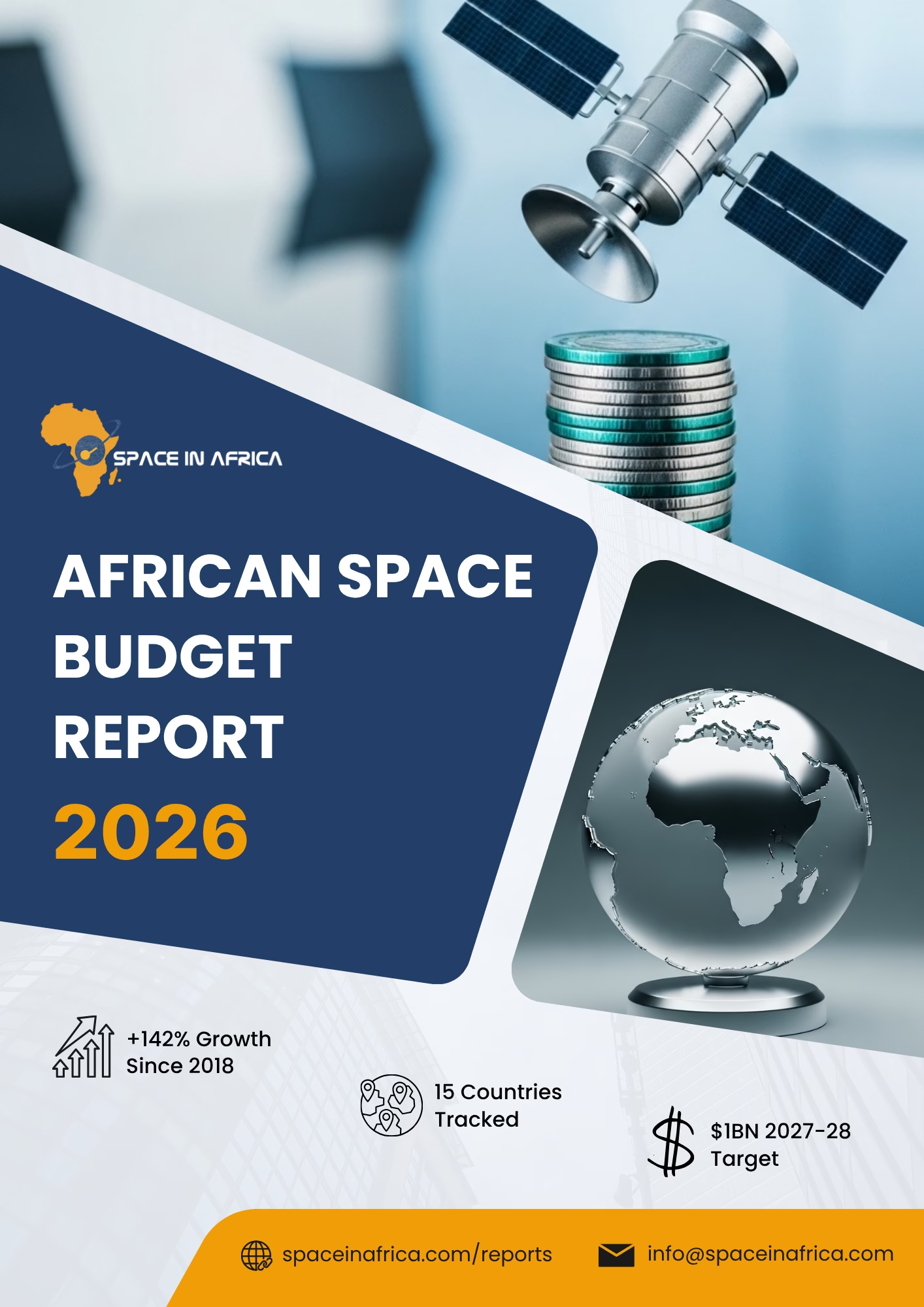
Space in Africa, a boutique consulting and media firm providing data-driven insights for businesses and decision-makers to succeed in the African space industry, has released the 2026 African Space Budget Report. The report aggregates annual budgets by African governments for space programmes and explores the factors influencing budgetary decisions, including technological priorities and national strategic objectives.
After a period of fluctuation in recent years, 2026 marks a strong rebound. African governments collectively allocated USD 828.37 million to space-related activities, up from USD 626.69 million in 2025. This 32.2% increase reflects a renewed push by countries to embed space capabilities into broader economic and development agendas. The total includes statutory funding for national space programmes as well as contributions from the African Union toward the continued establishment of the African Space Agency.
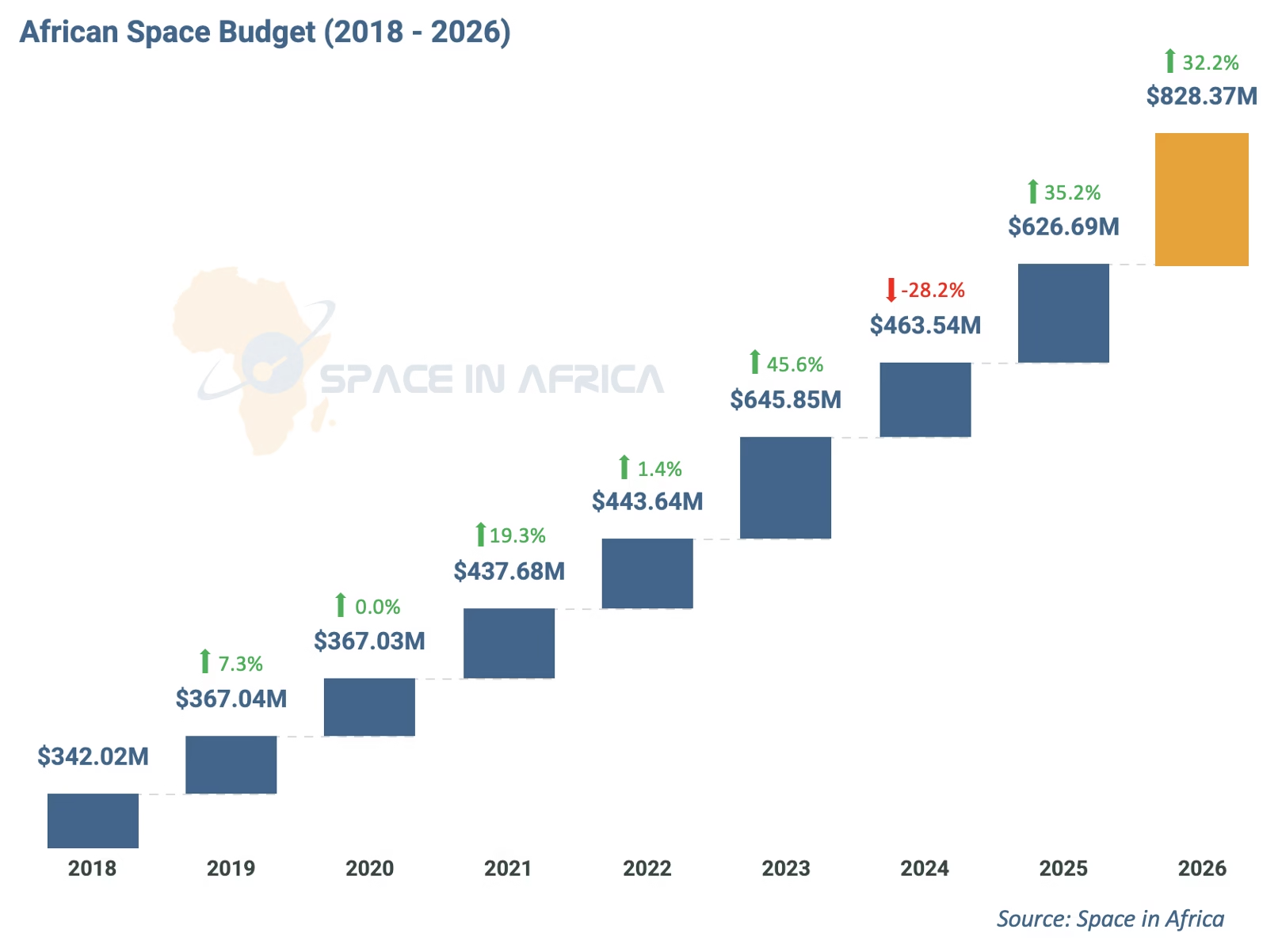
The story behind this growth is not just about larger budgets, but about where the money is going. A significant share of the increase can be traced to major infrastructure commitments that are now moving from planning into execution. Across the continent, governments are investing heavily in long-term assets such as satellites, observatories, and ground infrastructure.
South Africa offers a clear example of this shift in focus. A substantial portion of its national space budget, about 79%, has been directed toward the Square Kilometre Array, underscoring the country’s continued leadership in space science and astronomy. In North Africa, Morocco has entered a new phase of sustained expenditure following the signing of its satellite acquisition agreement in 2024. The deal, valued at USD 1 billion with Israel Aerospace Industries for two Ofek 13 reconnaissance satellites, is structured over several years. This translates into an estimated annual commitment of roughly USD 202 million, alongside smaller operational costs, making it one of the most financially significant programmes on the continent today.
Alongside these large infrastructure programmes, the report highlights a consistent pattern in how African countries prioritise their investments. Earth Observation continues to dominate capital expenditure, with governments focusing on applications that deliver immediate value to their economies. Angola stands out, allocating nearly all of its space budget, approximately 96.7%, to the ANGEO-1 satellite programme. Similar efforts are underway in Ethiopia, Botswana, and Nigeria, all of which are advancing Earth Observation satellite projects. This concentration reflects a practical approach. Space investments across Africa are closely tied to real-world challenges such as food security, environmental monitoring, urban planning, and disaster response. However, the report notes that heavy reliance on a single flagship programme can introduce risk. When budgets are centred on a single major project, any disruption in funding or execution can significantly affect the broader national space agenda.
Beyond infrastructure and application focus, another important development is emerging. The next phase of growth in Africa’s space spending is increasingly being shaped by policy. Countries that establish clear governance frameworks for their space activities are seeing more consistent and often accelerated investment. Rwanda illustrates this trend vividly. Following the adoption of its national space policy in 2025, the country recorded a 139% increase in its space budget in the next fiscal cycle. The introduction of a formal policy created a foundation for sustained investment, signalling to government institutions that space is now a defined national priority. Similar policy-driven momentum is beginning to take shape in other mid-tier countries, suggesting that future growth across the continent will be less concentrated and more widely distributed.
Taken together, the findings of the 2026 report point to a maturing ecosystem. Africa’s space sector is not only expanding in size but also evolving in structure. Investment is becoming more deliberate, anchored in long-term infrastructure, practical applications, and increasingly, policy-backed commitments.
The 2026 African Space Budget Report serves as a resource for policymakers, investors, researchers, and industry stakeholders seeking to understand the dynamics of public spending on space across the continent. It offers insights into emerging opportunities, funding patterns, and the strategic direction of national programmes.
About Space in Africa
Space in Africa (SiA) is a boutique consulting and media firm that provides data-driven insights to help businesses and decision-makers succeed in the African space industry. SiA offers strategic consulting, market research and analytics, and media and PR services with an in-depth focus on the African space industry. Our domain focus enables us to build relationships, offer our clients market-inspired expertise, and support them in succeeding in Africa.
We manage the largest platforms, share industry activities, and connect stakeholders in the African space ecosystem. These platforms include news, analysis, opportunities, the African Space Data Hub and the NewSpace Africa Conference – the largest gathering of decision-makers and foreign partners interested in the African space economy. We have built upon these platforms to create tailored strategies and market research for companies and institutions interested in the African space industry. We offer services to clients from across all continents, and our resources are continually used in over 120 countries.