
NewSpace Africa Conference 2026: Day One Highlights

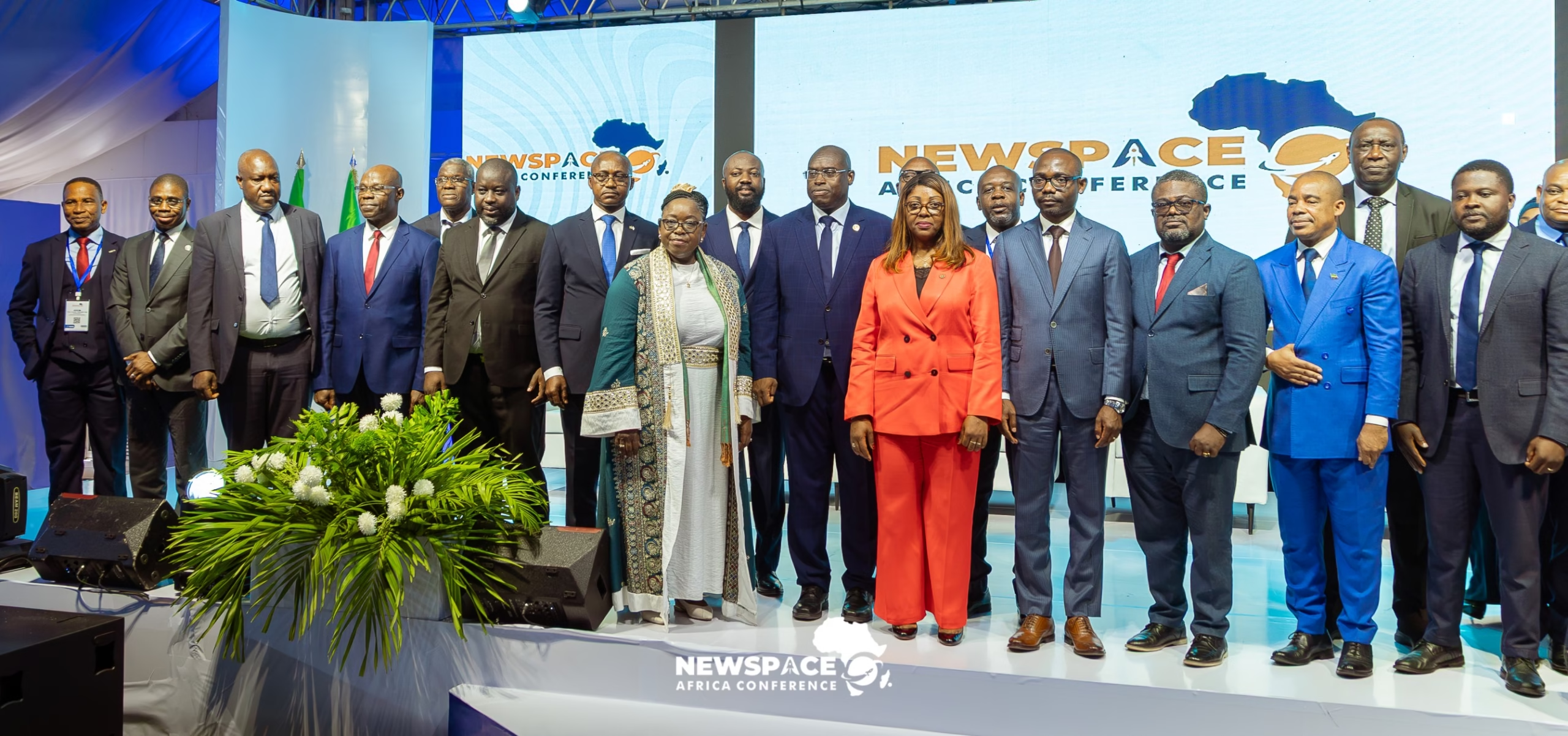
Space in Africa, in collaboration with the African Space Agency (AfSA), and hosted by the Government of Gabon together with the Gabonese Agency for Space Studies and Observations (AGEOS), organised the fifth edition of the NewSpace Africa Conference (NSAC) in 2026. Held from 20th to 23rd April 2026 in Libreville, Gabon, the conference has continued to stand as Africa’s premier gathering of continental and international space stakeholders, bringing together participants from government, academia, the private sector, and the diplomatic corps.
Themed “Inclusive Growth: Expanding Space Benefits to All Africans,” the four-day conference will feature keynote speeches, panel discussions, exhibitions and matchmaking sessions across B2B, B2C, and B2G formats. It is expected to convene over 600 delegates from more than 300 organisations and over 70 countries to collectively explore opportunities and drive discussions on the growth of Africa’s space industry.
Welcoming Remarks
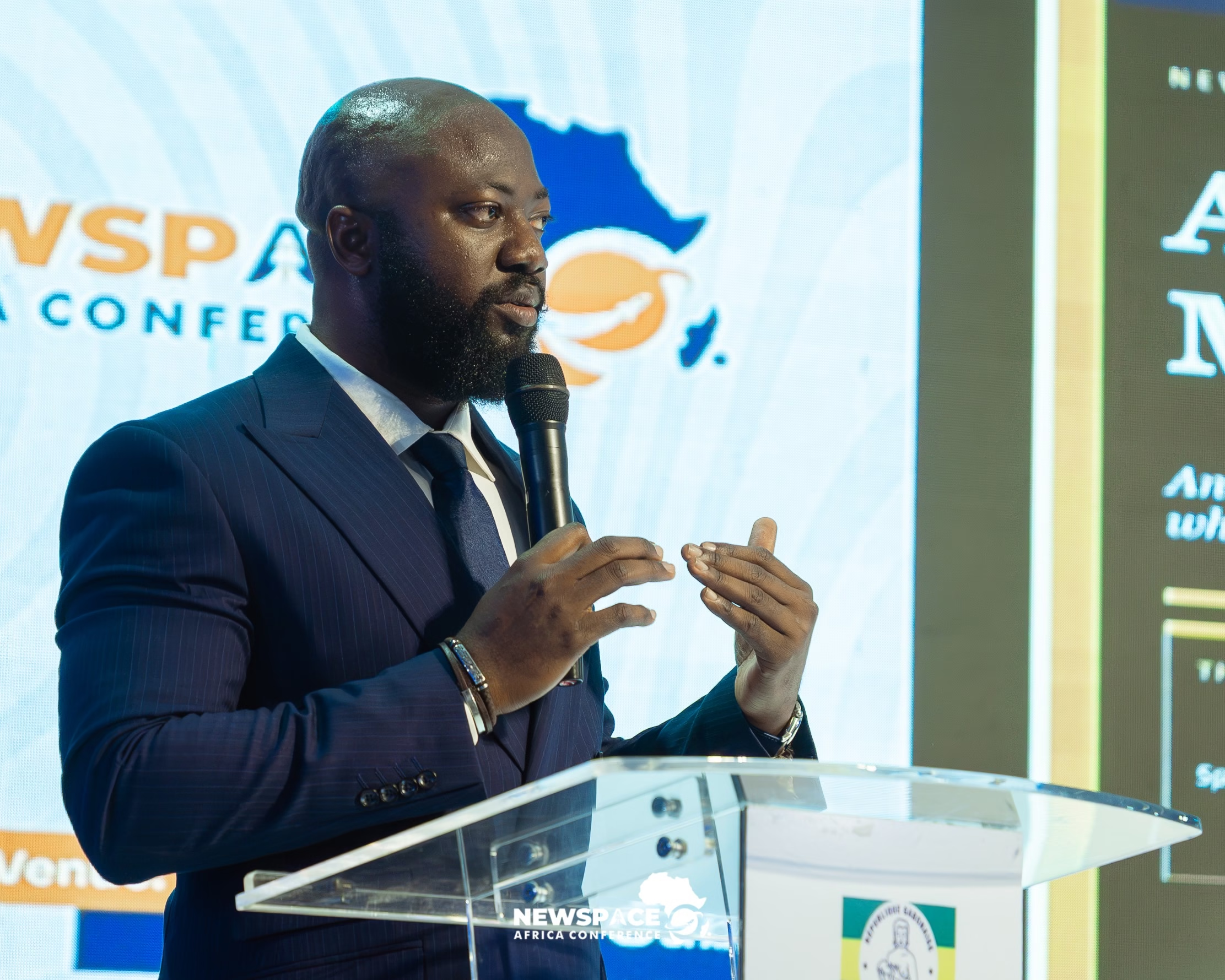
Highlighting the evolution of the NewSpace Africa Conference since its inception in Nairobi in 2022, Managing Director of Space in Africa, Temidayo Oniosun, noted the conference’s expanding footprint across the continent’s five regions, with the 2026 edition marking its first-ever hosting in Central Africa, completing its reach across all regions of Africa. He further emphasised that this edition represents a significant milestone as the first to take place following the official inauguration of the African Space Agency, reinforcing its role as the continent’s premier platform for industry collaboration and the signing of landmark, multi-million-dollar agreements.
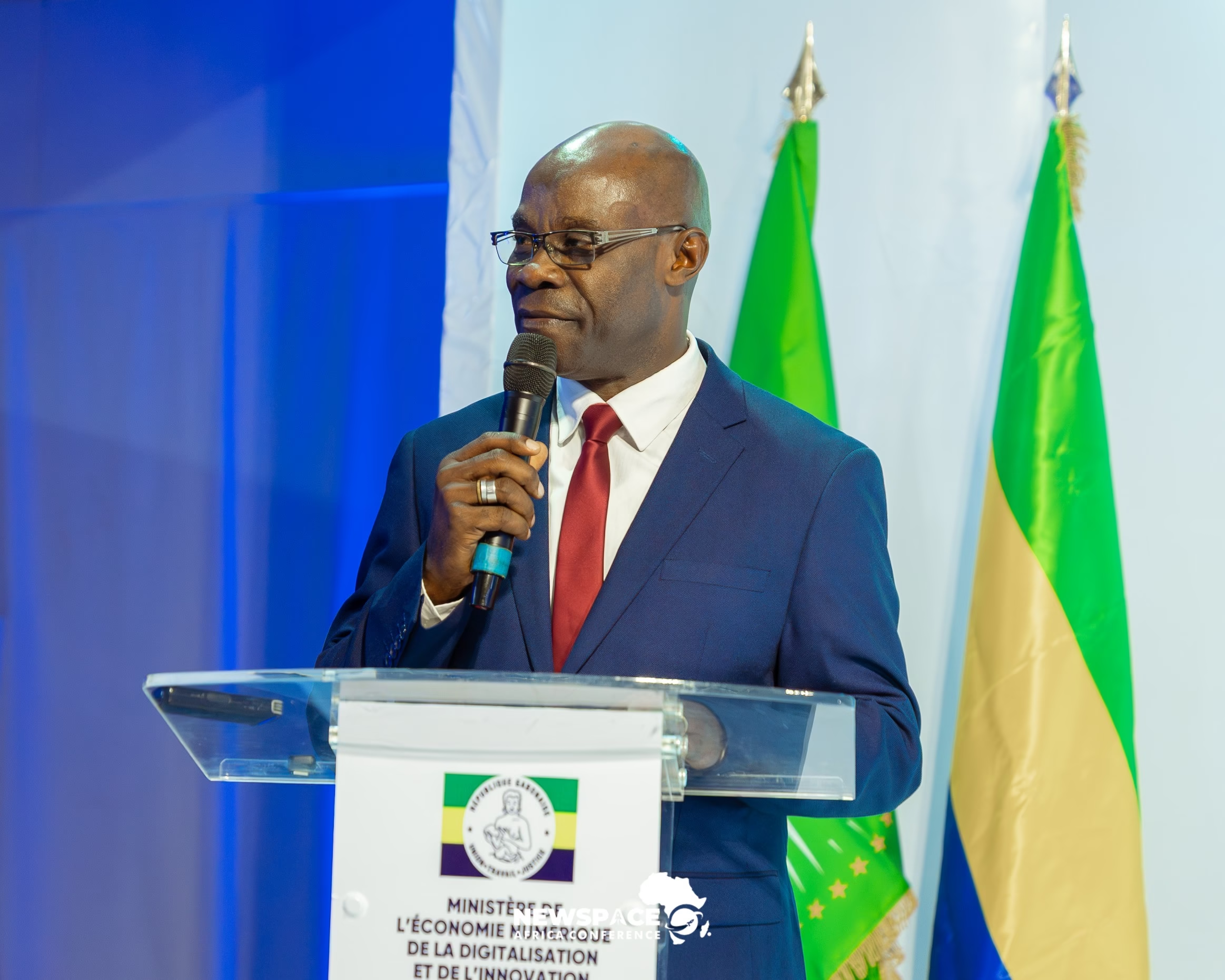
Following the opening remarks, Aboubakar Mambimba, General Director of the Gabonese Agency for Space Studies and Observations and host of this year’s conference, welcomed participants and expressed his appreciation for the opportunity to convene such a significant gathering. He reaffirmed AGEOS’s commitment, supported by the Government of Gabon, to advancing and sustaining the African space ecosystem.
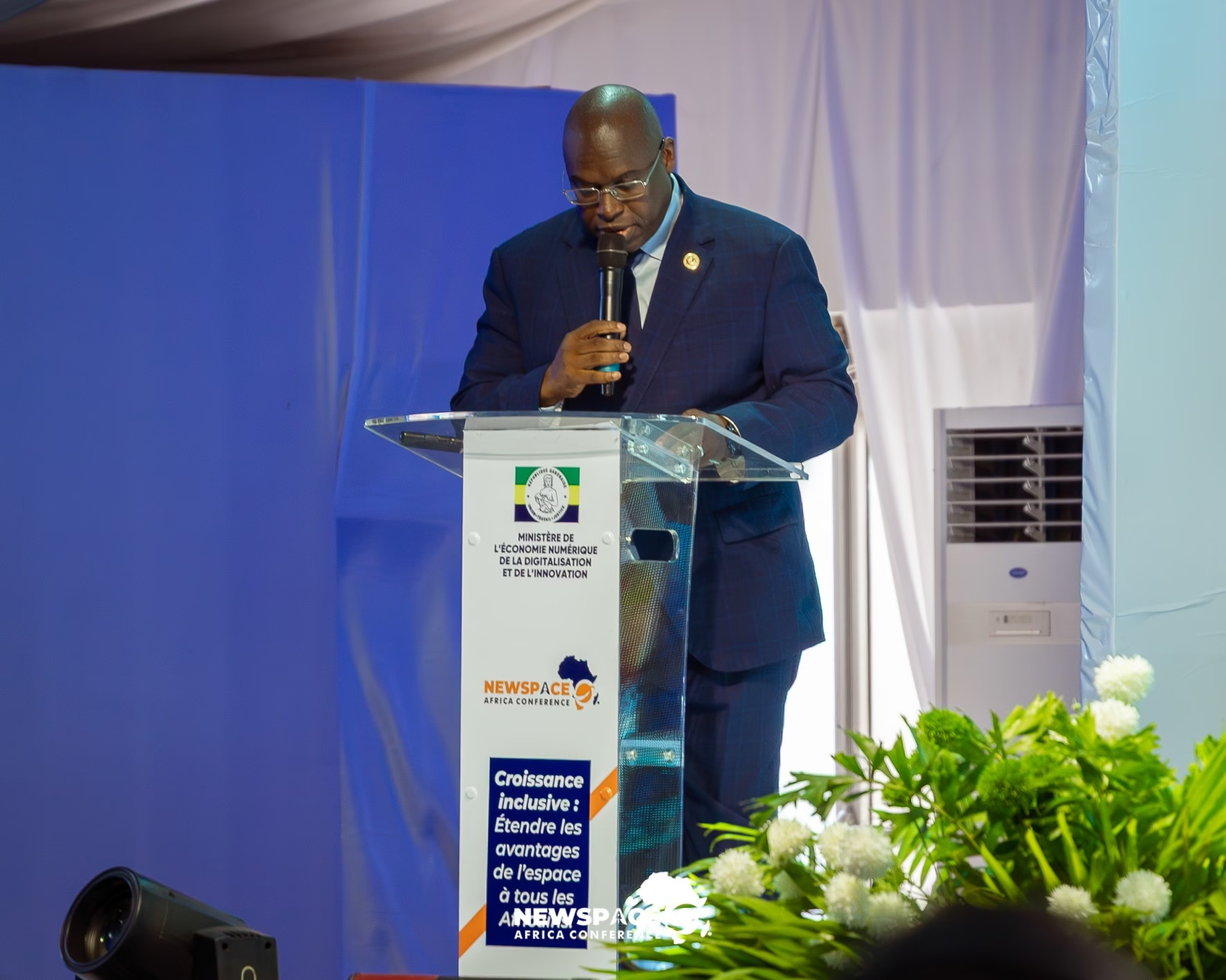
Immediately after, H.E. Tidiane Ouattara, President of the Council of the African Space Agency, reaffirmed Africa’s strong and growing position in the global space economy. He encouraged industry stakeholders to “dream big and act big,” urging them to continue pushing the boundaries and frontiers of space for the benefit of the African continent. Other key dignitaries included H.E. Minko Aline Sylvie, Secretary General of the Ministry of Digital Economy and Innovation, Gabon; H.E. Mark-Alexandre Doumba, Minister of Digital Economy and Innovation, Gabon; as well as various country and multilateral ambassadors to the Republic of Gabon.
Award Ceremony- Young African Space Professionals Award
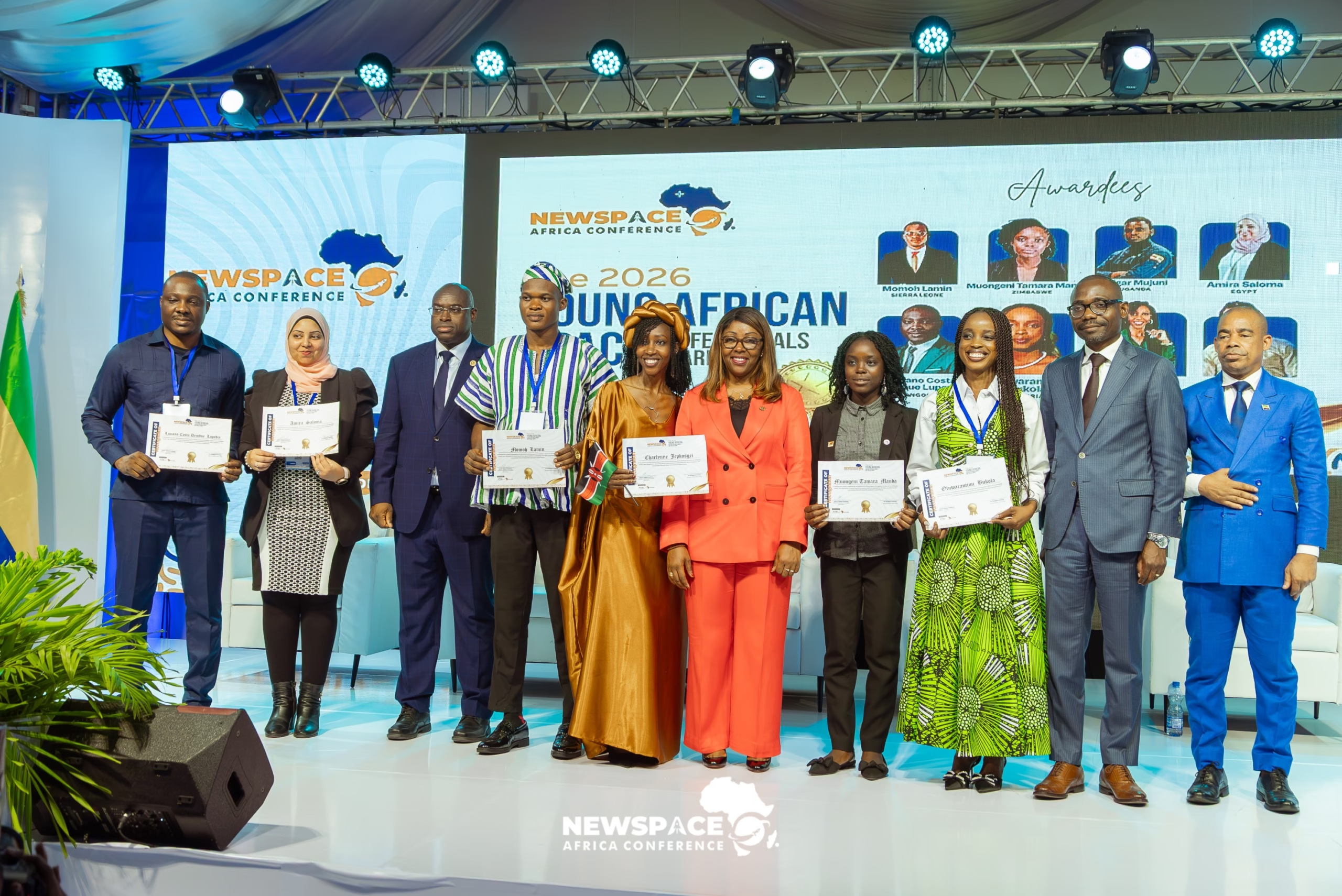
The theme of empowering the next generation of space leaders took centre stage with the 2026 Young African Space Professionals Awards, where outstanding individuals were recognised for their contributions to Africa’s space sector. The awards were presented by H.E. Minko Aline Sylvie, Secretary General of the Ministry of Digital Economy and Innovation, Gabon. The 2026 awardees included Amira Saloma (Egypt), Charlynne Jepkosgei (Kenya), Oluwarantimi Bukola (Nigeria), Momoh Lamin (Sierra Leone), Muongeni Tamara Manda (Zimbabwe), and Luciano Costa Dembue Lupedia (Angola).
Fireside Chat: The African Space Agency’s First Year — The Road Ahead
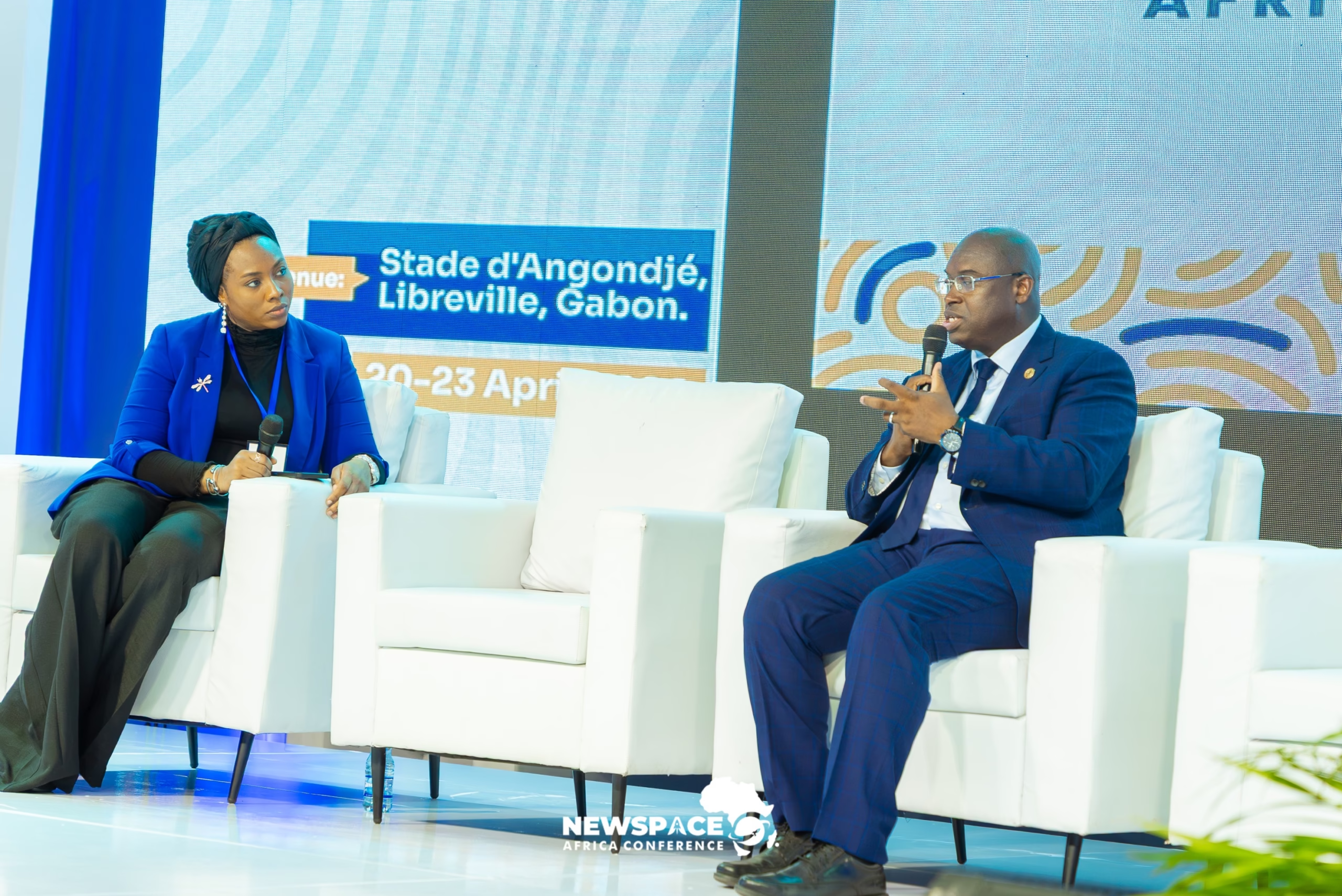
The first discussion of the day featured H.E. Tidiane Ouattara, moderated by Mariam Saliu, where Dr Ouattara shared a snapshot of the African Space Agency’s first year and the milestones achieved so far.He emphasised that intra-African collaboration is critical for the continent to achieve its space ambitions, noting the need to reduce fragmentation across national programmes and promote more joint initiatives to strengthen Africa’s collective capabilities. Lastly, he called for stronger investment in advancing beyond smaller-scale initiatives such as CubeSats, urging stakeholders to work collaboratively toward more ambitious and impactful space missions.
Heads of Space Agencies Panel- Cohort 1
Moderated by Temidayo Oniosun, the first Heads of Space Agencies panel brought together representatives from Angola, South Africa, Algeria, Egypt, and Nigeria, countries identified as leading contributors to Africa’s space economy, collectively accounting for approximately 67% of the continent’s total space budgets.
During the session, Zolana João, General Manager of the Angolan Management Office for the National Space Program (GGPEN), shared insights into the country’s space programme. He highlighted the significant impact of the AngoSat-2 satellite, noting its role in supporting local and regional ISPs. The satellite now delivers high-speed internet of up to 150 Mbps, with some service packages priced as low as USD 10 per month, and has connected nearly half a million Angolans to the internet for the first time.
Matthew Adepoju, Director-General of the National Space Research and Development Agency, outlined Nigeria’s roadmap toward a more commercially driven space economy anchored on strong public-private partnerships. He announced that the country has received presidential approval to launch six new satellites—two for communications and four for Earth observation.He further noted that Nigeria’s rocketry and permanent launch site programme has also been approved, with tangible progress expected in the near term. This builds on key deliberations from the recently constituted National Space Council, chaired by the country’s Head of State.
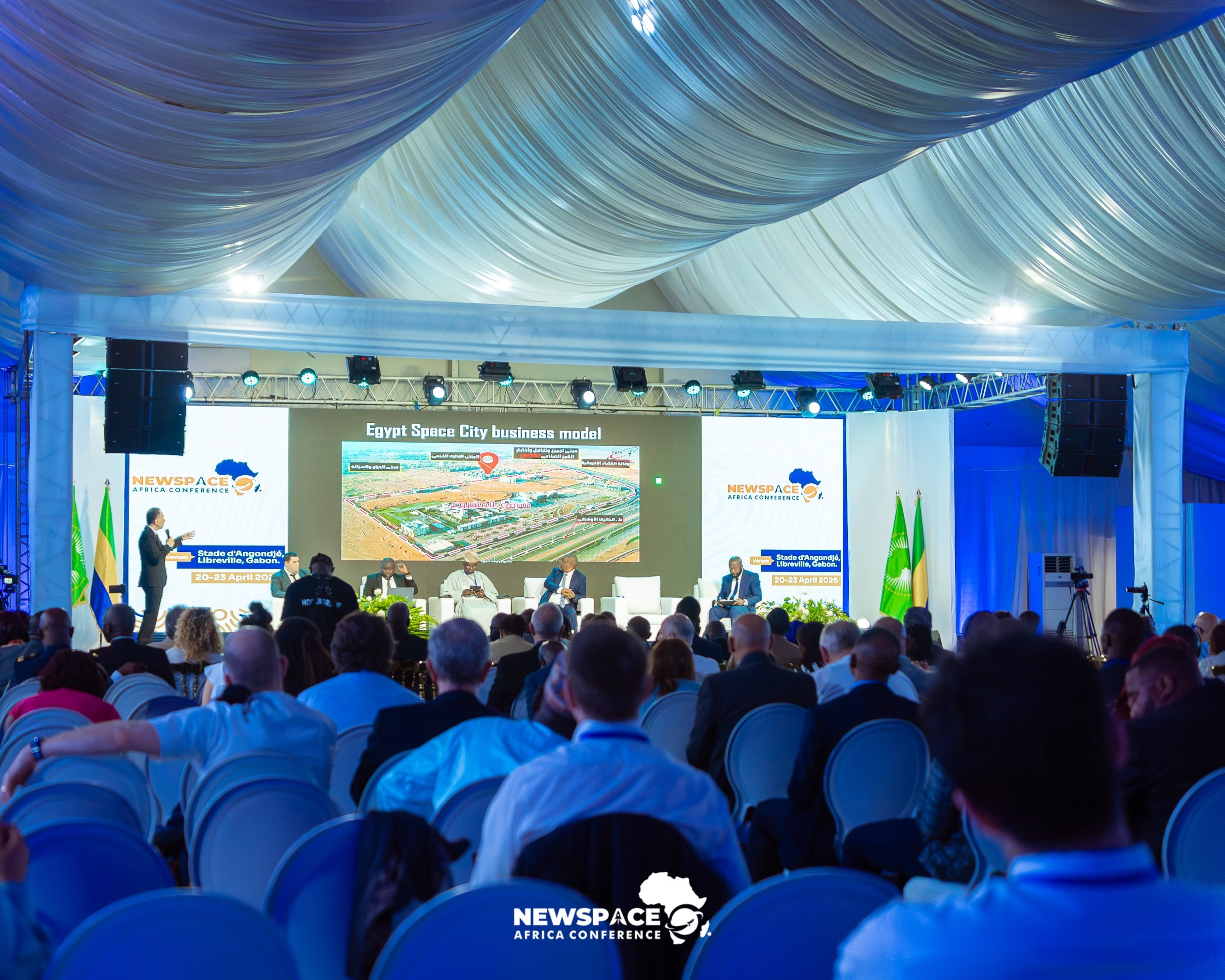
South Africa, Egypt, and Algeria also highlighted significant growth in their respective space programmes, with a strong emphasis on infrastructure development to strengthen national capabilities. Egypt pointed to advancements in its Assembly, Integration, and Testing (AIT) facilities, alongside ongoing efforts to commercialise its space infrastructure. South Africa underscored continued progress in developing its launch capabilities and sustained investments in space science. Meanwhile, Algeria noted the expansion of its Earth observation fleet, now comprising six satellites in orbit, as well as steady progress at its national Centre for Satellite Development.
These countries were represented by Abel Ramoelo, Executive Director for Earth Observation at the South African National Space Agency; Ayman Ahmed, Senior Director at the Egyptian Space Agency; and Amin Mestar, Secretary General of the Algerian Space Agency.
Panel Session: Africa–Europe Space Collaboration
With the launch and advancement of the Africa–Europe Space Partnership Programme (AESPP), the European Commission took the stage to outline the programme’s key highlights, benefits, and opportunities. The session began with a keynote address by H.E. Mrs Cécile ABADIE, the EU Ambassador in Gabon. Therafter, the panel featured Hamdi Kacem, Expert at the African Space Agency; Emmanuel Pajot, Secretary General of the European Association of Remote Sensing Companies; Kwaku Sumah, Founder and Managing Director of SpaceHubs Africa; and Munir or Munza Jahjah, Head of the Luigi Broglio Malindi Space Centre. The session was moderated by Alexis Chune, Earth Observation Application Specialist at the European Space Agency.
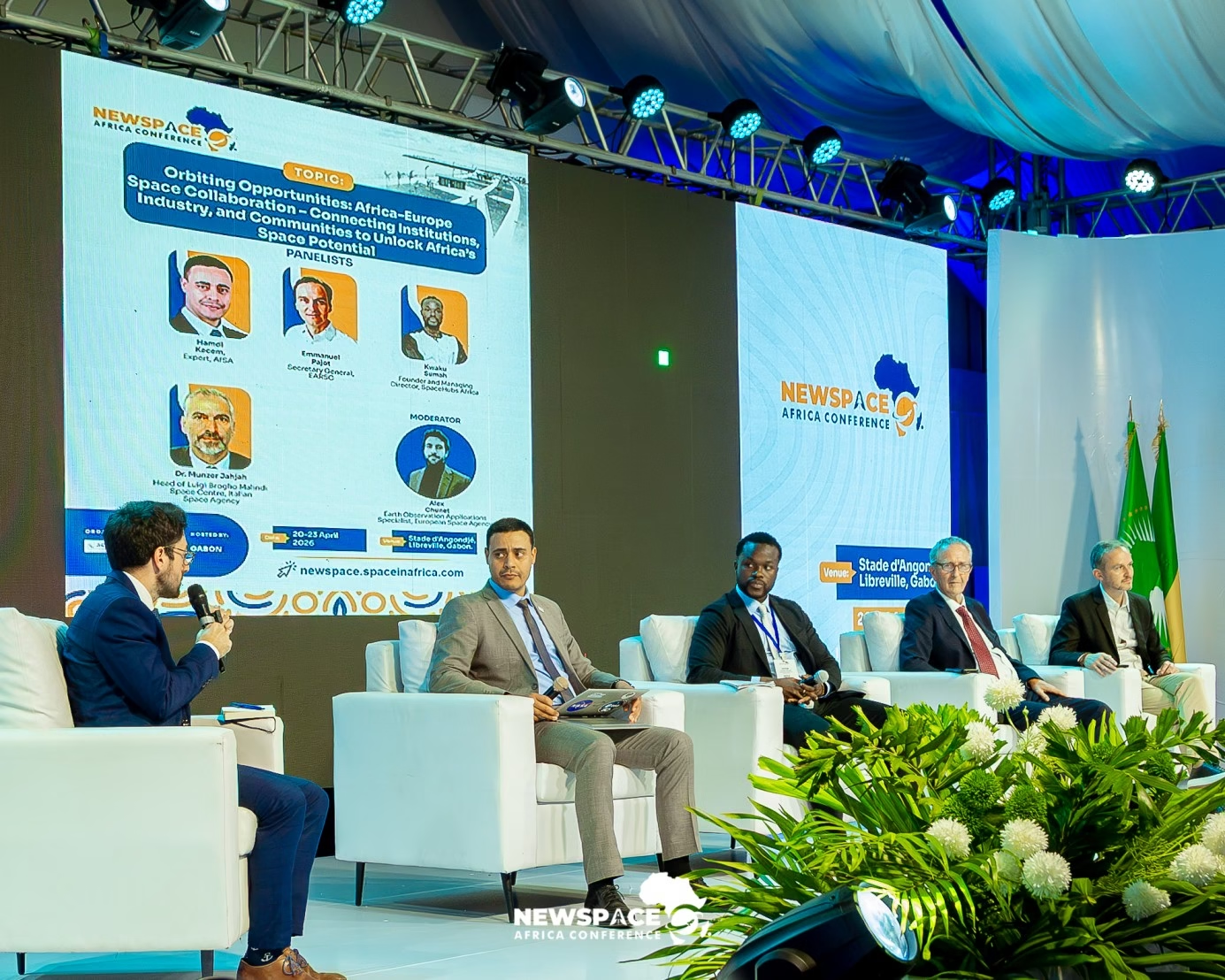
Discussions emphasised that AESPP is designed as an inclusive programme for space agencies across Africa, with panellists encouraging national leaders to actively leverage its collaborative framework to strengthen and expand their domestic space capabilities.
Keynote Addresses
Following this session, two keynote addresses were delivered by Célestin Kadjidja, President of Gabon Telecom and Electronic Télécommunication, and Rune Floberghagen, Head of the Climate Action, Sustainability and Science Department within the Directorate of Earth Observation Programmes at the European Space Agency. Dr Floberghagen highlighted the Earth Action in Africa programme, noting that Africa–ESA research collaborations have spanned more than 25 years and involve partnerships with more than 100 institutions across the continent. He emphasised ESA’s strong focus on capacity development in Africa and announced an open call for African research fellows at ESA to empower the next generation of African Earth Observation (EO) leaders.
After providing deeper insights into the AESPP and its core pillars, he concluded by underscoring that strengthened collaboration with Africa is essential to advancing space for the collective benefit of all.
Heads of Space Agencies Panel — Cohort 2
To conclude the first day of NSAC 2026, heads of space agencies from Uganda, Rwanda, Gabon, and Namibia took to the stage to highlight progress and priorities within their national space programmes. Aboubakar Mambimba of the Gabonese Agency for Space Studies and Observations noted that the rise in space activities in Gabon has necessitated the establishment of robust regulatory frameworks to govern the sector. He highlighted ongoing work on the country’s National Space Policy and Strategy (2026–2030), as well as its Space Law on the Regulation of Space Activities, launched in February 2026.
Representing Uganda, Doreen Agaba, Technical Lead of the Department of Aeronautics and Space Science at the Science, Technology and Innovation Secretariat, called for increased knowledge sharing among African space actors. She also outlined Uganda’s ambition to develop a Pan-African Space Station (PASS), an initiative the country has offered to lead in positioning Africa more strongly within the global space and research economy.
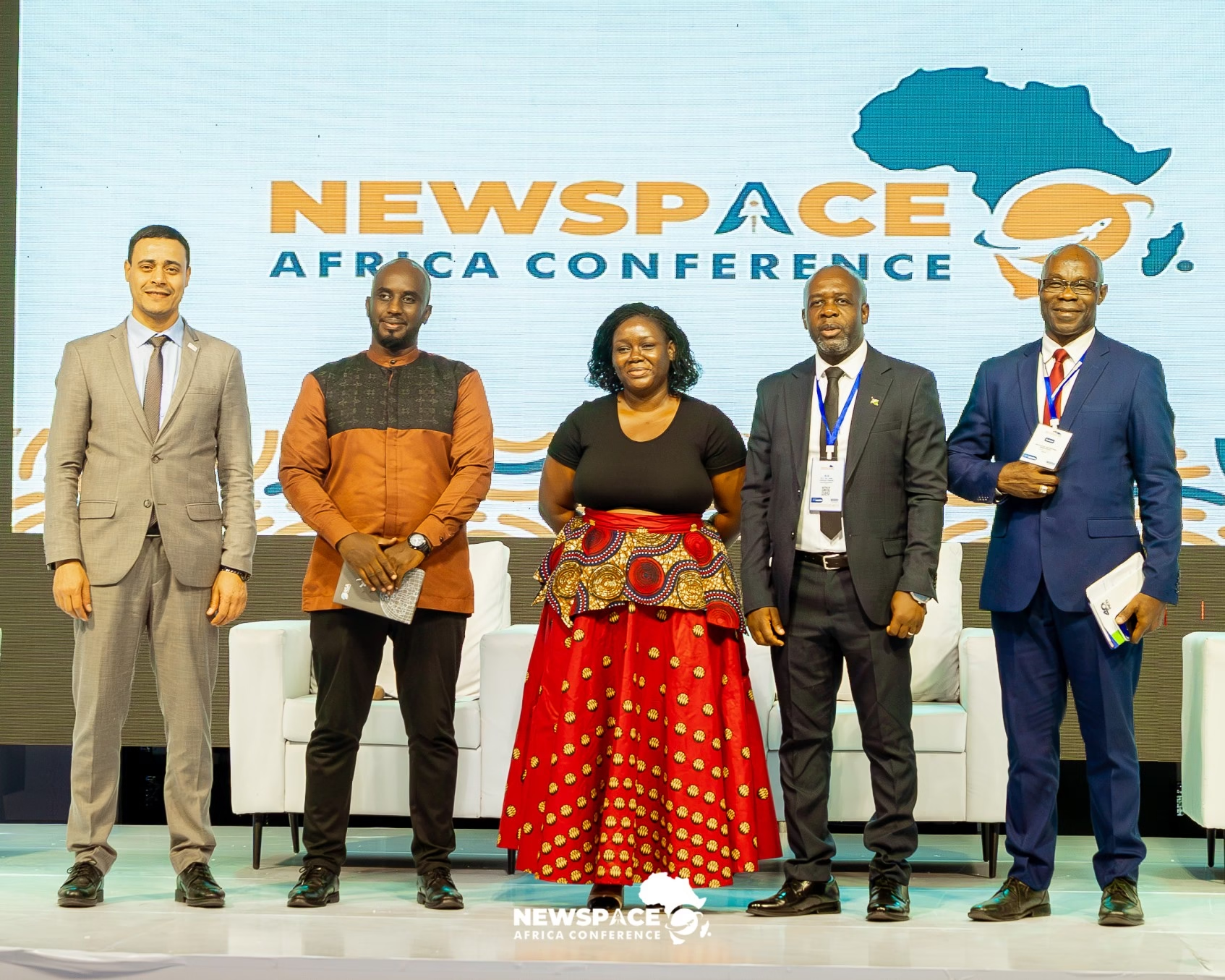
Rwanda and Namibia also shared insights on their national space initiatives. Namibia highlighted its growing focus on strengthening space science capabilities, while Rwanda announced that it will host the IAF Global Space Conference on Climate Change 2026 in June 2026. Adelin Kajangwe, Strategic Partnerships Analyst at the Rwanda Space Agency, also emphasised the importance of collaboration and knowledge sharing among African nations to accelerate sector-wide growth. From Namibia, Mundia Lisho, Deputy Executive Director for Higher Education, Training, Research and Innovation at the Ministry of Education, Innovation, Youth, Sports, Arts and Culture, highlighted the recent inauguration of the country’s Nano-Satellite Data Receiving Ground Station. He noted that the facility is expected to catalyse the satellite imagery market while strengthening local capacity in space technologies.