
African Development Satellite Project Marks Key Continental Milestones


The African Development Satellite (AfDevSat) is advancing steadily in 2025, bringing together six African nations, namely Egypt, Ghana, Kenya, Nigeria, Sudan, and Uganda, in the design, development, and launch of a hyperspectral-imaging CubeSat for an Earth Observation mission. Furthermore, the project seeks to deepen collaboration among African nations while advancing indigenous space technology and localising satellite manufacturing across the continent.
Kenya: Development of the Electrical Power Subsystem
From May to August 2025, engineers from the Kenya Space Agency (KSA) completed the design, development, and testing of the Electrical Power Subsystem (EPS) at the Egyptian Space Agency (EgSA) facilities in Cairo. Additionally, the subsystem comprises three core elements:
- Power Generation Board: Responsible for harvesting and regulating solar energy.
- Power Distribution Board: Ensures a stable supply and switching across the satellite.
- Battery Management System: For monitoring, protecting, and controlling the thermal performance of an 8-cell lithium-ion pack in 4S2P configuration.
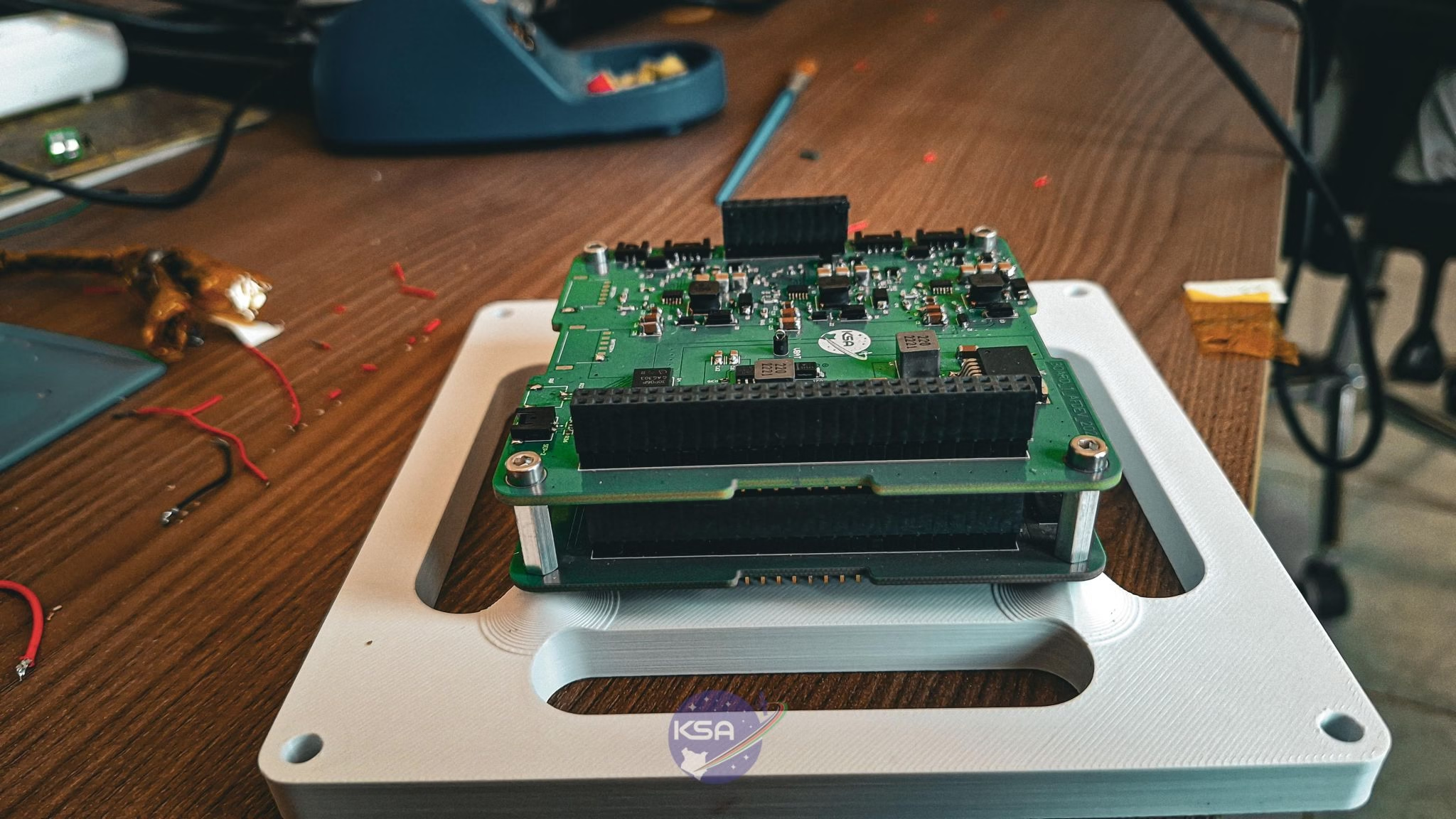
Kenya’s contribution underscores its growing technical capacity and complements the country’s broader space initiatives, including the development of national Earth observation satellites and applied technology programmes. The KSA team, led by Captain Jackson Koll, together with engineers Mr Brian Oure Omollo and Mr Evans Yomu Kidada, successfully delivered this critical subsystem. In addition to the technical achievements, the programme strengthened collaboration, knowledge exchange, and resource sharing among African space professionals, enabling the subsystem’s assembly, integration, and qualification within the agreed timeframe.
Uganda: Computer Subsystem and Regional Coordination
Uganda, through the Science, Technology and Innovation Secretariat, will be responsible for the development of the onboard computer systems. Additionally, in May 2025, Uganda hosted the inaugural AfDevSat workshop in Kampala, which served to discuss on technical development, capacity building, funding mechanisms, policy harmonisation, and expansion strategies to ensure the initiative’s sustainability and scalability.

During the discussions, participants outlined a clear roadmap for the project’s long-term objectives, including its transformation into a continent-wide programme. Building on the lessons learnt from the pilot phase, the AfDev-Sat initiative aims to expand its reach by incorporating additional African nations interested in contributing to and benefiting from the project. This expansion will facilitate a sustainable platform for capacity building, knowledge exchange, and the advancement of Africa’s space ecosystem.
Egypt: Expanding Capacity Through Strategic Training Initiatives
Egypt continues to assert its leadership role in the AfDevSat initiative, serving as the principal integration hub and a focal point for continental capacity development. In January 2025, the Egyptian Space Agency (EgSA) hosted the “Basic Space Technology and Satellite Systems Workshop”, a ten-day training programme under the AfDevSat initiative. Held from 13 to 23 January in Cairo, and supported financially by the Italian government, the workshop welcomed 21 engineers and specialists from 20 African nations.

Additionally, Egypt serves as the primary integration and testing hub for AfDevSat, leveraging Space City, home to Africa’s largest Assembly, Integration and Testing (AIT) facility to carry out mission-critical subsystem assembly, environmental simulation, and full satellite integration. The initiative strengthens Africa’s satellite manufacturing capacity and lays the groundwork for a follow-on programme, AfDevSat-2, which will expand participation to more universities and institutions across the continent.
Future Outlook
Other partner countries are also advancing their contributions to the project. In an exclusive interview with Space in Africa, former Egyptian Space Agency CEO Dr Sherif Sedky shared insights into AfDevSat’s progress. At present, efforts are concentrated on refining the Attitude Determination and Control System (ADCS) in collaboration with Nigeria. Work is ongoing, and further updates will be communicated as the mission moves closer to launch readiness.
The AfDevSat mission is scheduled for launch by the end of 2025 or early 2026, marking a defining milestone in Africa’s collective pursuit of space capability and continental satellite collaboration.