
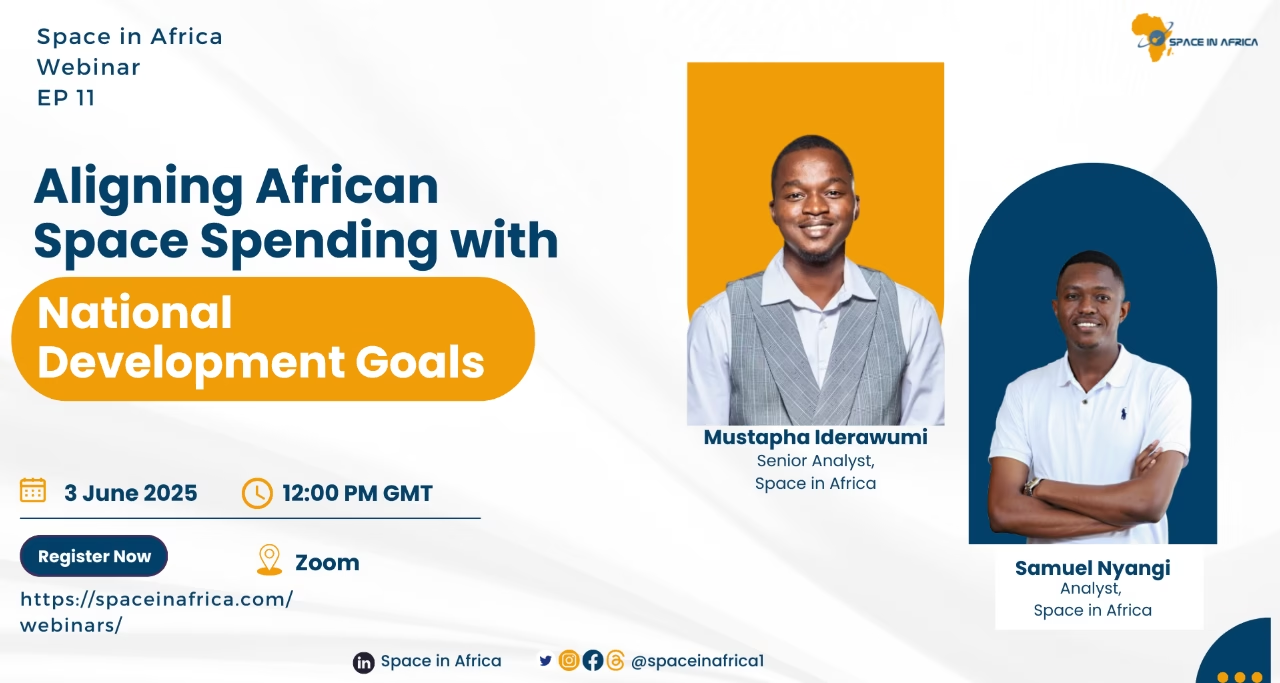
Webinar: Aligning African Space Spending with National Development Goals
With over USD 426 million, including covering statutory allocations for national space programmes and contributions from the African Union to support the newly established African Space Agency, allocated to space activities in 2025, African governments continue to view space as a strategic lever for national development and economic transformation. But how are these funds being deployed? In the face of shifting economic priorities and currency fluctuations, there is growing pressure to ensure that every amount spent translates into measurable value for citizens. However, while the total 2025 space budgets across Africa reflect a modest decline in USD terms, there is something to be said about how African countries are evolving their space financing strategies, transitioning from traditional agency-based annual allocations to project-specific investments funded through loans, grants, and bilateral partnerships.
This structural shift is reshaping the continent’s approach to funding space infrastructure. For example, although Angola’s annual space budget has remained under USD 5 million, it recently signed a EUR 225 million deal to develop ANGEO-1. Nigeria, Egypt, and other countries have used Export Credit Agencies and concessional loans to finance large satellite missions, highlighting a trend toward capital-intensive, development-aligned space investments.
This webinar, which will be coicinding with the release of our African Space Budgets Report 2025, will explore how space budgets are strategically aligned with national development priorities, such as agriculture, security, communications, disaster risk reduction, digital transformation, education, and climate resilience, and what this means for policymaking and accountability. It will also unpack how spending trends are evolving, with many countries moving beyond standard annual allocations to more project-specific investments supported by loans, grants, and special funds. This session will also explore how these evolving funding models can better align with national development priorities, ensuring that even large, externally financed projects deliver measurable social and economic value at home. It also seeks to bridge the gap between fiscal strategies and policy impact, showcasing how smart investment can empower national goals.
Objectives:
- To present key findings from the 2025 African Space Budgets Report, with a focus on how national space funding is being structured and aligned with development priorities and agendas, and real-world outcomes.
- Examine how national governments are deploying space budgets both operationally and through large infrastructure projects, to support development sectors like agriculture, health, environment, and education and where space investments have translated into measurable benefits in these areas.
- Explore the shift from traditional annual budgeting to alternative financing mechanisms, such as sovereign loans, export credits, and large project-based investments.
- Discuss how impact-based budgeting, performance tracking, and inter-ministerial coordination and reporting frameworks can improve space investment outcomes and ensure space programmes deliver measurable national value.
Speakers
- Samuel Nyangi, Analyst, Space in Africa;
- Mustapha Iderawumi, Senior Analyst, Space in Africa
Date and Time
- Webinar Date: Tuesday, 3 June 2025.
- Time: 12:00 PM GMT
Important Information
-
- Date and Time—The event will be held on June 3, 2025, at 12 p.m. GMT via Zoom.
- Registration Link – Registration is open to all interested individuals. To register, please click here.
- Duration: 60 minutes
To learn more about the webinar, please click here.
About Space in Africa
Space in Africa is the leading analytics and consulting company in the space sector, serving both the institutional and commercial markets with a particular focus on Africa. Our experience builds on a long track of past projects executed for international organisations, national governments, and commercial players, with high stakes in the space business — our practice cuts across all African countries. Space in Africa’s proprietary, research-based business and market analysis predicts critical outcomes in what happens next in the industry and the opportunities available. Our data-driven analysis, free of vested interests and preconceptions, is helping to shape the ecosystem by making available accurate information critical for the change.