
Mali Eyes Establishing a National Space Agency
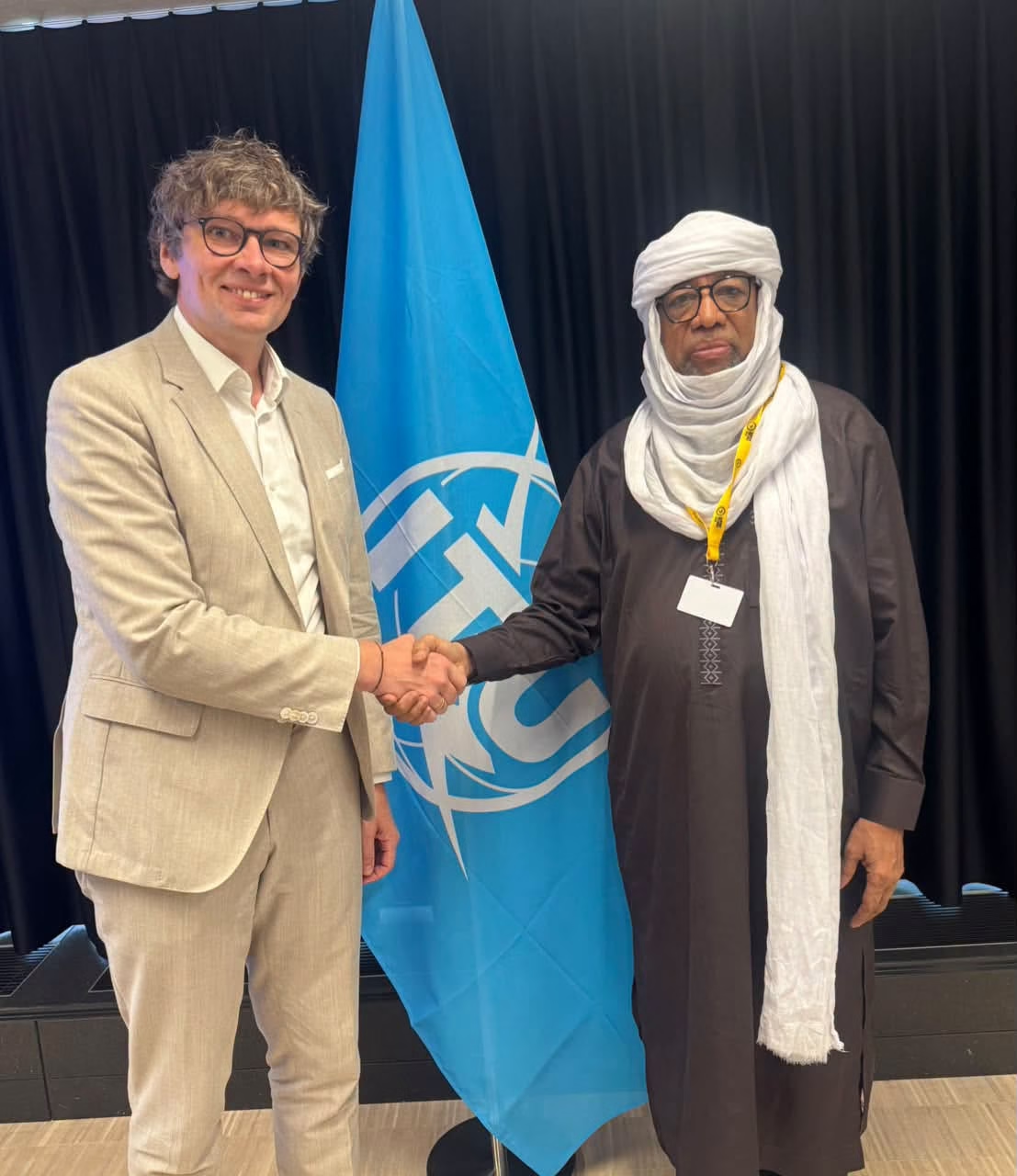
Mali’s Minister of Communication, Digital Economy, and Administrative Modernisation, Alhamdou Ag Ilyène, has raised the prospect of establishing a national space agency and developing shared satellite capabilities within the Alliance of Sahel States (AES) during a meeting with ITU Deputy Secretary-General Tomas Lamanauskas on the sidelines of the WSIS Forum 2026 in Geneva.
The discussions, which centred more broadly on strengthening cooperation between Mali and the ITU in digital transformation and artificial intelligence, took a significant turn when the Minister outlined Mali’s spatial ambitions. He emphasised the importance, for the AES member states, of progressively developing common space capabilities in the service of technological sovereignty, connectivity, Earth observation, disaster management, agriculture, security, and development.
A Space Agency for Mali, Satellite Capabilities for the Confederation
The Minister raised two distinct but complementary ambitions: the creation of a national space agency in Mali and the development of confederal satellite capabilities shared across the AES, which also includes Burkina Faso and Niger. No timeline, budget, or technical partners were disclosed at this stage.
Mali currently has no documented national space programme, making the announcement a first step in a direction that several African countries have already taken. African countries have established eleven national space agencies across the continent to date, and Mali’s potential entry would expand a growing cohort of African states investing in space infrastructure to address challenges in security, agriculture, land management, and disaster response.
The proposal is not without regional precedent. In September 2024, ministers from Mali, Niger, and Burkina Faso met with Russia’s aerospace agency, Roscosmos, to discuss joint satellite projects, including telecommunications and remote sensing satellites intended to expand broadband internet access, support secure, encrypted communications, and improve surveillance of the vast and underserved territories of the Sahel.
ITU Support on the Table
In presenting the space agency proposal to the ITU, Minister Ag Ilyène expressed the hope that the Union would support this ambition within its own area of competence through technical expertise, experience sharing, and facilitation of international partnerships.
Tomas Lamanauskas reaffirmed the ITU’s readiness to deepen its support to Mali across its digital priorities, expressing the organisation’s commitment to backing the country’s initiatives in digital transformation, cybersecurity, artificial intelligence, and connectivity infrastructure development.