
Africa Launches Its First GNSS Lab and Academy to Drive Continental Space Autonomy

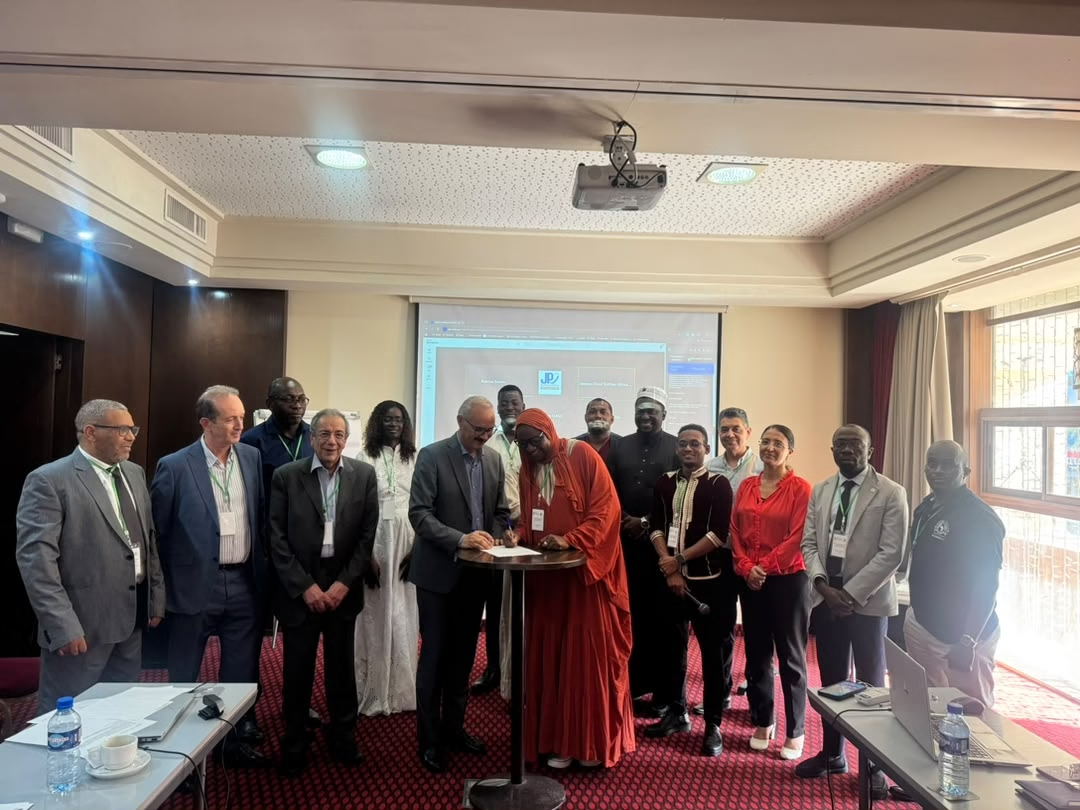
The Africa GNSS Lab and its accompanying Academy were officially launched during a two-day workshop held on 23 and 24 June 2026. The event was hosted and co-organised by the Centre for Research in Microelectronics and Nanotechnology (CRMN) In Sousse, Tunisia, together with the SatNav Africa Joint Programme Office, bringing together more than 40 representatives from academia, the private sector, and non-governmental organisations.
A Platform for Africa’s Strategic Autonomy in GNSS
The workshop’s opening remarks emphasised the importance of establishing the foundations for African strategic autonomy in the space and GNSS sectors, building on existing achievements and capitalising on opportunities already present across the continent. Representatives from the African Union showcased the Lab’s role in addressing Africa’s comparatively limited contribution to the global space economy, while highlighting the importance of African ownership of continental programmes such as SatNav Africa and ANGA, anchored in durable collaboration between institutions, researchers, the private sector, and partners.
Participants represented a wide range of expertise, spanning geomatics, remote sensing, hydrology, precision agriculture, civil aviation, drones, and natural resource management, reflecting the breadth of disciplines the Lab is intended to draw together. A shared ambition emerged clearly from the discussions: positioning Africa not merely as a consumer of GNSS technologies, but as a genuine producer of knowledge, innovation, and solutions.
Core Objectives of the Lab and Academy
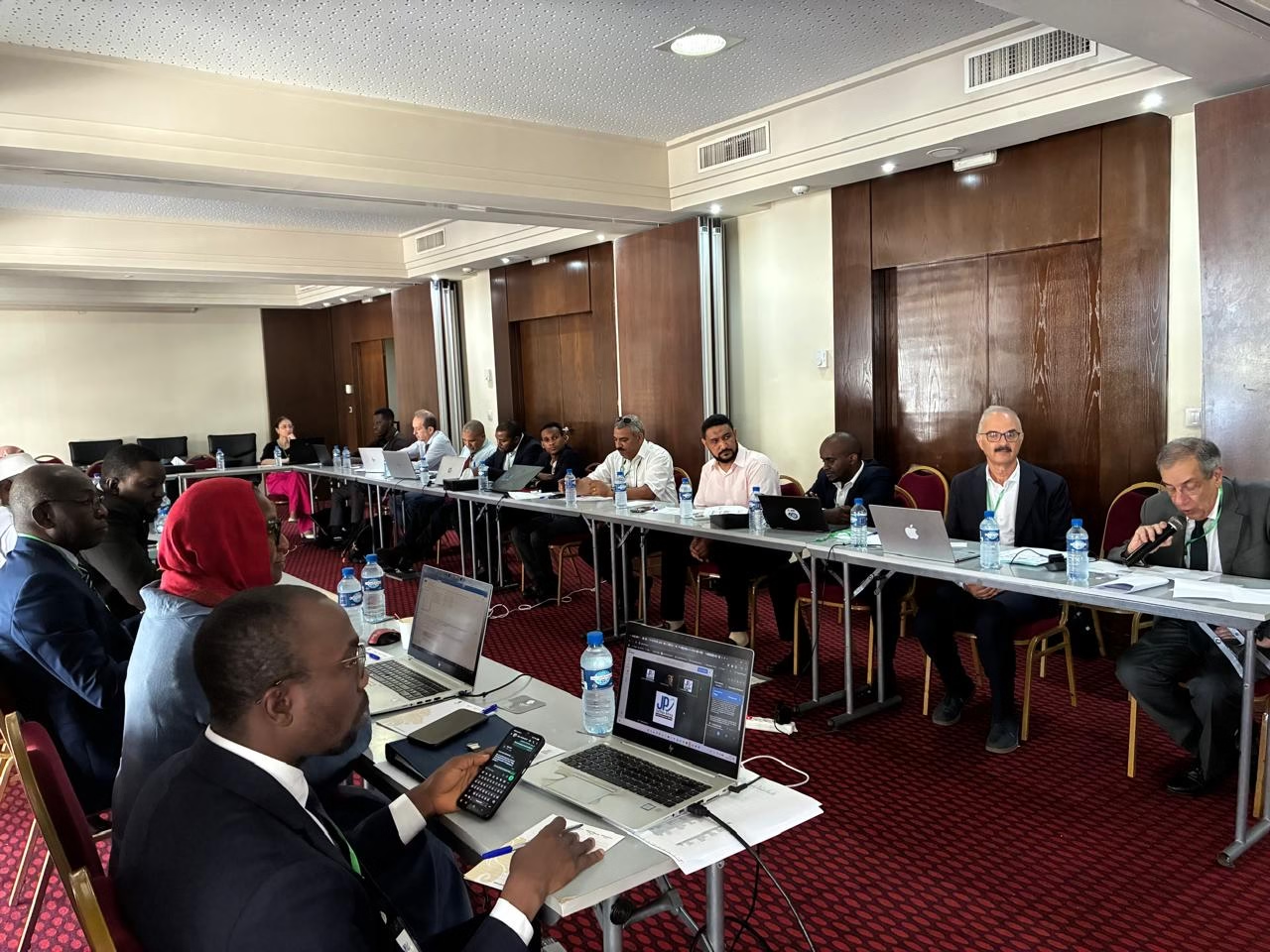
The Workshop sessions set out a clearer operational mandate for the Lab, structured around three complementary clusters: a thematic pillar covering sector-specific applications, a scientific pillar focused on fundamental positioning research, and a professional pillar bringing together practitioner associations and networks. Discussions also pointed to a phased rollout, beginning with low-cost, accessible pilot projects, such as low-cost GNSS stations and small research teams, before progressing toward heavier shared infrastructure.
Sessions also reviewed ongoing partner projects with potential to feed directly into the Lab’s future work, drawing on existing initiatives already underway across the continent. These discussions culminated in the establishment of dedicated working committees covering legal matters, governance, resource mobilisation, research and innovation, and capacity building, each comprising representatives from partner institutions across the continent.
The Sousse Declaration
The workshop concluded with the adoption of the Sousse Declaration, formally signed by participating institutions on 24 June 2026. The Declaration consolidates the consortium behind the Africa GNSS Lab, establishing it as a decentralised, open, and inclusive research and development hub intended to catalyse scientific and industrial initiatives in satellite navigation across Africa.
Signatories committed to a shared vision built around four pillars: strengthening infrastructure and R&D capabilities, consolidating an agile and transparent governance framework, promoting applied and innovative projects with measurable impact, and deploying a structured training and knowledge transfer programme through the GNSS in Africa Academy.
The Declaration also commits signatories to jointly mobilising the financial, material, and human resources needed to sustain the Lab’s long-term development, drawing on public and private partners as well as multilateral financing institutions. It further positions the Lab as a platform for continental and international cooperation, linking African institutions with universities, the private sector, professional and scientific associations, and international bodies, in alignment with Africa’s space agenda and the Sustainable Development Goals.