
UENR Ghana and Gabon’s AGEOS Sign MoU to Train Africa’s Next Generation of Space Scientists
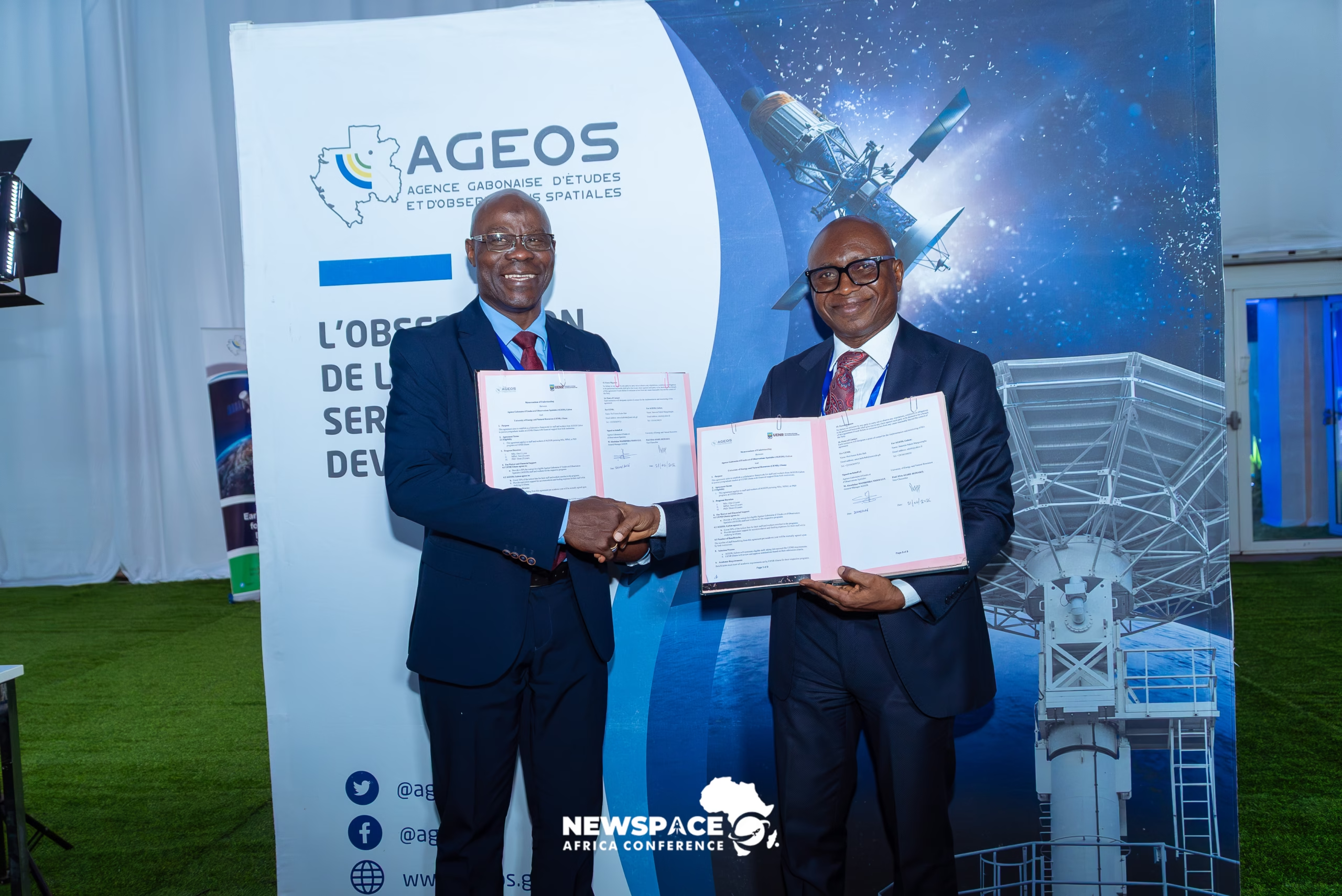
Ghana’s University of Energy and Natural Resources (UENR) and the Agence Gabonaise d’Études et d’Observations Spatiales (AGEOS) formalised an academic partnership through a Memorandum of Understanding, creating a structured pathway for AGEOS personnel to pursue postgraduate education in Ghana.
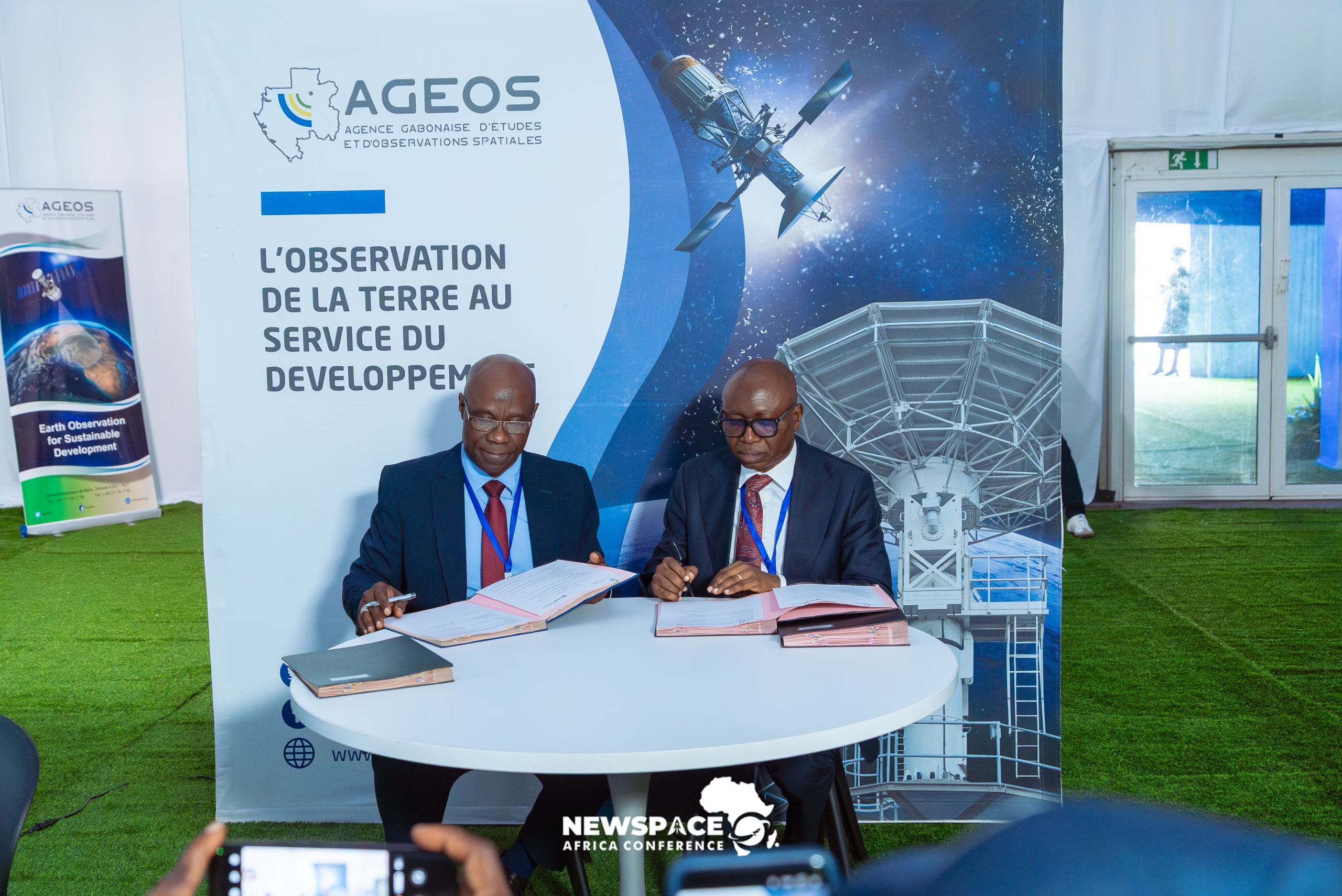
The agreement was signed by AGEOS General Manager Dr Aboubakar Mambimba Ndjougui and UENR Vice-Chancellor Prof. Elvis Asare-Bediako, with Prof. Amos Kabo-Bah, Dean of International Relations, serving as UENR’s institutional point of contact.
The MoU was signed on the sidelines of the NewSpace Africa Conference, one of the continent’s most prominent gatherings for the commercial and institutional space sector, providing an avenue for what has become a recurring feature of such events: bilateral agreements that convert conference-floor conversations into binding commitments.
How the Arrangement Works
Under the MoU, AGEOS scientists and staff become eligible to enrol in MSc, MPhil, and PhD programmes at UENR. The cost-sharing structure is straightforward: UENR provides a 50% tuition fee waiver, while AGEOS covers the remaining tuition and takes responsibility for accommodation and feeding allowances for its staff in Ghana. Programme durations follow standard academic timelines, one year for the MSc, two for the MPhil, and three for the PhD. Annual intake figures will be negotiated between both institutions, and all nominations remain subject to UENR’s standard academic admissions criteria. The agreement runs for three years with provisions for renewal.
Why This Matters
AGEOS sits at the centre of Gabon’s Earth observation ambitions. The agency manages satellite data acquisition and analysis for environmental monitoring, particularly forest cover and land use, in one of sub-Saharan Africa’s most ecologically significant countries. Gabon is one of the most forest-rich countries in Africa, forming a significant portion of the Congo Basin, and AGEOS’s mandate to track and report on that resource places a premium on highly trained spatial scientists. The MoU directly addresses that need.
For UENR, the partnership reinforces its positioning as a postgraduate destination for space and geospatial disciplines within the West and Central African corridor. Ghana has steadily expanded its space sector footprint over the past decade, from the launch of GhanaSat-1 in 2017 to the establishment of the Ghana Space Science and Technology Institute, and institutions like UENR are increasingly central to supplying the technical workforce those ambitions require.
A Corridor Taking Shape
The UENR–AGEOS agreement reflects a broader pattern of intra-African academic cooperation in the space sector, where national agencies are seeking capacity-building partnerships with regional universities rather than exclusively with Europe or Asia. Arrangements co-financed by both parties and structured around specific programme durations tend to produce more durable human capital outcomes than scholarship-only models, since the receiving agency has skin in the game. Both institutions have signalled interest in deepening the collaboration beyond its initial three-year term.