
2026 NewSpace Africa Conference – Day 4 Recap

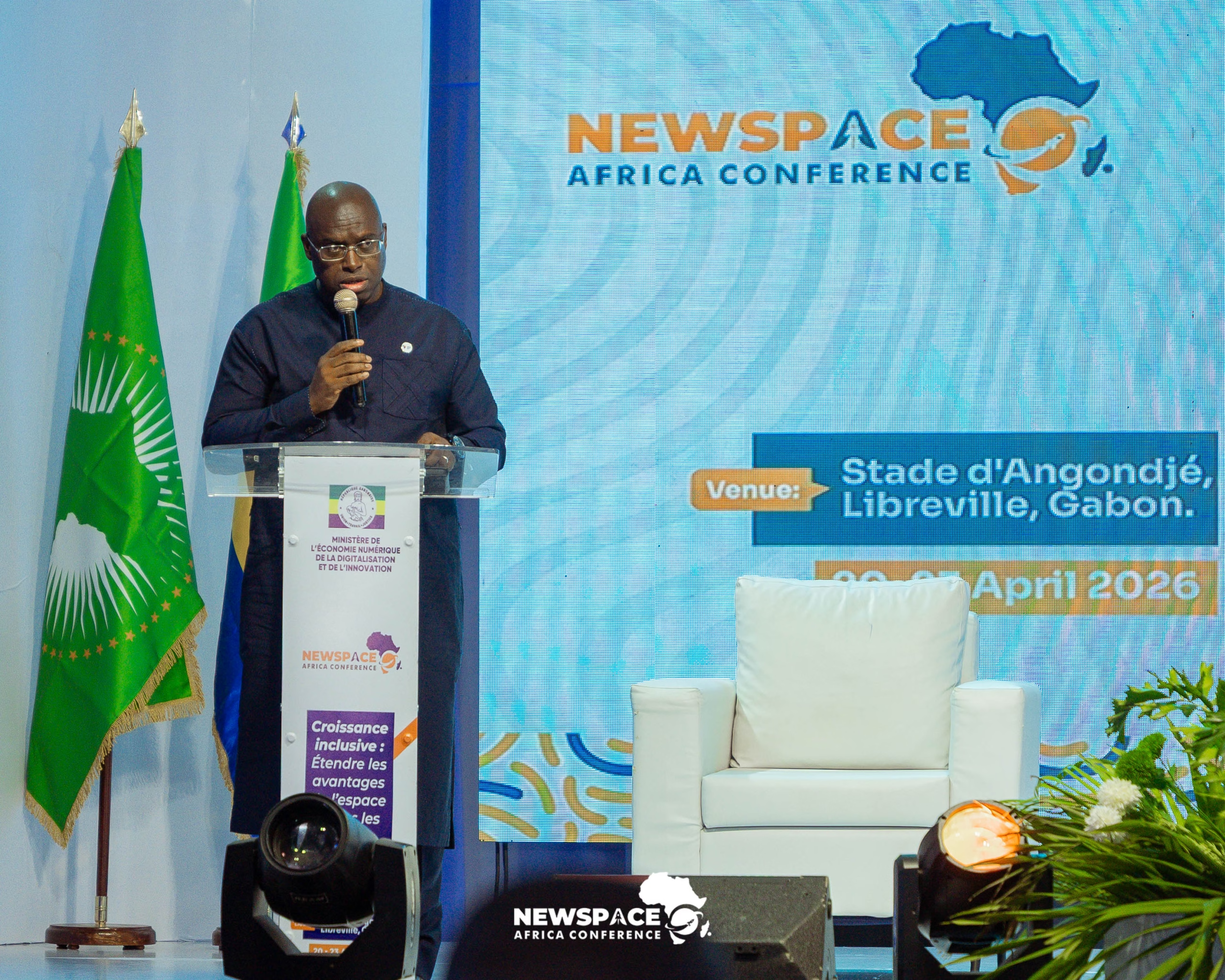
Day 4 arrived as both a culmination and a conclusion. Over the preceding three days, the 2026 NewSpace Africa Conference had moved through an ambitious programme, heads of agency panels spanning more than 20 countries, keynotes from global industry leaders, deep technical sessions on Earth observation, satellite navigation, connectivity, manufacturing, and investment, and a pitch competition that put Africa’s next generation of space ventures in front of experienced judges and potential partners. Agreements had been signed, partnerships formalised, and conversations started that will take months and years to fully realise.
The final day carried a different quality: more reflective, more forward-looking, and in some ways, more ambitious than what had come before. Where the earlier days had focused heavily on infrastructure, policy, and commercial frameworks, Day 4 turned toward the questions that underpin all of it: the science that makes space meaningful, the talent that makes it sustainable, and the socioeconomic impact that makes it worth pursuing. It was a fitting close to a conference that had consistently insisted on connecting orbital assets to African lives.
Keynote: Africa2Moon
Speaker: Dr Adriana Marais, Director, Foundation for Space Development Africa
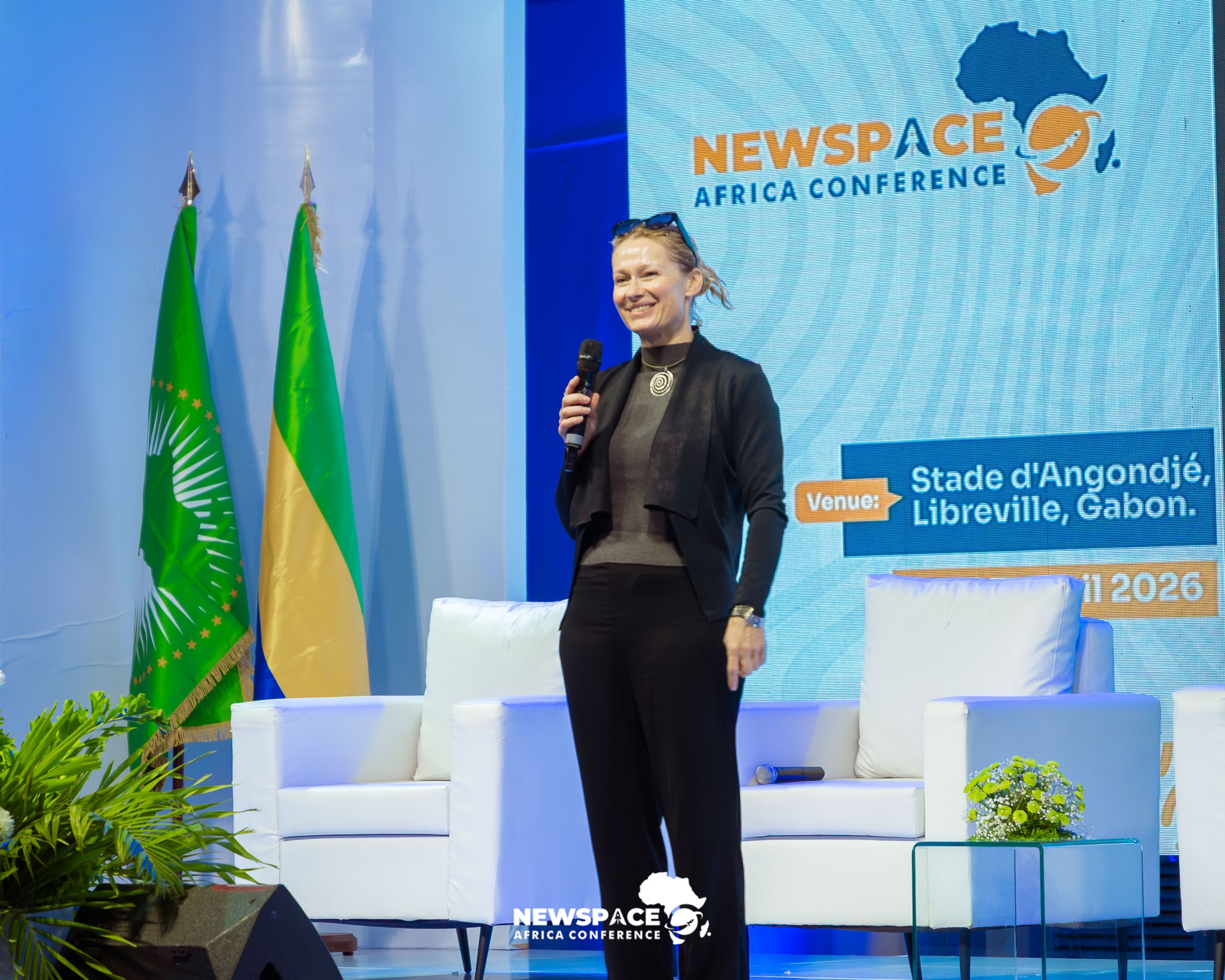
Dr Adriana Marais opened Day 4 with a keynote on the Africa2Moon project, one of the most ambitious and philosophically distinct space initiatives to emerge from the continent. Africa2Moon is a mission concept led by the Foundation for Space Development Africa with the goal of landing an African-built payload on the Moon, but its significance goes well beyond the technical feat. Dr Marais framed the mission as a statement of African agency in deep space exploration, a demonstration that the continent is not merely a recipient of space-derived services developed elsewhere, but a producer of knowledge, technology, and vision at the frontier of human activity in space.
Furthermore, she spoke to the mission’s scientific objectives, which centre on lunar surface research and the development of technologies relevant to long-duration human presence beyond Earth, areas in which Africa can make a meaningful contribution, given the continent’s expertise in resource-constrained engineering and its diverse scientific communities. Dr Marais also addressed the capacity-building dimension of the project, emphasising that Africa2Moon is designed to draw a new generation of African scientists, engineers, and mission designers into the space sector by giving them a real, historic mission to work toward. The keynote made a clear case that for Africa to fully realise its potential as a space-capable continent, it must pursue not only practical applications but also the kind of bold, inspirational missions that define what a space-faring civilisation looks like, and that Africa2Moon is precisely such a mission.
Presentation: Astronomy Infrastructure in the Age of Mega-Constellations – How Will LEO Proliferation Affect African Observatories?
Speaker: Dr Meryem Guennoun, Executive Officer, African Astronomical Society
Dr Meryem Guennoun brought a perspective to the conference that is too rarely heard in commercial space forums, that of the scientific community whose work is being directly disrupted by the rapid proliferation of low Earth orbit satellite constellations. Her presentation addressed the growing tension between the commercial drive to deploy thousands of satellites in LEO and the impact that these constellations are having on ground-based astronomical observation, with particular consequences for African observatories that in many cases, represent irreplaceable infrastructure for dark-sky science. She outlined the specific challenges that satellite trails pose for optical and radio astronomy, including interference with long-exposure imaging, radio-frequency contamination, and the compounding effect of multiple operators simultaneously deploying constellations without adequate coordination.
For African observatories, several of which are located precisely because of their exceptional atmospheric conditions and low light pollution, the proliferation of LEO objects threatens to undermine the very qualities that make them scientifically valuable. Dr Guennoun called for stronger engagement between the astronomical community and space regulators at both national and international levels, and for African governments to ensure that astronomy interests are represented in spectrum and orbital use discussions, not as an afterthought but as a legitimate and economically significant stakeholder in the space environment.
Panel: Space Applications and Natural Capital Monitoring
Speakers:
- Engineer Conan Vassily Obame, Head of Space Application Department, AGEOS
- Dr Marcien Mackaya, Expert, Digital Technologies
- Dr Landing Mane, Head, Central Africa Forest Observatory (OSFAC)
- Prof. Amos T. Kabo-Bah, University of Ghana
- Moderator: Dr Marjolaine Okanga-Guay, Professor, Dept of Geography, University Omar Bongo
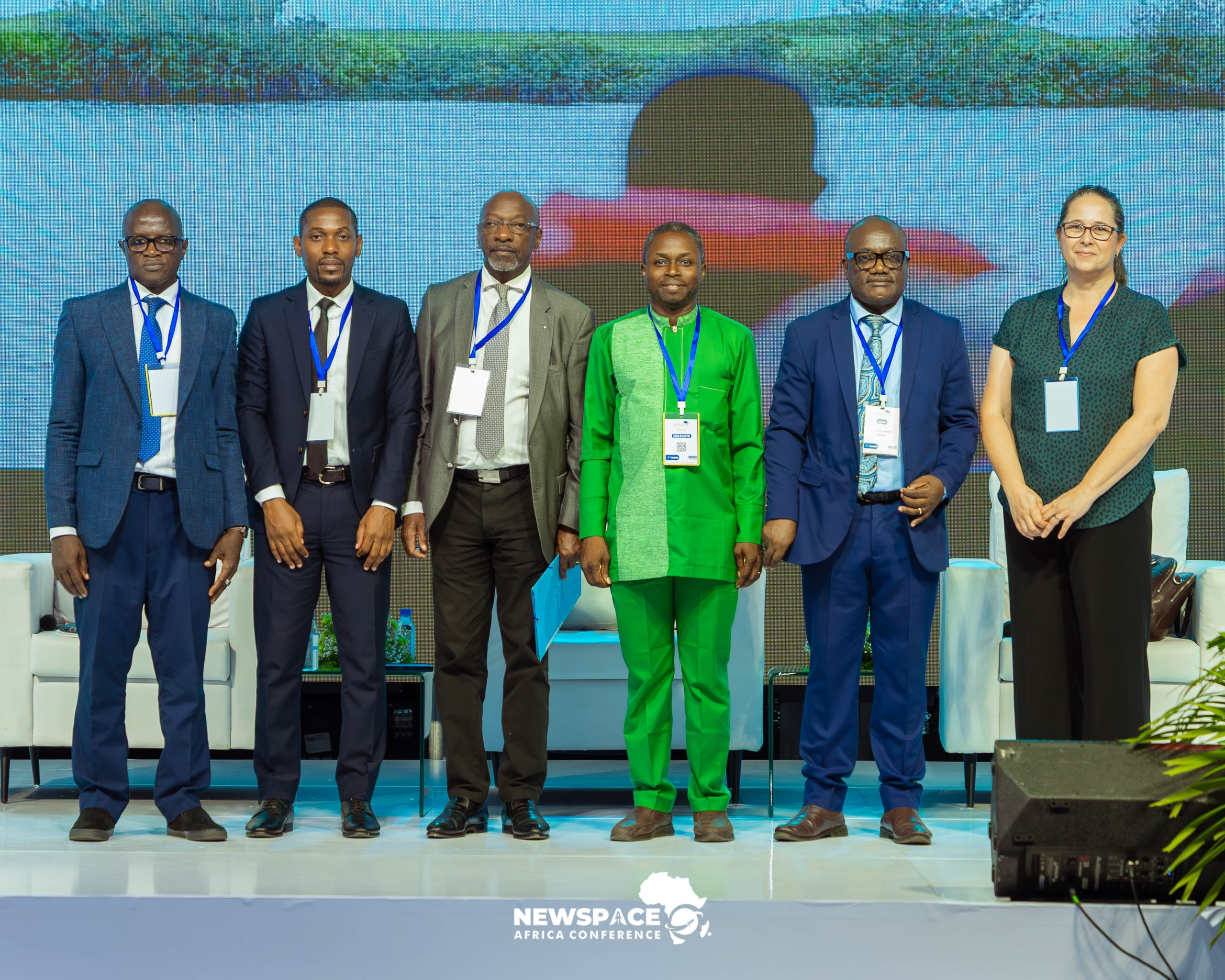
This panel examined how space-based tools are being applied to monitor and manage Africa’s natural capital, the forests, river systems, wetlands, and ecosystems that underpin the livelihoods of hundreds of millions of people and play a critical role in global climate systems. Engineer Conan Vassily Obame drew on AGEOS’s operational experience to illustrate how satellite imagery and remote sensing data are being integrated into Gabon’s national monitoring frameworks, enabling more systematic tracking of changes in forest cover, land-use dynamics, and ecosystem health.
Dr Landing Mane brought the perspective of the Central Africa Forest Observatory, addressing how regional data infrastructure is being used to build a more comprehensive and consistent picture of forest conditions across one of the world’s most ecologically significant biomes, as well as the governance challenges involved in coordinating that work across multiple national jurisdictions. Dr Marcien Mackaya explored the role of digital technologies in processing and interpreting the volumes of Earth observation data generated by these monitoring systems, and how artificial intelligence and cloud-based platforms are expanding what is analytically possible even for institutions with limited in-house capacity.
Prof. Amos Kabo-Bah contributed a hydrological and climate dimension to the discussion, reflecting on how space-derived data is being used to model water resources, track changes in river basins, and support more evidence-based approaches to water and land management in West Africa. Together, the panel made a strong case that natural capital monitoring is one of the clearest and most immediate applications of space technology for African development, and that the data, tools, and expertise to do it at scale are increasingly available, provided the institutional frameworks to act on the insights can be built and sustained.
Panel: Talent, Brain Drain & Deep-Tech Retention
Speakers:
- Gayane Faye, Coordinator, Senegalese Space Project — SENSAT
- Prof. Lazarus Mustapha Ojigi, Executive Director, African Regional Institute for Geospatial Information Science and Technology
- Prof. Chakroun Hedia, General Secretary, AGEOS-Tunisia
- Dr Taiwo Tejumola, Lecturer, University of Southampton
- Moderator: Prof. George Wiafe, Founder, Edenway Foundation
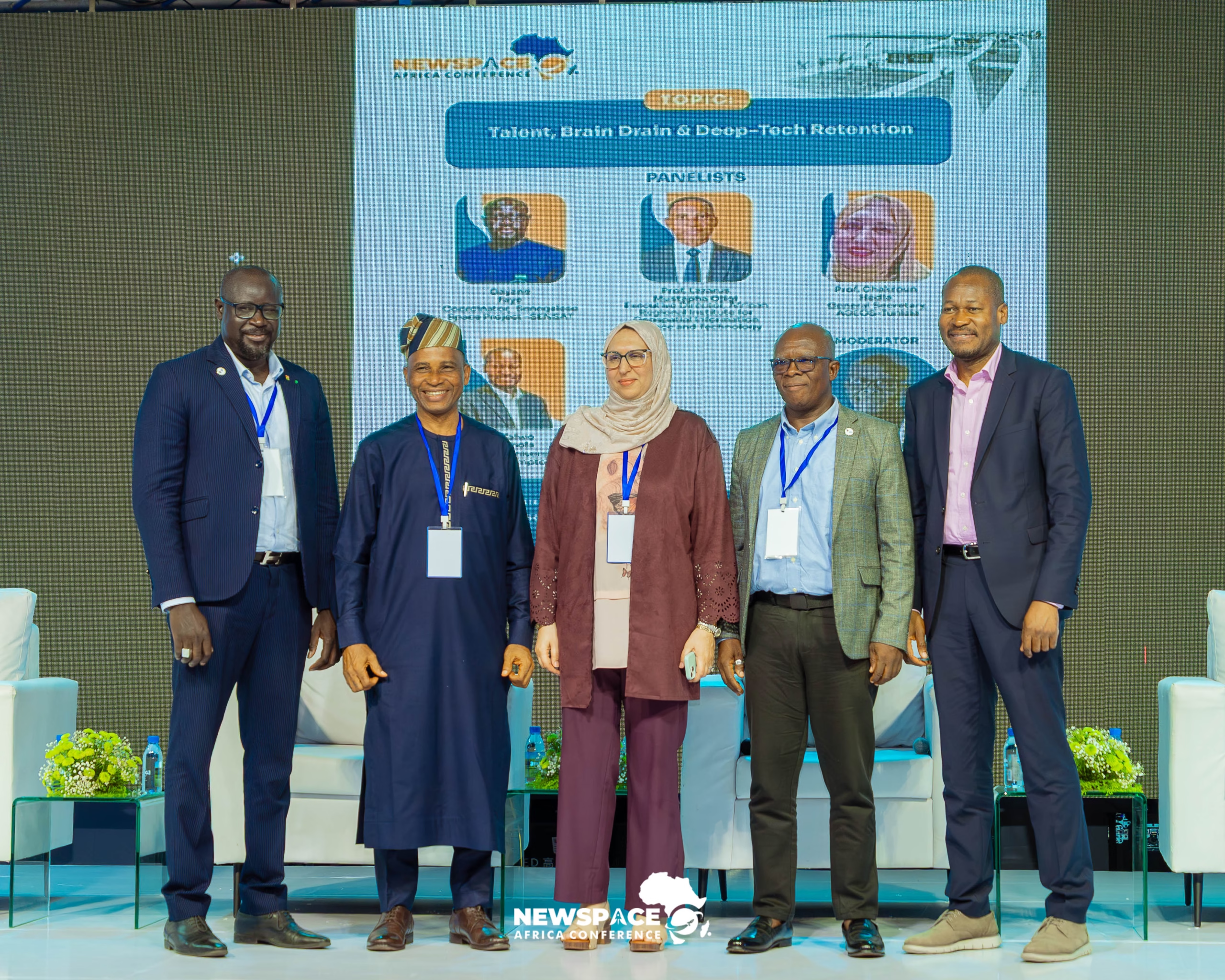
The final panel of the conference addressed what many participants had identified across all four days as the most persistent and structurally damaging challenge facing the African space sector, the loss of trained, highly capable professionals to institutions and economies outside the continent. The discussion was frank and wide-ranging, refusing to treat brain drain as a simple problem with a simple solution. Gayane Faye opened from the perspective of the Senegalese satellite (SENSAT) programme coordinator, speaking to the practical reality of building and sustaining a skilled team in an environment where salaries, career pathways, and research infrastructure in Africa frequently cannot compete with those available abroad. Prof. Lazarus Mustapha Ojigi addressed the regional institutional dimension, reflecting on what bodies like AFRIGIST can do to create environments that are intellectually stimulating and professionally rewarding enough to retain talent, and where the limits of what regional institutions can offer, without stronger government and private-sector backing, become apparent.
Prof. Chakroun Hedia brought Tunisia’s experience to the discussion, exploring how North African space institutions are navigating the particular pressure of proximity to Europe, where the pull of better-resourced programmes is especially acute, and what strategies have shown promise in keeping researchers engaged with national and regional priorities. Dr Taiwo Tejumola, speaking from his position at a leading UK university, offered an honest account of what draws African scientists and engineers to institutions abroad, and importantly, what conditions would need to change for more of them to choose to build their careers on the continent instead.
The panel concluded with a shared recognition that retention is not simply a compensation issue but a systemic one, requiring investment in research infrastructure, clearer career pathways within national space programmes, stronger industry-academia linkages, and the kind of compelling national missions, like those discussed earlier in the day, that give talented people a reason to stay and build something of lasting significance.
Closing Ceremony
The closing ceremony brought together the voices that had shaped and supported the 2026 NewSpace Africa Conference from its opening session, offering reflections on what the four days had achieved and what comes next for the African space community.
Dr Temidayo Oniosun, Managing Director of Space in Africa, opened the ceremony by extending warm thanks to all sponsors, partners, speakers, and attendees whose participation had made the conference what it was. He reflected on the quality and depth of engagement across all four days, noting that the conversations, agreements, and connections formed at the event represent a meaningful contribution to the broader project of building a self-sustaining and globally competitive African space economy. He acknowledged the role of each sponsor and supporting organisation in making the conference possible, and reaffirmed Space in Africa’s commitment to continuing to provide the platform and analysis that the sector needs.
Dr Aboubakar Mambimba Ndjoungui, General Director of the Gabonese Agency for Space Studies and Observations and host of this year’s conference, expressed his gratitude on behalf of Gabon for the privilege of welcoming the African space community to Libreville. He spoke to the significance of hosting an event of this scale and ambition in Central Africa, and the pride with which AGEOS and the Government of Gabon had approached that responsibility. His remarks underscored Gabon’s commitment to developing Africa’s space sector and to AGEOS’s continued role as a leading institution in Earth observation and environmental monitoring across the continent.
H.E. Dr Tidiane Ouattara, President of the Council of the African Space Agency, delivered remarks that brought the ceremony to a high point, thanking all who had contributed to making the 2026 edition of the NewSpace Africa Conference a landmark event. He acknowledged the governments, space agencies, industry partners, academic institutions, and individual professionals whose engagement had elevated the quality of discussion and the significance of the outcomes achieved.
In a moment that drew considerable enthusiasm from the assembled delegates, H.E. Dr Ouattara announced that the 2027 NewSpace Africa Conference will be held in Senegal, marking the event’s arrival in West Africa and signalling another chapter in the conference’s mission to bring the largest and most impactful gathering of space professionals and global partners on the continent to new locations and new communities.
He described the Senegal edition as an opportunity to build on everything established in Gabon, to welcome new voices into the conversation, and to continue the work of forging, strengthening, and reimagining partnerships for the benefit of all Africans and the world at large.
H.E. Minko Aline Sylvie, Secretary General of the Ministry of Digital Economy and Innovation of Gabon, brought the 2026 NewSpace Africa Conference to its official close. Speaking on behalf of the Government of Gabon, she reflected on what the four days had represented, not only for the space sector but for Gabon’s broader ambitions as a digital and knowledge economy. She expressed appreciation for the trust placed in Gabon as the host nation and for the engagement of every participant who had travelled to Libreville to be part of this moment. Her closing remarks were a reaffirmation of Gabon’s commitment to the principles that had animated the entire conference: collaboration, sovereignty, innovation, and the conviction that space is not a luxury for Africa but a strategic necessity and that the work done in rooms like this one is how that necessity becomes reality.