
National Space Conference 2025 (NSC 2025): Event Excerpts

South Africa’s National Earth Observations and Space Secretariat (NEOSS), in collaboration with the South African National Space Agency (SANSA) and the Department of Science and Innovation (DSI), successfully hosted the 2025 National Space Conference (NSC 2025). Guided by the theme “Space for Societal Resilience, Transformation and Intelligence,” the event provided a collaborative platform for knowledge-sharing and innovation, bringing together a diverse range of stakeholders from government, academia, industry, and civil society.
Day One: Space and Socio-Economic Resilience
Opening Session
The first day of the conference opened with high-level addresses from key partners, with SANSA CEO Mr Humbulani Mudau highlighting South Africa’s growing role in the global space economy while aligning with the priorities of the African space agenda. He pointed to key national milestones, including the ongoing establishment of a new antenna facility at the Matjiesfontein (MTJ) site for deep space exploration, as well as ongoing plans to deliver Earth Observation (EO) intelligence to support data-driven decision-making. Concluding his remarks, he called for dialogue on resilience, transformation, and intelligence in the space ecosystem.
Following his remarks, Dr Mlungisi Cele, Director-General of the Department of Science and Innovation, emphasised the need for stakeholders to deepen collaboration across the public, private, and academic sectors to ensure that space remains a shared frontier while minimising unnecessary competition. Adding to the opening remarks, CSIR CEO Dr Thulani Dlamini reflected on the organisation’s legacy, noting its longstanding role in shaping South Africa’s space industry. He emphasised that the CSIR’s founding leaders had the foresight to drive industrialisation across multiple sectors, with the space industry standing out as one of their most visionary pursuits.
To conclude the session, South African Air Force Lieutenant-General Wiseman Mbambo left delegates with a powerful message: “Let us not wait for others to chart our path; let us lead boldly, shaping Africa’s space future with vision, courage, and collaboration.” His call urged participants to take ownership of Africa’s future in space, reinforcing the spirit of leadership and unity that underpinned the day’s opening.
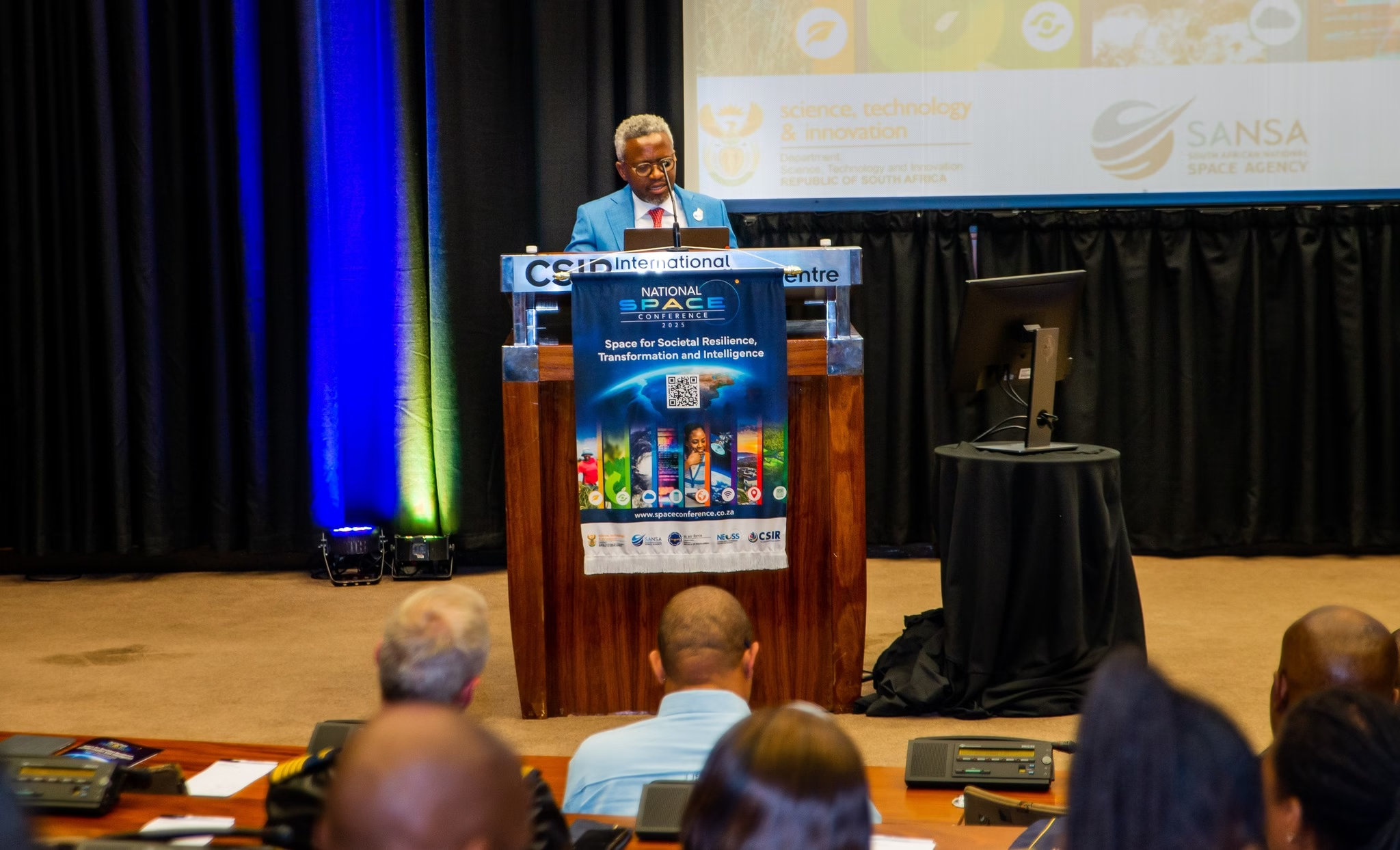
Panel Session- Industry Reflections: Pathways to Resilience, Intelligence and Transformation
This session brought together leaders from across the space, defence, energy, engineering, Earth observation, and policy sectors, offering a strategic industry response to the opening remarks. Speakers shared experiences, lessons, and bold ideas on how innovation within South Africa’s space economy is tackling urgent national challenges while also opening new global opportunities. The discussion further explored the enabling conditions required to unlock inclusive growth through space-based technologies.
Key representatives from leading South African institutions and companies, including the South African Air Force, Dragonfly Aerospace, Denel Group, and SANSA, contributed to the dialogue, underscoring the importance of collaboration between government, industry, and research in shaping the country’s space future.
SANSA: Space Weather, GNSS and Earth Observation for Prediction and Resilience
Showcasing the importance of SANSA’s space weather monitoring capabilities, this session highlighted how SANSA’s Space Weather and Earth Observation programmes are working together to safeguard critical infrastructure. The Space Weather segment focused on the October 2024 geomagnetic storm, which had a significant impact on GNSS applications. The panellists provided analysis, real-world user experiences, and insights into forecasting tools designed to protect aviation, power grids, and navigation networks. The Earth Observation segment showcased progress on the South African Earth Observation System of Systems (SAEOSS) and the use of autonomous agents to monitor agriculture and natural resources, underscoring the value of integrated space-based and Earth-based solutions in strengthening national resilience.
Day Two: Space and Earth Intelligence
Kicking off the second day, the opening panel examined how cutting-edge space technologies, encompassing Earth observation, artificial intelligence, and data fusion, are revolutionising evidence-based planning across government, industry, and research. Panellists highlighted the role of intelligent systems in strengthening equitable service delivery, supporting more responsive governance, and expanding inclusive data access to empower decision-makers at all levels.
Following the first session, the technical session theme, “Space Engineering, Security and Systems Innovation,” examined the role of resilient space infrastructure and secure operations in supporting sustainability and addressing global challenges. Speakers introduced innovations designed to improve efficiency, strengthen the reliability of space systems, and integrate space-based infrastructure with terrestrial networks to deliver social, environmental, and economic benefits. Presentations covered areas such as advanced engineering, on-orbit AI processing, and the development of sustainable innovation ecosystems, highlighting how space systems are being positioned to contribute to long-term resilience and inclusive growth.
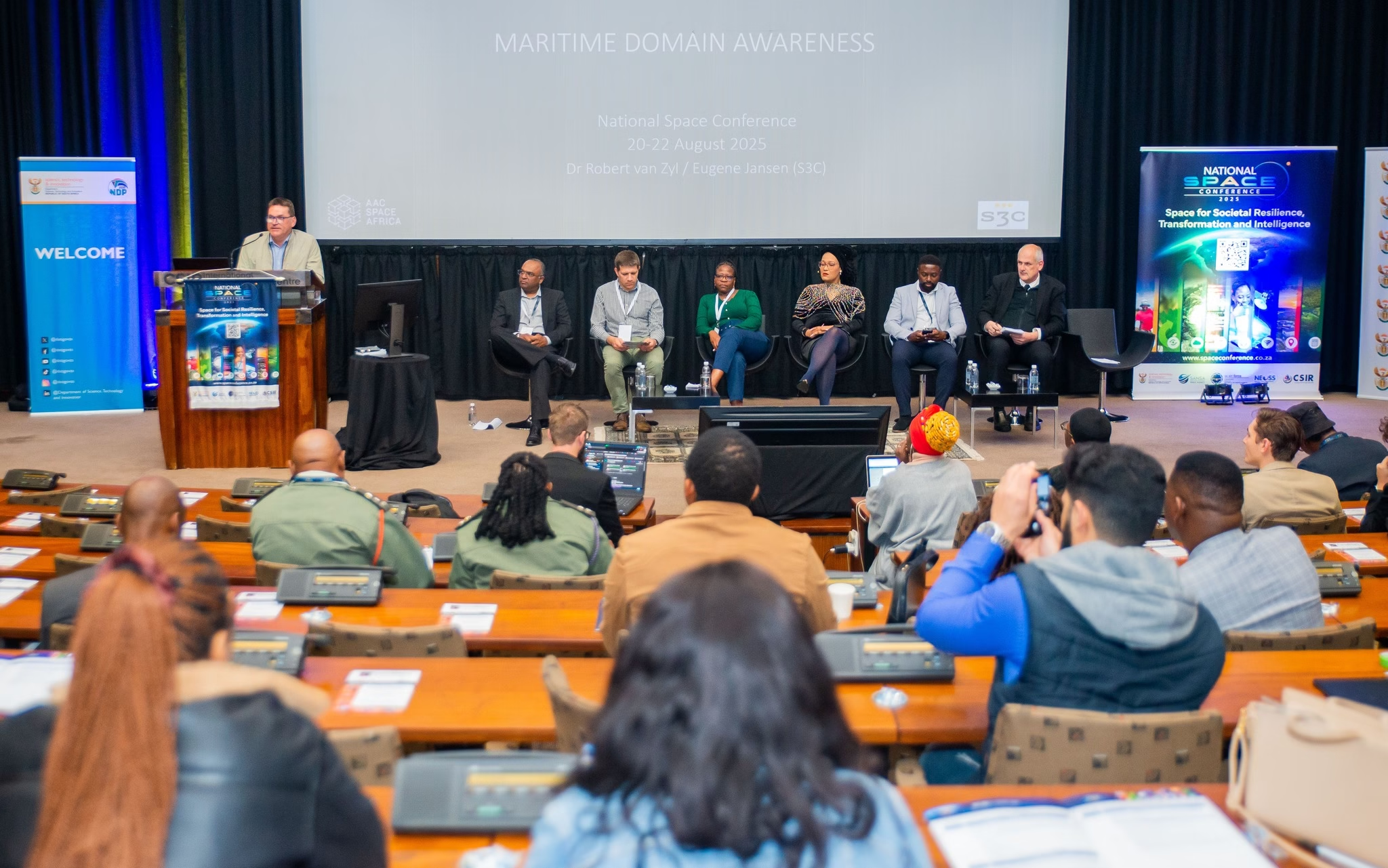
Additionally, the last session of the day explored national platforms that leverage data, technology, and innovation to support planning, service delivery, and systems management across multiple sectors. Guided by the theme, “Intelligence-Driven Platforms for Smart, Resilient Infrastructure,” the discussions also addressed the importance of widening equitable access, strengthening data governance and sharing, and encouraging inclusive participation in the design and application of space-enabled solutions for the benefit of society. The panellists included a diverse range of speakers from entities such as the Cape Peninsula University of Technology, Astrofica Technologies, the University of Limpopo and the Research Institute for Innovation and Sustainability (RIIS).
Day Three: Space for Transformative Development
The final day saw leading South African professionals, researchers, and innovators come together to share strategic insights for advancing the country’s space science and technology agenda. Focused on the theme, “Pathways to a Resilient and Transformative Space Future,” panellists from SANSA, MaxIQ Space, NEOSS, isiLimela Space Systems, and RIIS placed strong emphasis on industry growth, public engagement, and ensuring that socio-economic benefits are broadly inclusive.
Speakers also drew attention to practical initiatives already shaping South Africa’s space future. Among them was the Neo Frontiers Programme, positioned as a catalyst for the development of the Earth Observation industry by helping start-ups transform space-based ideas into tangible products and services that address pressing societal needs, while also providing capital support. Equally notable was MaxIQ’s empowerment initiative, which is nurturing Africa’s future workforce through the social and economic impact of its Space STEM programmes. Lastly, the annual Africa EO Challenge was highlighted as an innovation platform that supports start-ups in applying Earth Observation technologies to solve pressing challenges across diverse sectors in Africa.
Under the theme “Space for Transformation: Public Value and Development Impact,” the technical session highlighted how Earth Observation and satellite-enabled systems are contributing to improved service delivery, innovation, and sustainability across South Africa. With a focus on national priorities such as food security, climate monitoring, education, and emergency response, speakers showcased research and practical applications that translate space-based data into measurable public benefits. The discussion was led primarily by academics, with contributions from the University of KwaZulu-Natal, the Cape Peninsula University of Technology, and the CSIR.
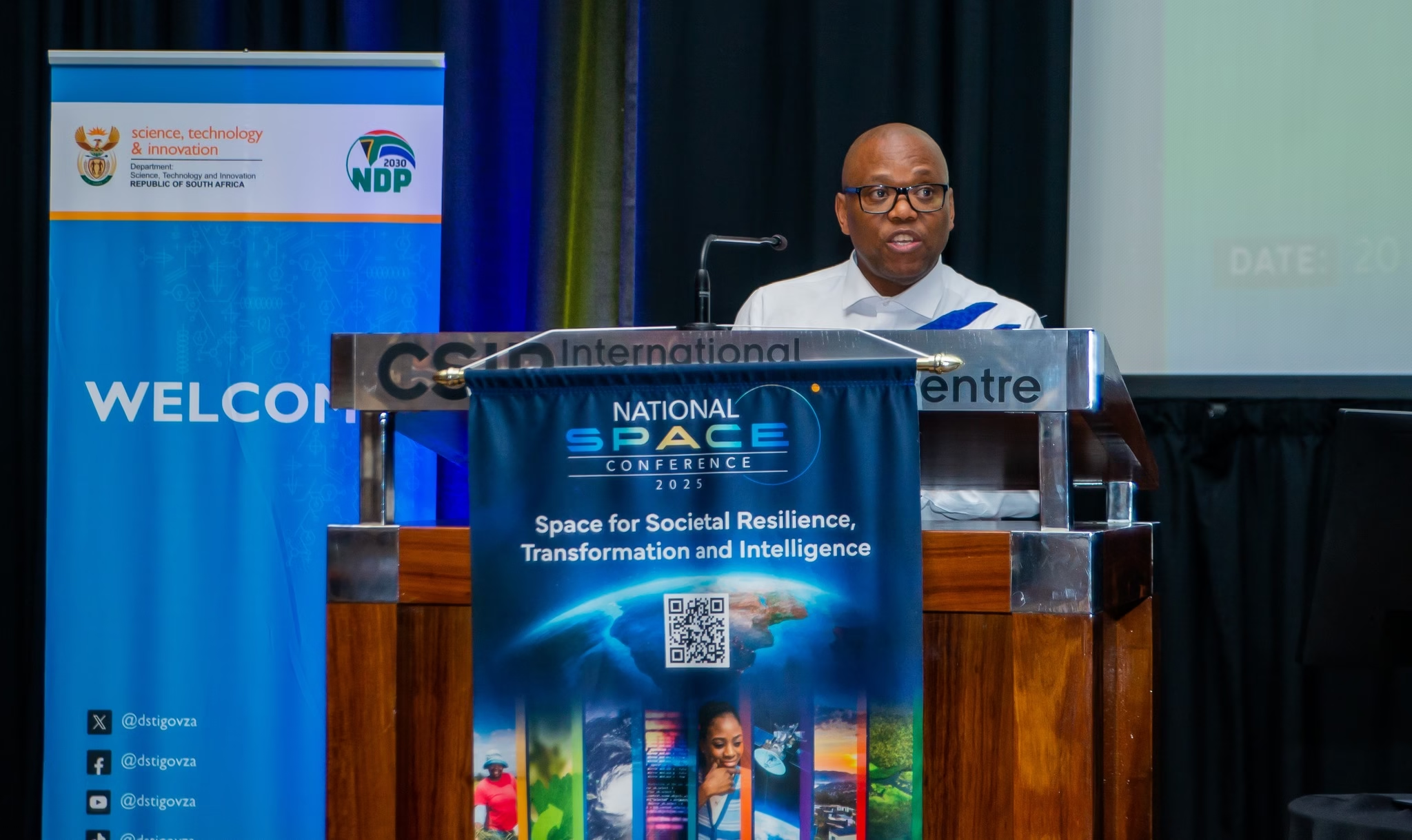
As the NSC 2025 concluded, Adv Lulu Makapela of the National Earth Observations and Space Secretariat provided a comprehensive recap of the key highlights and insights emerging from the sessions. This was followed by formal closing remarks from Mr Itumeleng Makoloi, Acting Chief Director at the Department of Science, Technology, and Innovation, who reflected on the conference’s outcomes and their implications for the future of South Africa’s space agenda. The event formally closed with a performance by the South African Air Force Band.
Sidelines Events
Alongside the NSC 2025, the University of South Africa signed a Memorandum of Understanding (MoU) with STAR.VISION to partner in space sciences, leveraging STAR.VISION’s advanced satellite platforms alongside the university’s expertise in artificial intelligence (AI) and data science.
To read the full article, visit this link.