
Kenya Expands Earth Observation Infrastructure With New Innovation Laboratory
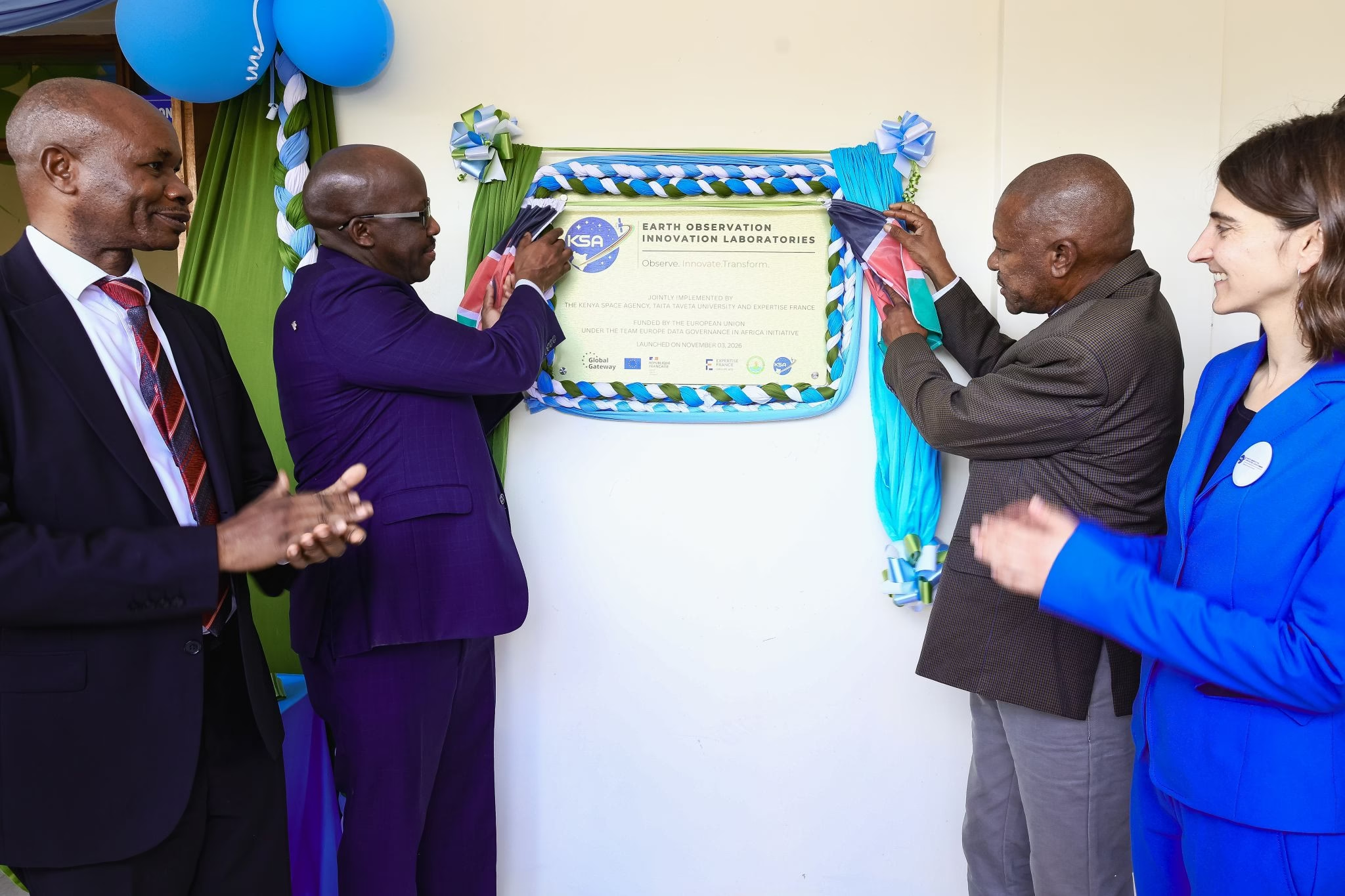
Kenya has launched an Earth Observation Innovation Laboratory (EOIL) at Taita Taveta University (TTU), giving students, researchers, startups, and institutions access to satellite data, geospatial tools, and technical infrastructure to develop Earth observation applications. The Kenya Space Agency (KSA) Director General, Maj Gen Hillary Kipkosgey, officially launched the laboratory alongside Taita Taveta County Governor Andrew Mwadime and TTU Deputy Vice-Chancellor for Administration, Finance and Planning, Prof. Kiptanui Too.
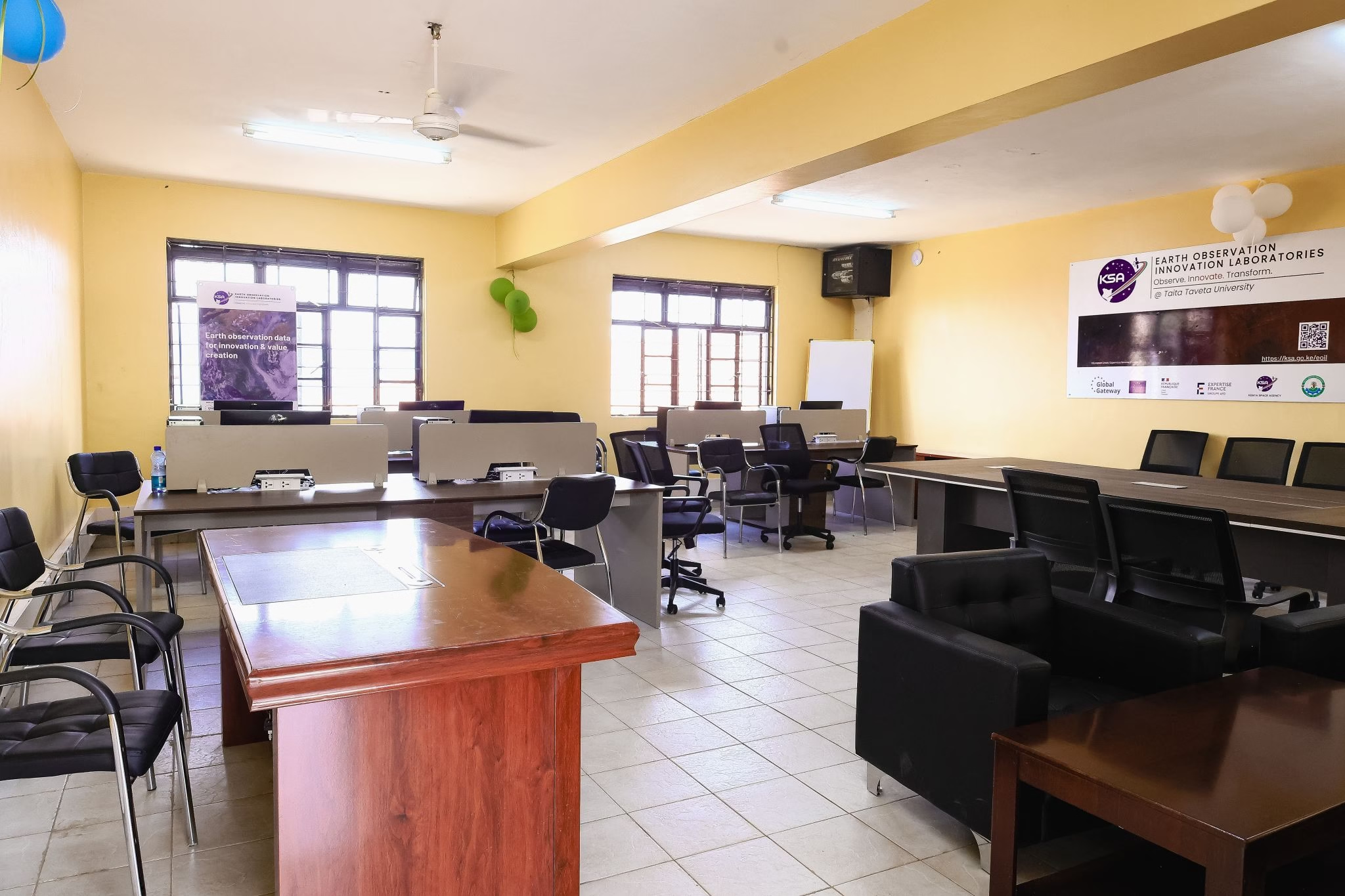
The EOIL provides access to geospatial data, digital infrastructure and open-source geospatial tools, with applications spanning agriculture, climate resilience and urban planning. It will also support data governance work and provide users with technical training, certification, prototyping facilities, networking opportunities and expert support.
The real value of Earth Observation’s is not in the data itself. Its value lies in our ability to transform that data into actionable information, useful applications, innovative services and ultimately improved livelihoods. This is precisely the opportunity that EOIL seeks to unlock. Maj Gen Hillary Kipkosgey, Director General, The Kenya Space Agency (KSA).
Expanding Access To Earth Observation Data
The EOIL initiative builds on cooperation between KSA and Expertise France that began in 2023, when the two institutions initiated discussions on strengthening Kenya’s capacity to apply space science, technology and data to sustainable development. These engagements culminated in a Cooperation Framework signed in December 2023, which laid the groundwork for the subsequent development of the innovation laboratories.
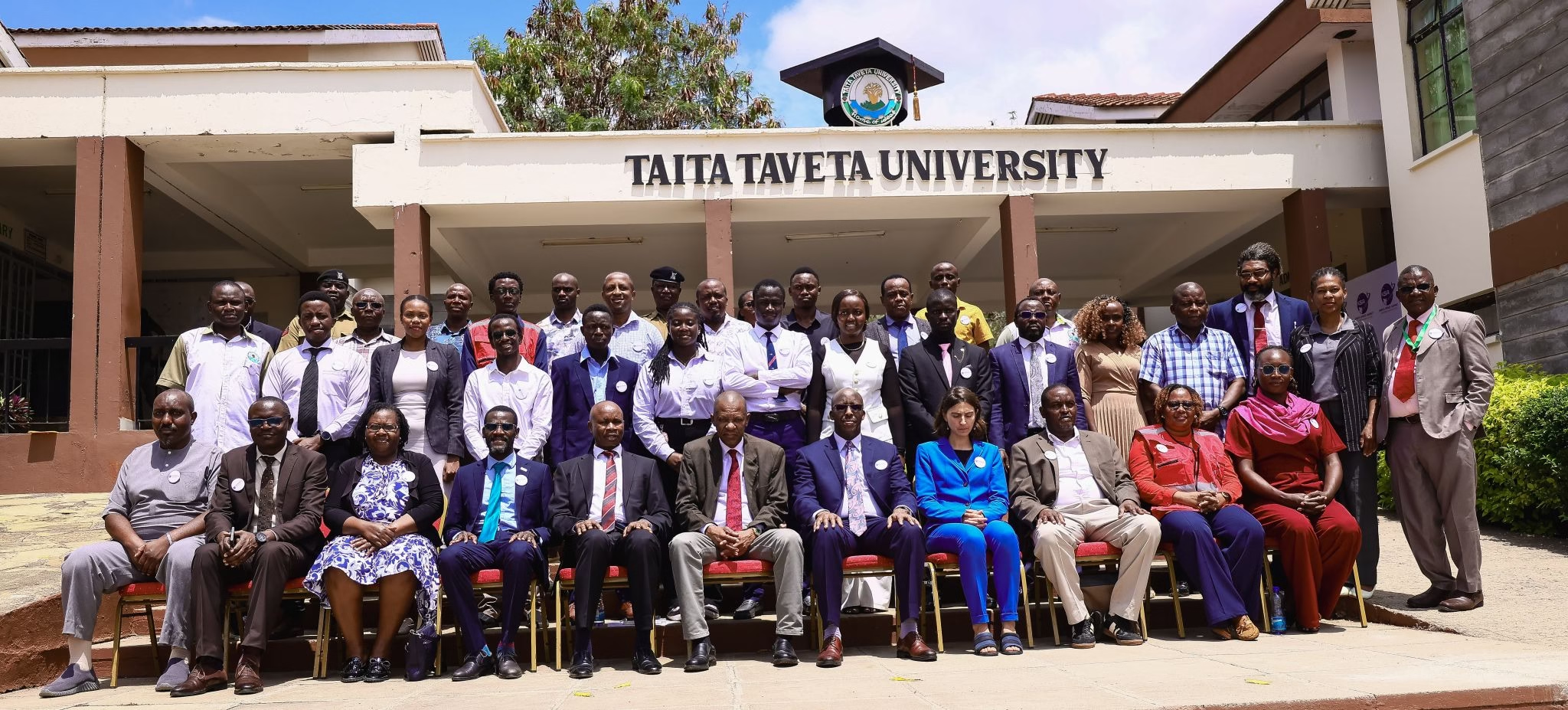
Furthermore, the EOIL initiative was conceptualised in 2024 under the European Union-funded Data Governance in Africa Initiative and developed through a partnership between KSA and Expertise France, with funding from the European Union and France. In May 2025, Taita Taveta University and the University of Nairobi were selected from 18 applicants to host Kenya’s first two EO Innovation Labs. The initial phase was structured as a one-year proof of concept, with the potential to extend the model to other higher education institutions. Expertise France implements the initiative in partnership with KSA, with TTU and the University of Nairobi hosting the laboratories.
For the Kenya Space Agency, our priority is to ensure that these laboratories become sustainable, productive and impactful institutions within the national space ecosystem, Maj Gen Hillary Kipkosgey, Director General, The Kenya Space Agency (KSA).
The cooperation has also extended beyond establishing the laboratories, with Expertise France strengthening links between Kenya’s space ecosystem and European institutions. This has included engagement with the French Embassy, the French Development Agency (AFD) and the French Space Agency (CNES), as well as a study exchange involving the Belgian and French space ecosystems. The exchange exposed Kenyan institutions and stakeholders to established European approaches to space-sector development, including opportunities for institutional partnerships, knowledge exchange and technology transfer. Cooperation with CNES has also strengthened Kenya’s broader international space engagement, including its accession to the Charter of the Space Cooperation Organization.
Building Sustainable Earth Observation Innovation Capacity
In his remarks, Maj Gen Hillary Kipkosgey outlined five priorities for ensuring the laboratories deliver sustained value within Kenya’s space ecosystem:
- Operational sustainability: Maintaining technical expertise, continuous training, access to data and the supporting infrastructure.
- Institutional collaboration: Building stronger links between the laboratories, universities and research institutions to enable shared resources and joint research.
- Research commercialisation: Moving geospatial innovations beyond academic research and proof-of-concept stages towards market-ready products and services, with initiatives such as ABIL supporting this transition.
- Development applications: Aligning research with national and county-level priorities so that solutions can be adopted by government, communities and industry.
- International partnerships: Expanding access to global expertise, technologies, knowledge exchange and potential markets.
The laboratory is also part of a wider expansion of Kenya’s space innovation infrastructure. In March 2026, Kenya launched the Africa Business Innovation Lab (ABIL), becoming the first African country to host the initiative under the Africa–EU Space Partnership Programme. Unlike the university-based EOIL, which focuses on access to geospatial data, technical skills, and application development, ABIL is designed to help space-based innovations progress toward commercially viable products and services. It provides incubation, technical mentorship, business development and investor linkages for startups and SMEs working with Earth observation and other space technologies.
Its longer-term value will depend on how effectively these capabilities translate into applications used by government, industry and other end users. But the model addresses a persistent gap in Earth observation markets: access to satellite data alone does not create value unless users have the skills, tools, and infrastructure to turn that data into usable products and services.