
Tanzania Signals Interest In ANGOSAT-2 Services Through New Angola Partnership
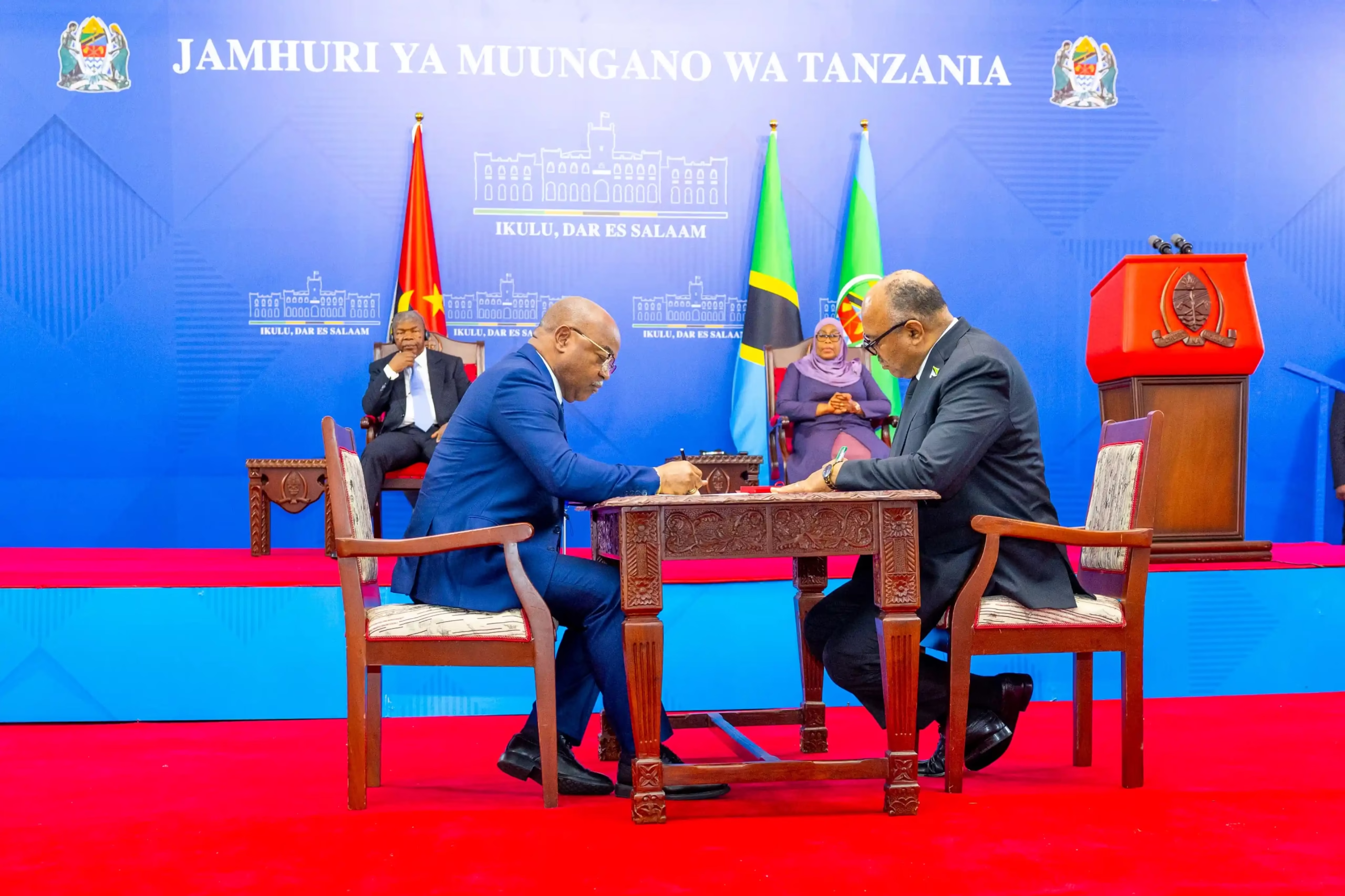
Tanzania intends to use services from Angola’s ANGOSAT-2 satellite under a new bilateral cooperation agreement signed by the two countries in Dar es Salaam during Angolan President João Lourenço’s state visit to Tanzania. The Memorandum of Understanding (MoU) establishes a framework for cooperation in telecommunications, information and communication technologies, and space technology, including the exchange of knowledge, technology and technical expertise.
Tanzania Looks To ANGOSAT-2 For Connectivity
Under the space component of the agreement, Tanzania expressed interest in adopting ANGOSAT-2 services to strengthen connectivity and gain access to technological solutions developed under Angola’s National Space Programme. This interest builds on technical engagement already underway between the two countries. According to Angola’s Minister of Telecommunications, Information and Social Communication Technologies, Mário Oliveira, a Tanzanian technical delegation visited Angola several months ago and worked with experts from the National Space Programme’s Management Cabinet (GGPEN).
The visit gave the Tanzanian delegation an opportunity to examine ANGOSAT-2’s capabilities and the solutions developed around the satellite. Oliveira said Angola could share its experience and solutions in connectivity, particularly through the Conecta Angola programme, which uses ANGOSAT-2 capacity to expand internet access.
The new MoU provides an institutional framework for continuing that technical engagement. Rather than a standalone satellite-services agreement, it creates a broader basis for the two countries to pursue cooperation in space technology and consider applications across different areas of Tanzania’s economy.
ANGOSAT-2 Extends Beyond Angola
For Angola, the agreement also provides a pathway to take the capabilities developed under its national space programme beyond its domestic market. ANGOSAT-2 fits within Angola’s broader efforts to build national capacity in satellite communications, Earth observation, and geospatial applications. Cooperation with Tanzania gives those capabilities an additional avenue for regional application, while providing Tanzania with access to experience and technologies already developed through Angola’s programme.
The agreement therefore links two different elements of national space development: Tanzania’s interest in using space-enabled services and Angola’s effort to build practical applications around its satellite infrastructure.
The two countries are expected to continue exchanging technical knowledge and exploring space technology applications under the MoU framework. For Tanzania, the immediate focus is connectivity and the potential adoption of ANGOSAT-2 services, while broader cooperation could extend to other space-enabled applications as bilateral technical work develops.
A Regional Satellite Market Is Taking Shape
ANGOSAT-2’s growing regional reach is clearest in Southern Africa, where several countries have engaged with Angola on using its satellite capacity. Namibia has progressed from technical testing to a pilot commercial agreement with Telecom Namibia, Mozambique has undertaken operational testing, and Zambia is already using ANGOSAT-2 services. South Africa has also conducted tests through Sentech, while Tanzania, Botswana and the Democratic Republic of Congo have expressed interest in acquiring capacity.
Much of this activity is taking place within the SADC region, which is itself working towards a shared regional communications satellite. South Africa is also pursuing its own national communications satellite programme. This creates an interesting landscape in which countries are exploring existing commercial capacity while simultaneously developing longer-term national and regional infrastructure. For Angola, the engagements offer an opportunity to expand the market for ANGOSAT-2 beyond its domestic operations.
For SADC, they also highlight existing demand for satellite connectivity that could inform the development and eventual use of its proposed shared system.