
Two Years to Samarkand: What It Will Take to Bring Africa to IAC 2028
Samarkand is opening its doors
In October 2028, the International Astronautical Congress (IAC) will convene in Central Asia for the first time. The 79th IAC will run from 9 to 13 October at the Silk Road Samarkand Congress Centre, organised by the Uzbekspace Agency (Uzcosmos) and the International Astronautical Federation (IAF). Samarkand won the hosting rights at IAC 2025 in Sydney, ahead of bids from India and Bahrain, and Uzbek officials expect more than 10,000 international participants.
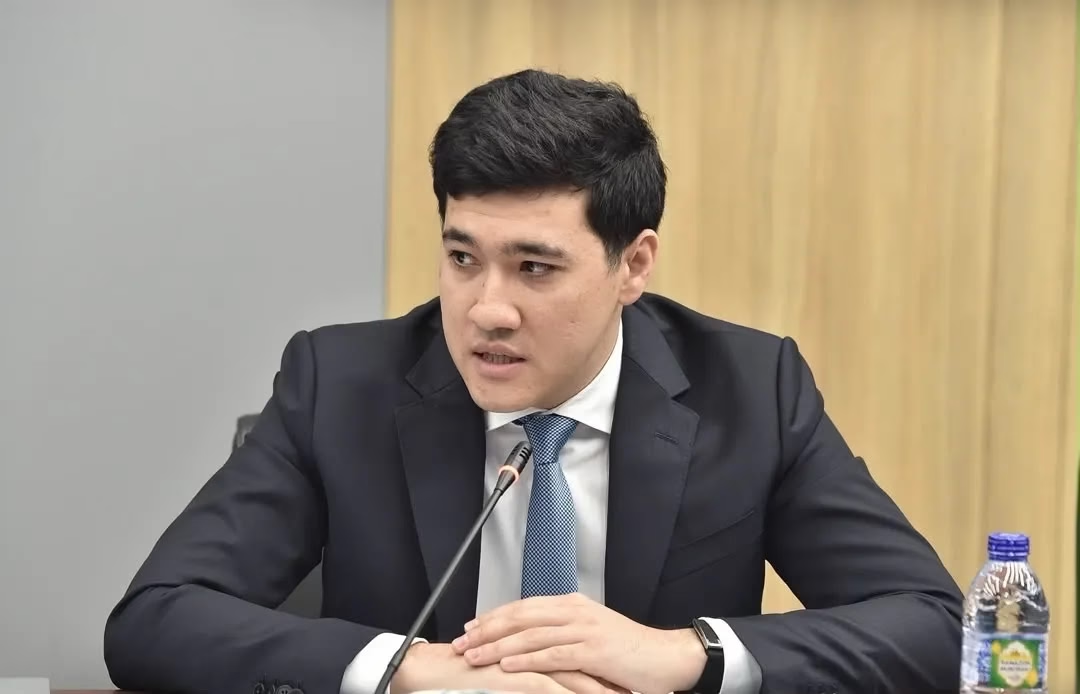
Uzcosmos wants far more of them to be African than past congresses have seen. “The whole community should see that Africa is not just a member of the IAF, but proactive in the space community,” Mukhiddin Ibragimov, Deputy Director at Uzcosmos, told Space in Africa on the sidelines of IAC 2026 in Antalya, Türkiye.
The intent is sincere, and Uzcosmos is already working the lever a host controls: access. Turning that welcome into attendance will depend on the IAF, which sets the congress programme and runs its grants, and on African institutions preparing; the next two years will decide how far it goes.
Why Uzbekistan, why now
Uzbekistan comes to the IAC as an emerging space nation using the congress to anchor its space diplomacy. In August 2026, a hyperspectral Earth observation satellite named “Samarkand-2028” reached orbit; it was built by China’s STAR.VISION in cooperation with Uzcosmos and carries an AI module developed by Uzbek engineers. In Antalya, Minister of Digital Technologies Sherzod Shermatov met AIAA Executive Director Clay Mowry to discuss drawing the US and international aerospace communities to Samarkand.
The city also brings a scientific pedigree. In the 15th century, the ruler and astronomer Ulugh Beg built one of the largest observatories of his age in Samarkand and calculated the length of the year to within about a minute. Ibragimov points further back to al-Farghani, whose astronomical compendium served scholars for centuries, and to al-Khwarizmi, born in the region, whose work carried the Hindu-Arabic numerals, including zero, westward. “We have a lot of things to share,” he said.
For a young agency, hosting the IAC converts heritage and recent momentum into standing in the global community. Bringing other emerging nations along strengthens that position: a host that convenes the Global South becomes more than a venue.
Shared problems, shared voice
Ibragimov’s case for Africa rests on resemblance, not patronage. “There are a lot of things in common between African countries and Uzbekistan, Central Asia,” he said. “We are both emerging countries. We are facing similar issues: economic, ecological, issues with water.”
That is why he wants Africa widely represented in Samarkand. “This is where emerging countries come, and this is where our voices can be heard,” he said.
His offer is practical: Earth observation applied to everyday governance. Uzbekistan has built remote sensing data into economic administration, he said, citing monitoring of illegal mining and unauthorised construction, agriculture, and water resource management. Uzcosmos is using the IAC and its standing in the IAF to share those solutions with countries that need them, and he sees “a lot of potential in cooperation with Africa.”
Those application areas map closely onto problems African governments are already turning to satellite data to address. Asked whether Uzcosmos has existing partnerships with the African Union or individual African states, Ibragimov named none; he framed the congress as the platform for starting those conversations. That leaves African agencies room to shape the terms.
Getting there
Ibragimov’s most concrete commitments concern access, long the main barrier for African participants at international space conferences. He cited a visa-free regime covering 97 countries, the full support of Uzbekistan’s Ministry of Foreign Affairs for anyone who still needs a visa, and an online application that can be approved within about three days at low cost.
For African travellers, the route depends on the passport. Uzbekistan’s visa-free list is drawn mainly from Europe, the CIS, East Asia, the Gulf and the Americas, and includes no sub-Saharan African country. The e-visa covers 13 African states, according to the Ministry of Foreign Affairs list: Algeria, Angola, Cabo Verde, Cameroon, Côte d’Ivoire, Egypt, Gabon, Ghana, Mauritius, Morocco, Senegal, Seychelles and Tunisia. Nigeria, Kenya, South Africa, Ethiopia and Rwanda, among the continent’s most active space nations, are not on it.
Route |
Who it covers in Africa |
Cost (USD) |
Timing |
| E-visa | The 13 states listed above | 20 single entry; 35 double; 50 multiple; group from 20 per person | Apply at least 3 days before travel |
| Consular visa by invitation | All other African states; a host organisation in Uzbekistan files an invitation with the MFA Consular and Legal Department | 40 for a 30-day tourist visa; 60 for a 30-day single-entry visa; plus processing fees | MFA reviews invitations within 4 working days; visa then issued at an Uzbek mission |
| Pre-approved visa on arrival | Citizens of countries with no Uzbek mission; the host secures MFA confirmation in advance | Consular fee schedule | Issued at Tashkent International Airport |
| 5-day transit, visa-free | Algeria, Equatorial Guinea, Gabon, Mauritius, Morocco, Seychelles, South Africa, Tunisia | None | Requires an onward ticket to a third country issued by Uzbekistan Airways |
Data source: Ministry of Foreign Affairs of Uzbekistan.
The invitation route is where the congress can make the difference. Uzbekistan’s visa rules already provide a service visa for foreign citizens invited by state bodies, and Uzcosmos, as the state agency organising the congress, is positioned to act as the inviting organisation and file visa invitations for registered delegates. Uzcosmos plans to start this process early so arrangements are finalised well before delegates need to apply for visas. Options include a dedicated IAC 2028 invitation channel run by the MFA’s Consular and Legal Department, or e-visa eligibility extended to registered participants, both of which would extend that welcome to every African country, including those the e-visa does not yet reach.
On travel and cost, Ibragimov said Turkish Airlines is supporting the congress with discounts for IAC participants, alongside Uzbekistan Airways, and that Uzcosmos will seek partners among carriers with the most routes to Africa. Accommodation in Uzbekistan is affordable, he added, which matters most for students and young professionals. The venue itself will be dressed as a “space city” for the week.
From invitation to programme
Uzcosmos’s commitments sit where a host’s role sits: entry, travel, accommodation and the venue. However, the Federation sets the congress programme, its sessions, and the IAF’s travel grants through its International Programme Committee and technical committees. African participation at recent congresses has been modest, and access alone has not changed that.
Moving from a handful of African delegates to a visible presence will take work from three sides:
- Uzcosmos and the host organisers: a visa channel for registered delegates from countries outside the e-visa list, airline discounts that reach African departure points, and affordable accommodation for students and young professionals.
- The IAF: room in the technical programme and the Global Networking Forum for African topics and speakers, and travel grants that reach African students and young professionals.
- African IAF members and institutions: propose Africa-focused sessions through the IAF committees, prepare papers with African universities through 2027 and early 2028, and organise national delegations and exhibitors.
- All three together: a baseline of African delegates and papers at Antalya 2026 and Poznań 2027, so Samarkand’s result can be measured.
A host can open the door. Whether Africans walk through it in numbers depends as much on the Federation’s programme and on African institutions preparing now.
What Africa can do with the opening
Two years is enough time to arrive in Samarkand with delegations, papers and partnerships, not just individual attendees.
- National agencies and the African Space Agency can open talks with Uzcosmos now on the applications Ibragimov named, including mining oversight, water management, and agriculture. Agreements signed before 2028 give delegations something to present in Samarkand.
- Universities can plan IAC submissions and explore exchanges with Uzbek institutions, using the congress as a deadline.
- Companies can pursue exhibition space and partnerships with Uzbek users of Earth observation data.
There are convenings on the way. For instance, Uzcosmos had planned to attend the IAF Global Space Conference on Climate Change in Kigali this year, Ibragimov said, before the event was postponed. GLOC 2026 was set to be the first IAF global conference on African soil, under a climate resilience theme that overlaps with Uzbekistan’s offer. When it is rescheduled, it is a natural first meeting point between Uzcosmos and African agencies. The NewSpace Africa Conference 2027 in Dakar offers another.
Space as a tool, not a race
Ibragimov’s message to African space actors drew on Uzbekistan’s own experience. “Some might think that space is difficult, some might think that space is expensive,” he said. Uzbekistan, a developing economy with a modest GDP per capita, has found otherwise.
“You should not aim to compete with big players like the USA, Europe, China,” he said. “You need to address your own needs in your country, in your economic sectors, and this is where space is a tool which can give extraordinary results.” Over the past five years, he said, remote sensing has delivered direct and indirect benefits to Uzbekistan’s economy, running to hundreds of millions of dollars.
He also sees space changing how people think. “Young people love space because it captures their imagination,” he said. That curiosity, he believes, is where innovation starts.
He closed with an invitation to African space agencies and institutions to share their ideas and feedback directly with Uzcosmos. As Uzbekistan prepares to welcome the global space community to Samarkand in 2028, Ibragimov’s message was clear: African partners are welcome, and there is an opportunity to work together to ensure that space delivers value for everyone.