
Angola Joins the Space4Ocean Alliance, Becoming the Fifth African Signatory
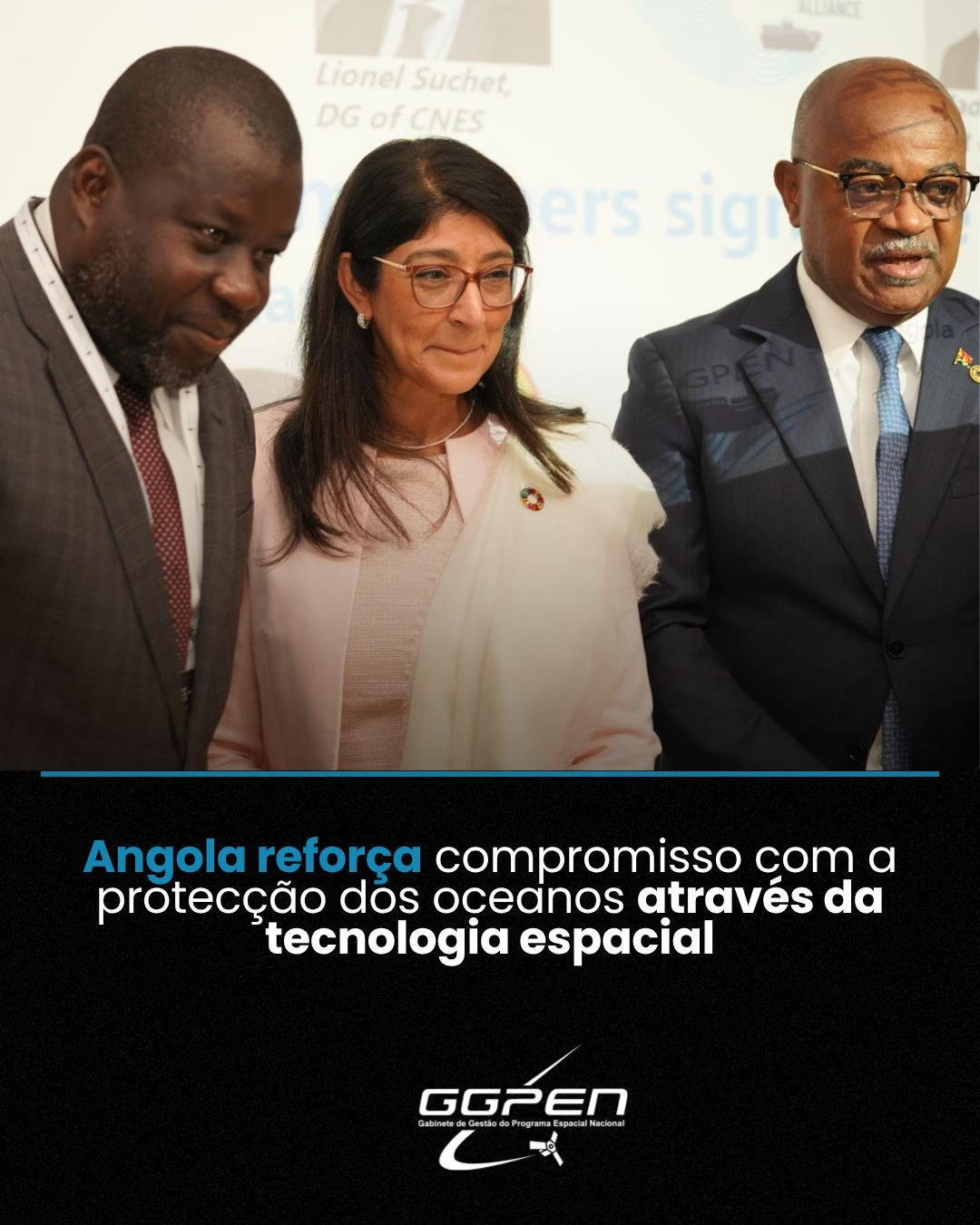
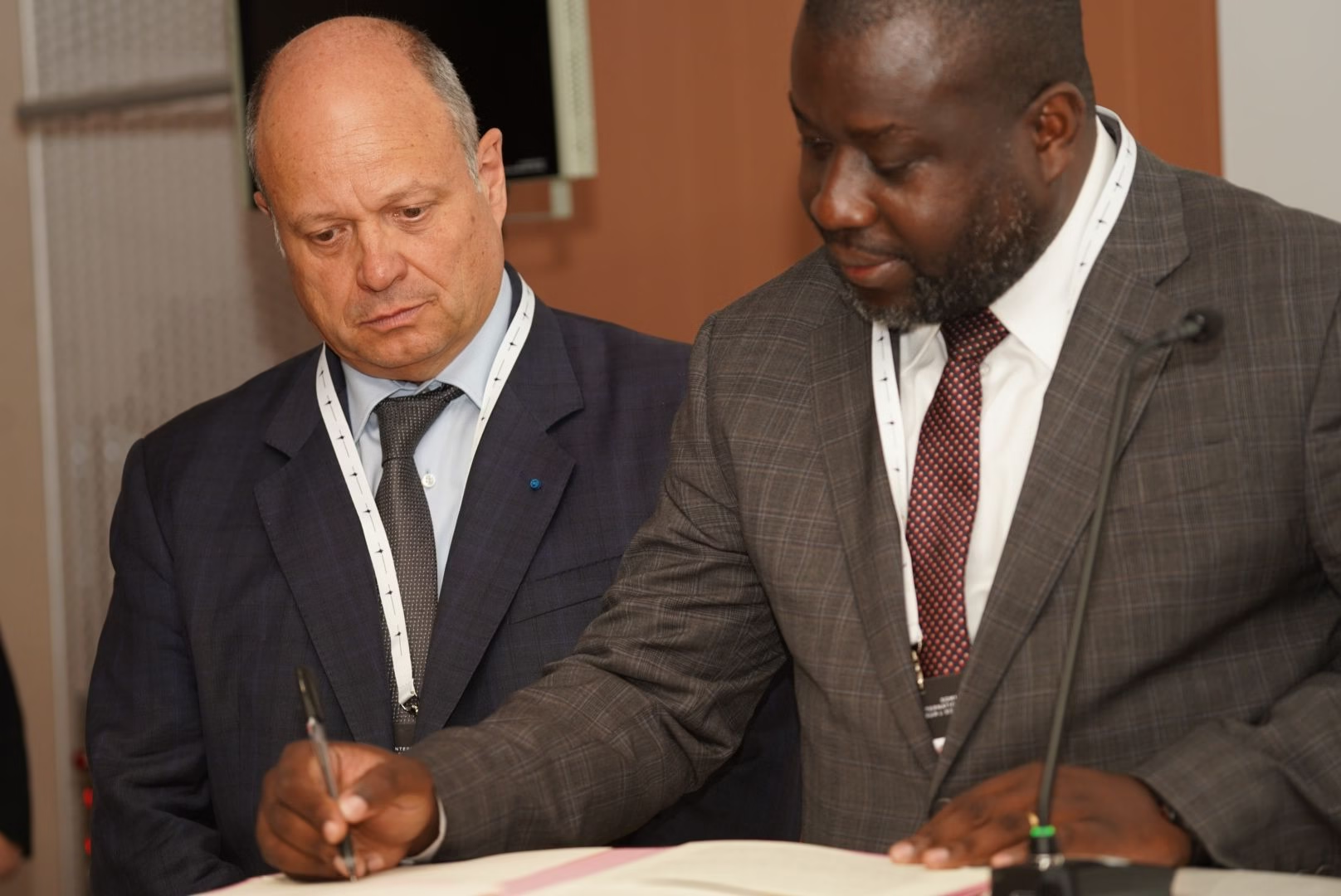
Angola formalised its entry into the Space4Ocean Alliance on 9 September 2026 in Paris, signing the initiative’s declaration at a ceremony held at the Grand Palais. The signature was made on behalf of the Ministry of Telecommunications, Information Technologies and Social Communication (MINTTICS) by Zolana João, Director-General of the National Space Program Management Office (GGPEN), and witnessed by MINTTICS Minister Mário Oliveira, Angola’s Ambassador to France, Guilhermina Prata, and the Director-General of the United Nations Office for Outer Space Affairs (UNOOSA), Aarti Holla-Maini.
Angola Becomes the Fifth African Member of the Space4Ocean Alliance
The signing places Angola among 31 entities now attached to the Alliance, and makes GGPEN the fifth African institution to join. It follows the Gabonese Agency for Space Studies and Observations (AGEOS), the Kenya Space Agency (KSA), the Research and Study Centre of Djibouti (CERD) and the Senegalese Space Study Agency (ASES).
All five are coastal states, and the pattern is worth naming: African participation in the Alliance has so far tracked national maritime exposure rather than space-sector maturity, which is why Djibouti and Senegal sit alongside Kenya and Gabon while several of the continent’s larger space programmes remain outside the mechanism. The African Space Agency does not currently appear among the signatories, leaving continental coordination on ocean applications to bilateral membership rather than to a single continental voice.
What the Space4Ocean Alliance Commits Its Members To
The Alliance was proposed by the French space agency, CNES, and developed from December 2024 by a founding group comprising UNOOSA, CNES, the Maldives Space Research Organisation, the Space Office of the Principality of Monaco, the Norwegian Space Agency, the European Space Agency and the Intergovernmental Oceanographic Commission of UNESCO. It was launched formally at the third United Nations Ocean Conference in Nice in June 2025, during a UNOOSA side event that closed with the handover of the signed declaration to Peter Thomson, the UN Secretary-General’s Special Envoy for the Ocean.
Its stated purposes are to connect space actors with marine and maritime stakeholders, to advocate for new missions that close observation gaps, to widen access to satellite and in situ data, to build capacity in frontline countries, particularly least developed countries and small island developing states, and to develop ocean indicators that decision-makers can act on. The mechanism is consultative; it carries no treaty obligation and no dedicated funding line, which is the correct frame for reading any accession to it, including this one.
Tech-Ecologia and Angola’s Operational Case for Membership
Angola arrives with an operational application rather than an aspiration, which distinguishes this accession from a purely diplomatic one. GGPEN’s Tech-Ecologia platform uses satellite imagery to detect and monitor oil spills offshore Angola, identify pollution sources, and shorten response times for the competent authorities. The system is in service with the National Agency of Petroleum, Gas and Biofuels (ANPG).
That partnership was extended only days before the Paris signature: on 3 September, GGPEN and ANPG launched a project applying satellite data and artificial intelligence to monitor Angola’s sedimentary basins, with the stated intention of expanding into other strategic areas. Together, the two announcements describe a deliberate sequencing, in which Angola consolidates a domestic user base for Earth observation services within its hydrocarbons regulator, then takes that record to a multilateral forum as its contribution.
The Constraint: Angola Has No National Earth Observation Satellite
The structural constraint is the data layer. Angola operates AngoSat-2 as a communications asset and has no national Earth observation satellite, so Tech-Ecologia and the new basin monitoring work depend on imagery sourced from foreign and open-access constellations.
That is precisely the gap the Alliance’s data-access and capacity-building provisions are meant to address, and it is the metric against which Angola’s membership should eventually be judged. The declaration commits members to capacity building and training aimed at converting satellite information into operational services for end users; for Angola, the practical question is whether membership improves the terms, latency and continuity of the imagery GGPEN already relies on, and whether it opens access to the model and in situ data streams that Mercator Ocean, IFREMER and IOC/UNESCO bring to the table.
From Beneficiary to Peer Contributor
There is also a positioning dimension. Angola graduated from the UN’s least developed country category earlier this decade, which means it enters the Alliance outside the frontline-beneficiary tier that the founding members explicitly designed the capacity-building provisions around. That gives Angola an unusual seat: a coastal middle-income state with a working operational application, positioned to act as a peer contributor to other African signatories rather than only as a recipient. Whether GGPEN uses the seat that way, for instance by offering Tech-Ecologia’s methodology to Gabon, Senegal or Djibouti through the Alliance’s good-practice channel, is the more interesting thing to watch over the next cycle.