
Starlink Drives Zimbabwe’s VSAT Subscriptions to a Record 67,057

Zimbabwe is Starlink’s fastest-growing market in Africa, and the numbers from Q4 2025 confirm just how quickly that growth is accelerating. The country closed the quarter with 67,057 VSAT subscribers, up from 50,949 the previous quarter and marking a 31.7% increase in just three months, representing an addition of 16,108 users.
According to the latest performance report by the Postal and Telecommunications Regulatory Authority of Zimbabwe (POTRAZ), VSAT subscriptions, the category under which Starlink is classified, have risen consistently since the service launched in September 2024. In the 16 months since entry, Starlink has recorded an average quarterly growth rate of 126%.
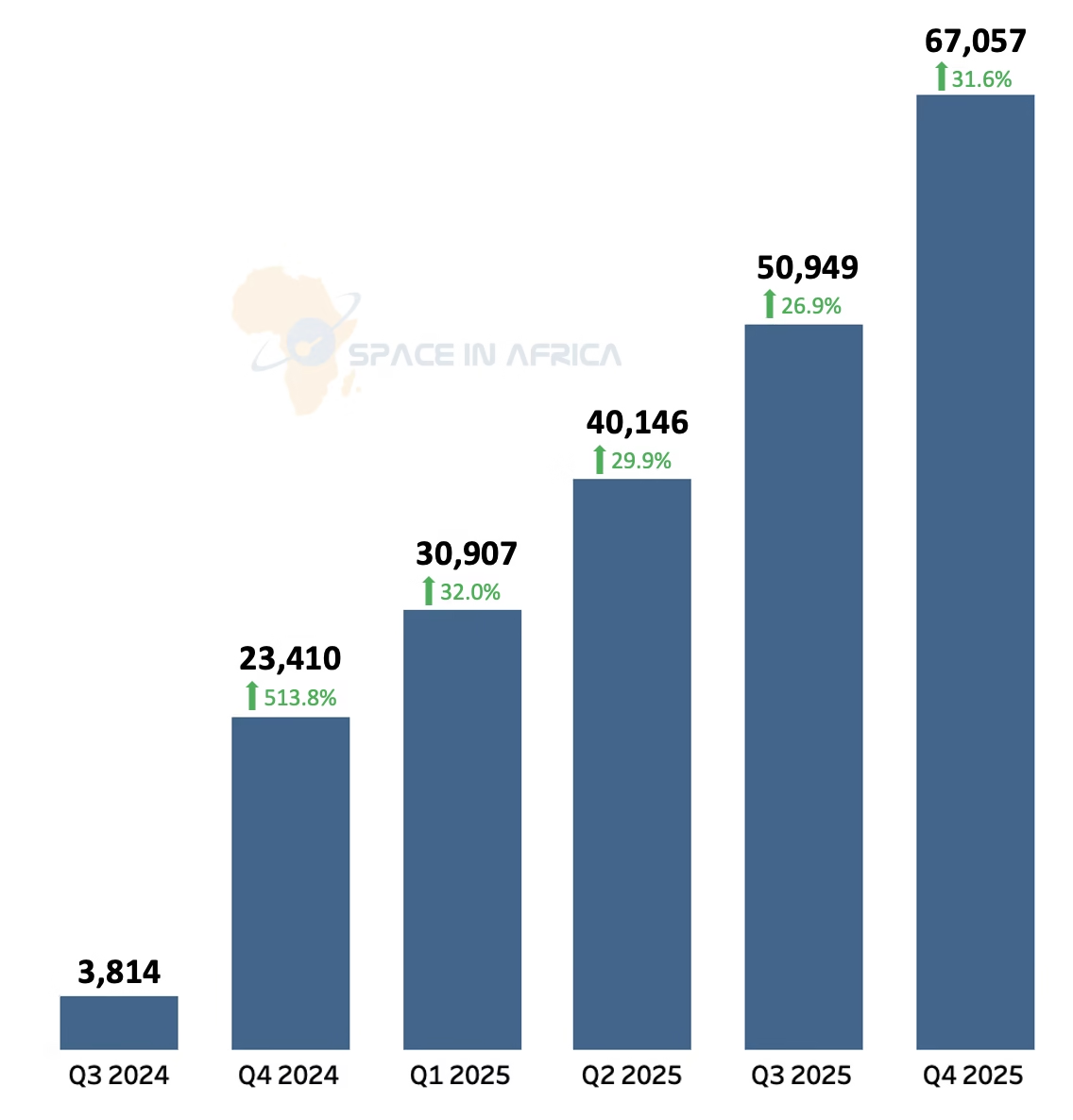
Zimbabwe’s subscriber base now exceeds that of all other Southern African countries combined, which together account for an estimated 60,000 users. The numbers are now comparable with Nigeria, which has historically been Starlink’s largest African market, recording 66,523 subscribers in its most recent data from Q2 2025.
How Disruptive Is Starlink in Zimbabwe’s Internet Market?
The latest statistics underscore Starlink’s growing dominance in Zimbabwe’s fixed internet market. The satellite internet service now holds a 17.23% market share among alternative internet technologies. Notably, Starlink recorded the strongest market share growth, rising by 31.62% from Q3 2025, significantly outpacing competing technologies such as fibre, which posted a modest 7.42% increase.
Further analysis also reveals a decline in active data subscriptions across several traditional connectivity categories, including Digital Subscriber Line (DSL), WiMAX, and CDMA. This points to a broader market shift away from legacy broadband solutions toward high-speed, reliable satellite internet services, with Starlink increasingly emerging as a preferred connectivity option.
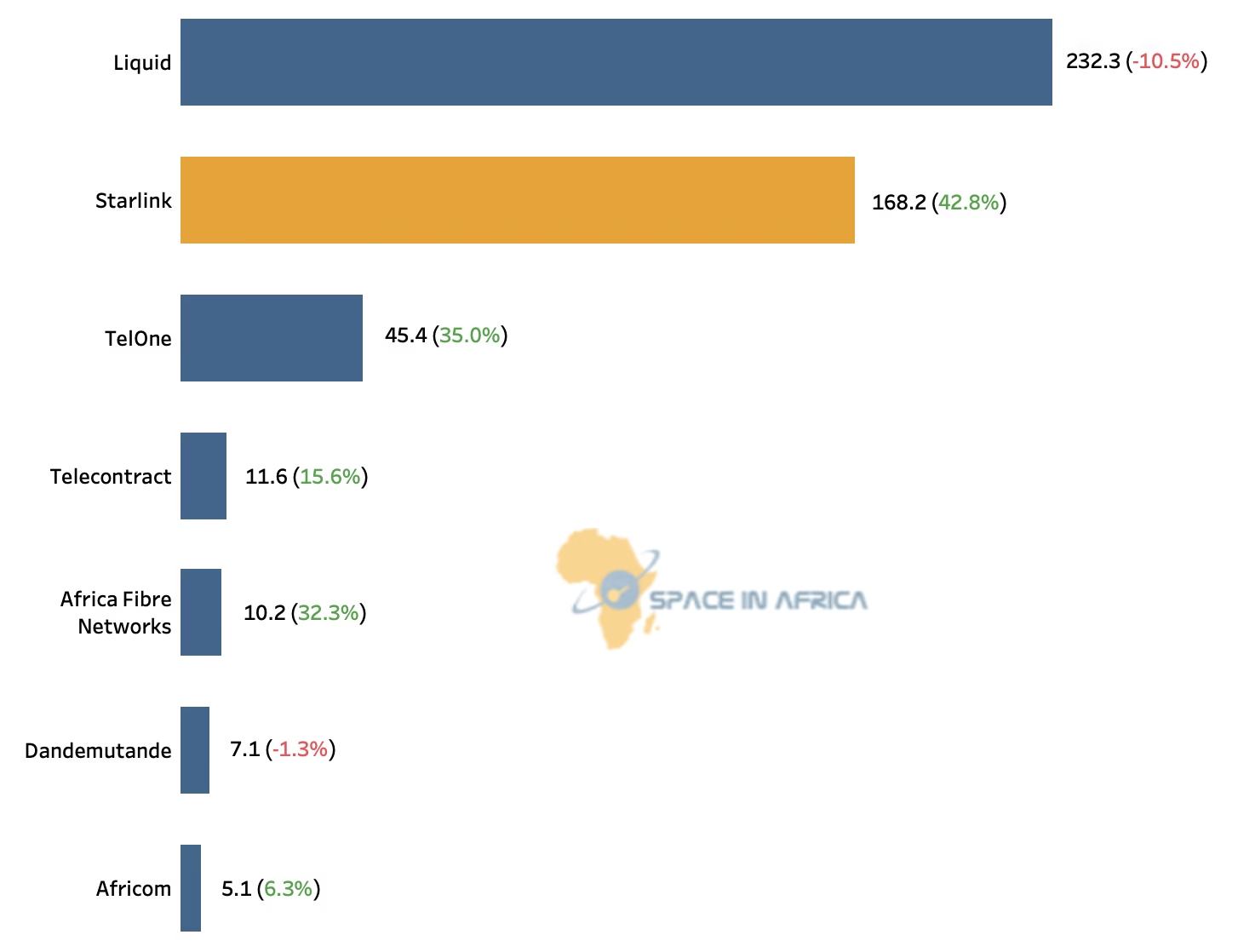
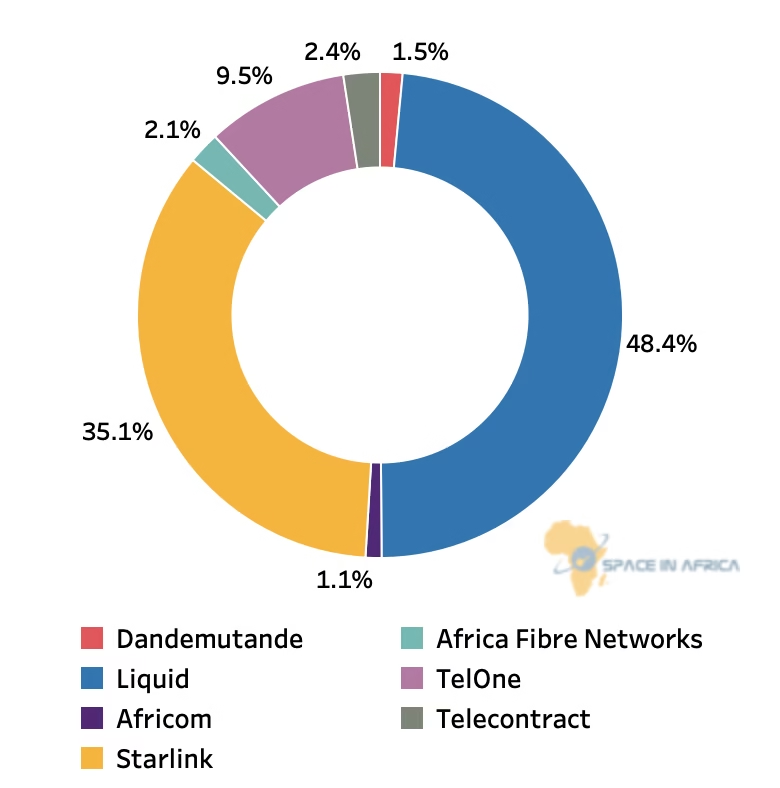
This growing market presence is increasingly translating into usage dominance. During the quarter, Starlink Zimbabwe recorded a 42.76% surge in internet data traffic, rising from 117.83 petabytes in Q3 2025 to 168.21 petabytes in Q4 2025. The shift is equally evident in competitive terms: Liquid Intelligent Technologies ceded 10.49 percentage points in fixed internet traffic market share over the same period, while Starlink gained 8.32 percentage points, marking a clear and measurable redistribution of traffic from traditional fixed-network infrastructure to satellite connectivity.
Starlink in Zimbabwe: A Market Worth Studying
Several compelling factors warrant a deeper analysis of Starlink’s unprecedented growth in Zimbabwe. Most striking is the pace of adoption.
Despite having a population roughly 14 times smaller, Zimbabwe reached in 16 months the subscriber milestone that took Nigeria 30 months to achieve.
Furthermore, this contrast suggests that while population size influences overall adoption potential, demand-side conditions and country-specific market dynamics play a far more decisive role in shaping uptake. A key driver in Zimbabwe appears to be strong government-backed adoption, with public sector investment in Starlink equipment significantly advancing the country’s connectivity agenda and accelerating market penetration.
A clear example is the decision by the Ministry of ICT, Postal and Courier Services to donate 8,000 Starlink kits to the Ministry of Primary and Secondary Education, a substantial deployment that, on its own, would rank among the top 10 Starlink subscriber bases in Africa. Similar initiatives across other government agencies have further accelerated Starlink uptake. Taken together, these point to a distinctly use-case-driven adoption model in Zimbabwe, where growth has been propelled less by traditional household or enterprise demand and more by targeted deployment in public services, from expanding educational connectivity to strengthening government service delivery.
Future Outlook
During the 2025 period, Starlink in Zimbabwe faced constraints in new kit activations due to limited capacity, which temporarily slowed the pace of new subscriber additions. With this bottleneck now eased, growth is expected to accelerate further. The outlook is underpinned by strong government-driven demand, alongside the persistently high cost and inconsistent quality of alternative connectivity options. Against this backdrop, Starlink is increasingly positioned as the most attractive solution for affordable, reliable, high-speed internet access.