
Starlink Kenya Records 14% Quarterly Growth, Reaching 22,282 Subscribers
Starlink Internet Services Kenya recorded a quarterly subscriber growth rate of 14.4% from September to December 2025, reaching 22,282 users, its highest subscriber count since the service launched in the country. According to the latest data from the Communications Authority of Kenya (CAK), Starlink now holds a 0.9% market share, placing it eighth among Kenya’s Internet Service Providers (ISPs).

After a temporary halt in new customer acquisitions driven by capacity constraints earlier in the year, the company has moved decisively back onto a growth trajectory, adding 2,812 subscribers to bring its total base from 19,470 in September 2025 to 22,282, a result that speaks to the underlying demand that had been building during the pause.
Starlink’s Role in Kenya’s ISP Market
With Starlink now ranking eighth in Kenya’s competitive ISP landscape despite its 14% growth, the data underscores the continued strong leadership of existing players such as Safaricom and Jamii Telecommunications Ltd. During the same period, Safaricom, the country’s leading fixed internet provider, added approximately 43,000 new users, while Jamii Telecommunications Ltd expanded its subscriber base by 27,693. Both additions exceed Starlink’s total subscriber count, highlighting the gap between emerging satellite-based providers and established market leaders.
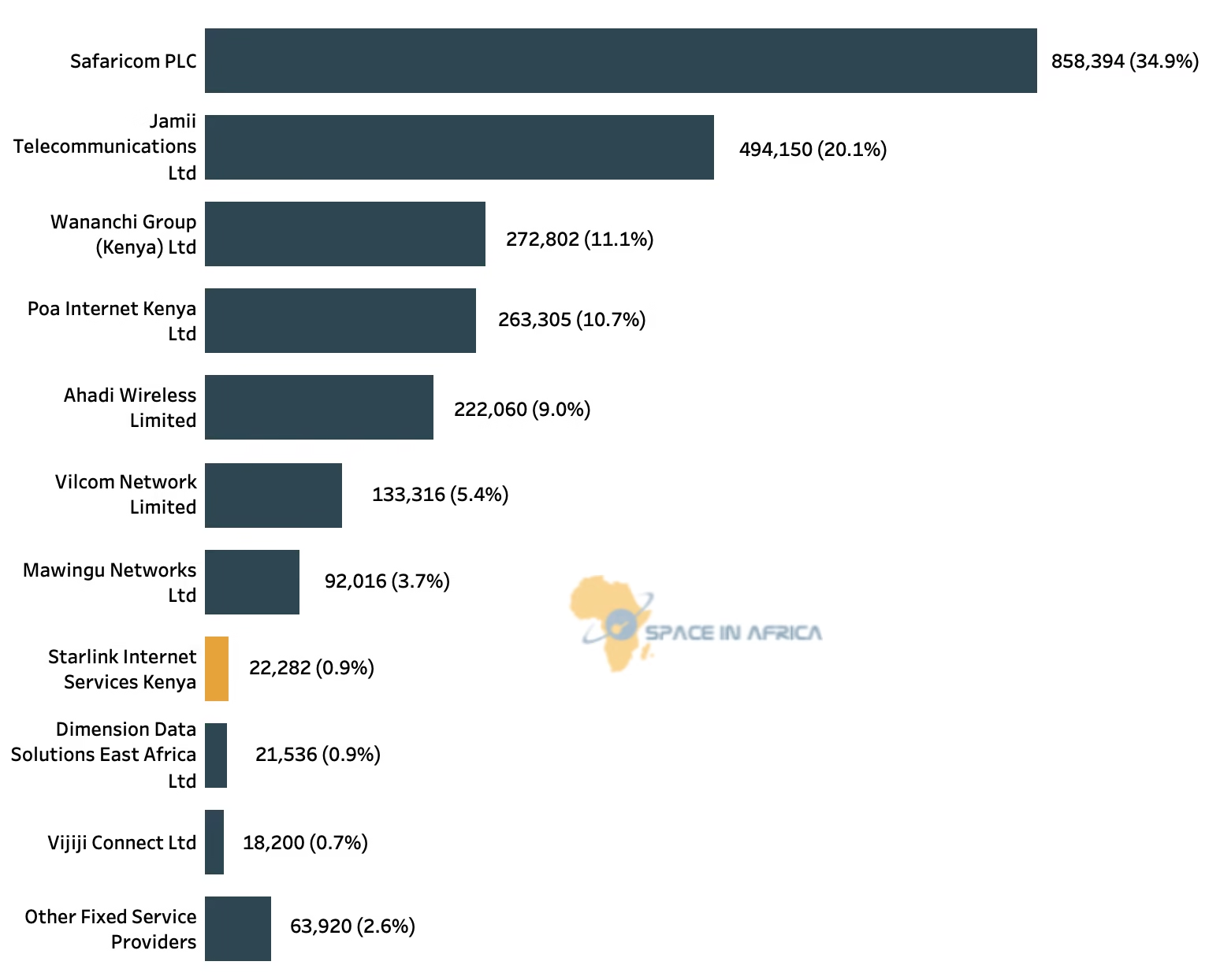
However, most leading ISPs in Kenya recorded a decline in market share growth during the period, with an average decline of 5%, while Starlink grew its share by 12%, representing one of the largest increases in the market. This suggests that although Starlink remains behind in total subscriber count, consumer preferences may be gradually shifting toward satellite-based internet. Starlink’s low-latency, high-speed, and reliable service appears to be a key driver of this adoption, highlighting a potential shift in internet service demand in Kenya that is set to define the landscape over time.
Addressing Affordability to Expand Market Access
To address Kenya’s price-sensitive market, where high upfront costs have limited adoption, Starlink introduced an instalment payment plan for local customers. Under the plan, customers can pay KES 6,750 (USD 52.80) upfront for the Starlink Mini kit instead of the full retail price of KES 27,000. Additional costs include a KES 16,250 (USD 125.80) activation fee and KES 3,010 (USD 23.30) for shipping. The remaining hardware cost is spread over six months at KES 4,500 per month, in addition to the standard residential service subscription of KES 6,500.
Furthermore, the instalment plan targets a demographic that has traditionally been out of reach. Kenya’s M-Pesa ecosystem, with over 32 million daily users, is optimised for small, frequent transactions rather than large upfront payments. By spreading hardware costs into manageable monthly instalments, Starlink aligns with local payment behaviour and positions itself competitively against third-party resellers, who had already introduced buy-now-pay-later schemes charging KES 1,350 per week over 24 weeks