
Africa’s Space Ambitions: Milestones to Watch in 2026

Every year, Space in Africa compiles the most intriguing projects and developments in the African space and satellite industry from government and private sector players. In 2026, the industry is set for not just sustained momentum but an upward trajectory; the kind that transforms an entire ecosystem.
Our 2025 African Space Industry Annual Report valued the African space economy at USD 24.95 billion and projects it will expand to USD 39.52 billion by 2030 at a Compound Annual Growth Rate (CAGR) of 7.97%. This 2024 valuation significantly surpasses the 2026 forecast in our 2022 report, which served as the foundation for global discussions on African space capabilities. At that time, the industry was valued at USD 19.49 billion (for 2021) and projected to reach USD 22.64 billion by 2026. Africa’s space economy has already exceeded that projection by USD 2.31 billion, two years ahead of schedule.
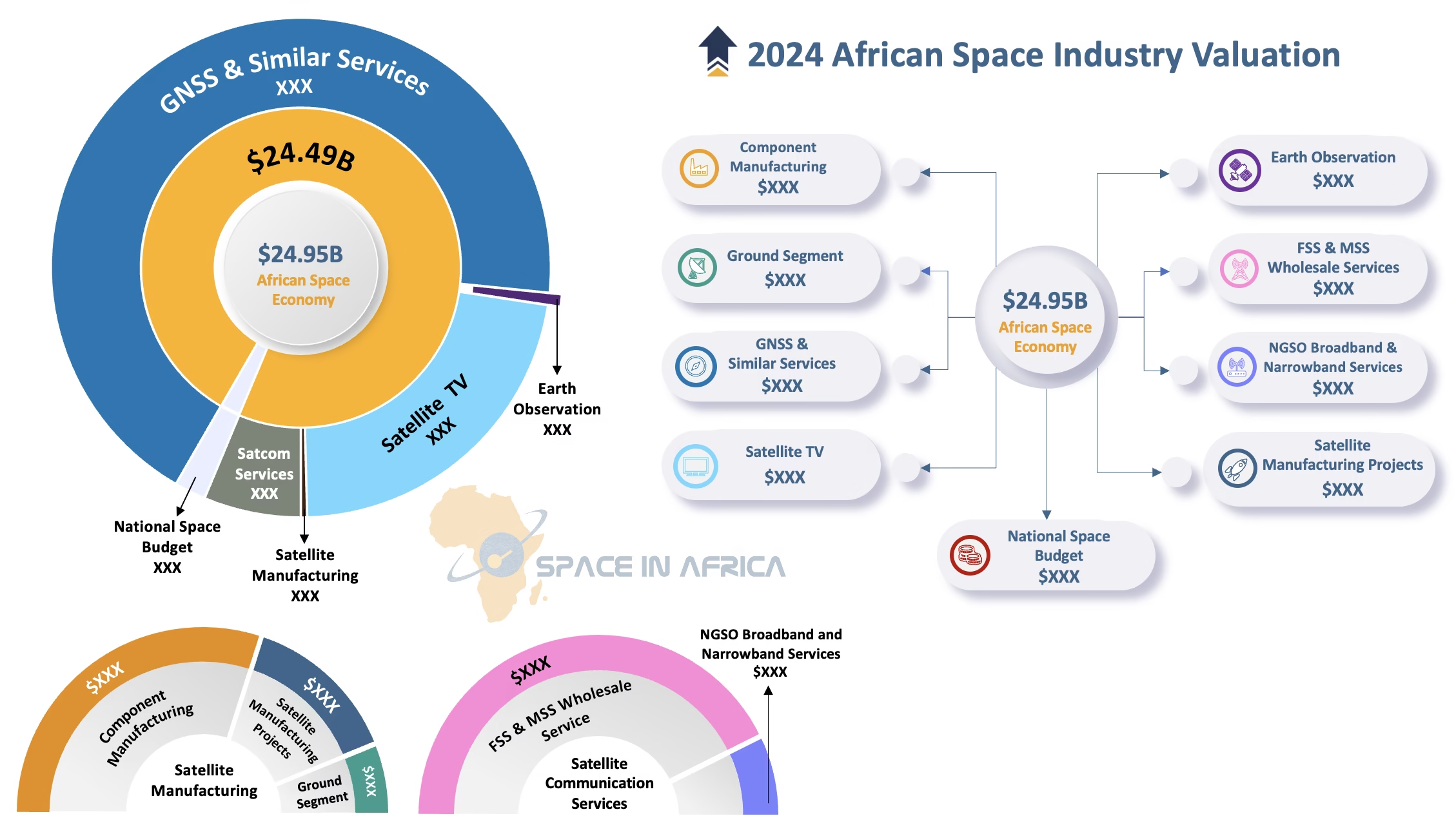
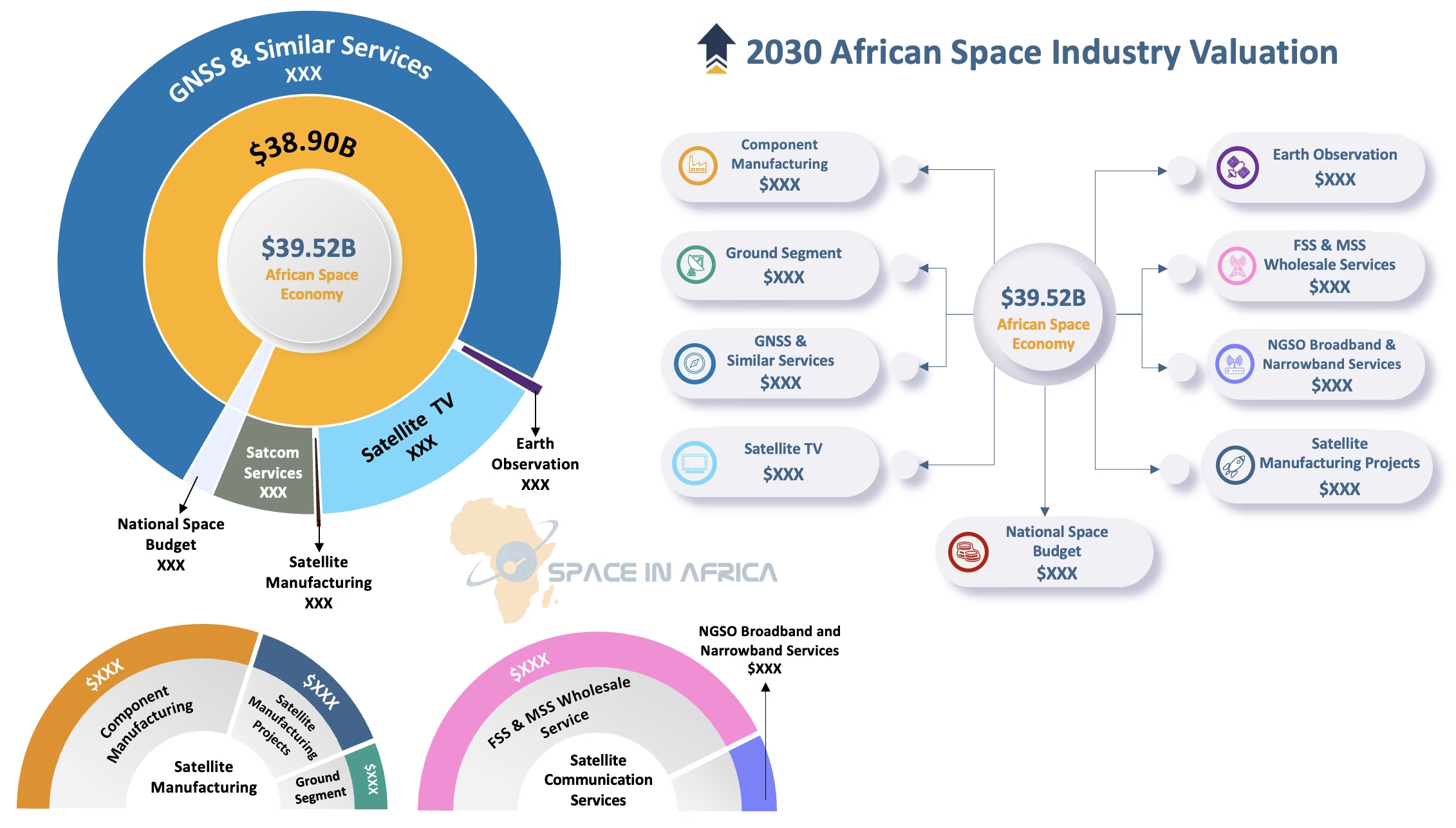
We look forward to improved processes, more coordinated space programmes, increased investment inflows, and updated business trends across the board, all of which will help maintain momentum and ensure the continued growth of industry segments. The continent is no longer merely participating in the space race; it is defining its own path with clarity, purpose, and accelerating capability. From the operationalisation of the African Space Agency to ambitious infrastructure projects and the maturation of commercial space ventures, 2026 promises to be a landmark year.
Get up-to-date analysis of the African space industry segments, government priorities, business trends, promising models, and development outlook when you purchase our 2025 African Space Industry Annual Report.
Here are the most important milestones to watch in 2026:
AfSA Now Operational: What’s Next?
One of the most important and symbolic milestones last year was the official inauguration of the African Space Agency at its headquarters within the Egyptian Space City in Cairo, Egypt. For many, it signals the beginning of a coordinated, continent-wide approach to space development. AfSA is an organ of the African Union, which means each of the 55 member states is automatically part of this collective endeavour.
Under the leadership of H.E. Dr Tidiane Ouattara, President of the African Space Council, and all Council members, AfSA’s mission is straightforward yet profound: to eliminate duplication across the ecosystem and serve as the primary liaison for international partnerships. The challenge is clear: resources are limited. These resources extend beyond finances to include infrastructure and human capital, which vary significantly across member states. The main question becomes: How can we ensure that no country is left behind in the space race? How can we guarantee that all nations benefit from the dividends of space technology?
As H.E. Dr Tidiane has emphasised, Africa and Africans are not pursuing space for prestige or the mere title of being space-faring nations. Instead, countries are focused on leveraging space for sustainable development across their continental, regional, and national priorities. AfSA will continue to work with all partner nations to answer critical questions: What should precede what in terms of space development? What should each country prioritise? How can regional frameworks best facilitate data sharing and resource pooling for faster, more optimal outcomes?
These are the expectations the entire African community should have of AfSA. However, full operational capacity takes time. For now, the agency is prioritising the building blocks, staffing, establishing processes, and developing continental frameworks, all essential to ensuring that programme implementation runs smoothly with complete buy-in from all member states. As these foundations solidify in 2026, expect AfSA to begin translating vision into coordinated action.
More National Space Programmes, Policies and Legal Frameworks
A useful taxonomy for African nations on space development groups them into three tiers based on operational maturity and technological capabilities. Pioneer African space agencies include Algeria, Egypt, Nigeria, Morocco and South Africa. The second tier encompasses emerging space agencies in Kenya, Rwanda, Angola, Ghana, Gabon, Mauritius and Zimbabwe. The third tier comprises newcomer space programmes in Botswana, Côte d’Ivoire, Djibouti, Namibia, Uganda and Zambia.
In 2026, we expect more countries to join the space ecosystem through full-fledged government buy-in and the implementation of cross-cutting policies to ensure smooth operations in space development. Additionally, countries that have begun elementary space activities within a ministry, with work carried out by government departments or universities, are now seeking to cement their structures by establishing dedicated space agencies. This ensures a more coordinated national approach. Botswana and Djibouti are among the countries working to translate their goals into reality, ensuring that space business and government practices are executed in a coordinated manner that enables all Ministries, Departments, and Agencies (MDAs) to utilise space technologies for improving processes and economic sectors.
Beyond institutional structures, policy formulation and legal implementation are gaining critical attention. Countries including Ghana, Rwanda, Nigeria, Gabon, and others are developing, updating, or initiating processes to implement comprehensive space legislation. This is crucial for several reasons. Robust space policies and laws provide the regulatory clarity needed to govern space activities, define liability frameworks, and establish licensing mechanisms for satellite operations and launches. Without such legislation, countries face significant challenges: they struggle to attract foreign partners and investment due to regulatory uncertainty, cannot adequately address issues of orbital debris management and frequency coordination, and lack the legal mechanisms to resolve disputes or enforce compliance.
Infrastructure Projects: Building the Foundation
Significant developments in space infrastructure are underway across Africa, with new projects being conceptualised and expected to commence this year. Countries are building their first satellites and ground stations or adding to their existing fleets, developing astronomy facilities, and conceptualising Assembly, Integration, and Testing (MAIT) facilities alongside spaceport development initiatives across the continent.
Satellite Projects and Ground Stations
Angola, Burkina Faso, Egypt, Zambia, Nigeria, Rwanda, Botswana, and the Democratic Republic of Congo are expected to either fully scope out, initiate, or continue work on satellites and ground station infrastructure in 2026. This includes new ground stations or subtle to significant upgrades on existing facilities. At least eight new satellites are projected to launch this year, if everything proceeds as planned for the countries involved. Among these is the multilateral AfDevSat satellite, a climate monitoring project involving Egypt, Ghana, Kenya, Nigeria, Sudan, and Uganda, for which there is a strong possibility of recording its launch this year.
Get unprecedented insights into the African satellite manufacturing and launch landscape.
African countries are increasingly establishing ground systems to enhance their Ground Station-as-a-Service (GSaaS) capabilities, as evidenced by recent strides made by Rwanda, Ethiopia, and South Africa. By providing multi-satellite tracking and data reception services, these stations enable local and international partners to access their satellites without the significant capital investment required to build independent ground infrastructure. Payment structures typically based on usage time per pass or minute make this an attractive and viable model for the continent.
Astronomy Initiatives
Africa now hosts a diverse range of astronomical initiatives, from large-scale, internationally supported projects to emerging national observatories and research centres. The Square Kilometre Array (SKA) in South Africa and its African partner countries continue to make impressive progress. As of late 2025, five SKA-Mid dishes have been installed and integrated with the existing 64 MeerKAT dishes, along with 14 new MeerKAT extension dishes contributed by Germany and Italy. SKA-Mid has now reached a key commissioning milestone by recording “first fringes,” the first successful combination of signals from two or more antennas, using two of its 15-metre dishes. In line with trends within the SKA project, Space in Africa expects that scientists will begin utilising data from the telescopes by late 2026.
Beyond South Africa, nations such as Ethiopia, Namibia, Ghana, and Senegal are developing their own astronomical capabilities. Senegal has commenced construction of the Astronomical Observatory of Senegal (OAS), the first facility of its kind in West Africa. Egypt is advancing plans for the Egyptian Large Telescope (ELT), a flagship project set to become the largest optical telescope in the Middle East.
In recognition of Africa’s clear skies, a compelling value proposition has emerged around astrotourism as an economic enabler. Countries such as Morocco, Namibia, South Africa, Kenya, and Egypt are integrating astronomy into their tourism strategies, with NewSpace companies, lodges, and private observatories offering curated stargazing and astronomy experiences. This trend will help countries capture a share of the multi-million-dollar global astrotourism market while promoting scientific awareness and sustainable local development.
MAIT Facilities
Nigeria has released a tender seeking partners to build a Modular Satellite Assembly, Integration, and Testing (MAIT) facility to support end-to-end development of small to medium-sized satellites. This facility will place Nigeria among a small group of African nations with active MAIT capabilities, addressing a key strategic objective in its long-term plan. Once completed, it will significantly reduce dependence on foreign facilities and enable faster iteration of satellite designs.
NewSpace Ecosystem Growth: Evolution and Expansion
African NewSpace companies continue to demonstrate remarkable growth across multiple dimensions – increased revenues, workforce expansion, new research and development facilities, access to external funding, and scaling operations to accommodate larger production plans.
These firms are intensifying efforts to improve their operations and strategically position themselves to access both local and international funding. Companies such as NewSpace Systems, CubeSpace, Simera Sense, Amini, and others have successfully tapped into investment opportunities and raised considerable financing to expand their operations. As we correctly predicted last year, global expansion remains a critical step for many African NewSpace companies as they broaden their customer base. This often involves establishing facilities in new regions to provide quicker response times and cater to region-specific needs. Additionally, creating physical sales offices in strategic global locations ensures these companies remain close to their customers, enhancing accessibility and market responsiveness.
Beyond geographic expansion, business models across all industry segments are evolving. This transformation is occurring across the board, in both upstream (satellite manufacturing, launch services, ground systems) and downstream (data analytics, applications, services) sectors. Companies are exploring subscription-based models for Earth observation data, developing software-as-a-service platforms for satellite data processing, and creating integrated solutions that combine hardware and analytics. This sophistication in business approach signals a maturing ecosystem in which African companies are not just service providers but also innovative solution architects competing on the global stage.
African NewSpace companies are also leveraging startup accelerators, competitions, and strategic partnerships for early-stage funding and mentorship. The emphasis remains on global competitiveness, operational excellence, and delivering value that transcends continental borders.
Increased Collaboration and Partnerships: An Open Invitation
This year, Space in Africa expects a similar trend of targeted, coordinated collaborations, both domestic and international, as African countries and companies continue to adopt a multipronged partnership approach to build capacity across the entire industry value chain.
It is important to address a growing misconception. Some observers suggest that the African continent has been “divided up” among a few partners: China, the United States, and the European Union. This could not be further from the truth. African nations are welcoming and actively seeking partners from anywhere in the world, provided these partnerships are built on mutual benefit, involve real and quantifiable technology transfer (not empty promises without value addition), demonstrate respect for sovereignty, and align with the specific projects or programmes each country or company is pursuing.
This is a clarion call to international partners: the ecosystem is ready for business. Government agencies and commercial entities across Africa are actively seeking mutually beneficial partnerships. If you need to understand where the opportunities lie, what each country aims to accomplish, and which types of partners are being sought, do not hesitate to reach out to the Space in Africa team for consultation. The door is wide open for serious, committed partners who understand that Africa’s space ambitions are not just about participation; they are about leadership, innovation, and shared prosperity.
Events, Awareness, and Capacity Building
The growth of national space programmes across Africa is creating sustained demand for skilled professionals. National space agencies, allied institutions, and commercial companies are actively seeking qualified candidates to fill key roles, presenting numerous opportunities for space practitioners and other essential profiles critical to optimising operations.
Visit Space in Africa’s opportunities platform year-round to explore exciting openings in the African space ecosystem as soon as they are released.
Raising public awareness of space programmes and their societal benefits has become a pressing priority for spacefaring nations. A significant disconnect often exists between a nation’s space ambitions and the public’s understanding of how these activities benefit or impact their daily lives. Bridging this gap requires consistent engagement, education, and demonstration of tangible outcomes. This translates to a series of events, forums, and awareness campaigns throughout the year.
One event that has emerged to become the defining gathering of the year is the NewSpace Africa Conference. The fifth consecutive edition will take place in Gabon between April 20 and 23, 2026. Space in Africa, in partnership with the African Space Agency and the Gabonese Agency for Space Studies and Observations (AGEOS), will welcome hundreds of delegates from the global space community at the National Stadium in Libreville.
Staying true to its founding directives, this year’s conference will take another significant step forward in bringing together key stakeholders from the African and international space industries, academia, policymakers, national space agencies, the commercial space sector, and professionals across all segments of the industry. Over four days, attendees will enhance B2B and B2G connections while sharing best practices and actionable insights to drive policy and business development and advance Africa’s space industry.
Click here to learn more and register for the NewSpace Africa Conference 2026.
Conclusion
The trajectory is clear: Africa’s space industry is moving from emergence to establishment. With the African Space Agency now operational, infrastructure projects accelerating, commercial ventures maturing, and legal frameworks solidifying, 2026 should continue the fundamental shift in how the continent approaches space, with confidence, coordination, and an unwavering commitment to ensuring that space serves sustainable development for all Africans. The milestones ahead are ambitious, but they are grounded in the solid foundation built over recent years.