
Satlyt Raises USD 8 Million Seed to Turn Satellites into Virtual AI Data Centers

Led by non sibi ventures, the financing will help operators make more use of computers onboard spacecraft, with two applications planned for an orbital deployment targeted for October 1.
SUNNYVALE, USA, October 1, 2026. Satlyt, a company building software that enables satellites to process data and run AI onboard, today announced USD 8 million in Seed financing led by non sibi ventures. The funding will accelerate development of its virtual AI data centers in space, expand its engineering and customer delivery teams, and scale software deployments across spacecraft operated by other companies.
The funding round includes investors such as TLCOM, Antler, Slauson & Co., Launch Africa Ventures, Enza Capital, Askya Investment Partners, Demos, BAG Collective, Gaingels, Axian Investment, and others, with existing investors also making follow-on investments.
Making More Use of Computers Already in Space
Satellites collect images and measurements, but operators often need to send that data back to Earth before they can use it. Limited communications capacity can leave valuable information waiting for a connection. Satlyt moves more processing onto the spacecraft itself, reducing the need to send every raw image or system log to Earth for analysis. That can reduce communications demands and the wait for useful results.
Satlyt’s approach is to make computing hardware on existing spacecraft more useful through software. Operators can process data closer to where it is collected, while application developers gain a way to run their software in orbit. Over time, Satlyt aims to provide spacecraft from different operators with a shared software layer to coordinate computing resources.
The next planned deployment is expected to support two applications on one spacecraft: research software and a commercial imagery-processing application. It is a step toward making onboard computing useful to organizations beyond the spacecraft operator itself.
Satlyt already has software operating in orbit from earlier deployments. A Google DeepMind case study describes Satlyt’s earlier deployment of a Gemma model onboard a satellite to analyze system logs, software errors, and stack traces locally. This provides an existing example of onboard AI processing.
“Running applications on existing spacecraft gives operators a way to do more with the computing hardware they already have in orbit,” said Rama Afullo, Founder & CEO of Satlyt. “Our job is to make those applications practical to deploy and operate. This financing lets us expand the engineering and delivery teams needed to support more spacecraft and customers, while building toward computing resources that can work together across missions.”
“We see a vast opportunity for software to make spacecraft computing more useful to operators and application developers,” said Kent Lucas, Managing Partner at non sibi ventures. “Satlyt is addressing that opportunity through deployments on third-party platforms. Its existing onboard work and planned support for commercial and research applications give the team a concrete foundation for pursuing a broader computing platform in space.”
Satlyt’s U.S. headquarters is in Sunnyvale, USA, and its Africa headquarters is in Nairobi, Kenya. Its leadership team is entirely Kenyan-American, with a substantial engineering presence in Nairobi and team members elsewhere on the African continent. Its Kenyan subsidiary and signed memoranda of understanding with the Kenya Space Agency and Angola’s GGPEN establish an operating connection to Africa. African capital in the syndicate supports its work in a global infrastructure market.
Technical Background and Planned Deployment
The planned deployment is aboard a third-party spacecraft on SpaceX’s Transporter-18 mission, targeted for October 1. It includes research software developed through Satlyt’s NASA Glenn Small Business Technology Transfer (STTR) work with the University of Houston, and an imagery-processing application supplied by a commercial software company.
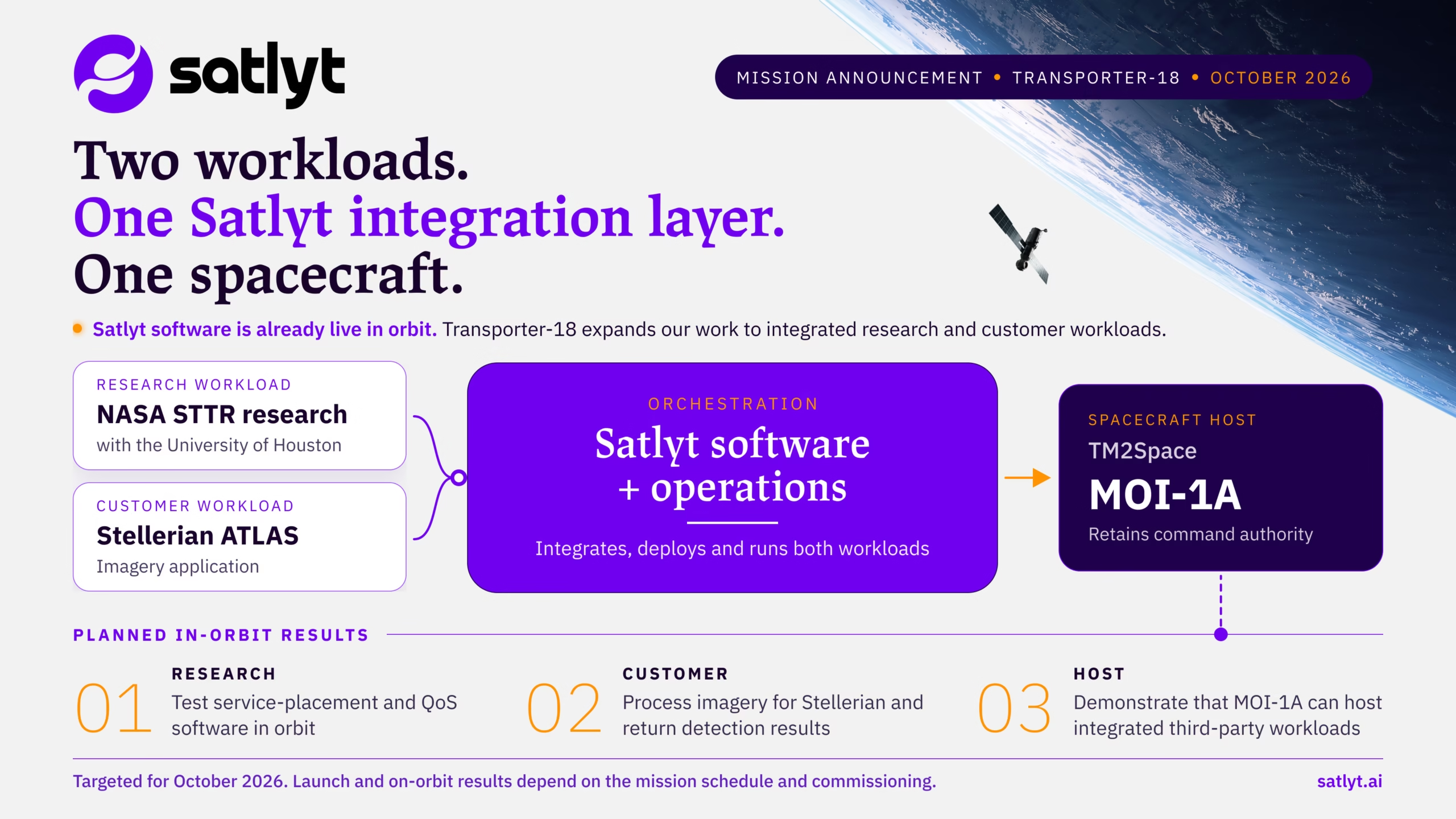
Satlyt supplies the software deployment and operating layer. The host provider supplies the spacecraft and computing platform, while the commercial software company supplies its application. The NASA STTR relationship concerns funded research with the University of Houston. Launch and successful onboard execution are separate milestones; results will be assessed after the applications run in orbit.
Satlyt’s current capabilities focus on processing within individual spacecraft. Its longer-term ambition is to coordinate computing across spacecraft operated by different companies, creating virtual AI data centers in space. The planned deployment involves two applications on one spacecraft; it does not yet demonstrate computing coordinated across multiple spacecraft.
About Satlyt
Satlyt builds software that enables satellite operators to process data and run AI onboard spacecraft, reducing the need to send all raw data to Earth. With U.S. headquarters in Sunnyvale and Africa headquarters in Nairobi, Satlyt is building toward coordinated computing across spacecraft operated by different companies. Learn more at satlyt.ai.
Media Contact
- Satlyt Press: admin@satlyt.ai