
As Africa’s Artemis Accords Signatories Grow, What Does the Framework Mean for the Continent’s Lunar Ambitions?


Botswana’s signature this week made it the sixth African nation to join the Artemis Accords, extending a pattern that has steadily taken shape across the continent over the past four years. Beyond the diplomatic significance of each individual signing, the growing list of African signatories raises a broader question about what participation in the Artemis framework actually means for the continent’s long-term position in space.
Africa’s Growing Presence Within the Artemis Framework
Nigeria and Rwanda became the first African signatories in December 2022, signing at the inaugural U.S.-Africa Space Forum. Angola followed in November 2023, before Senegal signed at NASA Headquarters in July 2025. Morocco became the fifth African nation to join in April 2026, at a formal ceremony in Rabat, ahead of Botswana’s signature in June.
What This Means for Africa’s Position in the Emerging Lunar Economy
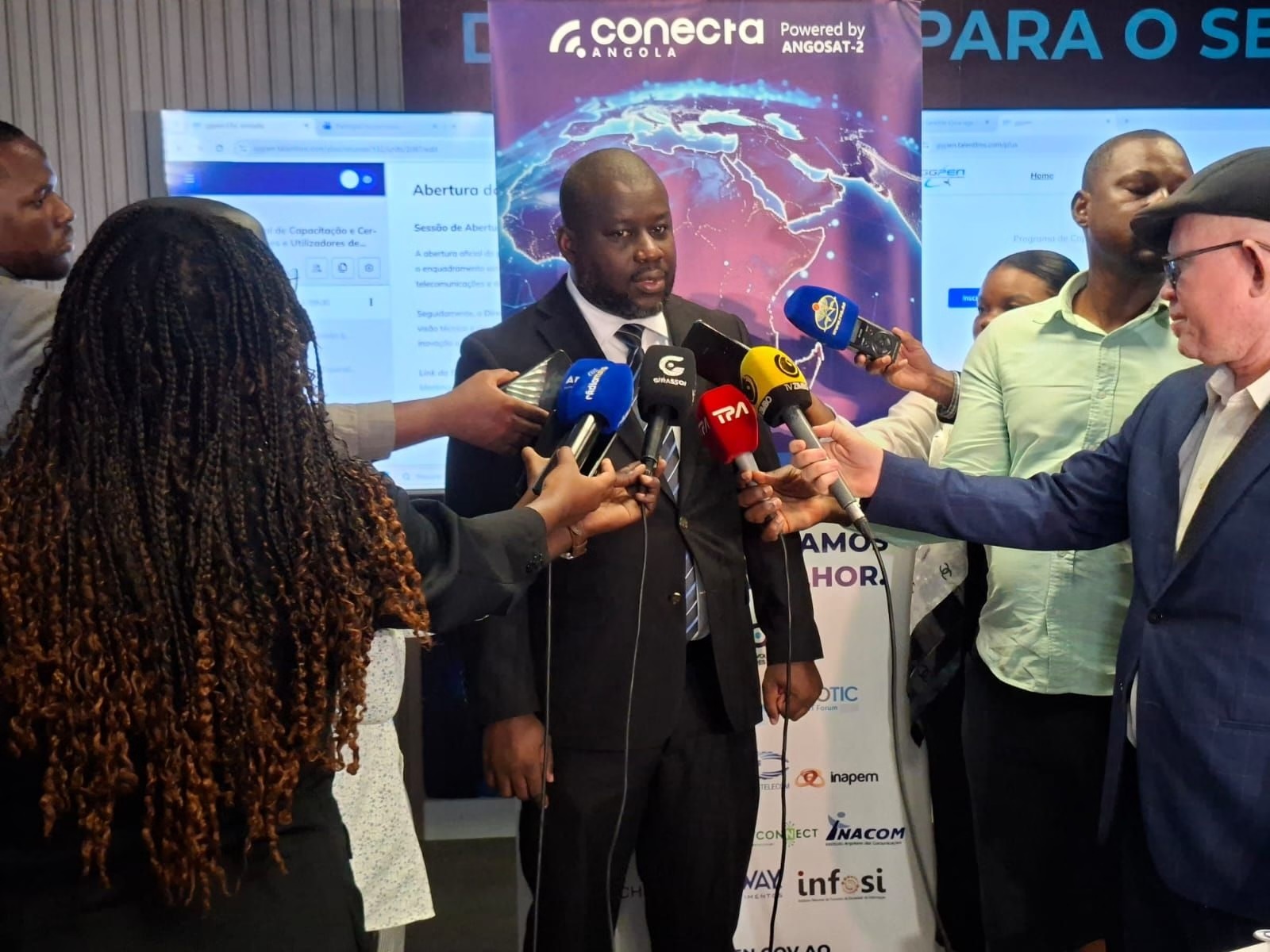
Dr Zolana João, General Manager of Angola’s National Space Program Management Office, has argued that early engagement with Artemis carries strategic weight for African governments and space agencies, extending well beyond the symbolic act of signing. Speaking generally about the dynamics at play rather than about any single country’s case, Dr João frames Artemis as marking a shift in how space activity is governed, built around international agreements, shared technical standards, and coordinated policy frameworks rather than unilateral national programmes. In his view, this matters because predictability allows partners to plan, invest, and innovate with greater confidence.
A Governance Model Africa Can Help Shape, Not Just Adopt
For African space agencies more broadly, Dr João contends that engaging with Artemis offers exposure to emerging operational and technical standards, as well as data-sharing practices likely to define space activity for years to come. Rather than adapting to frameworks established by others at a later stage, he argues that African agencies have an opportunity to help shape how these rules evolve from the outset, stating that the continent’s space agencies have “the opportunity to shape how these frameworks evolve” rather than simply adopting them after the fact.
Lessons from the Satellite Era, Applied to the Moon
Dr João draws a direct parallel with the satellite era. Drawing on his own experience with satellite systems and national space programmes, he notes that nations which moved early on communications satellites, Earth observation systems, and data infrastructure secured lasting advantages in telecommunications, agriculture, climate resilience, and national security. He argues the same logic now applies to the Moon, suggesting that the first countries and companies to build and operate lunar communication and data networks will shape technical standards, control key interfaces, and benefit from sustained demand for their services over the long term.
He also points to specific areas where African involvement need not depend on an independent deep-space launch capability. Participation in Artemis-linked communications and data architecture, he notes, allows countries to contribute through mission operations, data processing, and analytics, extending existing space experience without the need to develop entirely new capabilities from scratch.
Capacity Building Beyond the Symbolic
Dr João further argues that engagement with Artemis supports broader institutional capacity building for African governments, strengthening mission assurance and data governance in ways that reinforce existing Earth-orbit programmes and regional cooperation, rather than functioning as an isolated or symbolic commitment. He frames this as an extension of a logic African governments already understand: countries that have used satellite assets to support national priorities, whether in telecommunications, navigation, or Earth observation, are well placed to extend that same logic to lunar activity.
A Personal Perspective, Not a Continental Position
It is worth noting that these observations reflect Dr João’s own analysis and professional perspective on the continent’s positioning within the Artemis framework, rather than an official continental position. Individual signatories’ own rationale for joining the Accords may differ in emphasis and reflect their own specific national priorities.
Whether African engagement with Artemis ultimately translates into the kind of institutional capacity and rule-making influence that Dr João envisages will likely depend on how individual signatories choose to build on the framework in the years ahead.