
ArkEdge Space and Partners Establish Consortium to Accelerate Space Business Co-Creation in Africa
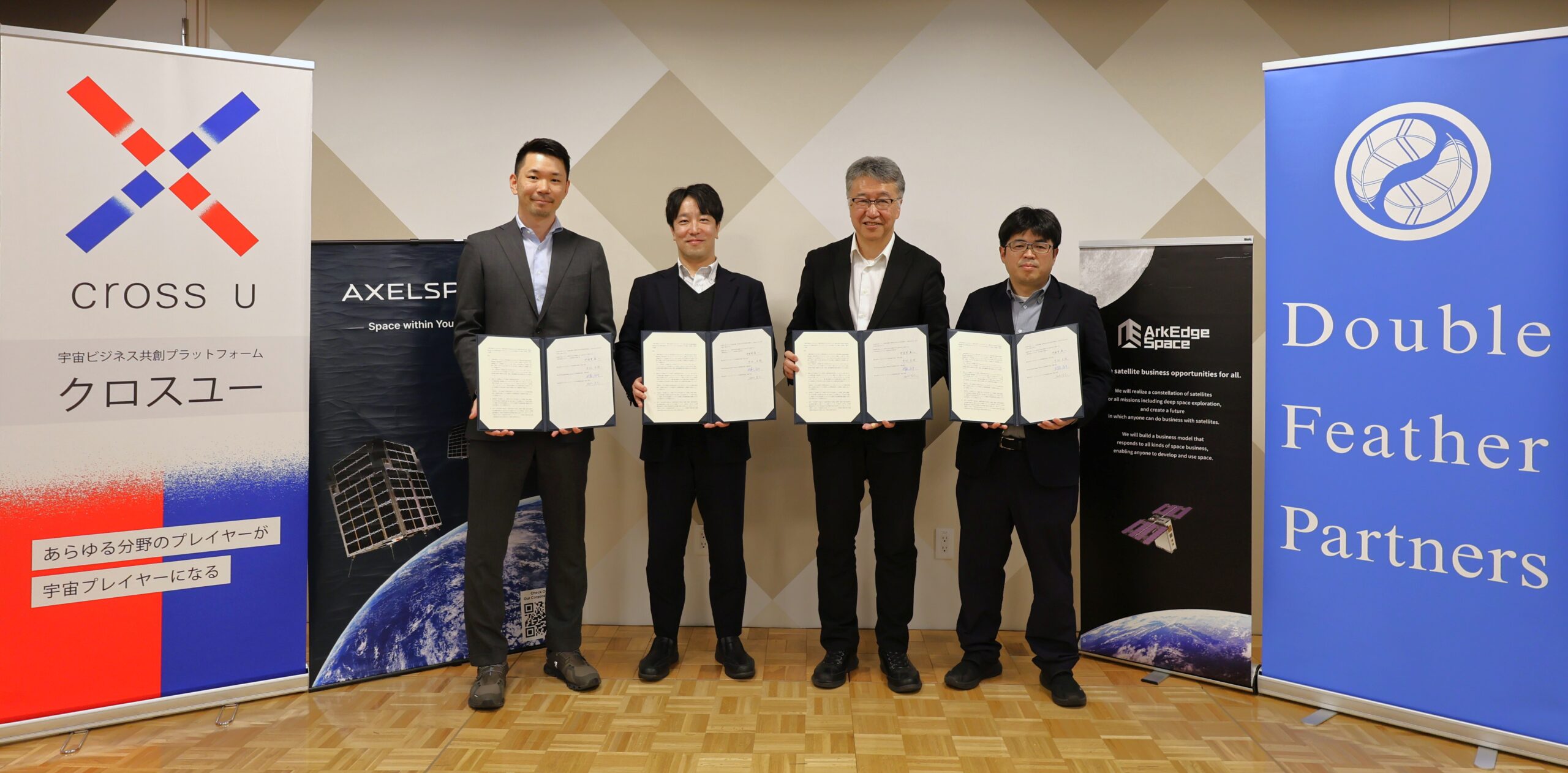
ArkEdge Space Inc., a Tokyo-based space start-up delivering micro-satellite constellations from design through operations, has formed a consortium with General Incorporated Association Cross U (Cross U), Axelspace Corporation (Axelspace), and Double Feather Partners to promote structured, private-sector-led co-creation in Africa’s emerging space markets.
The four organisations signed a Memorandum of Understanding (MoU) on February 18, 2026, establishing a formal framework for collaboration.
Moving Beyond Traditional ODA Toward Market Implementation
The consortium seeks to move beyond conventional Official Development Assistance (ODA) models by directly connecting Japan’s advanced space technologies with Africa’s private-sector dynamism. Rather than focusing on aid-driven cooperation, the initiative aims to embed satellite systems, data platforms, and space-enabled services into Africa’s economic and social infrastructure through commercially viable partnerships.
This approach aligns with Japan’s Free and Open Indo-Pacific (FOIP) vision, originally articulated in 2016 under former Prime Minister Shinzo Abe, by translating strategic intent into operational market engagement in the space sector.
Shinichi Nakasuka, President of the Board at Cross U, emphasised the shift from dialogue to execution:
“Africa’s social challenges are directly linked to global sustainability. While our previous working group focused on dialogue and opportunity exploration, this consortium moves decisively toward project formation and commercialisation based on space technology and data. By connecting Japan’s expertise in space, data utilisation, and finance with Africa’s private-sector dynamism, Cross U will serve as a hub to accelerate implementation and international expansion of Japan’s space industry.”
From Working Group to Consortium: Institutionalising Co-Creation
The consortium builds on the Cross U Africa Initiative Working Group, established in November 2025, which brought together more than 20 Japanese partners across industry, academia, and government to explore concrete collaboration models.
Following participation in the Ministry of Foreign Affairs of Japan’s Public and Private Joint Mission for Promoting Trade and Investment in Africa in January 2026, the partners formalised the consortium to transition from exploratory cooperation to implementation.
The initiative operationalises the co-creation of innovative solutions principle articulated in the Yokohama Declaration adopted at TICAD 9. Rather than transferring technology in isolation, the consortium seeks to cultivate long-term business ecosystems alongside African enterprises.
Kohei Muto, CEO of Double Feather Partners, underscored the strategic logic behind this approach:
“Rapid economic growth across Africa has brought diverse social challenges to the forefront. At the same time, innovation-driven startups are emerging as key actors in addressing these issues. Through this partnership, we will promote co-creation between Japanese satellite technologies and African innovation ecosystems, contributing both to social impact and the creation of new business opportunities.”
Ethiopia Pilot: From Concept to Commercial Model
Prior to the consortium’s formal establishment, the first pilot project was launched in Ethiopia in January 2026. Axelspace signed an MoU with Ethiopian technology company Jethi Software Development PLC (Jethi) to collaborate on satellite data applications targeting pressing development challenges.
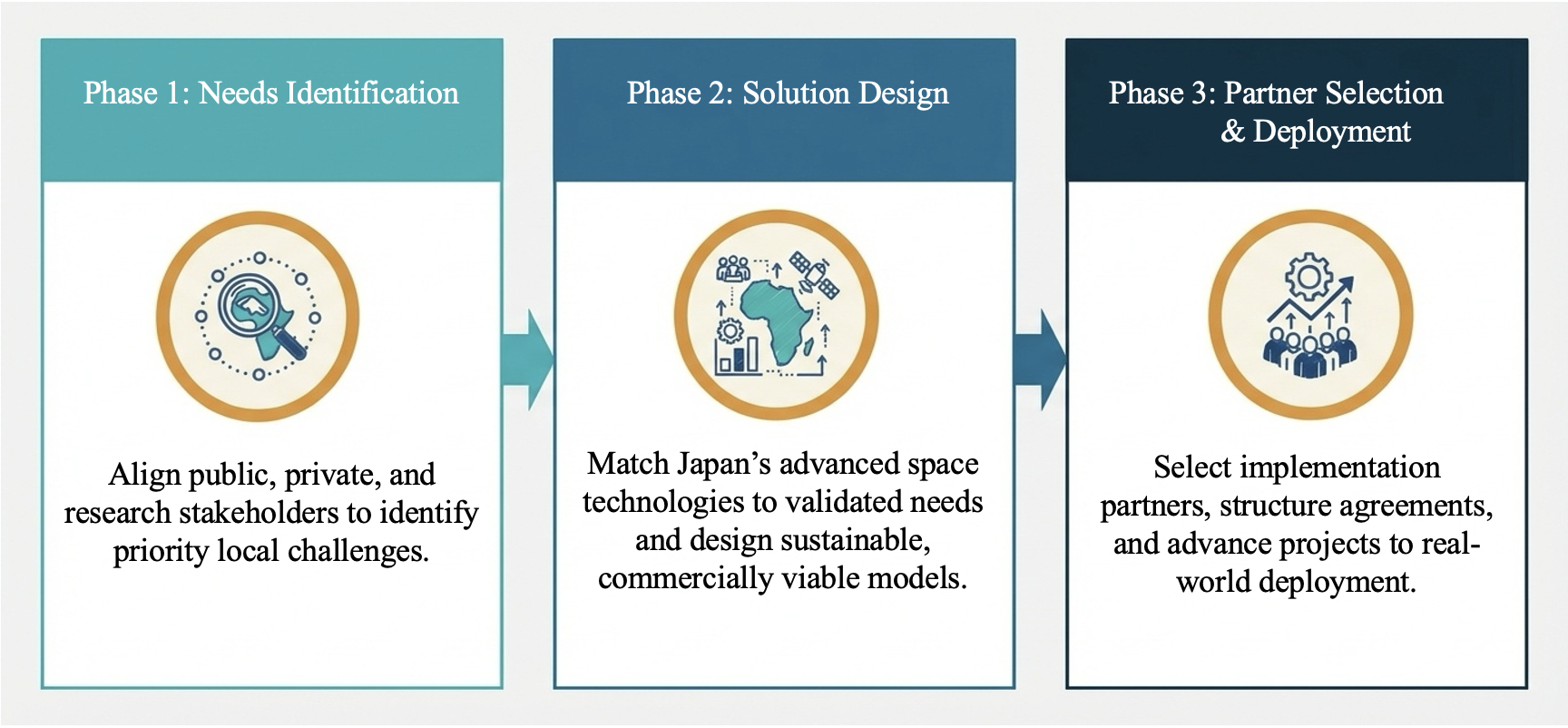
The Ethiopia initiative will serve as a reference model for expansion into additional African markets.
By combining Axelspace’s high-frequency satellite data analytics capabilities with Jethi’s local network and software development expertise, the partners will focus on priority sectors including agricultural productivity, forest conservation, and urban planning optimisation.
Yuya Nakamura, President and CEO of Axelspace Corporation, highlighted the importance of local enterprise participation:
“Satellite data holds significant potential to address social challenges across Africa, yet practical utilisation remains limited. In addition to government commitment, the participation of local businesses with a deep understanding of on-the-ground needs is essential. Through this consortium and the Cross U Africa Initiative Working Group, we will partner with local enterprises to develop impactful solutions and foster mutually beneficial relationships between Japan and African nations.”
Building Sustainable Business Infrastructure
A central objective of the consortium is to establish business models in which African enterprises independently operate, scale, and monetise satellite-enabled services. The emphasis is on embedding technology into local economic systems rather than creating dependency on external actors.
Takayoshi Fukuyo, CEO of ArkEdge Space, outlined the technical and operational focus:
“Through our participation in the Cross U Africa Initiative Working Group, particularly within the satellite IoT manufacturing subcommittee, we have examined how satellite IoT communications, constellation deployment, and integrated data utilisation can address pressing societal challenges, including drought resilience and food security. During TICAD 9, we signed memoranda of understanding with three African countries regarding satellite-based initiatives and have since advanced collaboration. Looking ahead, we will further accelerate efforts to deploy satellite-enabled infrastructure that contributes to both regional problem-solving and new business opportunities, in alignment with the vision of a Free and Open Indo-Pacific.”
Through this model, Japanese space technologies are positioned not merely as export products but as foundational infrastructure components within African economies.
Next Steps
In April 2026, consortium members will return to Africa to engage public institutions and private stakeholders in discussions to launch additional implementable projects and expand the co-creation framework. As 2026 marks a pivotal year for translating TICAD 9 commitments into operational outcomes, the consortium will present progress updates at NIHONBASHI SPACE WEEK 2026 in November, one of Asia’s largest space business events.
The consortium will continue expanding partnerships across African markets, with the objective of embedding space-based technologies into local economies and fostering durable industries that extend beyond individual projects or funding cycles.