
Ten Years On, AGEOS Takes On a New Role as a UN-SPIDER Regional Support Office
Maps, satellite images and location data can shape how a country plans, builds and makes strategic decisions, yet their impact grows when expertise is pooled rather than kept in silos. That belief sits at the heart of the African Association for Geospatial Development (AGEOS), which was founded to bring public institutions, private companies and universities together in a single consortium. Its mission is to promote geospatial technologies, encourage the exchange of knowledge and expertise, and link research and innovation to real operational needs, in support of sustainable development across Africa.
A decade on, that idea has found a regional stage. In March 2026, AGEOS signed a memorandum of understanding with the United Nations Office for Outer Space Affairs (UNOOSA) and became a Regional Support Office (RSO) of UN-SPIDER, the United Nations Platform for Space-based Information for Disaster Management and Emergency Response. AGEOS describes it as the fifth such office in Africa.
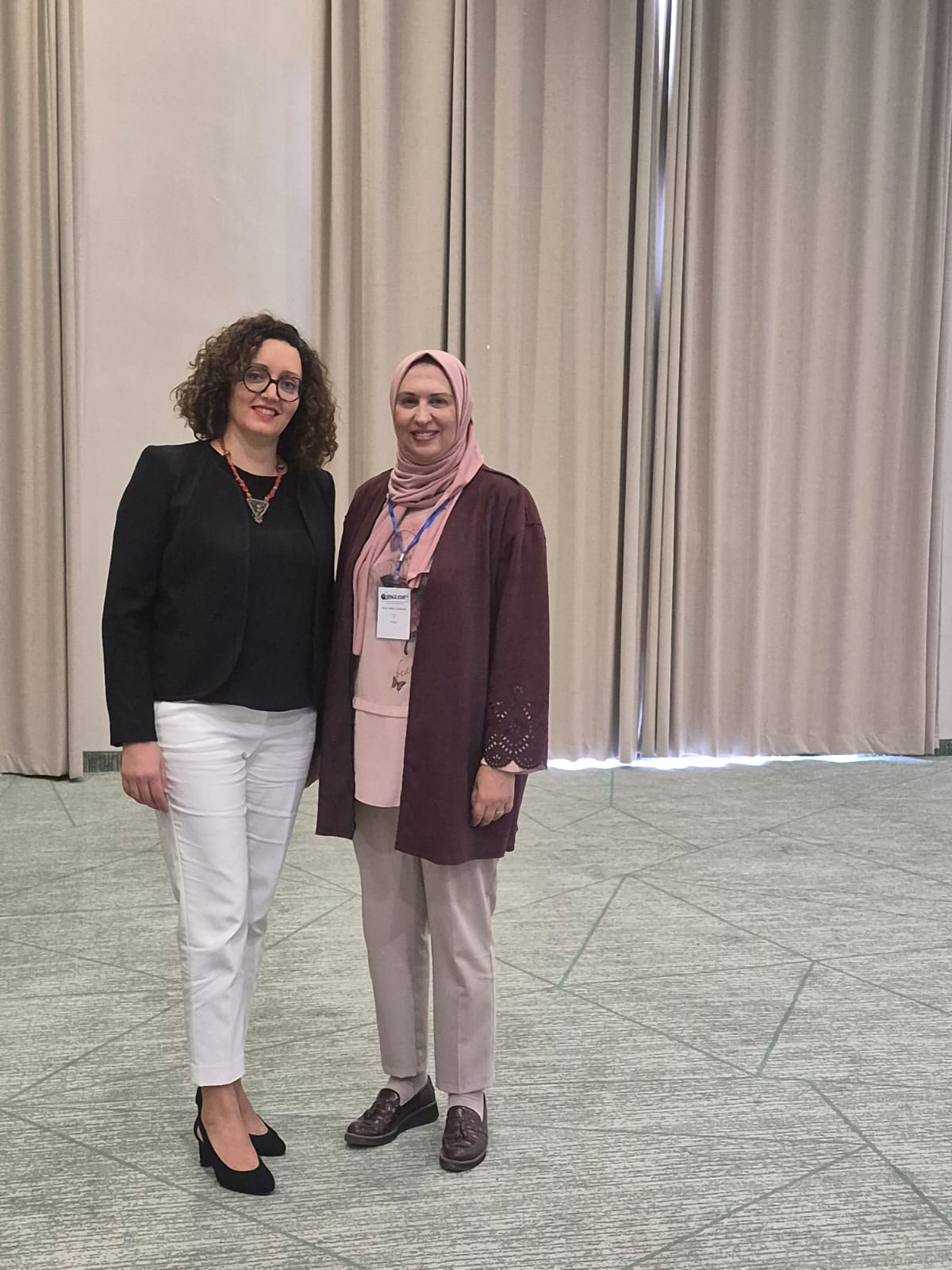
To understand what the designation changes, Space in Africa spoke with the association’s two women co-founders: President Prof. Nesrine Chehata, General Secretary Prof. Hedia Chakroun. The conversation covered what the role means for AGEOS and how it intends to use it to advance disaster management and resilience across the continent.
What an RSO Actually Does
UN-SPIDER exists to help countries access and use space-based information at every stage of disaster management. Prof. Chakroun explains that its network links space agencies, governments and operational stakeholders through technical cooperation, capacity building and advisory missions. Regional Support Offices carry that reach onto the ground, acting as centres of expertise that bring the programme’s support closer to the countries that need it.
For Prof. Chehata, the designation carries weight beyond recognition. “Becoming a UN-SPIDER Regional Support Office is a recognition, but above all a responsibility,” she says. “AGEOS aims to translate space-based information into actionable solutions for disaster resilience in North Africa and beyond, helping national institutions leverage the expertise and resources of the UN-SPIDER network.”
The role also means working alongside peers. “This also involves strengthening cooperation and knowledge exchange with other UN-SPIDER RSOs across the Mediterranean and Africa, fostering synergies and joint initiatives to support informed decision-making before, during and after disasters,” she adds.
Space for Resilience: The RSO at Work
The office is already active. Together with UN-SPIDER, AGEOS is running “Space for Resilience”, a five-part webinar series that follows the disaster risk management cycle, from prevention and early warning to emergency response and recovery. The first three sessions, held in October and November, drew more than 530 participants, with several UN entities involved, including UNDRR, OCHA and FAO. A fourth session, on cross-cutting innovation, was scheduled for 24 November, and the series closes on 8 December.
The series also gives African institutions working on disaster risk management a place to compare experiences, raise practical challenges and explore solutions suited to the African context. Its sessions cover satellite-based monitoring and early warning for hazards such as floods, droughts, wildfires and coastal erosion.
Behind this work sits a practical approach to data. AGEOS combines open satellite imagery with field data and OpenStreetMap contributions, and it aggregates and improves datasets from ministries and public bodies, which it shares through its open geodata platform.
Skills and Innovation Close to Home
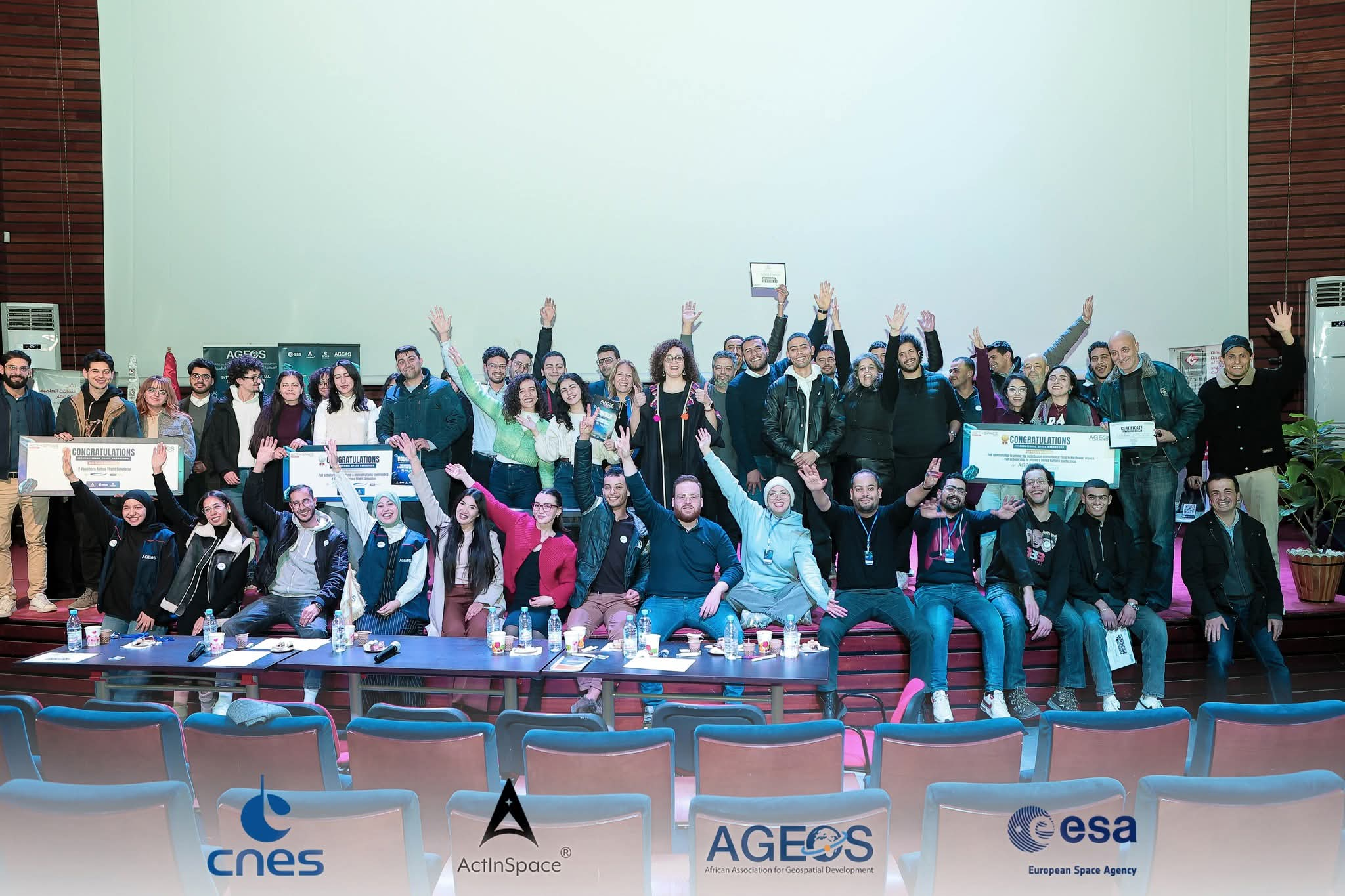
Capacity building and innovation are central to how AGEOS approaches the wider space ecosystem in Tunisia and across Africa. Through its training programmes, the association develops skills in GIS, Earth observation and geospatial AI among professionals, students and young people, and it introduces mapping to children from an early age. One recent schools programme alone reached more than 500 pupils. The RSO role adds a further advantage for African professionals, who can now find data and training closer to home.
“You don’t need to go abroad to study. You can come to Tunisia instead; that’s the ultimate goal,” Prof. Chehata says.
Innovation is the second pillar. AGEOS’ hackathons bring students, engineers, entrepreneurs and researchers together around open geospatial data, Earth observation and AI. They include the OpenGeoAI Hack, now in its fourth edition, and the Tunisian edition of the international Act in Space challenge, which sent a Tunisian team to the international final in Bordeaux in 2026.
“Innovation is our key goal,” Prof. Chehata says, explaining that the association wants to connect trainers, researchers, startups and end users around real needs. The test, she adds, is concrete: “We want practical impact.”
Local Projects Behind the Regional Role
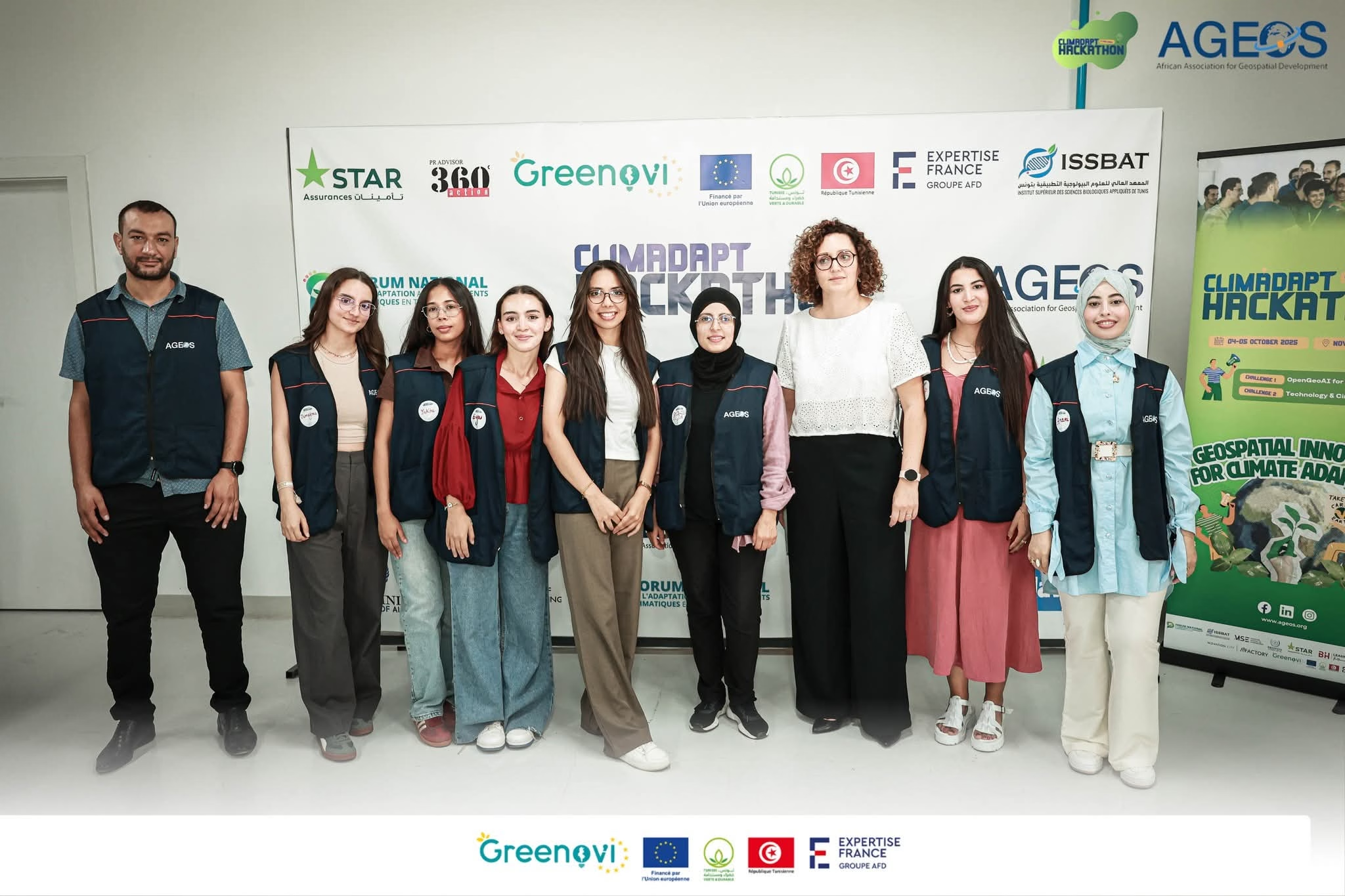
The regional ambition is grounded in work closer to home. In Tunisia, AGEOS turns geospatial innovation into tangible results through ClearSchools, supported by the Swiss Embassy in Tunisia, which promotes environmental education and participatory waste mapping. In Greater Sousse, it supports sustainable waste management and territorial planning. GeoDahar advances territorial development and the valorisation of heritage, while ExpoClimat, supported by GIZ, German cooperation, fosters climate awareness and education. Together, they show how geospatial technologies, participatory mapping and capacity building can empower local communities.
The Next Chapter
By 2027, AGEOS plans to hold AfricaGIS 2027 and launch AGEOS Academy 2027, and it intends to modernise its technical infrastructure during the same year. Prof. Chehata says the broader ambition is to bring communities together, support startups, and ensure that quality training is available in niche skills the region does not yet offer.
As AGEOS marks its tenth year, its message is consistent: space data matters most when it reaches the people who have to act on it.