
Red Planet Dreams: Africa’s Young Innovators Test Mars Rovers at SANSA

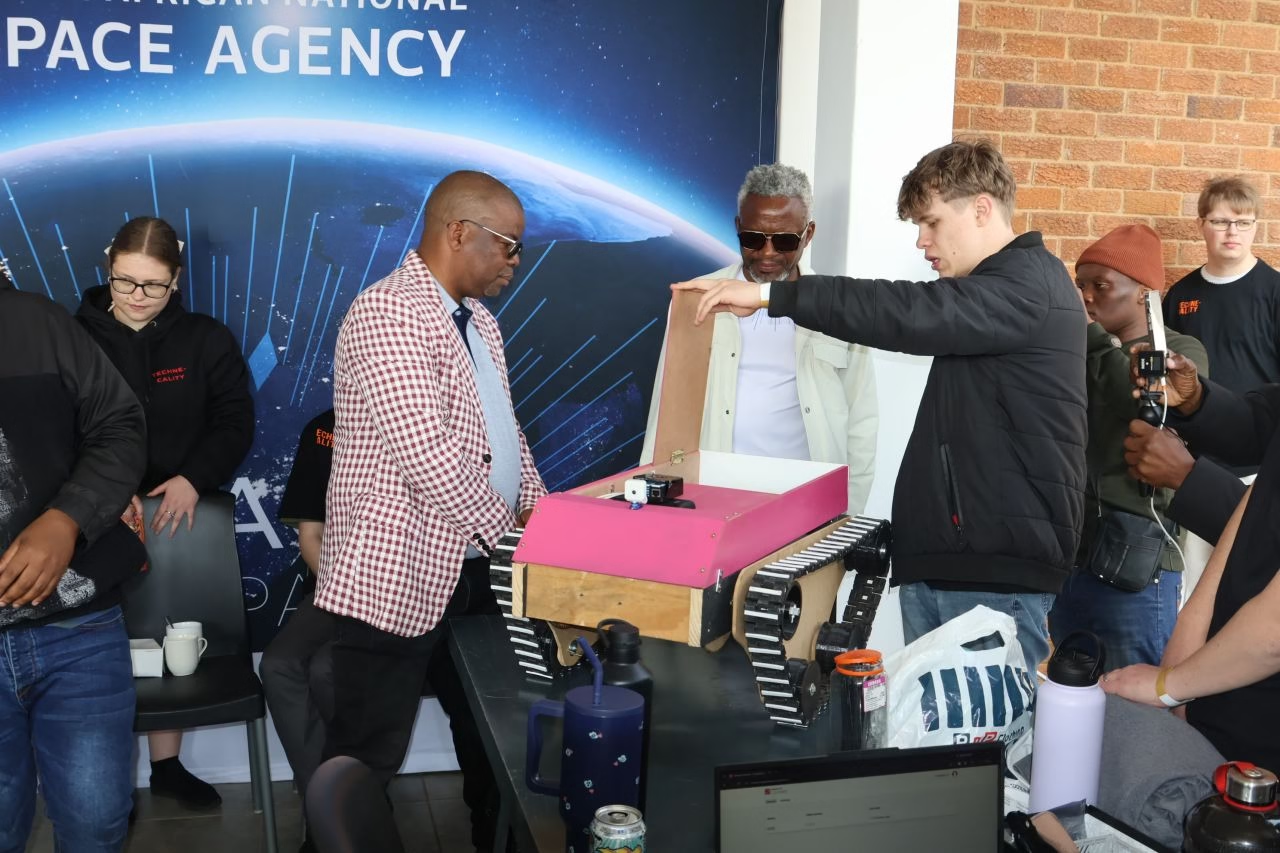
The Mars Yard at the South African National Space Agency (SANSA) site in Hartebeesthoek was transformed into a testing ground for Africa’s emerging engineering and technology talent on Saturday, as young innovators put their self-built Mars rover prototypes through a series of challenging missions during the Cars4Mars African Rover Challenge: Mars Stage Final 2026. Around 120 young participants from South Africa, Kenya and Zimbabwe, representing 18 finalist teams, competed in the physical final after progressing from an initial online stage of the competition, which included approximately 100 teams from 11 African countries.
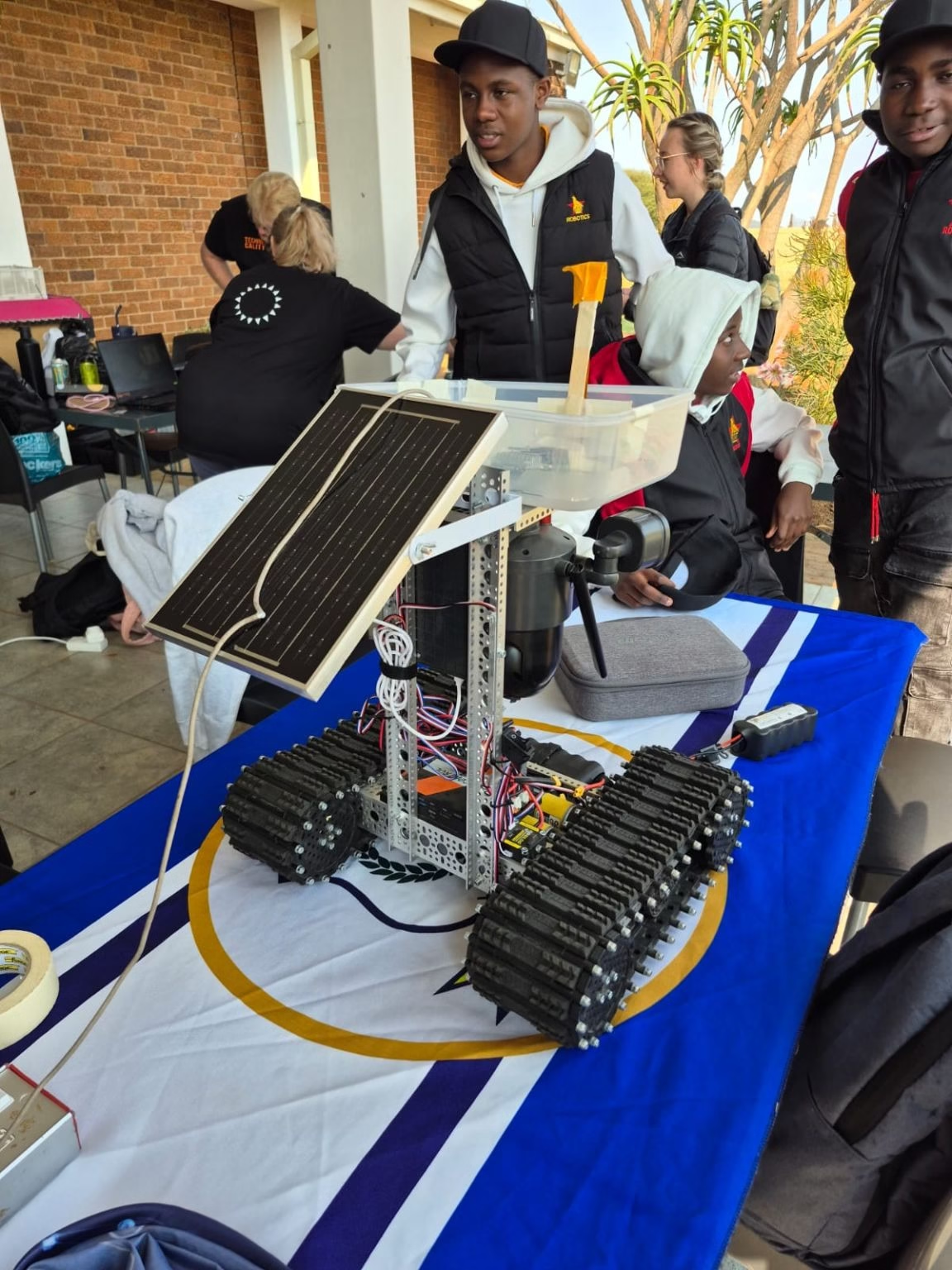
The five-month competition challenged students and learners to design, engineer, build, test and refine their own rover prototypes before bringing them to Hartebeesthoek for the ultimate test. The rovers were put through the Traversal Mission and AI Autonomous Mission, requiring teams to demonstrate skills in robotics, electronics, software engineering and artificial intelligence. During the Traversal Mission, teams remotely operated their rovers across uneven, challenging terrain to locate and transport objects placed on the course by judges.
Teams could choose to operate their rovers using camera-based visual feedback or direct observation, testing their ability to remotely control and manoeuvre their machines. The AI Autonomous Mission tested the teams’ ability to apply artificial intelligence and computer vision to their rover systems. Teams were required to identify objects within their rover’s camera view, including a hammer, tennis ball, traffic cone and balloons of different colours, with additional points awarded for systems capable of identifying an object’s location within the camera image using AI or computer-vision algorithms.
From Competition to Long-Term Platform
The competition was assessed by an international panel of judges, including Lukasz Gliwinski, Kuba Kopec and Adam Zagrajek from Europe, who were involved in designing the Mars Yard obstacle course and evaluating the teams’ performance. The Cars4Mars African Rover Challenge is an annual, volunteer-led robotics competition open to high school learners and university and college students across Africa. Participants receive free mentoring while developing their rover prototypes over approximately five months.
The 2026 competition began on 1 May 2026 and culminated in the Mars Stage Final at SANSA Space Operations. The Mars Yard itself was constructed using more than 40 tonnes of red sand, sponsored by AFRIMAT, to recreate the appearance and challenging terrain of the Martian surface. The partnership between Cars4Mars and SANSA also establishes Hartebeesthoek as a permanent venue for future Cars4Mars finals, creating a lasting platform for young African engineers, scientists and space enthusiasts to develop practical skills and contribute to the future of space exploration.
Backing Africa’s Next Generation of Engineers
The event was made possible through the support of a range of sponsors and partners. SMD Technologies sponsored Creality 3D printers for the first-, second-, and third-place teams, while RS South Africa provided vouchers for the top three teams to purchase electronics for their rovers. SIMTEQ Engineering provided specially designed 3D-printed trophies and free professional simulation software to participating teams. Other contributors included BYMEDICAL, Scientific Technical Labs, MSI ZA, Home Technologies, Stelltron, Counter Space Learn, Woodline Branding Solutions, ER24, and Vision Dynamics.
The Cars4Mars challenge aims to inspire African youth to gain practical experience and knowledge in robotics, space technologies and artificial intelligence by providing a free educational platform through which they can design, build, test and compete with their own robotic systems.
Basia Nasiorowska, Cars4Mars Founder and Organiser said, “Today was a wonderful reminder of what young people can achieve when they are given the opportunity to build, test and solve real challenges. We saw wheels come off, AI vision systems struggle to recognise objects and teams having to adapt in the moment but they kept going.
Nasiorowska said the teams’ perseverance stood out most throughout the competition. By the end of the day, she said, the teams had overcome the challenges they faced and completed their missions, demonstrating determination, creativity and teamwork. She also expressed her gratitude to the SANSA team for creating a memorable experience for the young participants.
Cars4Mars Mars Stage Final 2026 Results
The competition ran throughout the day, with teams completing their missions and being assessed by the judging panel. The top seven awards are:
- 1st Place – Cyberstorm – Milestone High School (Zimbabwe)
- 2nd Place – Inadeptus Mechanicus – Rhodes University and Stellenbosch University (South Africa)
- 3rd Place – Tech Tonic – Bryanston High School (South Africa)
- Best in AI Mission – Robo TechAura – Tshwane University of Technology (TUT) (South Africa)
- Best in Traversal Mission – Wall-E – Tshwane University of Technology (TUT) (South Africa)
- Best Design – Vulcan – Jomo Kenyatta University of Agriculture and Technology (JKUAT) (Kenya)
- Best Creativity – Techne-Cality – Open Window Institute for Creative Arts (South Africa)
The remaining ten finalist teams received the Perseverance Award, recognising their achievement in reaching the Mars Stage Final.
About the South African National Space Agency
At SANSA, we believe in creating an infinite impact for the benefit of all South Africans through technological advancement and innovation. The agency was established in 2010 through the South African National Space Agency Act, 36 of 2008. SANSA aims to promote cooperation in space-related activities, foster research in space science, advance scientific engineering through human capital and support development of an environment conducive to industrial development in space technologies.
About the Cars4Mars African Rover Challenge
The Cars4Mars African Rover Challenge is an annual South African volunteer-led robotics competition open to students from universities and colleges across Africa, as well as learners from high schools. Participants are challenged to design and build a Mars rover prototype. The rovers are not intended to be space-grade machines and are not required to operate in actual space or on Mars. Instead, each rover is a small mobile robot that must be controlled wirelessly and have an independent power source, such as a battery. The mission of Cars4Mars is to inspire African youth to gain hands-on experience and knowledge in robotics, space technologies and artificial intelligence by providing a free educational platform through which they can design, build, test and compete with their own robotic systems.