
Uganda Grants Starlink an Operational Licence

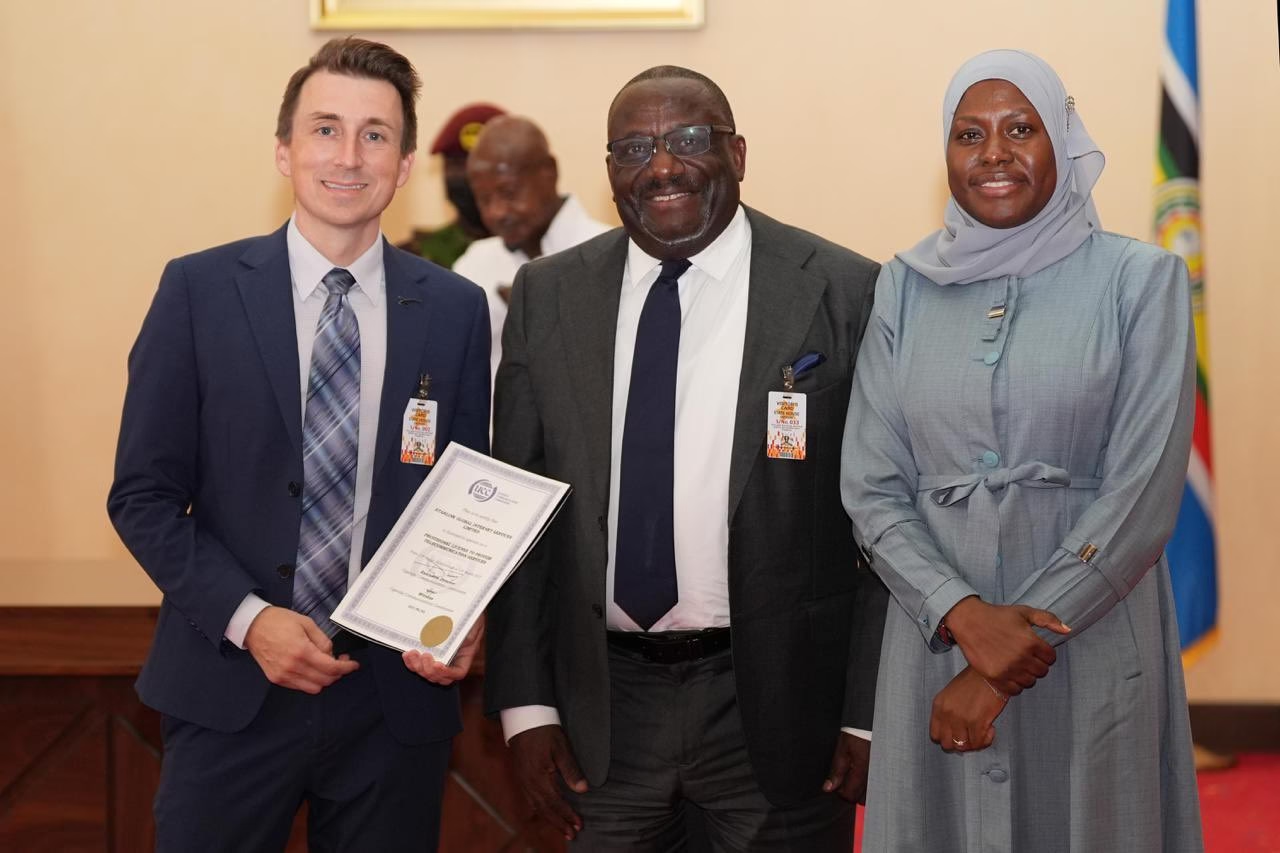
Uganda has officially granted an operational licence to Starlink, clearing the path for the company to begin formal service delivery in the East African country. President Yoweri Kaguta Museveni announced the development in a post on X, confirming he had personally witnessed the signing of the Memorandum of Understanding and operational licence agreement between the Uganda Communications Commission (UCC) and Starlink.
“I witnessed the signing of the Memorandum of Understanding and operational licence agreement between the Uganda Communications Commission and Starlink, marking an important step towards the commencement of their operations in Uganda,” President Museveni stated.
A Clear Regulatory Mandate
The Ugandan government was unambiguous about the terms underpinning the agreement. President Museveni noted that the country’s primary interests lie in security, revenue assurance, and proper accountability within the telecommunications sector.
“Our interest is security, revenue assurance, and proper accountability within the telecommunications sector so that we know who is operating and who the customers are. I am pleased that Starlink has agreed to comply with Uganda’s laws and regulatory requirements as it prepares to begin service delivery in the country,” he added.
The Uganda Communications Commission serves as the country’s official communications sector regulator and was the principal signatory on behalf of the government.
From Shutdown to Licence: The Road to Compliance
The licence signing marks the conclusion of a turbulent regulatory chapter for Starlink in Uganda. On 1 January 2026, Starlink disabled all access to its network within the country following a directive from the UCC concerning the provision of satellite internet services without a valid licence. In a formal letter dated 2 January 2026, the company confirmed that it had activated a service-restriction mechanism that prevents any Starlink terminals from operating in Ugandan territory.
Starlink maintained at the time that it had neither marketed nor directly sold its services in Uganda, and that terminals in use prior to the restriction had been activated in other jurisdictions before being imported into the country without approval, in breach of its own terms of service.
The shutdown was further compounded by action from the Uganda Revenue Authority (URA), which, in a memorandum issued on 19 December 2025, instructed customs officials to halt the clearance of Starlink equipment unless importers presented written authorisation from the Chief of Defence Forces of the Uganda People’s Defence Force (UPDF), effectively placing satellite communication technology imports under military oversight.
The granting of a formal licence now resolves this regulatory impasse, bringing Starlink into full compliance with Ugandan law.
Addressing a Long-Standing Connectivity Gap
The arrival of Starlink comes at a critical moment for Uganda’s digital landscape. Ugandan consumers have long complained about the high cost and unreliability of domestic internet services, a situation widely attributed to limited competition in the market. The sector is currently dominated by a subsidiary of South African telecoms giant MTN Group, competing primarily with a unit of India’s Bharti Airtel.
According to data from DataReportal, only 11.4 million individuals were using the internet in Uganda at the end of 2025, representing an online penetration rate of just 22%, against a backdrop of 40.9 million active cellular mobile connections, equivalent to 79.1% of the population. The gap between mobile connectivity and internet access underscores the scale of the opportunity that satellite internet could address.
Part of a Wider African Expansion
Uganda’s licensing of Starlink forms part of the company’s rapid and continued expansion across the African continent, marking its 28th African market. SpaceX’s satellite internet service is already active in 27 African countries, half the continent. The formal entry into Uganda, on fully compliant and regulated terms, adds another significant market to Starlink’s growing African presence and signals a broader shift towards structured regulatory engagement as the company deepens its roots across the region.