
East African States Sign Resolution for Regional Satellite Feasibility Study

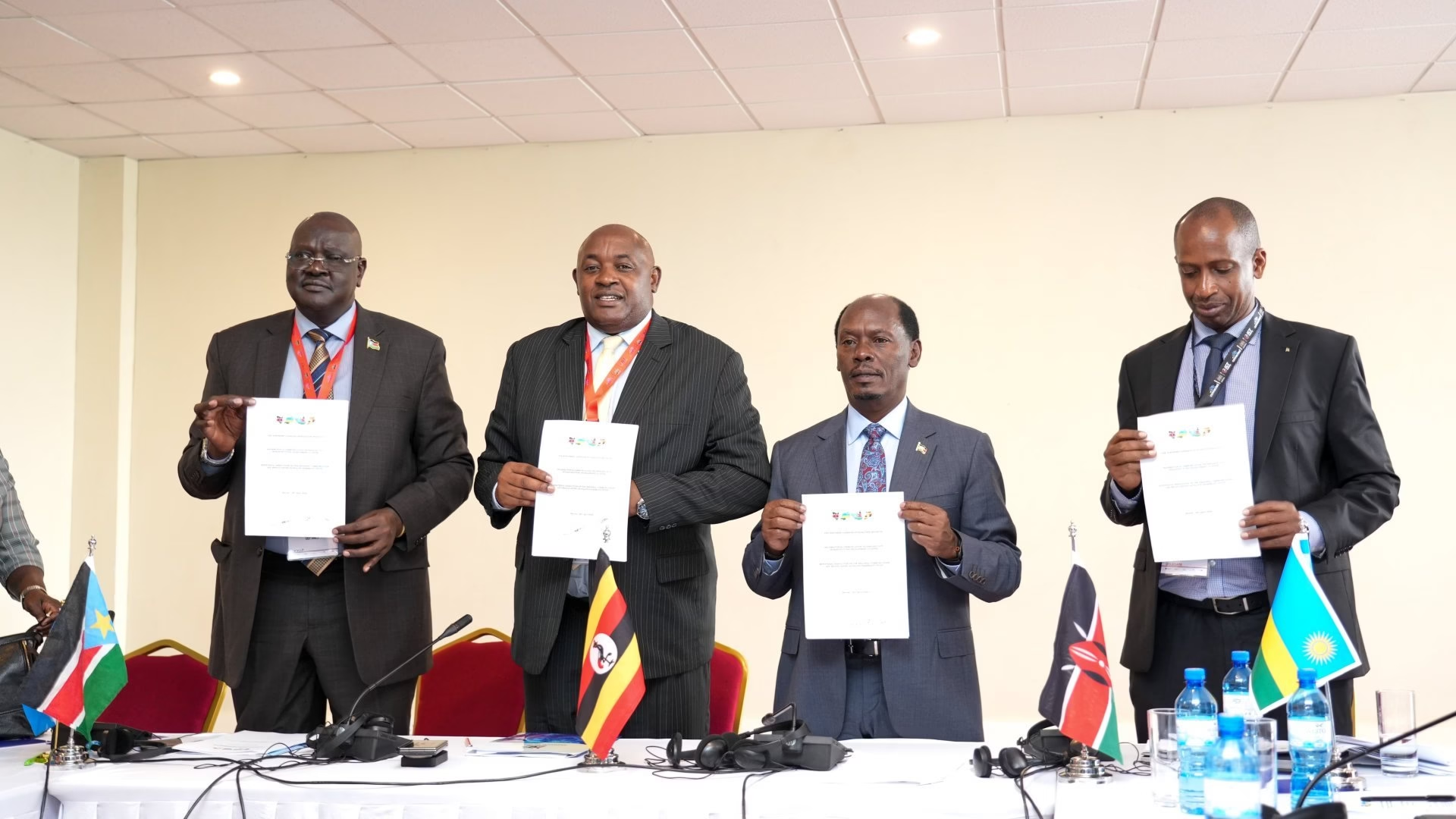
Ministers responsible for ICT from Uganda, Kenya, Rwanda, and South Sudan have jointly signed a resolution to undertake a feasibility study for a regionally owned communication and broadcasting satellite under the Northern Corridor Integration Projects (NCIP).
The resolution was adopted at an inter-ministerial meeting held in Nairobi on 29 April 2026, on the sidelines of the Connected Africa Summit. The meeting, chaired by Uganda and hosted by Kenya, followed directives from the 14th Summit, where Heads of State instructed Partner States to develop a regional, member-state-owned communication satellite to strengthen sovereignty, expand connectivity, and support digital transformation.
In his remarks, the Chair of the ICT Infrastructure Development Cluster at the Ministerial level and Uganda’s Minister of ICT and National Guidance, Hon. Dr Chris Baryomunsi, emphasised the urgency of moving forward. “We are now at a stage where we must move from preparation to implementation. The decisions we take today will determine how quickly we deliver this project,” he stated.
Addressing Regional Connectivity Challenges
Discussions focused on advancing the Northern Corridor Regional Communication and Broadcasting Satellite Initiative as a joint effort to strengthen connectivity across the region. Ministers agreed on the need to reduce reliance on external systems and limited international connectivity routes, and to invest in infrastructure that supports regional priorities.
Speaking on behalf of the host country, Kenya’s Cabinet Secretary for Information, Communications and the Digital Economy, H.E Hon. William Kabogo Gitau, highlighted the risks of external dependence. “Our countries continue to rely heavily on external systems. This has implications for cost, reliability, and continuity of services. Strengthening the resilience of our communications infrastructure is not optional,” he noted.
Governance and Implementation Framework
As a first step, Partner States committed to undertake a feasibility study to assess the technical, financial, and legal requirements of the project. Ministers also agreed to establish a dedicated project account with clear oversight to ensure transparency and accountability.
The Permanent Secretary at Uganda’s Ministry of ICT and National Guidance and Chair of the ICT Infrastructure Development Cluster at the Technical Level, Dr Aminah Zawedde, confirmed that the concept note, implementation roadmap, and terms of reference for the feasibility study are complete, enabling the mobilisation of resources and the commencement of the procurement process.
Strategic Objectives
The proposed satellite will complement terrestrial infrastructure, extend connectivity to underserved areas, and support broadcasting and digital services across the region. Ministers also expressed commitment to the eventual design and launch of a jointly owned satellite, marking a strategic shift towards regional technological sovereignty.
In closing, delegations acknowledged the progress made and the responsibility to move into implementation, noting that the resolution marks a shift from discussion to action with clear timelines, funding commitments, and governance arrangements.
Next Steps
The meeting concluded with the resolution being signed by Partner State Ministers. The feasibility study, expected to take 12 to 18 months, will define the project’s technical, financial, and institutional model and guide the next phase of implementation.
Also in attendance were the Minister of Information, Communication Technology and Postal Services of South Sudan, Hon. Ateny Wek Ateny; the representative of Hon. Paula Ingabire, Minister of Information, Communication Technology and Innovation of Rwanda, Mr Karisa Benon; the Principal Secretary for the State Department of Broadcasting and Telecommunications in Kenya’s Ministry of Information, Communications and the Digital Economy, Mr Stephen Motari Isaboke; and the Undersecretary for the Information Sector in South Sudan’s Ministry of Information, Communication Technology and Postal Services, Hon. Arok Dut Arok. Also present from Kenya were the Cabinet Secretary for East African Community Affairs, Hon. Beatrice Askul, and the Principal Secretary for ICT and Digital Economy, Eng. John Kipchumba Tanui.
The resolution represents a landmark commitment towards regional infrastructure sovereignty, with Partner States taking concrete steps to transition from policy deliberation to tangible implementation of a shared satellite platform designed to serve East African development priorities.