
What Africa Put Forward at the International Space Summit in Paris

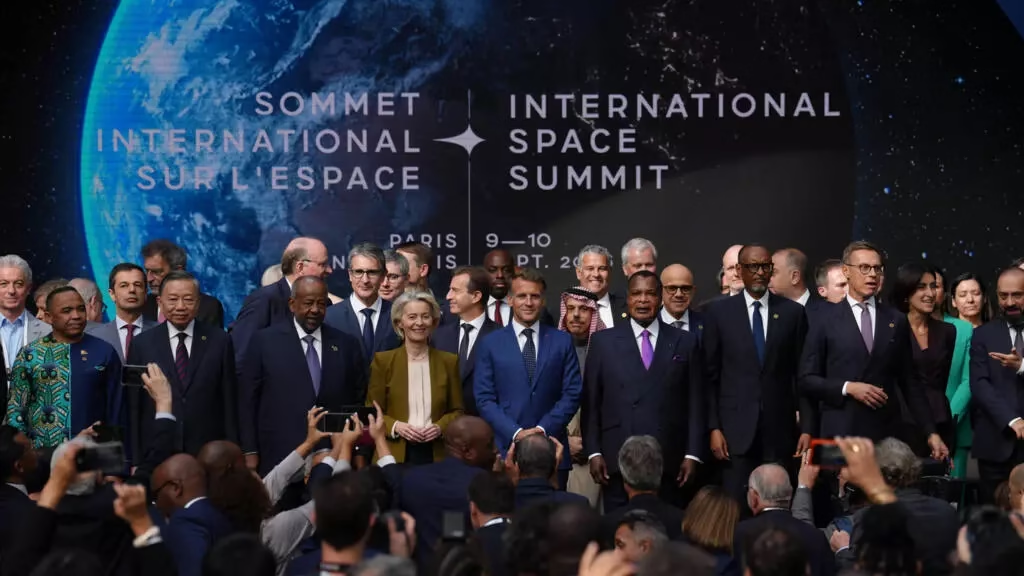
Championed by French President Emmanuel Macron, the International Space Summit brought together around 120 delegates in Paris on 9 and 10 September 2026, including heads of state, government officials, space agency leaders, and industry representatives from across the world.
Africa featured prominently throughout the summit, with several African leaders and senior officials using the gathering to advance space cooperation, strengthen international partnerships, and highlight the continent’s growing role in the global space sector.
Among the high-level African participants were Rwandan President Mr Paul Kagame, President of the Republic of the Congo Mr Denis Sassou Nguesso, and Djiboutian President Mr Ismail Omar Guelleh. The summit also brought together African leaders and representatives from African space agencies, including South Africa’s Minister of Science, Technology and Innovation Mr Blade Nzimande, President of the African Space Council H.E. Dr Tidiane Ouattara, Angola’s Director-General of the National Space Program Management Office (GGPEN) Dr Zolana João, and Dr Aboubakar Mambimba Ndjoungui, Director General of the Gabonese Agency for Space Studies and Observations (AGEOS), among others.
Beyond high-level participation, the summit provided a platform for several concrete developments involving African countries and institutions.
Senegal and France Advance Space-Based Early Warning Cooperation
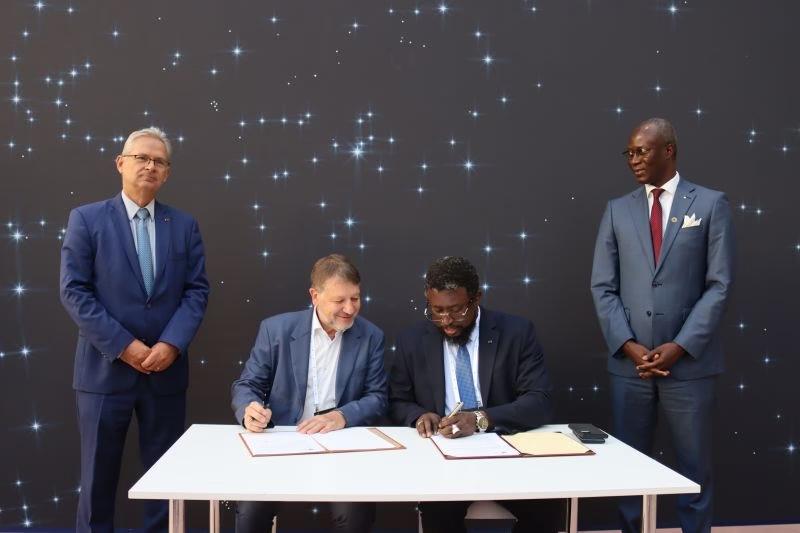
One of the partnerships announced during the summit involved the Senegalese Space Studies Agency (ASES) and French company LEOBLUE, which signed a memorandum of understanding.
The partnership aims to develop early-warning and real-time information systems using stratospheric balloons and satellites. The systems are intended to deliver information directly to smartphones and connected devices without relying on terrestrial infrastructure, using LEOBLUE’s Bluetooth® technology.
The initiative reflects a growing interest in combining space-based assets with terrestrial connectivity technologies to extend access to critical information, particularly in situations where conventional infrastructure may be unavailable or disrupted.
Rwanda Highlights African Coordination on Orbital and Spectrum Resources
Rwandan President Mr Paul Kagame also highlighted an achievement that the African Telecommunications Union (ATU) has supported in the space and telecommunications sector: coordinated African action to recover and protect critical orbital and spectrum resources.
Through an International Telecommunication Union (ITU) process established to help countries recover satellite resources at risk of being lost, and formalised through Resolution 559, 31 African countries recovered resources valued at billions of US dollars.
The process involved coordinated efforts between national administrations, the African Telecommunications Union and the ITU.
The experience stands as an example of what coordinated action among African countries can achieve in securing strategic orbital and spectrum resources.
Republic of the Congo and Kazakhstan Deepen Space Cooperation
The Republic of the Congo also used the summit to advance its space cooperation with Kazakhstan.
On the sidelines of the summit, President Denis Sassou Nguesso met with Kazakhstan’s Vice Prime Minister Zhaslan Madiyev to discuss the two countries’ growing cooperation in space technologies.
A central focus of the discussions was the development and launch of the Republic of Congo’s first satellite, which is expected to be dedicated to Earth observation. According to Madiyev, the two countries are now working towards the realisation and launch of the satellite.
The planned spacecraft is expected to provide Earth observation data for several strategic applications, including monitoring forest resources, agricultural and mining activities, and areas exposed to flooding.
The partnership also covers digitalisation, capacity building and the training of Congolese professionals, as well as the development of space products and systems. It follows President Sassou Nguesso’s state visit to Kazakhstan, during which the two countries signed several agreements.
Angola Joins the Space4Ocean Alliance
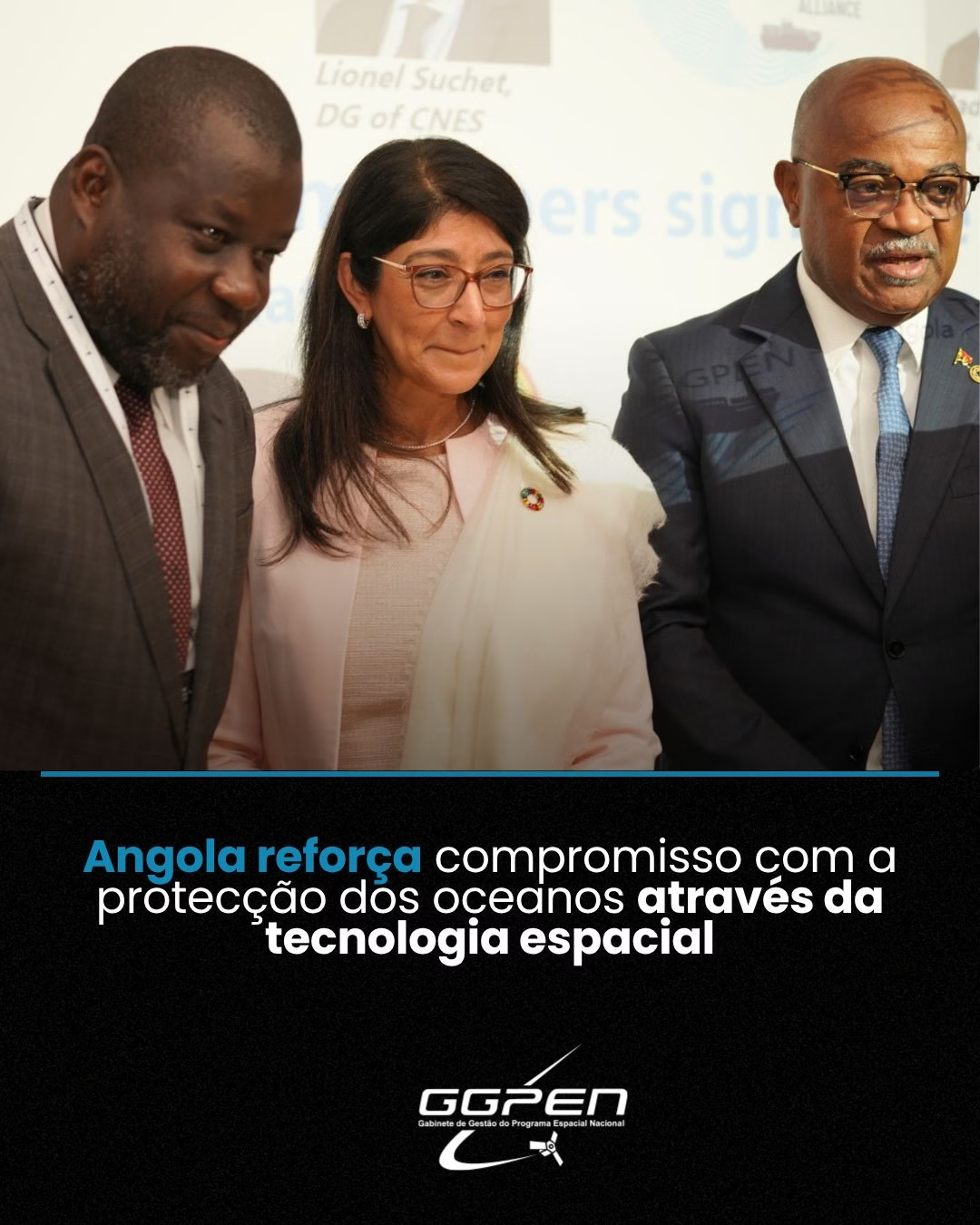
Angola formalised its entry into the Space4Ocean Alliance during a ceremony at the Grand Palais in Paris.
The declaration was signed on behalf of Angola’s Ministry of Telecommunications, Information Technologies and Social Communication (MINTTICS) by Zolana João, Director-General of the National Space Program Management Office (GGPEN). The signing was witnessed by MINTTICS Minister Mário Oliveira, Angola’s Ambassador to France Guilhermina Prata, and the Director-General of the United Nations Office for Outer Space Affairs (UNOOSA), Aarti Holla-Maini.
The move makes GGPEN the fifth African institution associated with the Space4Ocean Alliance, following the Gabonese Agency for Space Studies and Observations (AGEOS), the Kenya Space Agency (KSA), the Research and Study Centre of Djibouti (CERD), and the Senegalese Space Studies Agency (ASES).
The Alliance currently brings together 31 entities and focuses on leveraging space-based capabilities to support ocean-related priorities.
A Growing African Presence
The developments announced or highlighted in Paris point to an African space sector increasingly engaging with international partners across a range of areas, from satellite development and Earth observation to spectrum management and ocean monitoring.
The summit also provided a platform for African governments and institutions to showcase existing cooperation while pursuing new partnerships. Rather than being limited to participation at the diplomatic level, several African stakeholders used the event to advance concrete projects and initiatives with potential implications for national space capabilities and wider regional priorities.