
Meet the 2026 Young African Space Professionals Awardees

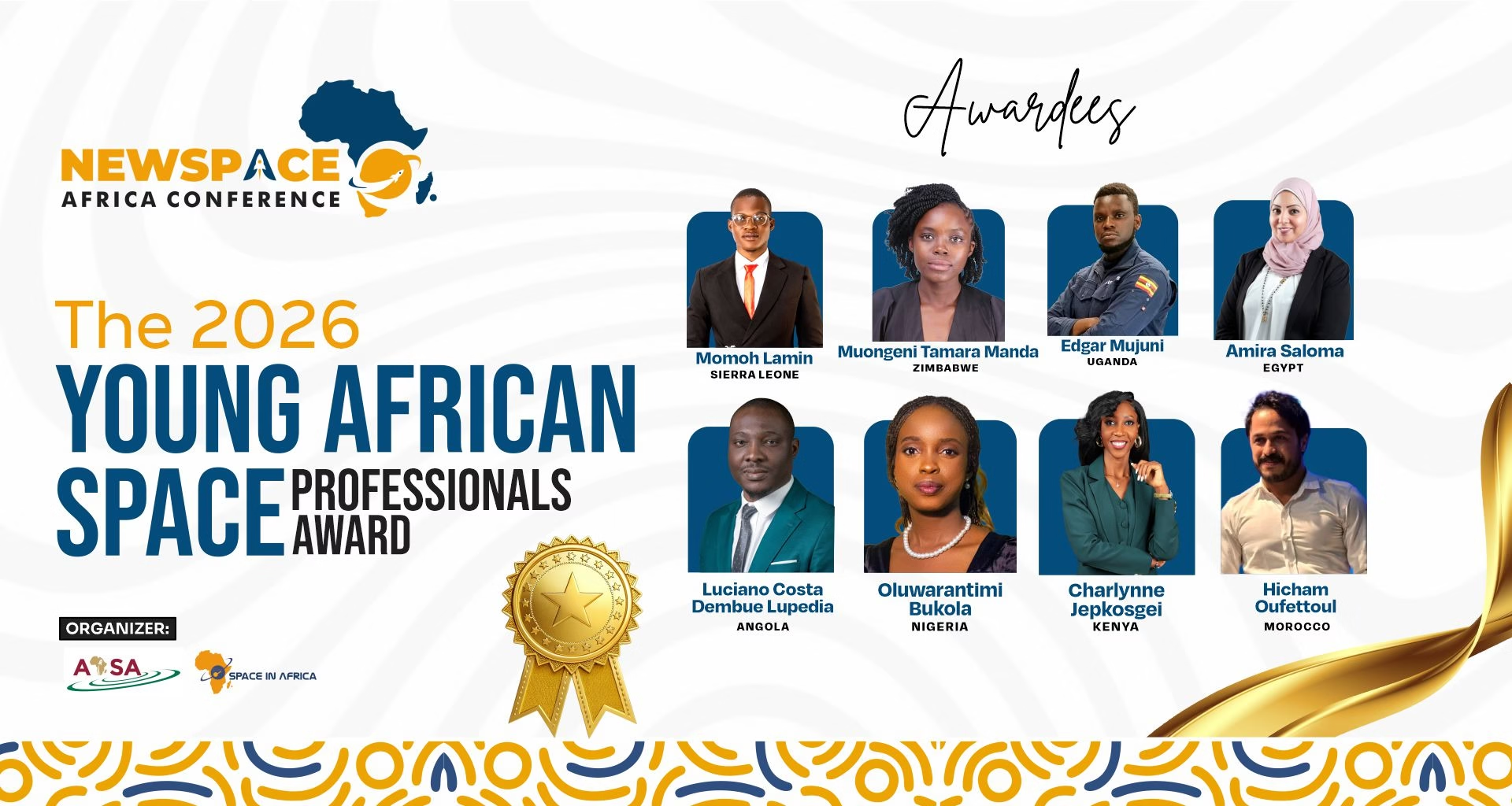
With the African space economy projected to grow to USD 22.64 billion by 2026, the continent is witnessing an unprecedented expansion in satellite infrastructure, earth observation capabilities, commercial space ventures, and national space programmes, driven by increasing investments, expanding satellite infrastructure, and a rising generation of of scientists, engineers, policymakers, and entrepreneurs shaping the continent’s future in space. As Africa deepens its participation in the global space economy, the need to recognise, support, and amplify the contributions of emerging talent has become both strategic to the long-term development of the continent’s space ecosystem and essential to long-term development.
To this end, the Young African Space Professionals Award, jointly led by Space in Africa and the African Space Agency, was created to spotlight the next generation of students and young professionals whose work is already influencing and making measurable contributions to the trajectory of the continent’s space ecosystem. From advancing Earth observation applications and satellite communications to contributing to space governance and policy, research, innovation and capacity development, and socio-economic impact, these individuals represent the intellectual and operational backbone of Africa’s space ambitions. Aligned with the African Union Commission’s mandate on gender equality, diversity, and geographic equity, the programme recognises talent across the African Union Member States, ensuring that excellence is celebrated wherever it exists on the continent.
Selection Process
The 2026 edition of the award received a total of 168 unique submissions from applicants from 35 countries in both early-stage career and academic programmes. The selection of the 2026 awardees involved a rigorous, highly competitive evaluation by a panel of distinguished judges drawn from across private and public institutions, with extensive experience in the African space industry.
Each submission was assessed based on five core criteria: strategic relevance to Africa’s space priorities and continental goals; tangible impact and scalability; demonstrated leadership and influence; innovation through novel approaches or solutions; and professional integrity and credibility. The final selection was guided by four additional principles to ensure a balanced and representative cohort. Awardees were chosen through a merit-based assessment using the evaluation criteria above, alongside consideration of regional representation across Northern, Western, Eastern, and Southern Africa; gender balance, ensuring equitable recognition of both women and men advancing the sector; and career stage diversity, achieving a balance between students and young professionals.
The 2026 Awardees
Northern Africa
Amira Saloma, Egypt
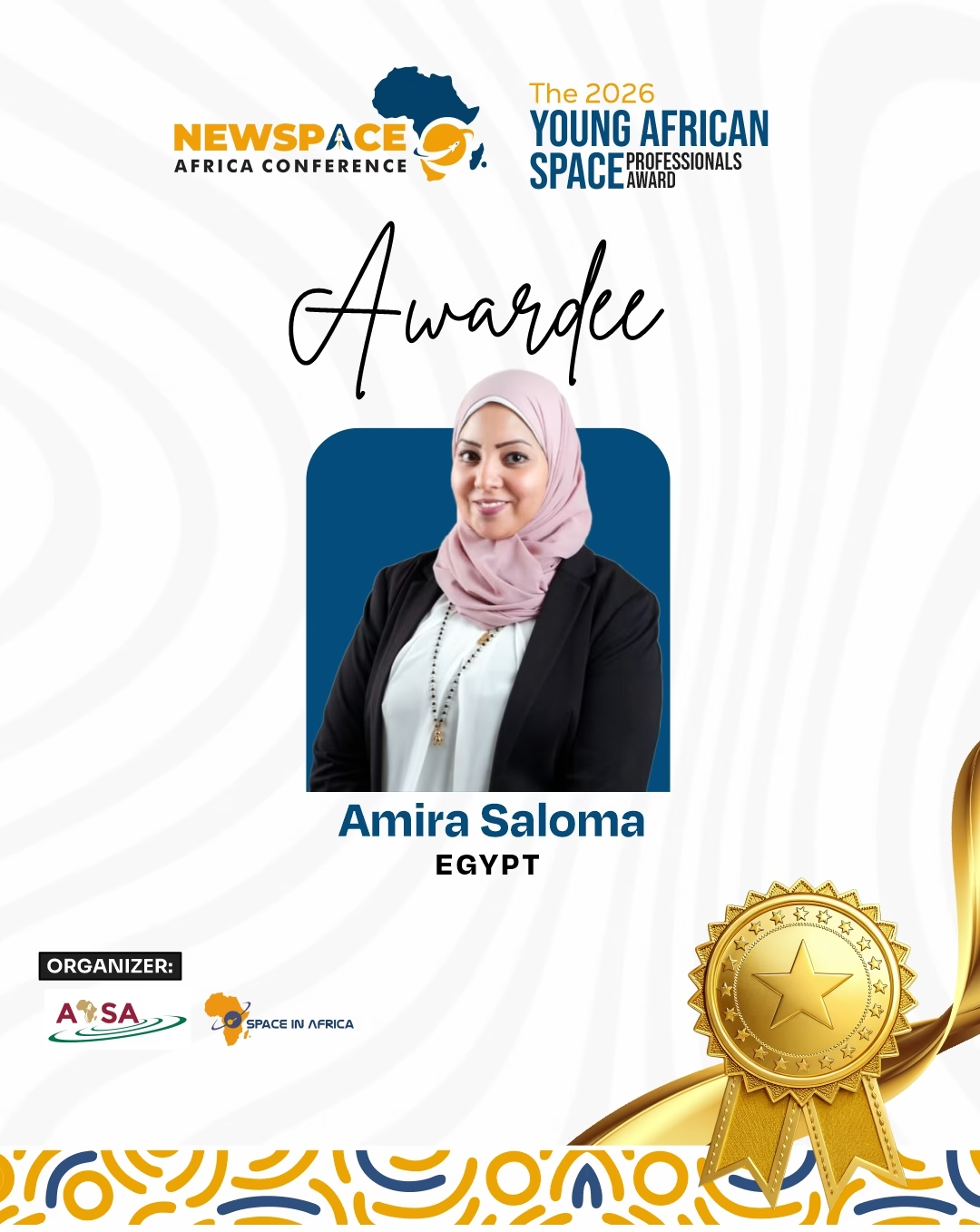
Amira Saloma Hussein graduated in May 2012 from the Department of Physics and Space Science, Faculty of Science, Helwan University. She has a master’s degree in Space Science from the Faculty of Science at Helwan University. Currently, she is the Director of the Space Environment and Space Weather Department at the Egyptian Space Agency (EgSA).
Since the beginning of her professional journey in space science in 2012, she has focused on the intersection of ionospheric physics, GNSS applications, and operational space-weather forecasting. Her work has contributed to strengthening national capabilities in Real-time ionospheric monitoring and TEC modelling, GNSS scintillation analysis and resilience strategies, Space environment mission analysis and modelling for satellite mission support, and AI-driven forecasting frameworks for geomagnetic disturbances. She is a specialist in Space Radiation Testing and its effects on Satellite Missions. The impact of space radiation on Satellite materials and devices is one of the primary reasons for satellite operation failures and reduced lifetime. She has extensive experience in space environment testing, software development, and data analysis, with a strong background in the effects of space weather on satellites. As Director of the Space Environment and Space Weather Department, she manages the development of monitoring networks, operational forecasting systems, and environmental qualification support for national satellite missions. Her role integrates scientific research with mission-level implementation, ensuring that theoretical advancements translate into operational resilience.
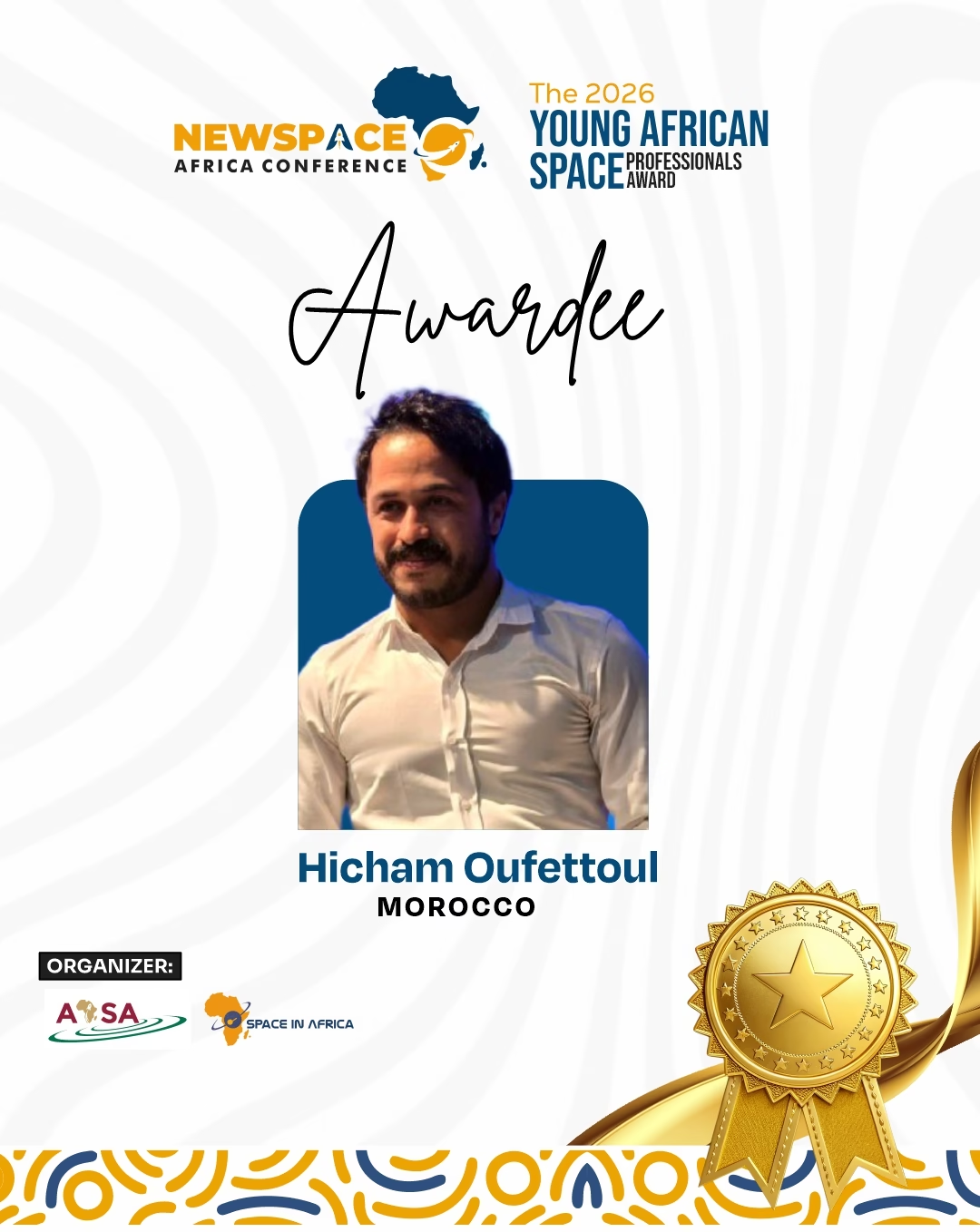
Hicham OUFETTOUL, Morocco
Eastern Africa
Charlynne Jepkosgei, Kenya
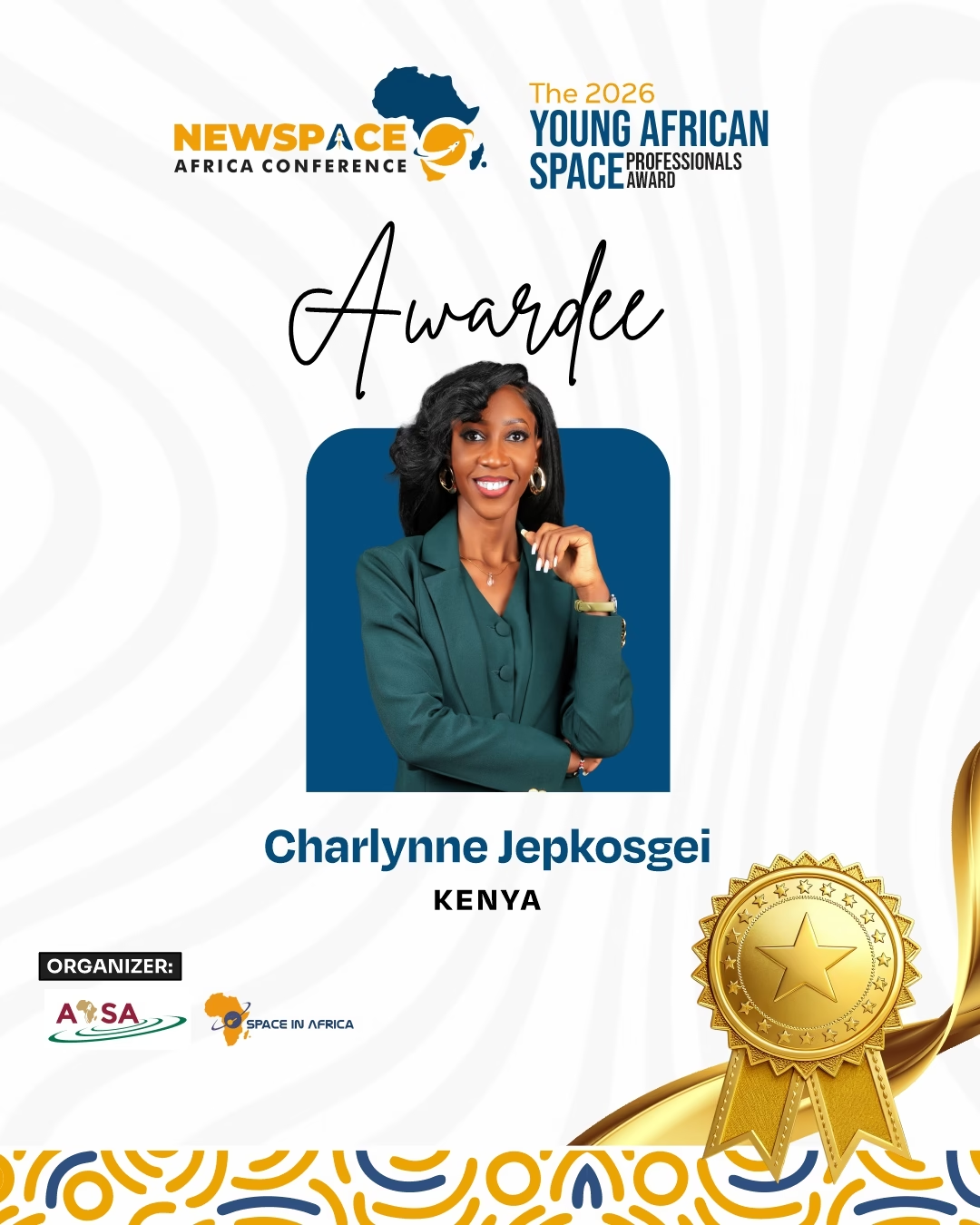
Charlynne Jepkosgei is a geospatial engineer and visionary leader with over 7 years of experience as a researcher and space ecosystem builder dedicated to advancing the use of Earth observation technologies for climate resilience, food security and sustainable development across Africa. Her professional experience spans academia, government and international development. She is currently a Tutorial Fellow and Researcher at the Technical University of Kenya, where she lectures on Remote Sensing, GIS and surveying and contributes to research and capacity development. Charlynne holds a Master’s degree in Spatial Engineering from the University of Twente, Netherlands with a specialisation in technical engineering, project management and policy and governance and is currently pursuing a PhD research focused on Earth observation application in an Agroforestry ecosystem. Beyond her technical work, Charlynne is a strong advocate for ecosystem development, inclusive leadership and capacity building within Africa’s space sector. She is the Founder of Women in Space Kenya (WiSK), a professional organisation dedicated to mentoring, inspiring, and equipping young women in Kenya and across Africa to pursue careers in the space and geospatial sectors, and to grow into space leadership. Through WiSK, she leads mentorship programmes, space awareness and educational outreach, and even successfully convened the inaugural Africa Women in Space Conference (AWiSC 2025), bringing together stakeholders from across the continent to advance collaboration and, more importantly, amplify and elevate women’s participation in the industry.
Charlynne also contributes to global efforts to advance gender inclusion in the space sector through initiatives such as the UNOOSA Space4Women programme. She participated in the 5th Space4Women Expert Meeting (2024), where she facilitated discussions on implementing gender mainstreaming strategies and expanding opportunities for marginalised communities. Driven by a deep commitment to impact, Charlynne is passionate and dedicated to advancing an inclusive, innovative and globally competitive African space ecosystem.
Edgar Mujuni, Uganda
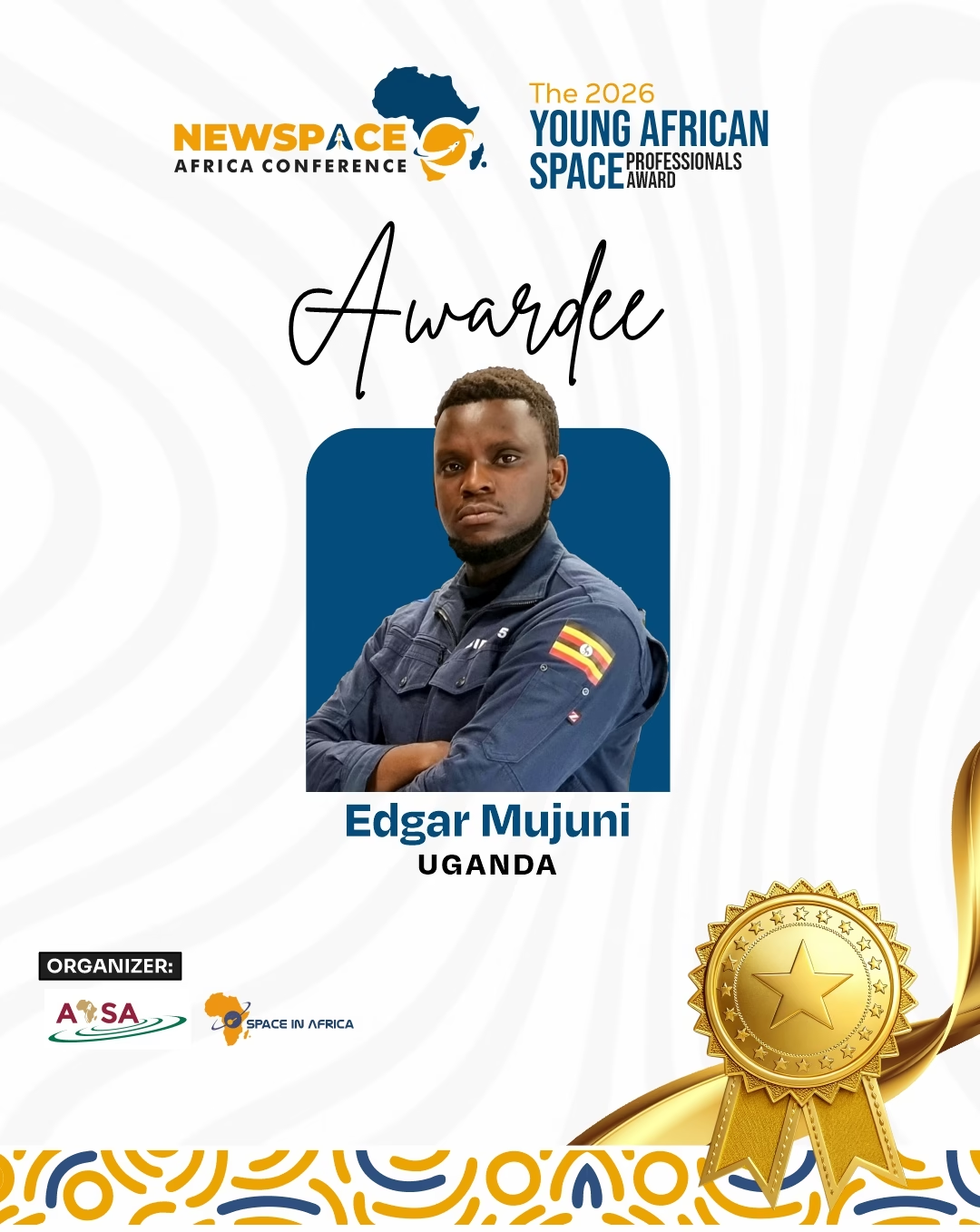
Edgar Mujuni is a Ugandan space systems engineer and emerging leader in Africa’s space sector, currently serving as Special Presidential Assistant on Space Engineering to the Government of Uganda. He is recognised for his pivotal role in the development of Uganda’s first satellite, PearlAfricaSat-1, launched in December 2022 under the BIRDS-5 international program. He holds a First-Class degree in Telecommunications Engineering from Kyambogo University, Uganda, and a Master’s degree in Space Systems Engineering from the Kyushu Institute of Technology (Kyutech), Japan, where he is currently pursuing a PhD in Space Systems Engineering at the Wireless Systems Laboratory. Mujuni has strong expertise in satellite communications, onboard computer systems, small-satellite missions, and ground-station systems, with contributions to more than 5 nanosatellite projects. He serves as Uganda’s Point of Contact for UNISEC-Global, advancing practical space engineering and institutional capacity development across Africa. He is the Founder and CTO of AfriSpace Labs, an indigenous African upstream space startup that enables institutions to design, build, and operate CubeSat systems through high-level, hands-on training, technology transfer, and systems engineering programs. Driven by a bold vision for Africa’s space future, Mujuni is committed to leveraging satellite technologies to address critical challenges across the continent, including agriculture and food security, climate monitoring, disaster risk reduction, water resource management, and environmental protection. He strongly advocates for international cooperation as a key enabler for accelerating Africa’s space capabilities and unlocking the full potential of space-based solutions for sustainable development.
Western Africa
Oluwarantimi Bukola, Nigeria
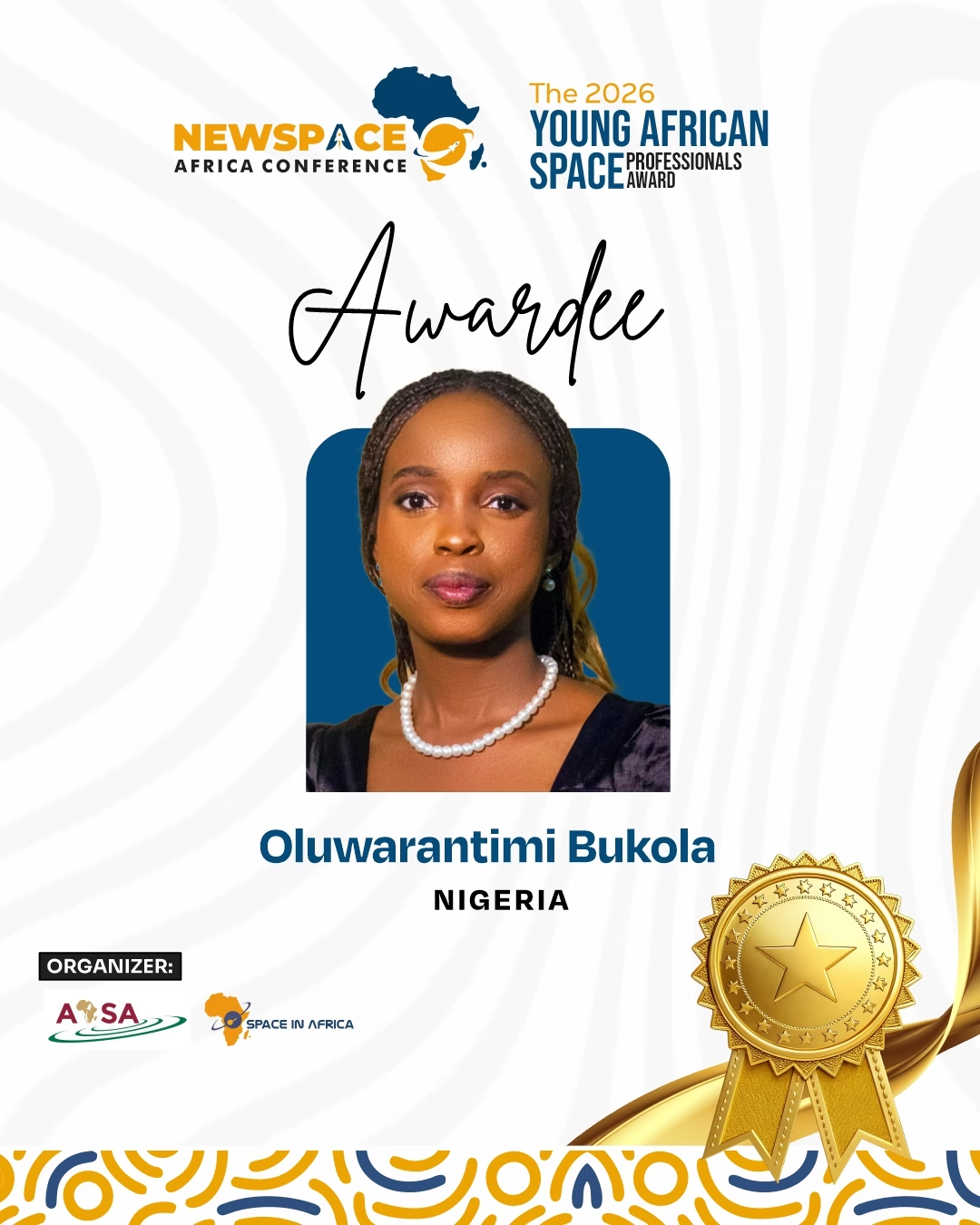
Oluwarantimi Bukola, popularly known as “The Aerospace Girl,” is a First Class Mechatronics Engineer and a leading voice in the emerging African aerospace ecosystem. As an International Liaison Officer for the Africa Space Foundation, she plays a pivotal role in driving continental collaboration, having successfully coordinated Pan-African summits and hackathons that connect hundreds of young innovators worldwide. Recognised as a 2025 AIAA Ascendant and a recipient of the Young African Space Professionals Award 2026, Oluwarantimi’s work sits at the intersection of advanced propulsion systems, space education, and operational excellence. She is the Co-Founder of Univast Space, where she leads the execution of education and climate-focused space programs designed to build sustainable capacity within the African workforce. A passionate advocate for bridging the digital and technological divide, Oluwarantimi is dedicated to building the “NewSpace Africa” infrastructure. Her mission is to ensure that African aerospace innovation is not only technically world-class but also a primary driver for socioeconomic transformation and climate resilience across the continent.
Momoh Lamin, Sierra Leone
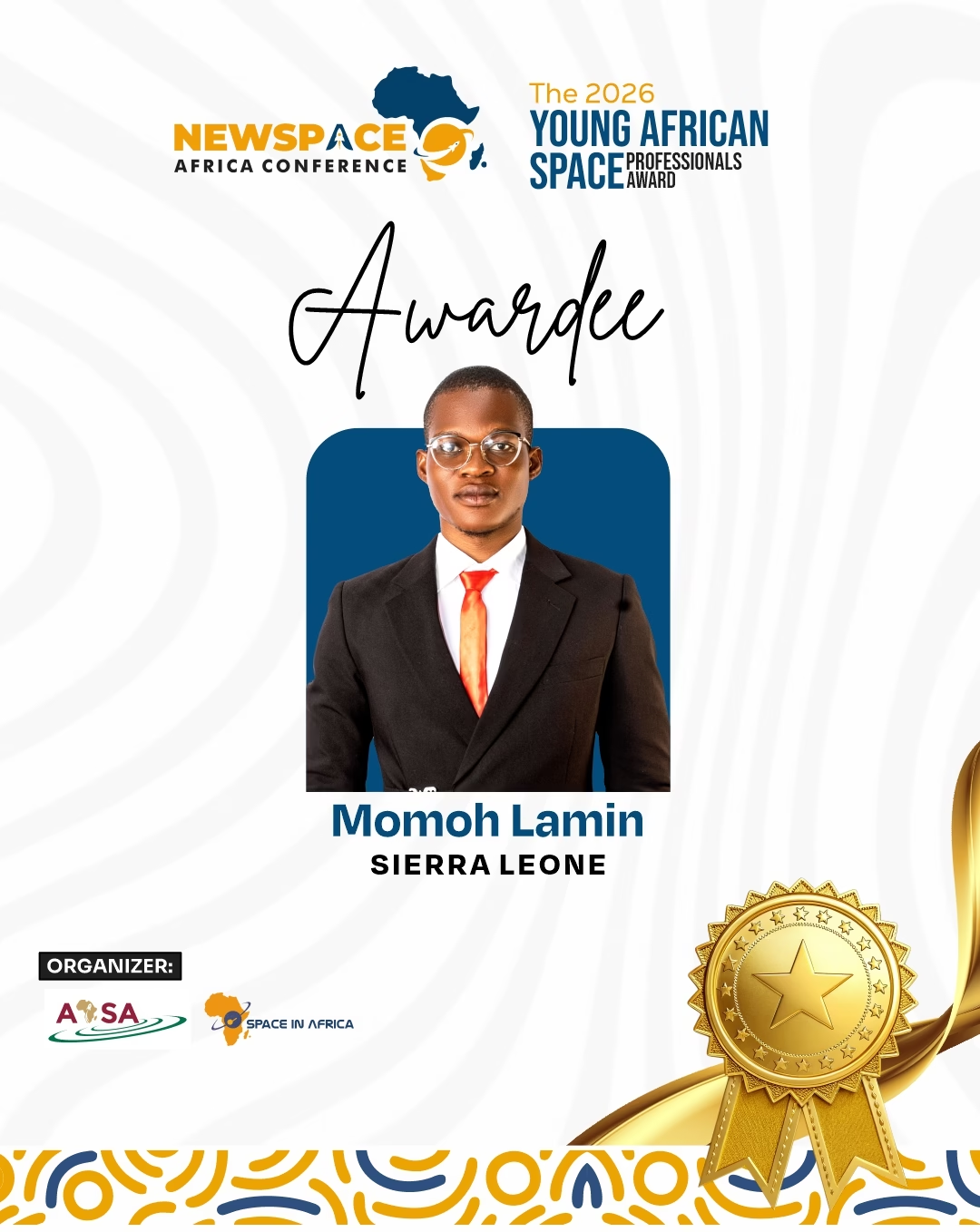
Momoh Lamin is a Sierra Leonean geospatial practitioner and emerging leader in Africa’s space ecosystem, working at the intersection of Earth observation, digital innovation, and sustainable development. Momoh’s work focuses on translating satellite data into scalable, real-world solutions that advance climate resilience, food security, water resource management, and inclusive economic development in underserved communities. As Executive Director of YouthMappers Technical University East, he is leading space-enabled initiatives that apply geospatial data and intelligence to empower local communities, particularly women farmers, through climate-smart agriculture and risk-informed decision-making, as well as enhancing key sustainable development goals. His portfolio includes leading projects under the Digital Earth Africa Technical Challenge, the Australian Aid Award, contributing to environmental monitoring with Gola Rainforest Conservation, and supporting geospatial systems for municipal governance and public service delivery. With a foundation in computer science and geo-informatics, Momoh integrates spatial analytics, digital systems, and emerging technologies to strengthen data-driven governance and development planning. As a former YouthMappers Regional Ambassador and participant in global programs such as the NASA Lifelines Simulation, he represents a new generation of African innovators committed to bridging the gap between space technology and societal impact, ensuring that Africa’s space advancements translate into tangible benefits on the ground.
Southern Africa
Muongeni Tamara Manda, Zimbabwe
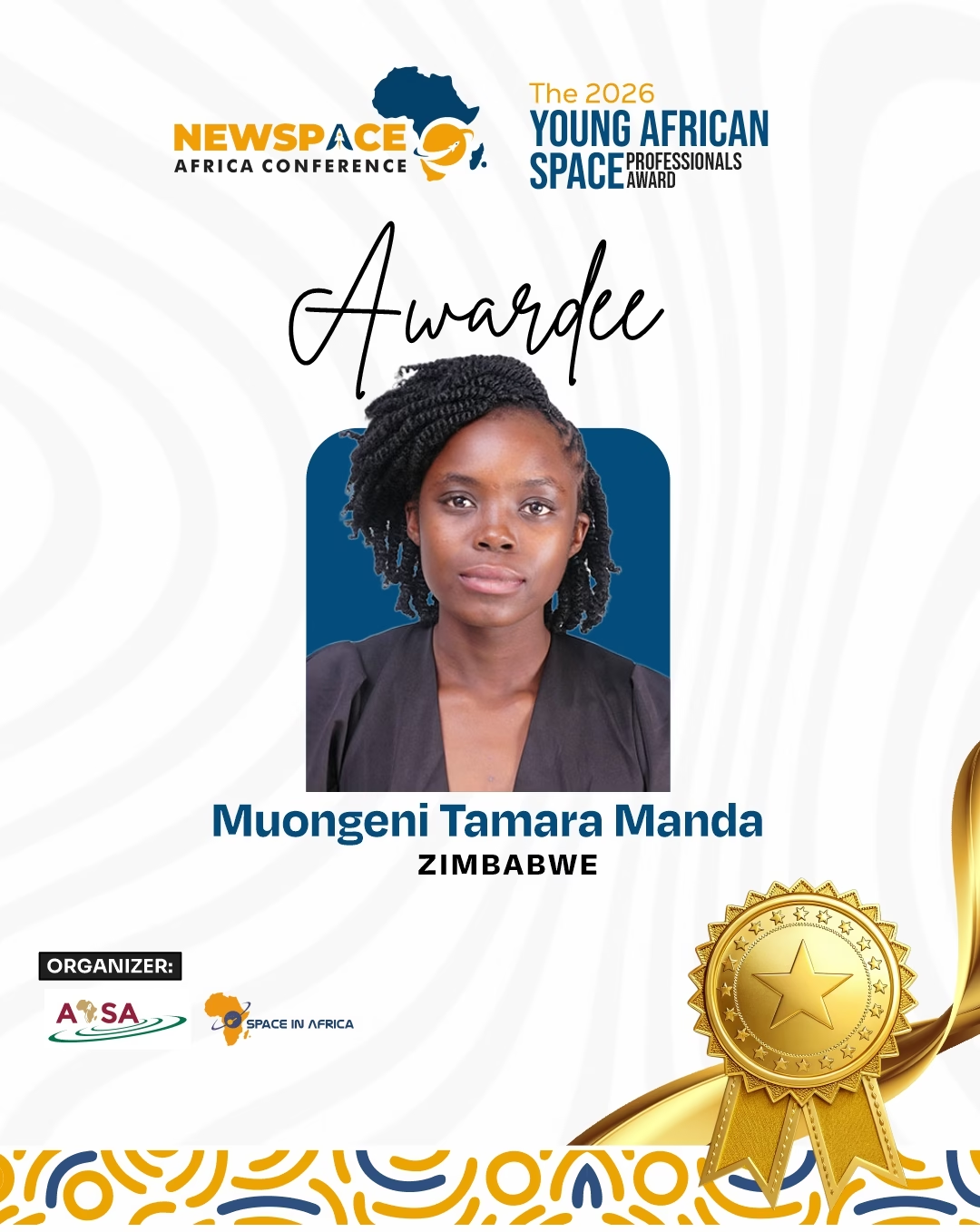
Muongeni Tamara Manda is a qualified environmental geoinformatics specialist and researcher applying Earth observation technologies to support sustainable development in Africa. She holds a Bachelor’s degree in Environmental Conservation and Geoinformatics and previously served as an Analyst intern at the Research Institute for Innovation and Sustainability (RIIS), contributing to the Space Ecosystem Development Toolkit (SEDT) and research on African space innovation systems. She is currently serving as Zimbabwe’s National Point of Contact for the Space Generation Advisory Council (SGAC). As such, she has led capacity-building initiatives across Africa, including organising Africa Space Generation Workshops and global hackathons, while actively advocating for youth and women’s participation in the space sector. She has presented her work at major international conferences, including the International Astronautical Congress (IAC), Space Generation Congress (SGC), UNESCO International Forum and eLearning Africa. She utilises platforms like Digital Earth Africa to address environmental challenges.
Luciano Costa Dembue Lupedia, Angola

Luciano Costa Dembue Lupedia is an Angolan space and geospatial leader serving as Programme Manager for ANGEO-1, Angola’s first national Earth Observation satellite programme, and Coordinator of GEDAE, the National Geodata Centre. At GGPEN, he leads the development of space applications and geospatial intelligence solutions that support national priorities across sectors such as agriculture, mining, environment, infrastructure, and public administration. His work focuses on transforming satellite data, GIS, and AI-driven analytics into operational tools for decision-making, territorial management, and socio-economic development.
Beyond recognition, the award serves as a platform to amplify excellence, foster cross-border collaboration, and inspire a broader pipeline of talent. The recipients of the 2026 Young African Space Professionals Award gain access to a range of high-impact opportunities designed to accelerate their professional growth and visibility within the industry. The benefits include full participation in the NewSpace Africa Conference 2026 in Libreville, Gabon, covered end-to-end by the African Space Agency. This includes conference registration; full access to all sessions and networking events across the four-day programme for strategic networking and exposure; logistical support; and a daily subsistence allowance to cover accommodation and other incidental expenses Beyond these, each awardee will be recognised during the conference and featured in the conference Final Programme, reports, and other conference materials, and across the African Space Agency’s and Space in Africa’s communication platforms, ensuring their work and contributions reach the widest possible audience.
The 2026 Young African Space Professionals Award reflects the shared commitment of Space in Africa and the African Space Agency to building a space sector that is not only technologically advanced but inclusive, equitable, and African-led. By identifying and investing in outstanding young talent across the continent, the programme contributes to a long-term pipeline of leaders who are equipped to drive Africa’s space ambitions from within. The 2026 cohort joins a growing community of recognised professionals whose work is shaping the industry.
About Space in Africa
Space in Africa is the leading analytics and consulting company in the space sector, serving both the institutional and commercial markets with a particular focus on Africa. Our experience builds on a long track of past projects executed for international organisations, national governments, and commercial players, with high stakes in the space business—our practice cuts across all African countries. Space in Africa’s proprietary, research-based business and market analysis predicts critical outcomes in what happens next in the industry and the opportunities available. Its data-driven analysis, free of vested interests and preconceptions, is helping to shape the ecosystem by making accurate information critical for change available. The NewSpace Africa Conference is the primary event in Africa’s space sector, designed to foster further business interactions and cooperation within the African space and satellite industry.
About the African Space Agency
The African Space Agency (AfSA) is the continental space organisation responsible for developing an adequate regional space capability. It is the focal point of Africa’s collaboration with worldwide partners. The African Union established the agency to coordinate the African Outer Space programme, promote cooperation on space policies among the AU’s member states, and create a regulatory framework as prescribed in the African Space Policy and Strategy documents. Its strategic objectives are to embed space as one of the critical pillars of African socio-economic development through robust capacity building, translated into adequate infrastructure and the training of qualified, critical human capital. The agency is domiciled in the Egyptian Space City, Cairo, Egypt.