
AU Launches Space for Early Warning in Africa (SEWA) Programme to Strengthen Climate Resilience

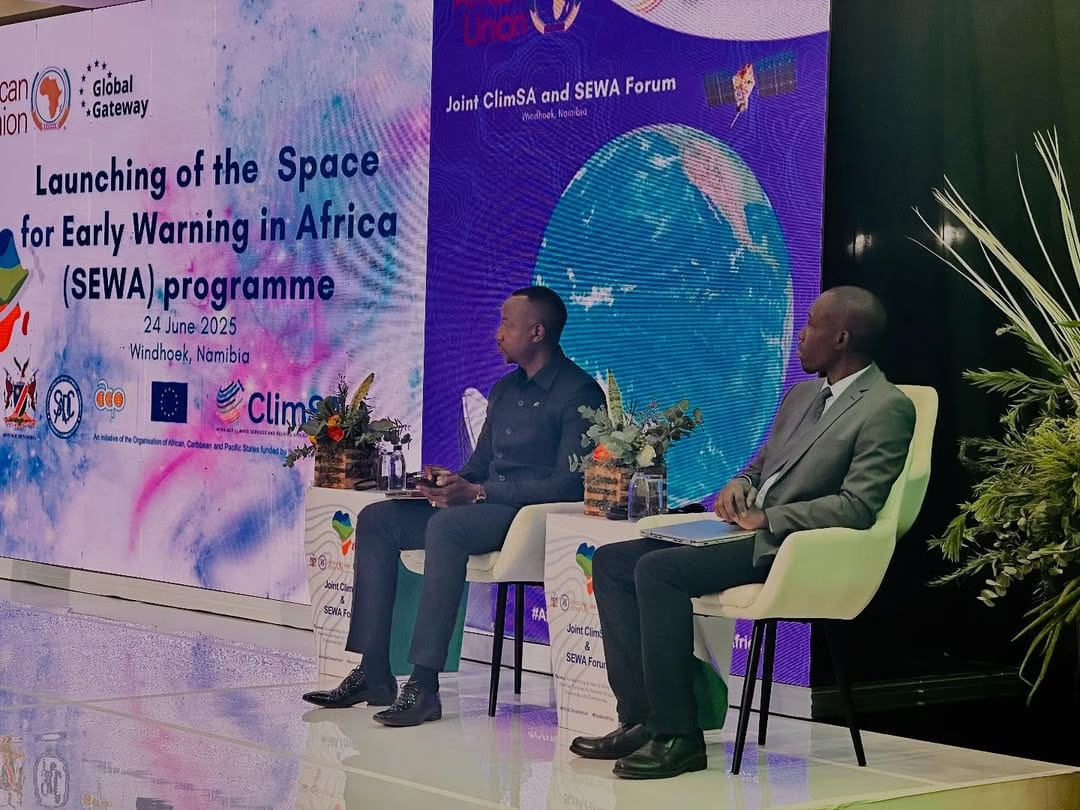
The African Union (AU) Commission has officially launched the Space for Early Warning in Africa (SEWA) initiative, marking a significant step toward enhancing the continent’s capacity to anticipate and respond to climate-related disasters. The launch event, held in Windhoek, Namibia, on June 24, 2025, marks a regional commitment to integrating space-based technologies into disaster risk management strategies. The event attracted representatives from various organisations under the auspices of the AU, the European Union, and Namibian government officials. SEWA is a component of the newly launched Africa-EU Space partnership programme.
SEWA was jointly initiated in 2018 by the African Union Commission, the European Centre for Medium-Range Weather Forecasts (ECMWF), and the European Organisation for the Exploitation of Meteorological Satellites (EUMETSAT). The initiative was conceived under the 2018 Abidjan Declaration, signed in Côte d’Ivoire, which called for integrating satellite data and services into Africa’s early warning frameworks. Additionally, the European Union has provided financial support to help implement this vision.
Strengthening Access to Climate Data
Speaking at the launch, AU Commissioner Moses Vilakati highlighted the initiative’s goal of enhancing African capacity to deliver space-based weather and climate services. SEWA aims to ensure African institutions can access and apply real-time satellite data for forecasting hazardous events, ultimately improving early warning delivery at national and community levels. Jonas Sheelongo, Deputy Executive Director at Namibia’s Ministry of Transport and Works, emphasised the urgency of the effort, describing Africa as “at the frontline of the climate crisis.” He also pointed to the opportunities for technological and institutional advancement that SEWA presents.
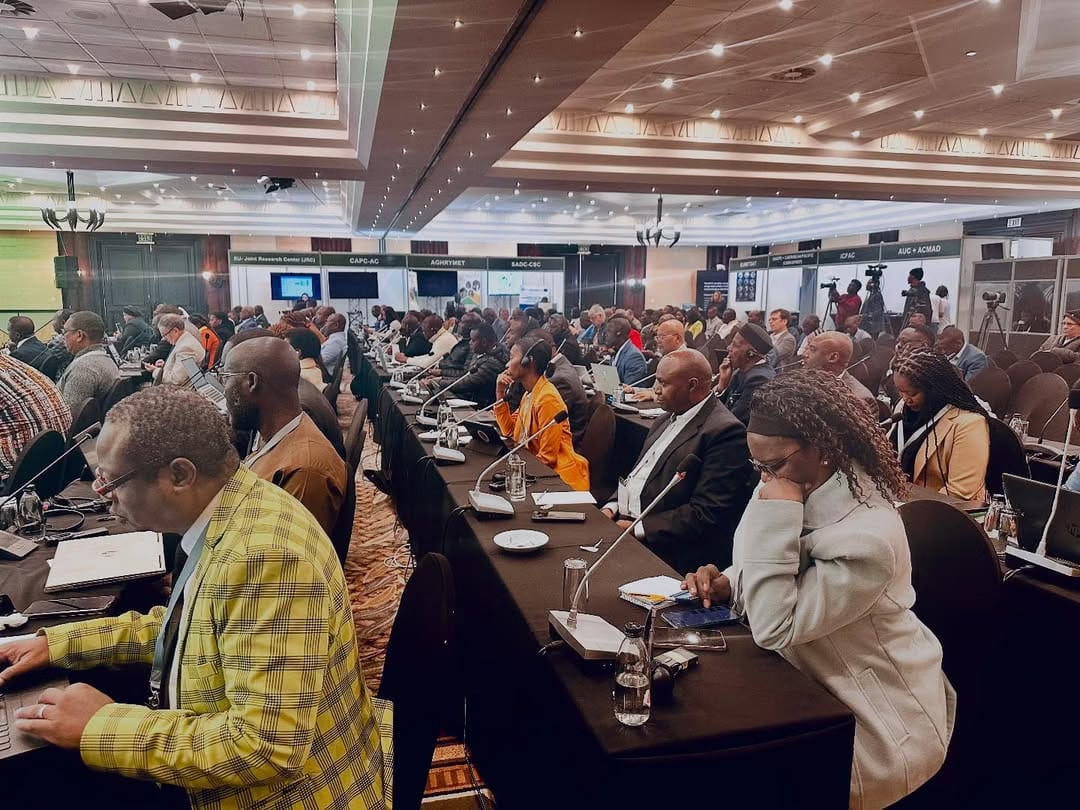
One of SEWA’s key objectives is to bridge the existing information gap that leaves millions without access to accurate weather forecasts. The initiative aims to enhance service delivery to a diverse range of end-users, including farmers, pastoralists, women, and youth, who often bear most of the climate-related impacts. By strengthening regional meteorological systems and promoting data sharing, SEWA is expected to facilitate more timely and effective decision-making in the face of extreme weather events.
Beyond data access, SEWA places strong emphasis on training, knowledge exchange, and capacity building across the early warning value chain. The project aims to enhance Earth Observation (EO) utilisation, strengthen local forecasting infrastructure, and promote collaboration between African regional economic communities and specialised agencies.